A buyer-focused look at why discreet waterfront enclaves are becoming more powerful in South Florida luxury real estate, and how privacy, scarcity, water access, and design are shaping the next tier of demand.
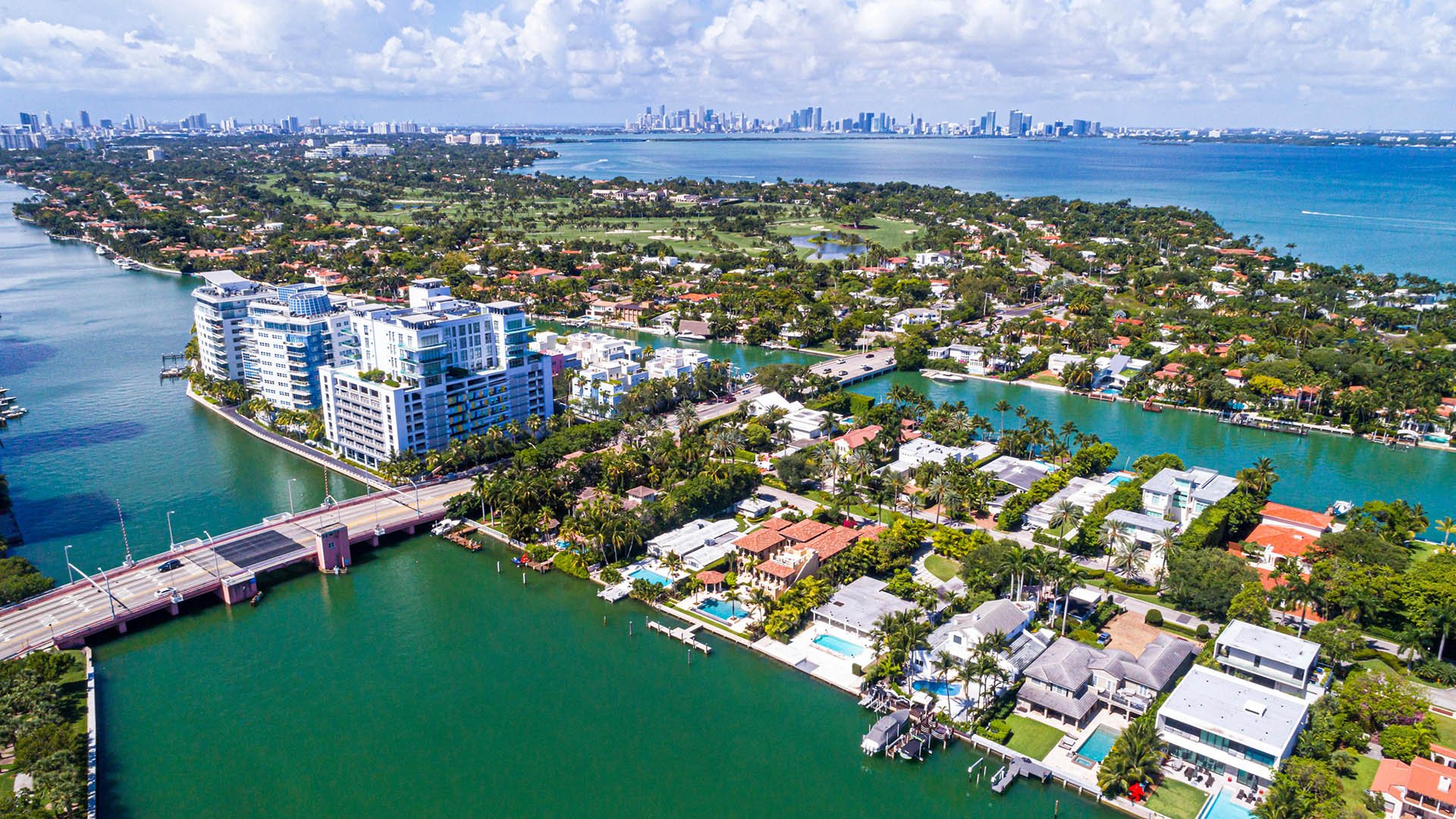
The useful lesson in the Sergey Brin and Allison Island conversation is not celebrity trivia. It is a broader market signal: the highest tier of South Florida real estate is increasingly rewarding discretion, low exposure, and waterfront calm. The trophy address is no longer measured only by scale, skyline visibility, or dramatic arrival. For many ultra-premium buyers, the new power address is quieter, more controlled, and harder to casually access.
Allison Island has become shorthand for a specific kind of Miami Beach luxury. It suggests residential privacy, proximity without immersion, water at the edge of daily life, and a level of remove from the performative energy of more public waterfront corridors. Whether a buyer is pursuing a single-family residence, a full-service condominium, or a second-home base, the core question has sharpened: how much privacy can the property preserve while still offering the convenience that makes Miami compelling?
That is why the broader conversation matters for South Florida. The signal is not simply about one name or one island. It reflects a wider migration of value toward enclaves that feel composed, protected, and quietly rare.
That signal also has a reported transaction reference point. Public-record sale pages show 6596 Allison Road in Miami Beach selling for $51 million on March 3, 2026, while The Real Deal has linked the buyer trail to Sergey Brin through an LLC record trail. Framed cautiously, the detail is useful because it shows how a discreet waterfront address can carry value beyond spectacle.
Privacy has always mattered in luxury real estate, but South Florida has made it more complex. The region offers global access, cultural energy, waterfront recreation, and a dense network of lifestyle options, yet it also brings visibility. The more Miami becomes a capital of wealth, technology, finance, design, and hospitality, the more certain buyers want the benefits of access without the cost of exposure.
That is where discreet waterfront enclaves gain strength. They can offer a more residential rhythm than urban cores, a softer arrival sequence than hotel-branded districts, and a sense of separation that cannot be recreated by finishes alone. Oceanfront is not enough if the experience feels crowded. A view is not enough if the building or block lacks calm. The strongest properties create a buffer between public life and private living.
This preference does not eliminate demand for the city. Brickell remains essential for buyers who prioritize finance, dining, and vertical energy. But even in high-rise neighborhoods, the premium is moving toward residences that choreograph privacy through dedicated entries, limited density, refined service, and large-format homes in the sky.
The appeal of an enclave is psychological as much as physical. A buyer is not only purchasing land, frontage, or a floor plan. They are buying the feeling of arriving somewhere that filters the outside world. That may come through a quiet bridge, a low-traffic street, a discreet lobby, a private elevator, a marina-oriented lifestyle, or simply a neighborhood pattern that discourages wandering.
This is especially important for founders, family offices, entertainers, athletes, and international buyers who value anonymity. Their daily life often requires movement between airports, schools, offices, restaurants, and yachts, but home must feel like a sanctuary. A discreet waterfront address reduces friction. It gives the owner more control over who sees them, how guests arrive, and how the property performs as a retreat.
The best enclaves also offer what might be called soft security. Not a fortress aesthetic, but layered privacy. Landscaping, setbacks, water orientation, service protocol, and architectural restraint all contribute. Luxury here is not loud. It is edited.
The single-family waterfront estate remains the purest expression of privacy, but the condominium market has absorbed many of the same lessons. Buyers who once would have considered only private homes are now looking closely at boutique, service-rich residential buildings where privacy is embedded in the plan.
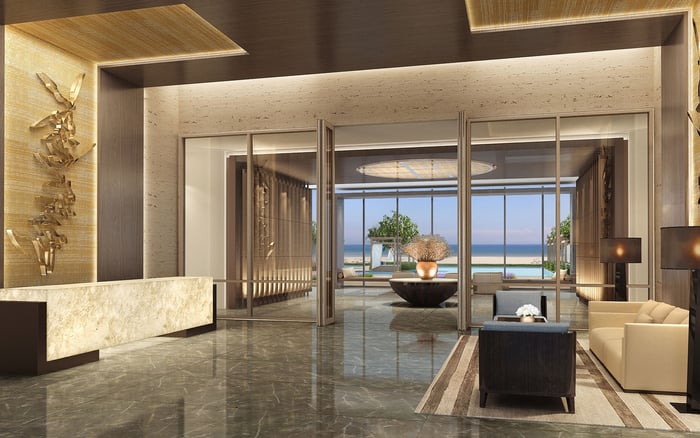
In Miami Beach, The Ritz-Carlton Residences® Miami Beach speaks to buyers who want a residential atmosphere with hospitality-grade ease, without the feel of a conventional tower. Along the sand, The Perigon Miami Beach reflects the continued appeal of architecture, water, and private residential identity in a setting that still connects to the city.
The same logic extends north into smaller waterfront communities. Onda Bay Harbor fits the buyer who wants water, scale, and a more intimate residential mood. In Bal Harbour, Rivage Bal Harbour shows how a rarefied coastal address can combine architectural presence with a quieter, more estate-like sensibility.
These projects do not replace island homes. They broaden the menu for buyers who want privacy without the management burden of a standalone estate.
A discreet address should be assessed with more rigor than a highly visible trophy property. Scarcity can be powerful, but not all privacy is equal. Buyers should study arrival, exposure, water orientation, neighborhood rhythm, service logistics, and the long-term liquidity of the micro-market.
First, consider access. Is the property easy for the owner but inconvenient for casual traffic? Second, study the view corridor. Waterview value is strongest when it feels protected and not easily replicated. Third, evaluate density. A boutique building may feel more private than a large tower, but only if the service model and circulation support that promise. Fourth, look at how guests, staff, deliveries, and vehicles move through the property. True discretion is often revealed in back-of-house details.
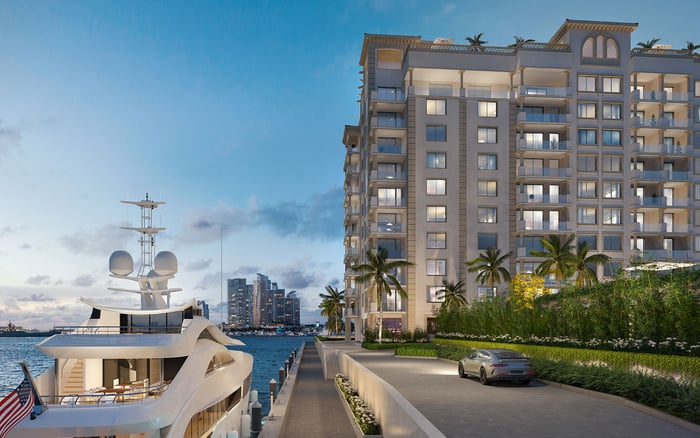
For buyers considering island-style living without a traditional house, Fisher Island remains part of the conversation because it represents separation as an amenity. The Residences at Six Fisher Island illustrates how privacy, scale, and service can be combined in a setting where access itself is central to the lifestyle proposition.
The old luxury signal was visibility. The new one is optionality. A buyer wants the option to be in Miami Beach for dinner, in Brickell for business, in Surfside for quiet coastal living, or on the water by morning, without making home feel exposed. The most powerful addresses allow that flexibility while preserving control.
This is why discreet waterfront enclaves are gaining power. They match the way high-net-worth life is often lived: mobile, global, family-centered, security-aware, and increasingly design-conscious. The owner does not need every passerby to understand the value. In many cases, the fact that the value is not immediately legible is the point.
Allison Island, as a market signal, captures this shift. It points to a South Florida buyer who wants water, but not spectacle; proximity, but not congestion; architecture, but not performance. That buyer is shaping the next chapter of premium demand.
Is Allison Island important because of celebrity attention? Celebrity association may draw curiosity, but the deeper appeal is privacy, waterfront character, and residential calm.
Why are discreet waterfront enclaves gaining value? They offer scarcity, controlled arrival, and a quieter lifestyle while keeping owners close to South Florida’s core amenities.
Are private islands the only way to achieve discretion? No. Certain boutique condominiums and low-density waterfront buildings can deliver a similar sense of privacy through design and service.
What should buyers compare first in these locations? Compare access, view protection, density, service circulation, and the everyday feel of arriving home.
Does oceanfront always outperform bayfront property? Not always. Some buyers prefer bayfront calm, boating convenience, and softer exposure over a more public beachfront setting.
Is Brickell still relevant for privacy-focused buyers? Yes, especially for buyers who need business access, though they should prioritize buildings with strong private-entry and service design.
Why does boutique scale matter? Smaller scale can reduce traffic and create a more personal residential atmosphere, provided operations match the architecture.
How does a marina influence value? A marina can add lifestyle utility for boating buyers, but privacy, access, and management remain equally important.
Is Surfside part of the discreet luxury conversation? Yes. Surfside appeals to buyers who want a quieter coastal identity near Bal Harbour and Miami Beach.
Should buyers choose a house or a condominium? Choose a house for maximum control and land ownership, or a condominium for service, lock-and-leave ease, and simplified management.
For a tailored shortlist and next-step guidance, connect with MILLION.
If branded residences are on your mind — as a home or as an allocation — we would be glad to share what we are seeing, privately.
Begin a quiet conversation