A discreet look at how founder-scale buyers think about Biscayne Bay, privacy, and the quiet architecture of South Florida’s most coveted luxury real estate decisions.
At the highest end of South Florida real estate, the buyer often reveals more than the property. A Sergey Brin-level buyer, understood primarily as an archetype and as a reference to reported attribution rather than a personal ownership claim, changes the entire conversation. The question is no longer simply square footage, view, or pedigree. It becomes: how does a home protect time, movement, family, information, and optionality?
That is why Biscayne Bay continues to matter. It offers what ultra-premium buyers quietly prize: water as a buffer, geography as an organizing principle, and neighborhoods where access can feel curated rather than exposed. The best homes and residences do not merely face the bay. They use it to create distance, serenity, and a sense of personal command.
In that vein, public-record sale pages show 6596 Allison Road in Miami Beach selling for $51 million on March 3, 2026, while The Real Deal has linked the buyer trail to Sergey Brin through an LLC record trail. The value of the reference is not certainty for its own sake; it is the way the address and price illustrate Biscayne Bay’s premium for privacy, water, and controlled movement.
For buyers at this level, privacy is not a single feature. It is a sequence. Arrival, parking, elevator flow, staff circulation, guest access, marina proximity, service discretion, sightlines, and exit routes all belong to the same evaluation. A beautiful room is only compelling if the life around it can remain controlled.
Biscayne Bay is often described as scenery, but for elite buyers it functions as infrastructure. Water creates separation without isolation. It softens the edge between public life and private residence while keeping the owner connected to Miami Beach, Brickell, Coconut Grove, Surfside, and the islands that define the city’s most discreet residential map.
This is why bayfront and bay-adjacent living attracts buyers who do not need to be persuaded by spectacle. They understand that the rarest luxury is not being seen. A residence can offer skyline views, architectural drama, and world-class finishes, yet still fail the test if it exposes too much of the owner’s daily pattern.
The same logic applies across different formats. A private island residence may emphasize controlled access. A boutique building may offer fewer points of contact. A high-floor condominium may create vertical privacy. A waterfront estate may use landscape, setbacks, and arrival choreography. The product types differ, but the underlying brief is consistent: reduce friction, reduce exposure, preserve freedom.
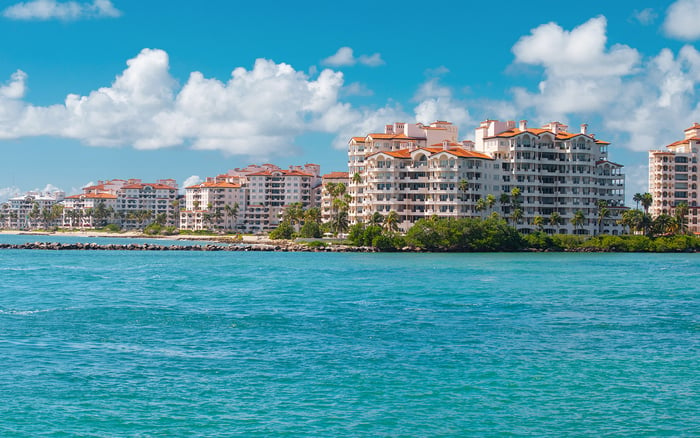
In that context, buyers studying the Fisher Island conversation may look at The Residences at Six Fisher Island not only as a residential address, but as part of a broader desire for controlled access and island privacy. The point is not merely exclusivity. It is the ability to live with fewer unwanted intersections.
At this echelon, off-market luxury is often misunderstood. It is not simply a hidden inventory category. It is a culture of trust. Owners may not want public exposure. Buyers may not want their interest known. Advisors may need to qualify intent, capability, timing, and discretion before a conversation becomes real.
The most sophisticated buyers are comfortable with that rhythm. They do not expect every meaningful opportunity to appear in public view. They also understand that off-market access is not produced by urgency alone. It is earned through relationships, reputation, clean communication, and a willingness to move carefully.
This does not mean every exceptional property is unavailable publicly. Many important residences are visible, marketed, and beautifully presented. But the psychology of the top buyer class is shaped by optionality. They want to know what is available, what might become available, and what could be quietly discussed under the right conditions.
For that reason, the first conversation is rarely about a single property. It is about the buyer’s privacy architecture. Who needs access to information? How should tours be handled? What level of anonymity matters? Are there family, security, corporate, or travel considerations? The answers determine not just which homes are appropriate, but which conversations should even be opened.
The word trophy once implied size, visibility, and a recognizable address. Today, among the most privacy-conscious buyers, trophy status is more nuanced. A trophy residence may be the one that lets a founder, investor, principal, or family office move through Miami without unnecessary attention.
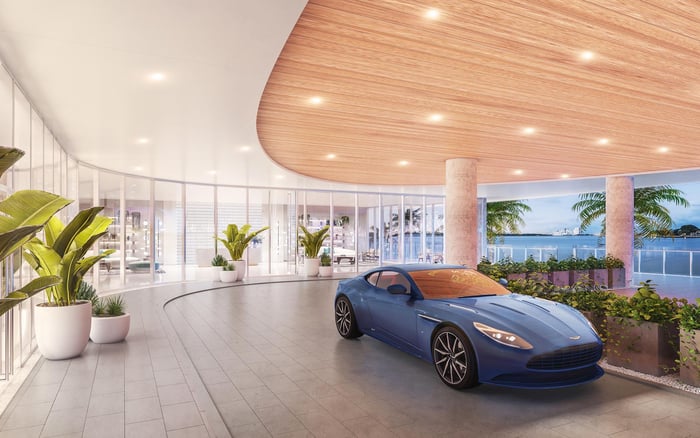
The best properties deliver a quiet kind of power. They offer views without vulnerability, service without intrusion, and presence without performance. A grand entertaining terrace may matter less than a private arrival sequence. A famous building may matter less than how many people must be passed between car and living room.
In Surfside, buyers comparing beachfront calm and architectural restraint may consider The Delmore Surfside within a broader search for low-key coastal prestige. The appeal is not about shouting for attention. It is about aligning the residence with a life that values composure.
In Edgewater, the conversation changes again. The district connects bay views with urban proximity, making it attractive to buyers who want a Miami base without abandoning the energy of the city. A project such as Aria Reserve Miami can enter the discussion when the buyer wants a waterfront orientation with a more metropolitan rhythm.
Brickell serves another profile: the principal who wants immediate access to finance, dining, private services, and the city’s vertical core. In that context, Una Residences Brickell belongs to the broader language of bayfront urban living, where the view is expansive and the lifestyle remains highly connected.
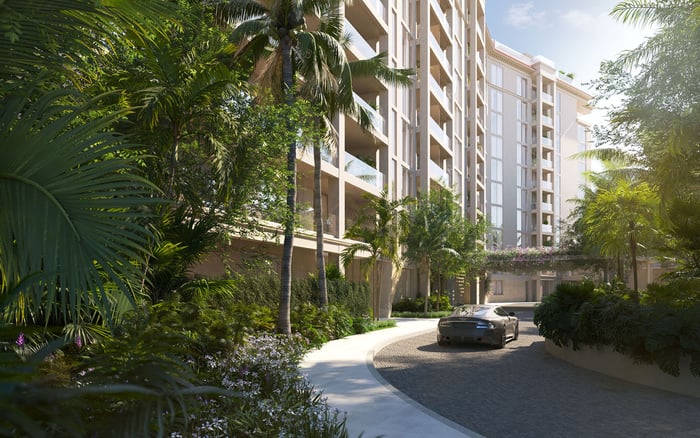
Privacy-minded buyers are rarely moved by generic luxury language. They evaluate the practical mechanics of living. The first layer is access. How does one arrive? Who sees the arrival? Can guests, staff, vendors, and family move without unnecessary overlap?
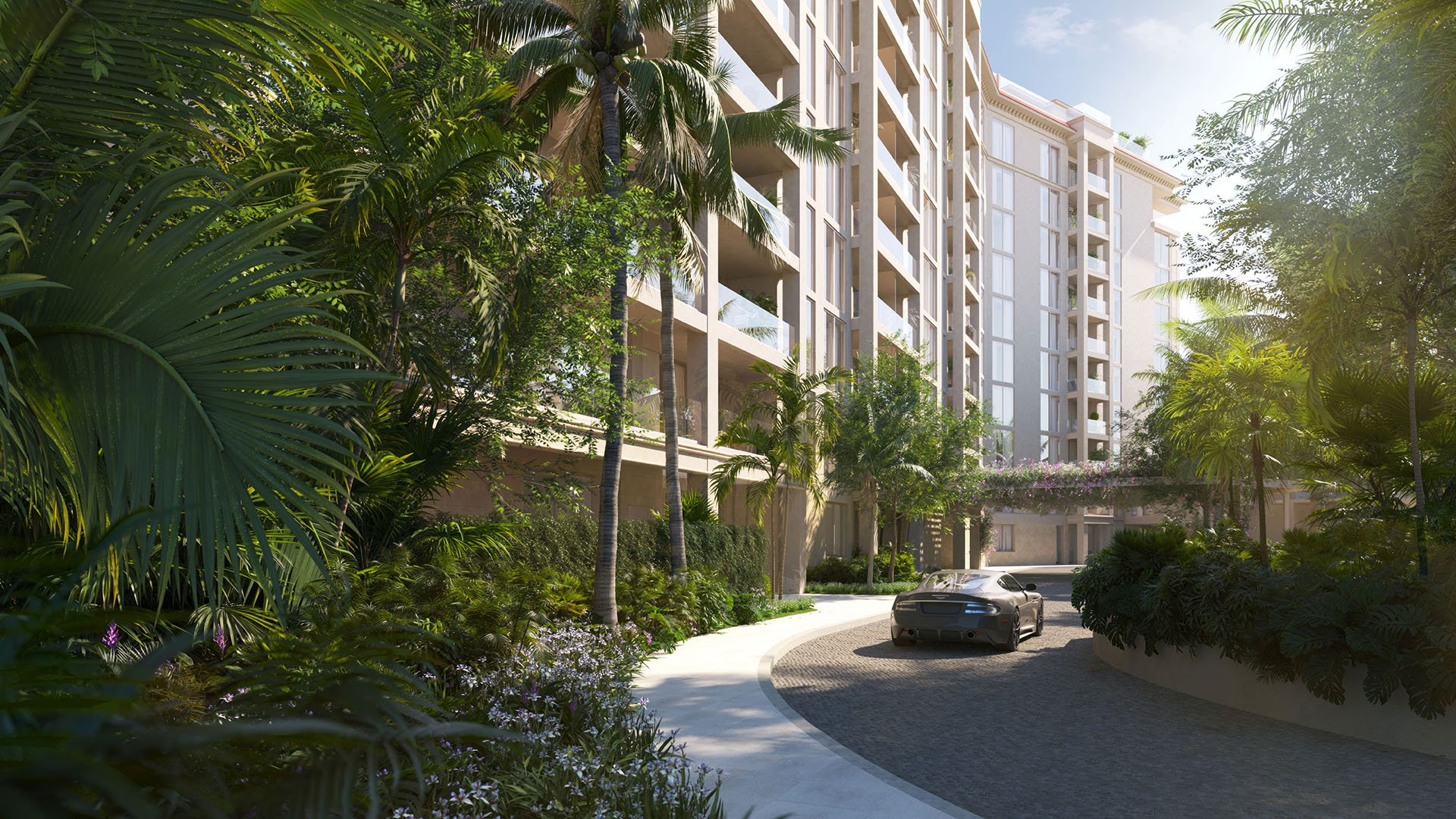
The second layer is vertical or horizontal separation. In condominiums, that may mean elevator logic, corridor exposure, and the relationship between public amenities and private residential areas. In single-family homes, it may mean driveway design, perimeter treatment, guest quarters, and how the home sits within its site.
The third layer is lifestyle durability. A property should work when the owner is in residence, when family arrives, when guests visit, and when the home is being managed in the owner’s absence. For global buyers, the residence must be both sanctuary and operating platform.
Finally, there is emotional privacy. This is harder to quantify, but immediately felt. Does the home allow the owner to exhale? Does it feel protected without feeling defensive? Does it give a family room to gather without turning daily life into a production?
Coconut Grove adds a useful counterpoint to the bayfront and island narrative. It offers a more residential, gardened sensibility while remaining connected to the water. Buyers considering Vita at Grove Isle may be drawn to that blend of bay orientation and quieter domestic rhythm.
The lesson from Sergey Brin-level buying behavior is not that every buyer should chase the most guarded address. It is that the smartest buyers begin with a personal operating thesis. They define the life they need to protect, then choose the residence that supports it.
For some, that means island seclusion. For others, it means a full-service tower with private circulation. For others still, it means a home near schools, marinas, airports, or family offices. The common denominator is not a single neighborhood. It is precision.
South Florida’s luxury market rewards that precision because it offers multiple versions of privacy. There is waterfront privacy, vertical privacy, gated privacy, service privacy, and social privacy. The buyer’s task is to understand which version matters most.
That is where the off-market conversation becomes especially valuable. Not because secrecy is glamorous, but because discretion allows the search to be shaped around reality rather than performance. The right residence does not have to be the loudest. It has to be the one that makes an exceptional life easier to live.
What does Sergey Brin-level buyer mean in this context? It refers to a founder-scale, ultra-high-net-worth buyer profile focused on privacy, mobility, and discretion. Where a specific transaction is discussed, it is framed as public-record and media reporting that has linked him to a purchase, not as an independent personal-ownership claim.
Why is Biscayne Bay so important to privacy-minded buyers? The bay creates natural separation while keeping owners connected to Miami’s most desirable waterfront and urban neighborhoods.
Is off-market luxury always better than public inventory? No. Off-market opportunities can be valuable, but the best choice depends on fit, timing, discretion, and the buyer’s actual lifestyle brief.
What should buyers evaluate before touring private residences? They should clarify access needs, confidentiality preferences, family logistics, service expectations, and how much visibility they are willing to accept.
Does a trophy property have to be highly visible? Not at this level. Many sophisticated buyers now define trophy value through privacy, control, views, and daily ease rather than public recognition.
Which areas suit buyers who want both privacy and city access? Brickell, Edgewater, Coconut Grove, Surfside, and island settings can each work, depending on the desired balance of access and seclusion.
How important is arrival design in ultra-luxury real estate? It is essential. The path from street, garage, dock, or lobby to the residence often reveals how private daily life will actually feel.
Do branded residences solve the privacy question automatically? Not automatically. Service quality matters, but buyers still need to examine circulation, staffing, access control, and the building’s social rhythm.
Why do global buyers value optionality in South Florida? Optionality lets them compare visible listings, quiet conversations, and future possibilities without committing too early or exposing their intentions.
What is the best first step for a discreet luxury search? Begin with a confidential advisory conversation that defines the buyer’s privacy requirements before discussing specific addresses.
For a discreet conversation and a curated building-by-building shortlist, connect with MILLION.
If branded residences are on your mind — as a home or as an allocation — we would be glad to share what we are seeing, privately.
Begin a quiet conversation