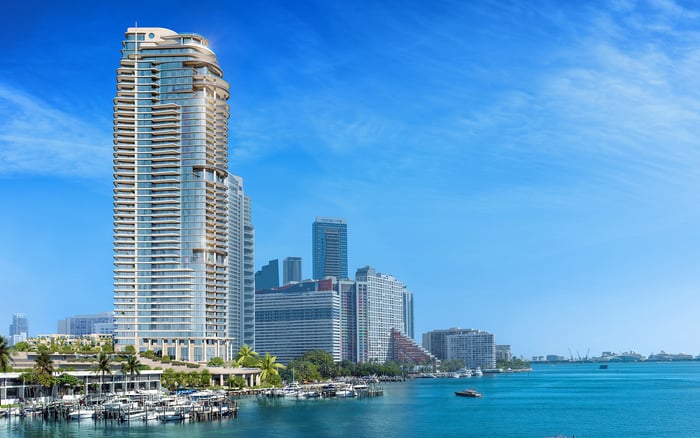
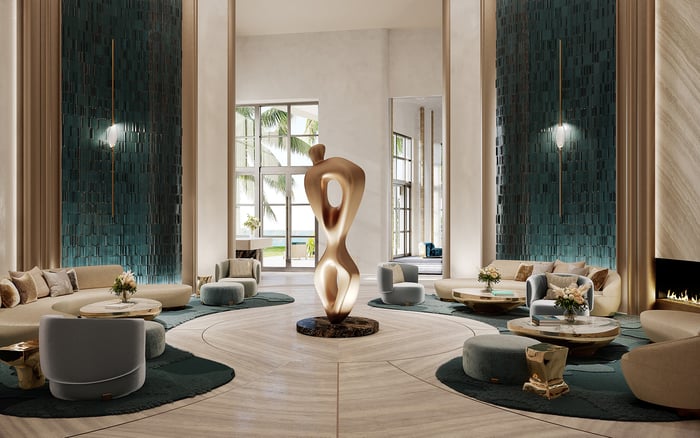
A buyer-focused look at how wellness expectations in Brickell luxury residences have evolved beyond fitness rooms into privacy, recovery, design, and everyday performance.
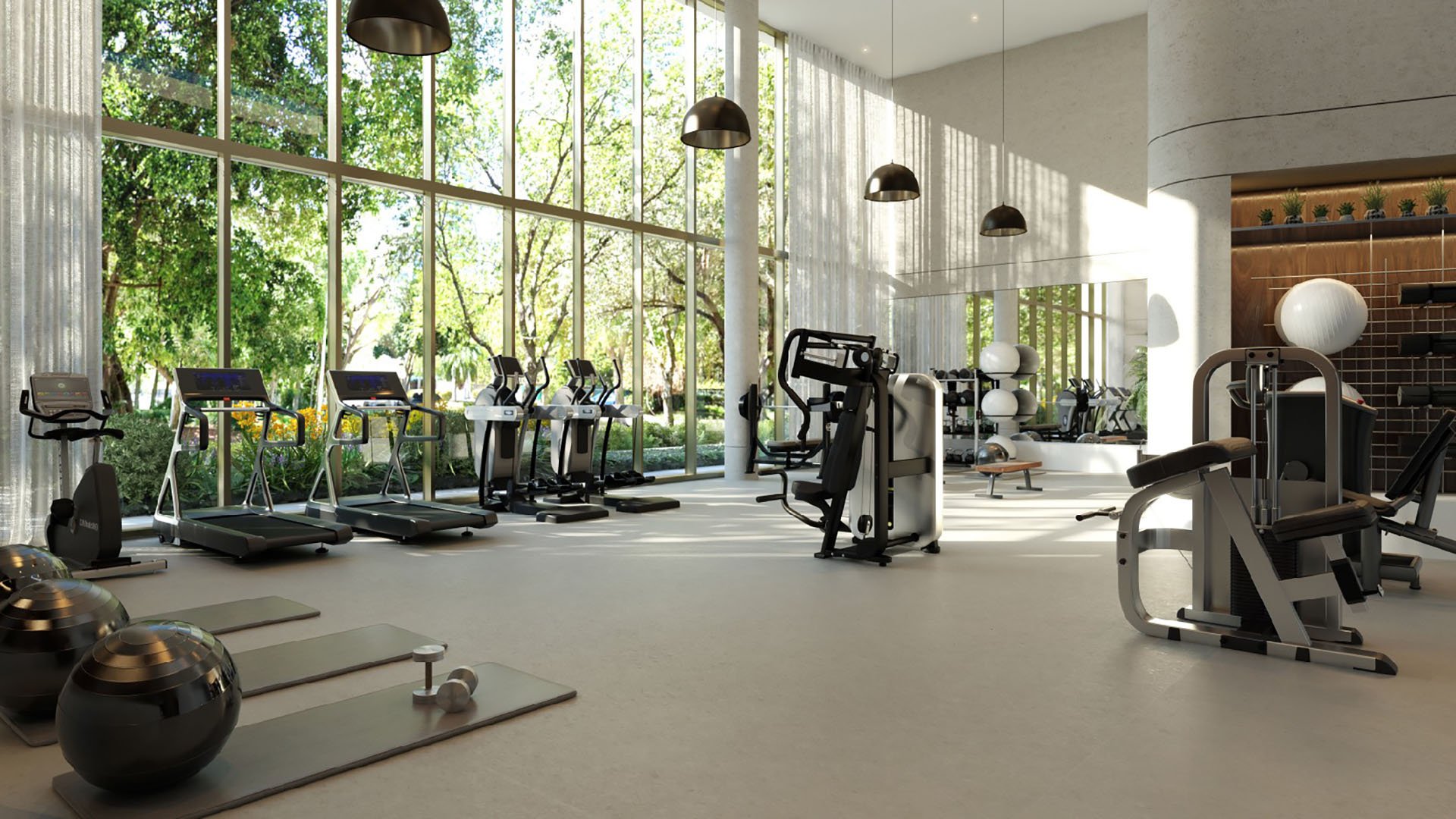
For a certain Brickell buyer, a gym is no longer enough. The affluent resident who once measured a building by its equipment room now asks a more exacting question: can the residence support sustained performance, privacy, recovery, and ease?
That shift matters in Brickell because the neighborhood is defined by velocity. Days begin early, meetings run long, flights are frequent, and social obligations often extend the workday rather than punctuate it. In that context, wellness is not an indulgence. It is infrastructure. The most compelling buildings are not simply adding amenities. They are trying to compress the best qualities of a private club, spa, recovery studio, and calm domestic retreat into the daily rhythm of home.
This is why buyers touring 2200 Brickell or comparing other new Brickell offerings often look beyond headline renderings. They want to understand the practical choreography: how quickly they can train, reset, shower, take a call, host discreetly, and return to the elevator without feeling that the building is working against them.
High-performance buyers are not all athletes, but many think like them. They are sensitive to friction. They notice the distance between the elevator and the spa. They ask whether a lap pool is actually useful in the morning. They care whether a treatment room feels serene or merely decorative. They distinguish between a beautiful amenity deck and a system that genuinely improves daily life.
The old luxury formula was accumulation: more rooms, more lounges, more equipment, more spectacle. The newer wellness formula is curation. A smaller, calmer, better-managed environment can feel more valuable than a sprawling amenity floor that photographs beautifully but functions poorly.
That is especially true for global buyers who split time between homes. When they arrive in Brickell, they want a building that helps them recalibrate quickly. The ideal residence does not require every restorative ritual to be outsourced to an off-site club or hotel spa. It brings enough of that capability home, with the discretion expected at the top of the market.
The gym remains important, but it has become the baseline rather than the differentiator. The more advanced conversation centers on recovery: heat, cold, stretching, quiet, breath, treatment, sleep, and low-stimulation spaces. Buyers are increasingly fluent in these categories, and they can tell when a wellness program is superficial.
A strong wellness environment recognizes that exertion is only one part of performance. The more valuable amenity may be the room that allows a resident to decompress after a difficult day, the pool that supports low-impact movement, or the spa sequence that creates a quiet transition between work and home.
In this sense, Brickell wellness has a design dimension as much as a health dimension. Materials, acoustics, lighting, privacy, and circulation matter. A serene room beside a noisy corridor is not serene. A treatment area that lacks privacy is not truly restorative. A wellness floor that feels crowded at peak hours loses the very advantage it is meant to provide.
The most sophisticated buyers apply what might be called the discreet use test. They imagine using the amenities on an ordinary Tuesday, not during a sales presentation. Would they feel comfortable arriving after a long flight? Can they move through the space without unnecessary exposure? Is the amenity likely to be available when they need it? Does the building feel like an extension of the residence, or like a public venue with private branding?
This is where Brickell’s luxury market becomes more nuanced. Projects such as Baccarat Residences Brickell are evaluated not only for name recognition, but for how the broader residential experience may support a polished, service-oriented lifestyle. The buyer is not merely choosing finishes. The buyer is choosing a daily operating environment.
Privacy also changes the way wellness amenities are valued. A resident may be willing to pay for spaces they use only occasionally if those spaces preserve discretion when it matters. A private treatment room, a quiet lounge, or a calm arrival sequence can carry outsized emotional value for someone whose public life is already highly exposed.
Brickell buyers increasingly appreciate hospitality-grade thinking, but they do not necessarily want to feel as if they live in a hotel. The distinction is subtle. Hospitality at home should mean anticipation, smoothness, and consistency. It should not mean lobby theater, excessive traffic, or a sense that private life is constantly staged.
This is why branded and service-forward residences must strike a careful balance. Cipriani Residences Brickell enters the buyer conversation through the lens of lifestyle and service, but the deeper question for any purchaser remains personal: does the building’s amenity culture match how they actually live?
For some, the ideal is a social wellness environment with places to meet friends after a workout or linger after a swim. For others, the ultimate luxury is invisibility: a quiet elevator ride, a reserved treatment, a restorative hour, and no unnecessary interaction. The best amenity programs understand that both preferences can exist in the same building when spaces are carefully separated and intelligently managed.
Wellness is also becoming a filter for long-term desirability. Buyers understand that amenity trends change, but the fundamentals of health-oriented living are durable: light, air, movement, water, privacy, and calm. These elements are not fads. They are conditions that support a more livable residence.
The mistake is assuming wellness value comes from the longest amenity list. In practice, the sharper question is whether the amenities are coherent. A building may offer impressive features and still feel disjointed if they do not connect to the way residents move through the property. The highest-value experiences are often the ones that feel inevitable, not theatrical.
When buyers compare St. Regis® Residences Brickell with other luxury options, they are often comparing a broader promise of service, privacy, arrival, and lifestyle. The wellness component sits inside that larger decision. It is not isolated from architecture, branding, management, or the emotional tone of the building.
A polished sales gallery can make any amenity program feel persuasive. Serious buyers should go further. Ask how the wellness spaces are accessed. Ask whether the most valuable rooms are shared, reservable, staffed, or self-directed. Ask how the building handles peak usage. Ask whether the design encourages daily use or simply occasional admiration.
It is also worth considering whether the residence itself supports wellness. Amenities can compensate for certain needs, but they cannot replace the basics of a well-conceived home: natural light, quiet bedrooms, usable terraces, efficient layouts, and a sense of retreat from the city below. The strongest Brickell residences connect private space and shared amenities into one coherent lifestyle.
That is why a project such as The Residences at 1428 Brickell belongs in the broader wellness conversation even when a buyer is not shopping solely by amenity count. The question is how the entire building experience supports clarity, energy, and control.
Brickell’s wellness conversation is maturing. The gym is still necessary, but it is no longer the headline for the most discerning buyers. They want places to recover, reset, breathe, focus, and move through the day with less friction. They want amenities that feel as considered as the residence itself.
For developers, that means wellness cannot be treated as a decorative layer. It must be operational, architectural, and deeply private. For buyers, it means looking beyond the brochure and asking whether the building will still feel restorative after the novelty fades.
The best wellness amenity is not always the most dramatic one. It is the one that quietly improves the day, again and again.
Why do Brickell buyers want more than a gym? Many luxury buyers now view wellness as part of everyday performance, not simply exercise. They want recovery, privacy, and calm built into the residential experience.
Are wellness amenities more important than views? Views remain highly important in Brickell. Wellness amenities add another layer of value when they improve daily comfort and convenience.
What makes a wellness amenity feel truly luxury? Privacy, ease of access, thoughtful design, and quiet operation matter more than novelty. The best spaces feel effortless to use.
Should buyers prioritize amenity quantity? Not necessarily. A coherent, well-managed wellness program can be more valuable than a long list of underused features.
How should investors think about wellness amenities? Wellness can support long-term appeal when it is tied to livability rather than short-term trends. Durable value comes from quality and usefulness.
Do all Brickell luxury buildings approach wellness the same way? No. Each building has its own balance of service, privacy, design, and social energy.
Is recovery more important than fitness equipment? For many high-performance buyers, recovery is increasingly central. Training matters, but rest and reset spaces can be equally valuable.
What should buyers ask during a tour? Ask how spaces are accessed, managed, reserved, and maintained. Also consider how they will function during peak hours.
Can wellness amenities replace a private club membership? They may reduce the need for some outside services, but the answer depends on the buyer’s routine. The best buildings complement, rather than imitate, private clubs.
What is the best way to shortlist comparable options for touring? Start with location fit, delivery status, and daily lifestyle priorities, then compare stacks and elevations to validate views and privacy.
If you'd like a private walkthrough and a curated shortlist, connect with MILLION.
If branded residences are on your mind — as a home or as an allocation — we would be glad to share what we are seeing, privately.
Begin a quiet conversation