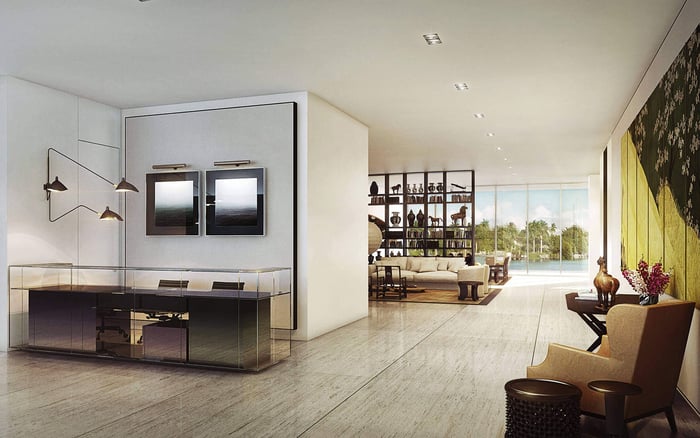
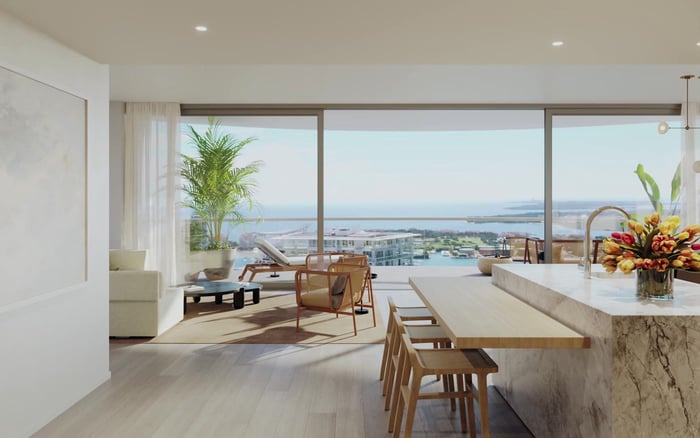
A discreet buyer’s guide to how founders can read Miami’s luxury residential map through workstyle, privacy, design, mobility, and long-term lifestyle fit.
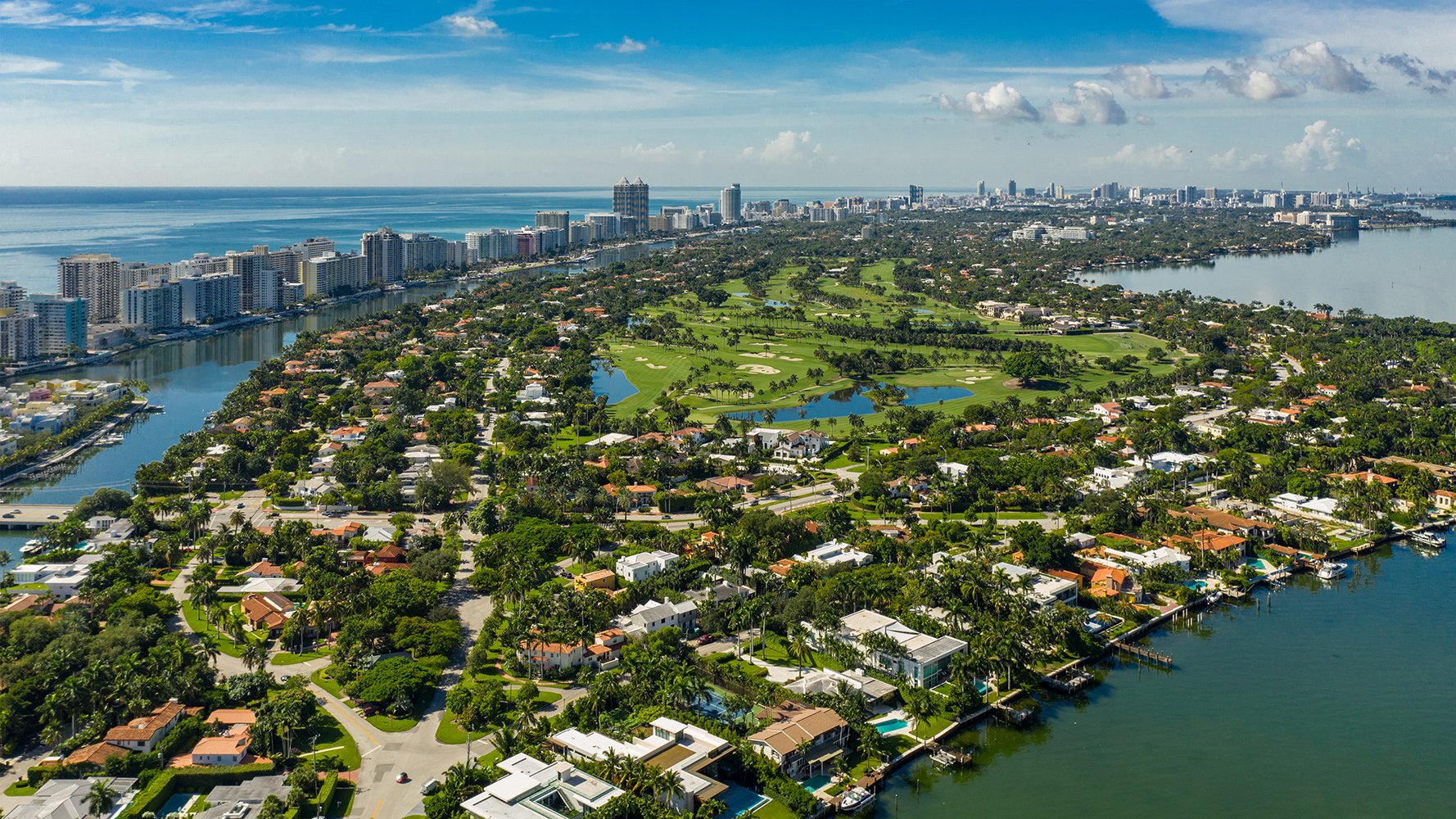
For founders looking beyond Silicon Valley, Miami is less a single destination than a set of highly specific operating environments. The right address is no longer chosen only by view, square footage, or brand. It is chosen by rhythm: where a principal takes early calls, where a spouse prefers to land after travel, where children may need consistency, where guests can be received without friction, and where privacy remains intact.
That is the new tech-wealth map. It is not a loud migration story. It is a quieter residential logic, one in which founders evaluate neighborhoods the way they evaluate companies: by use case, resilience, optionality, and long-term fit. In search shorthand, the map often resolves into Brickell, Downtown, Wynwood, Coconut Grove, Coral Gables, and Miami Beach. The real decision, though, is more nuanced than a neighborhood label.
For the luxury buyer, Miami’s advantage is choice. A founder can live in a glass tower near the financial core, a calmer village setting near the bay, a historic residential enclave, or a beachside environment that feels deliberately removed from the office. Each posture says something different about how work and life should meet.
That map also has a reported transaction backdrop, though each reference should be read as attribution from public-record trails and media reporting rather than definitive personal-ownership language. The Real Deal and Business Insider have linked Larry Page to three Coconut Grove homes, with public-record sale pages showing 3585 Anchorage Way at $101.5 million, 3085 Munroe Drive at $71.9 million, and 3320 Devon Road at $14.97 million between Dec. 29, 2025 and Jan. 21, 2026. Public-record sale pages show 6596 Allison Road in Miami Beach at $51 million on March 3, 2026, a buyer trail The Real Deal has linked to Sergey Brin, while closing reports have linked Mark Zuckerberg to a reported $170 million closing at 7 Indian Creek Island Road in Indian Creek on March 2, 2026.
Brickell and Downtown appeal to buyers who want a compact, service-rich day. The attraction is not merely height or skyline drama. It is the ability to compress decisions. A residence in this part of the city can support a schedule built around meetings, private dining, airport movement, wellness, and evening entertaining without forcing the owner to over-plan every transition.
For a founder who measures time as the ultimate asset, this vertical lifestyle has obvious appeal. Full-service buildings, bay-facing towers, and branded residential experiences can create a controlled base from which business and personal life move quickly. A buyer comparing The Residences at 1428 Brickell with Waldorf Astoria Residences Downtown Miami is not simply comparing architecture. They are weighing the texture of the day: arrival sequence, elevator privacy, entertaining potential, views, and the ease of returning home between obligations.
This is where the founder mentality becomes useful. The best purchase is not necessarily the most visible one. It is the one that removes friction. If the buyer’s calendar is intense, if visitors arrive frequently, and if proximity to the urban core matters, this zone can be a rational anchor.
Wynwood speaks to a different personality. It is less corporate in tone and more culturally charged. For founders who want proximity to creative energy, design conversations, restaurants, galleries, and a younger entrepreneurial pulse, the area can feel aligned with the way early-stage companies often live: fluid, informal, idea-driven, and visually aware.
A residence such as Frida Kahlo Wynwood Residences belongs in that broader conversation because some buyers want a home that feels close to cultural motion rather than insulated from it. This does not suit every principal. A family seeking deep quiet may look elsewhere. A founder who wants guests, collaborators, and creative peers nearby may find the neighborhood’s energy useful.
The key is to distinguish novelty from fit. A tech buyer should ask whether the area complements daily life after the first year. Is the surrounding environment inspiring on a Monday morning as well as on a Friday night? Does it support privacy when needed? Can the residence serve as a calm counterpoint to the street? These are the questions that separate a clever purchase from an enduring one.
Not every founder wants the home to feel like an extension of the office. Coconut Grove and Coral Gables offer a different kind of wealth signal: lower volume, more texture, and a sense of residential continuity. The appeal is emotional as much as practical. Mature streets, village-like routines, and a more private domestic atmosphere can create a reset from the velocity of company building.
For buyers considering Four Seasons Residences Coconut Grove, the attraction may be the balance between branded service and a softer neighborhood cadence. In Coral Gables, Ponce Park Coral Gables places the discussion in a setting associated with classic residential character and measured elegance.
This is where family considerations often become central. The buyer may care less about being seen and more about how a home supports everyday life. Morning routines, privacy, schools, household staff logistics, guest parking, and weekend patterns can matter as much as the view. For founders who have moved from intense professional environments, this quieter map can feel like the point of the move.
Miami Beach functions differently in the founder’s imagination. It can be a primary residence, but it also carries the psychology of escape. The water, the hospitality culture, the visual openness, and the sense of separation from the mainland create a residential mood distinct from Brickell, Downtown, or Wynwood.
A property such as The Perigon Miami Beach fits the buyer who wants the beach to be more than a weekend amenity. For some, that means a full-time address with a quieter emotional register. For others, it means a second home that can host family, partners, and friends in a setting that feels immediately decompressed.
The important distinction is frequency of use. A founder who will live in Miami Beach year-round should evaluate daily access, household logistics, and the ability to maintain routines. A buyer using the residence as a seasonal base may prioritize arrival, service, guest experience, and lock-and-leave simplicity. The same neighborhood can answer very different needs depending on the owner’s rhythm.
The most sophisticated buyers are not asking, “What is the hottest neighborhood?” They are asking, “Which address makes my life work better?” That question changes the conversation. It moves the focus from trend to function, from spectacle to fit.
A founder’s residential brief should begin with operating style. Is the home a headquarters, a sanctuary, a family compound, a hospitality platform, or a strategic second base? Each answer points to a different geography. The buyer who hosts investors may need a very different residence from the buyer who spends evenings with children and wants the city to disappear after sunset.
Privacy is another defining filter. In Miami, privacy is not only about gates or elevation. It is about arrival choreography, building scale, staff discretion, amenity design, and how easily guests can be received without exposing the household. A beautiful residence that fails this test may not suit a high-profile founder, no matter how strong the architecture appears.
Design should also be judged through durability. Ultra-modern finishes can be seductive, but the best homes for tech wealth are often those that can adapt. Flexible rooms, generous terraces, thoughtful service areas, strong storage, and spaces for both remote work and retreat become more valuable over time than a single dramatic gesture.
Finally, buyers should avoid treating Miami as a monolith. The city rewards precision. A few minutes in either direction can change the entire feeling of daily life. The smartest purchase is the one that aligns not only with wealth, but with temperament.
Miami’s new tech-wealth map is not defined by one neighborhood winning over another. It is defined by a more mature buyer psychology. Founders are learning to read the city through control, convenience, privacy, family, design, and emotional atmosphere.
For some, the answer is a tower in Brickell or Downtown. For others, it is the cultural edge of Wynwood, the residential calm of Coconut Grove and Coral Gables, or the softer horizon of Miami Beach. The luxury is not simply choosing Miami. It is choosing the version of Miami that lets life operate with greater clarity.
Why are founders considering Miami neighborhoods differently? They tend to evaluate homes through daily function, privacy, access, and lifestyle fit rather than prestige alone.
Is Brickell best for tech founders? Brickell can suit buyers who want vertical living, efficient routines, and proximity to the urban core.
How does Downtown differ from Brickell? Downtown can feel broader and more mixed in character, while Brickell often reads as more finance-oriented and residentially vertical.
Why might a founder choose Wynwood? Wynwood may appeal to buyers who value creative energy, design culture, and a less traditional urban atmosphere.
What makes Coconut Grove attractive to luxury buyers? Coconut Grove can offer a calmer residential rhythm with a softer neighborhood character near the bay.
Why consider Coral Gables? Coral Gables may appeal to buyers seeking classic residential character, privacy, and a more measured pace.
Is Miami Beach better as a primary or second home? It can work as either, depending on how often the owner will use the residence and what daily logistics require.
What should founders prioritize before buying? They should clarify whether the home is a headquarters, sanctuary, family base, or hospitality setting.
How important is building service? Service can be central for high-net-worth buyers because it affects privacy, arrivals, guests, and daily ease.
What is the best way to shortlist comparable options for touring? Start with location fit, delivery status, and daily lifestyle priorities, then compare stacks and elevations to validate views and privacy.
When you're ready to tour or underwrite the options, connect with MILLION.
If branded residences are on your mind — as a home or as an allocation — we would be glad to share what we are seeing, privately.
Begin a quiet conversation