A discreet look at the ultra-private buyer mindset shaping Indian Creek conversations, from security and scale to nearby luxury alternatives across Surfside, Bal Harbour, and Fisher Island.
The Mark Zuckerberg buyer profile is less about celebrity than about a new language of ultra-luxury acquisition. At the highest end of South Florida real estate, the question is no longer simply whether a property is large, beautiful, or waterfront. The sharper test is whether it can support a life defined by discretion, operational control, and a carefully managed perimeter.
Indian Creek holds a distinct place in that conversation because it is understood as a privacy-first environment. For buyers who think in terms of security, the appeal is not theatrical. It is quiet. The most coveted homes reduce friction: fewer public-facing exposures, greater control over arrival, more distance from casual attention, and a setting where the residence can function as both retreat and command center.
That is why the profile matters beyond any single famous name. It signals a broader migration in taste among principals, founders, family offices, and global families who view South Florida not as a seasonal indulgence, but as a base of operations.
That context became more concrete in public-record sale pages showing a reported $170 million closing at 7 Indian Creek Island Road in Indian Creek on March 2, 2026, with closing reports linking the transaction to Mark Zuckerberg. The reported price and address matter here less as celebrity proof than as an example of how security, scale, and controlled access are being priced at the very top of the market.
For the ultra-premium buyer, security is no longer an after-market layer added after closing. It is part of the architecture of desirability. The best properties are assessed through sightlines, setbacks, entries, dockage, vehicle movement, staff circulation, and the degree to which daily life can remain graceful while being protected.
That does not require a fortress-like aesthetic. In fact, the most sophisticated version of this market favors invisibility. Security works best when guests notice the landscaping, the water, the art, and the light before they notice the protocols. The ideal estate feels open to its owner and closed to the world.
The language around this search often includes oceanfront, waterview, gated-community, exclusive-area, and single-family homes, even when the final answer may be a condominium, a penthouse, or a compound-style alternative. The label matters less than the level of control.
Scale at this level is often misunderstood. It is not only a matter of interior volume or lot size. It is the ability to absorb complexity without making the home feel busy. A principal may need family quarters, guest accommodations, staff zones, wellness areas, offices, entertainment space, secure storage, and multiple modes of arrival. The best properties make that program feel natural.
Indian Creek logic rewards separation without isolation. A great plan allows a household to operate at several speeds at once: children at home, guests arriving, staff preparing an event, advisors meeting privately, and the owner moving between work, wellness, and family life without performance.
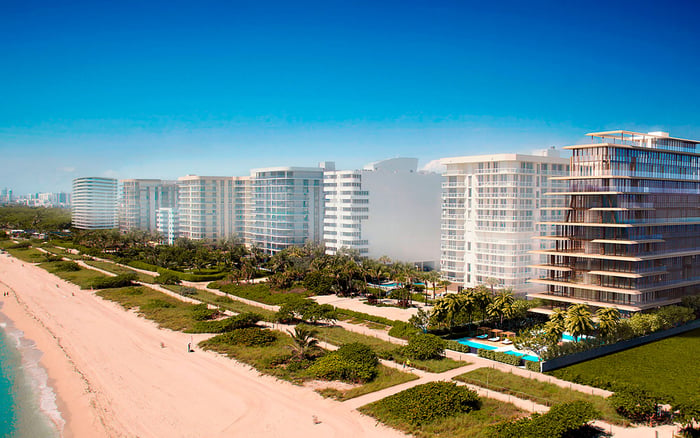
This is why surrounding markets have entered the same conversation. A buyer drawn to the privacy code of Indian Creek may also consider the architectural restraint of Arte Surfside, the boutique feel of Ocean House Surfside, or the newer large-format conversation around The Delmore Surfside. These are not literal substitutes. They are different answers to the same question: how much privacy can a buyer secure without giving up design, service, or proximity?
The modern privacy buyer reads the coastline as a series of micro-environments. Indian Creek represents one end of the spectrum: estate scale, guarded access, and a residential rhythm that prizes separation. Surfside offers a quieter oceanfront residential tone with immediate access to Miami Beach and Bal Harbour. Fisher Island adds another version of controlled arrival and community seclusion.
For some buyers, the right answer is a waterfront estate. For others, it is a lock-and-leave residence with staff depth, hotel-caliber service, and fewer operational burdens. The private-island buyer may also look at The Links Estates at Fisher Island when the objective is not merely square footage, but a highly managed residential environment.
This is the practical distinction. Privacy is not one product type. It is a spectrum. One buyer wants land and autonomy. Another wants guarded arrival, private amenities, and a residence that can be left for months without requiring a full estate infrastructure. The best advisors do not force these buyers into a category. They map the operational life first, then identify the real estate that supports it.
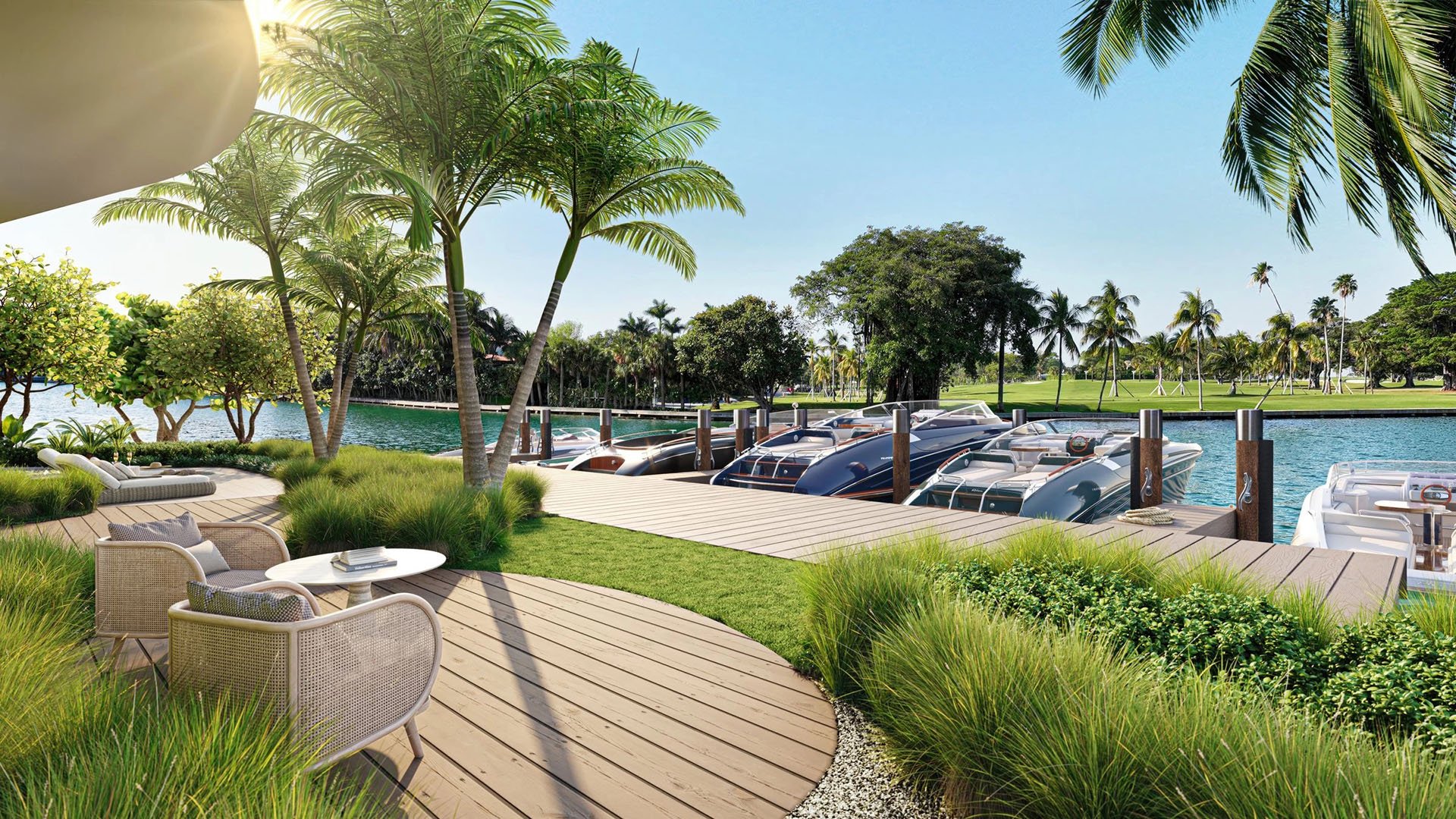
The technology buyer often thinks in systems. A home is not just a home. It is an interface between family, work, security, health, mobility, and reputation. That mindset changes the acquisition brief. A view matters, but so does network resilience. A dock matters, but so does controlled access. A trophy address matters, but only if it does not create unwanted exposure.
This is where the Mark Zuckerberg buyer profile becomes useful. It describes a purchaser who values optionality, redundancy, and strategic quiet. The property is expected to perform emotionally and operationally. It should host intimate family life, support high-level work, accommodate guests without chaos, and protect privacy without announcing the need for protection.
In this tier, overexposure can diminish enjoyment. The most desirable residence is often the one that gives its owner the greatest freedom to be ordinary inside an extraordinary setting.
A privacy-led purchase requires a different diligence lens. The first layer is physical: access, frontage, sightlines, neighboring conditions, and the relationship between indoor and outdoor living. The second is operational: staffing, maintenance, service circulation, hurricane preparation, and the ability to secure the property during travel. The third is social: how visible the residence is, how often the area attracts attention, and whether the community culture aligns with the buyer’s tolerance for recognition.
Exit strategy also deserves care. The more customized a property becomes, the more important it is to understand future liquidity. Ultra-private homes attract a narrow but powerful audience. The goal is to create or acquire something specific enough to be irreplaceable, yet not so idiosyncratic that the next buyer cannot see themselves living there.
This is where patience matters. At the top of the market, the best acquisition is often the one that never feels rushed. The buyer is not chasing inventory. The buyer is waiting for alignment.
The quiet premium is the amount a buyer is willing to pay for fewer compromises. Fewer eyes. Fewer access points. Fewer logistical problems. Fewer reasons to leave. It is not always visible in photography, and it is rarely captured by conventional comparisons.
For Indian Creek-minded purchasers, the premium attaches to peace of mind. That may mean estate land, water, distance, or a protected community culture. It may also mean a residence in Surfside, Bal Harbour, Miami Beach, or Fisher Island that provides a cleaner day-to-day experience than a larger but less manageable estate.
The future of South Florida luxury will be shaped by this logic. The most valuable homes will not simply be the most spectacular. They will be the ones that allow highly visible people to live privately, host elegantly, work securely, and move through the region with ease.
What is the Mark Zuckerberg buyer profile in real estate? It is a shorthand for a privacy-first buyer who values security, scale, discretion, and operational control as much as architecture or views.
Why does Indian Creek appeal to ultra-private buyers? It is associated with a guarded, residential environment where privacy and estate-style living are central to the ownership experience.
Is security now part of luxury design? Yes. At the highest level, security is evaluated alongside planning, landscaping, arrival sequence, and daily household flow.
Does every privacy buyer need a single-family estate? No. Some buyers prefer condominiums or managed residences that offer privacy, service, and reduced operational responsibility.
How does Surfside fit into this conversation? Surfside offers a quieter coastal setting near major luxury corridors, making it relevant for buyers who want discretion with oceanfront access.
Why is scale different from size? Scale is about how well a property supports complex living, including guests, staff, work, wellness, and family life without friction.
What should buyers review before pursuing a privacy-led property? They should evaluate access, sightlines, staffing needs, neighboring context, service circulation, and long-term maintenance demands.
Can a highly private property still be social? Yes. The best homes allow owners to host beautifully while keeping the mechanics of security and service discreet.
Is Fisher Island comparable to Indian Creek? It offers a different form of controlled residential living, with its own appeal for buyers who prioritize privacy and managed access.
What defines the next generation of South Florida trophy property? The defining qualities are privacy, resilience, design quality, service capability, and the ability to support a complex modern life.
To compare the best-fit options with clarity, connect with MILLION.
If branded residences are on your mind — as a home or as an allocation — we would be glad to share what we are seeing, privately.
Begin a quiet conversation