A discreet look at how founder wealth is influencing South Florida’s waterfront luxury market, from Brickell and Miami Beach to Surfside, Coconut Grove and Fisher Island.
In South Florida’s luxury market, the technology founder is no longer a novelty; it is a design brief. The buyer is often mobile, capital-efficient, privacy-conscious and unwilling to separate lifestyle from productivity. That combination is reshaping how waterfront homes are evaluated across Miami, Miami Beach, Surfside, Coconut Grove, Brickell and the more secluded islands of Biscayne Bay.
The old hierarchy was simple: frontage, view, address. Those elements still matter, but founder wealth has added new layers. Secure arrival, controlled visibility, wellness infrastructure, building services, marina proximity, family flexibility and the ability to host without feeling exposed now carry meaningful emotional weight. A residence is no longer just a trophy. It is a headquarters, retreat, gallery, family base and private club, often all at once.
That is why the conversation around repricing is not only about higher numbers. It is about a shift in what earns the premium. A perfect view without privacy can feel incomplete. A celebrated address without effortless service can feel dated. A large home without the right work, wellness and security sequence can feel less valuable than a better-planned residence with fewer obvious theatrics.
Recent public-record sale pages and media reporting give that trend a more concrete backdrop without reducing it to celebrity certainty. The Real Deal and Business Insider have linked Larry Page to three Coconut Grove residential purchases, with public-record sale pages showing 3585 Anchorage Way at $101.5 million on Dec. 29, 2025, 3085 Munroe Drive at $71.9 million on Jan. 5, 2026, and 3320 Devon Road at $14.97 million on Jan. 21, 2026. Public-record sale pages also show 6596 Allison Road in Miami Beach trading for $51 million on March 3, 2026, a buyer trail The Real Deal has linked to Sergey Brin, while a $170 million March 2, 2026 closing at 7 Indian Creek Island Road in Indian Creek has been linked to Mark Zuckerberg in closing reports.
Founder wealth tends to reward optionality. Buyers want to move between quiet mornings, investor calls, school runs, yacht weekends, wellness routines and private dinners without friction. Waterfront property answers that desire because it compresses beauty and utility into a single daily experience.
New construction is especially compelling when it offers modern mechanical systems, contemporary glazing, generous terraces, private elevators, controlled access and amenity programming that reduces the need to leave home. In this context, a building is not judged only by finishes. It is judged by how intelligently it protects time.
That is one reason Brickell remains part of the founder conversation. It offers a vertical, internationally legible lifestyle with dining, finance, design and bayfront energy close at hand. Residences such as The St. Regis Residences, Miami speak to buyers who want a polished urban base with hotel-caliber expectations and a recognizable waterfront rhythm.
Yet not every founder wants the same version of Miami. Some want proximity and skyline. Others want tree canopy, school access and an atmosphere that feels more residential than metropolitan. The most sophisticated buyers are not asking which neighborhood is best. They are asking which neighborhood best protects the way they live.
Brickell is the clearest fit for the founder who wants immediacy. It is dense, vertical and convenient, with a sense of global-city momentum. The appeal is not silence. It is access. A buyer choosing Brickell often wants a residence that functions as a command center, with water views, services and a polished arrival sequence that supports a fast-moving calendar.
Miami Beach offers a different proposition: cultural familiarity, ocean proximity and a resort-residential cadence. For buyers who divide time between coasts, countries or business ecosystems, Miami Beach can feel instantly legible. A project like The Perigon Miami Beach reflects the continued pull of beachfront living where architecture, views and discretion are central to the purchase decision.
Coconut Grove is quieter, more layered and more domestic. Its appeal is not only the bay, but the sense of rootedness. Mature landscaping, village-scale streets and a softer tempo make it attractive to buyers who want sophistication without constant spectacle. Four Seasons Residences Coconut Grove fits naturally into that conversation, pairing brand confidence with the Grove’s more private waterfront sensibility.
For founder families, this distinction matters. A residence must work on Tuesday morning as elegantly as it works on Saturday night. The best purchase is the one that reduces negotiation between ambition and ease.
At the uppermost end of the market, control becomes the luxury. Not only control in the obvious sense of gates and guards, but control over exposure, circulation, neighbors, access, water, staff movement and the transition between public and private life.
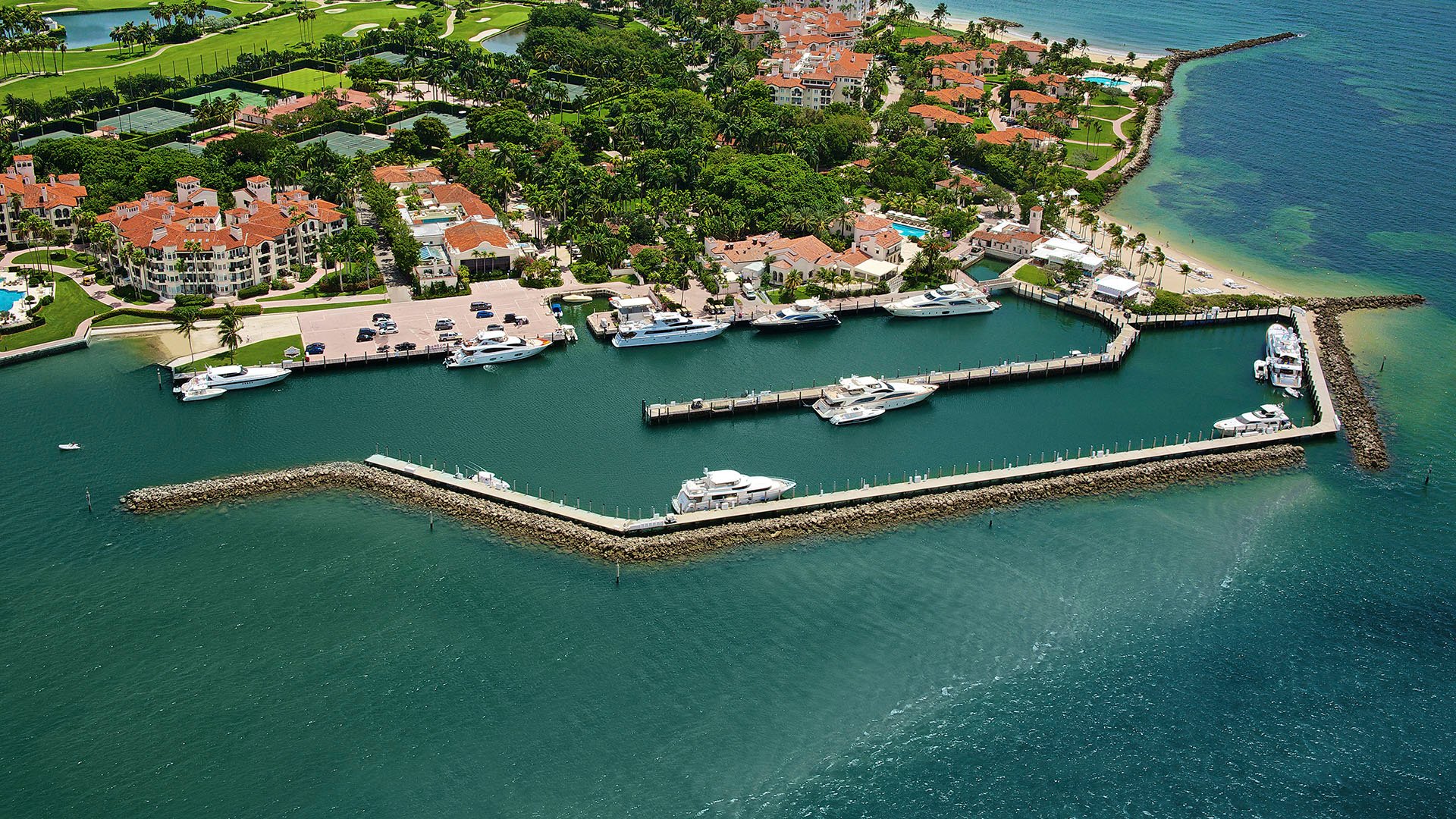
That is why island and near-island addresses carry such psychological force. Fisher Island remains shorthand for separation, privacy and a rarefied residential tempo. The Residences at Six Fisher Island sits within that broader idea of an enclave where the journey itself becomes part of the value proposition.
Surfside occupies another important lane. It is quieter than South Beach, more intimate than the city core and close enough to the energy of Miami while retaining a residential edge. The Delmore Surfside belongs to the category of addresses that appeal to buyers who want oceanfront presence without unnecessary noise.
For the founder buyer, scarcity is not simply a market condition. It is an operating advantage. Fewer comparable sites, fewer interchangeable views and fewer opportunities to reproduce the same privacy equation all strengthen the case for long-term ownership.
Sellers in waterfront enclaves should understand that founder wealth is discerning, not impulsive. The buyer may move quickly, but the evaluation is rigorous. Presentation must make the invisible visible: the quality of arrival, the privacy of bedrooms, the separation of guest and family spaces, the strength of outdoor living, the usability of dockage where relevant, and the credibility of the building or estate as a secure daily environment.
The strongest properties are not always the loudest. They are the ones that feel resolved. A founder buyer can forgive a cosmetic preference more easily than a flawed circulation pattern, weak service access or a terrace that photographs well but lives poorly.
Pricing strategy should therefore focus on irreplaceability. Waterfront alone is not enough. The question is whether the property gives a buyer something difficult to recreate: a protected view corridor, a rare location, a refined building culture, a graceful transition from car to residence, or a floor plan that supports both family and work without compromise.
For buyers, the first discipline is to define the operating lifestyle before touring. If the home is primarily a family base, Coconut Grove, Coral Gables-adjacent waterfront and select island settings may feel more natural. If it is an urban pied-à-terre with global connectivity, Brickell and Downtown Miami may be more efficient. If the priority is ocean, sand and a resort-like daily atmosphere, Miami Beach, Surfside and Sunny Isles deserve attention.
The second discipline is to underwrite privacy. Ask how guests arrive, how staff circulate, how deliveries are managed, how elevators open, how amenity spaces are shared and how visible outdoor areas are from neighboring buildings. Luxury that cannot protect privacy is only partially luxurious.
The third discipline is to think beyond the first impression. Founder buyers often excel at recognizing systems. Apply that same thinking to real estate. What will the residence feel like in five years? Can it support changing family needs? Does the building culture match the owner’s temperament? Is the waterfront experience passive, or does it genuinely change daily life?
South Florida’s most desirable enclaves are being repriced because the buyer pool is assigning greater value to time, privacy and lifestyle infrastructure. The winners will be residences that understand wealth not as display, but as freedom.
Why are tech founders drawn to South Florida waterfront homes? Many value privacy, warm-weather outdoor living, global access and residences that can support both work and retreat.
Is Brickell still attractive for founder wealth? Yes, for buyers who want an urban waterfront base with services, dining access and a polished vertical lifestyle.
Why does Miami Beach remain important to luxury buyers? Miami Beach offers ocean proximity, cultural familiarity and a resort-residential rhythm that appeals to mobile global owners.
What makes Fisher Island different from other enclaves? Fisher Island is associated with separation, privacy and a highly controlled residential environment.
How should buyers compare Surfside with Miami Beach? Surfside often feels quieter and more residential, while Miami Beach offers a broader mix of energy, culture and beachfront living.
Is Coconut Grove a fit for founder families? Coconut Grove can appeal to buyers seeking canopy, waterfront access and a more settled neighborhood atmosphere.
Does new construction matter more to this buyer profile? Often, because newer residences may better support privacy, wellness, technology, service and flexible daily use.
What is the biggest mistake buyers make in waterfront searches? They focus on the view before studying privacy, circulation, governance and how the residence will actually live.
Are branded residences part of the founder-wealth trend? They can be, particularly when the brand translates into service consistency, discretion and a well-managed ownership experience.
How should sellers position a waterfront property today? Sellers should emphasize irreplaceability, privacy, arrival experience and the property’s ability to protect time.
If you'd like a private walkthrough and a curated shortlist, connect with MILLION.
If branded residences are on your mind — as a home or as an allocation — we would be glad to share what we are seeing, privately.
Begin a quiet conversation