A discreet buyer’s framework for evaluating Miami luxury real estate through control, privacy, and optionality rather than spectacle or simple price comparison.
At the very top of the market, real estate is not simply a matter of square footage, finishes, or a postcard view. For buyers operating with Page-scale wealth, the sharper question is whether an acquisition increases control, protects privacy, and preserves optionality. Miami rewards that discipline because the city offers many expressions of luxury, from financial-district towers to quieter waterfront enclaves, each with its own balance of access and discretion.
This is not about mimicking any individual buyer. It is about understanding the psychology of extreme capital. The wealthiest purchasers tend to buy for outcomes rather than ornament. They want to decide who can see them, how easily they can move, how much friction exists between home and plane, how guests can be received without exposure, and whether the asset remains useful if life changes.
Public-record sale pages show a three-home Coconut Grove trail, $101.5 million at 3585 Anchorage Way on Dec. 29, 2025, $71.9 million at 3085 Munroe Drive on Jan. 5, 2026, and $14.97 million at 3320 Devon Road on Jan. 21, 2026, while The Real Deal and Business Insider have linked that trail to Larry Page. The reported $188.37 million total reinforces the article’s point: at this level, control is often built through multiple address-level options rather than a single public trophy.
In that framework, the best residence is not always the most visible one. It is the one that creates leverage over time.
For a high-net-worth buyer, control starts before a property is ever toured. The serious search is shaped by representation, confidentiality, ownership planning, timing, and internal decision rules. A buyer who has already defined what must remain private can move with far more confidence than one who reacts after interest becomes visible.
In Miami, this matters because luxury attention travels quickly. A public listing, a repeated showing, or a recognizably personal preference can all narrow a buyer’s negotiating posture. Discretion is therefore not cosmetic. It is strategic.
Control also means knowing which form of control matters most. Some buyers prioritize vertical control, such as privacy within a tower and separation from public areas. Others want neighborhood control, with fewer points of access and a quieter daily rhythm. Others care most about schedule control, where the residence functions as a base between business, family, travel, and entertainment.
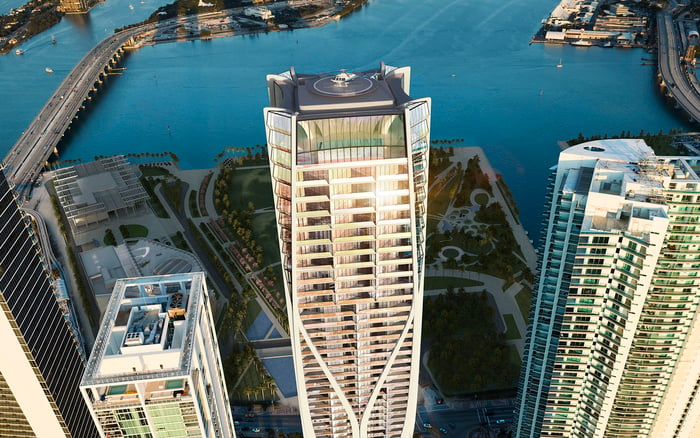
A buyer studying The Residences at 1428 Brickell, for example, is not only evaluating Brickell. The more sophisticated question is whether that address supports a controlled urban life, close to the center of activity yet still shaped by personal boundaries.
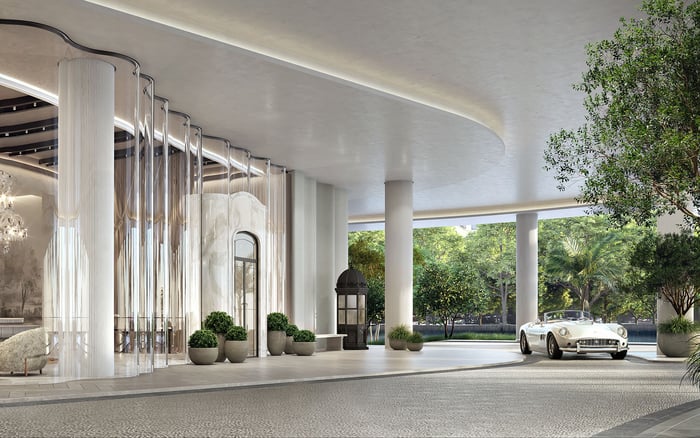
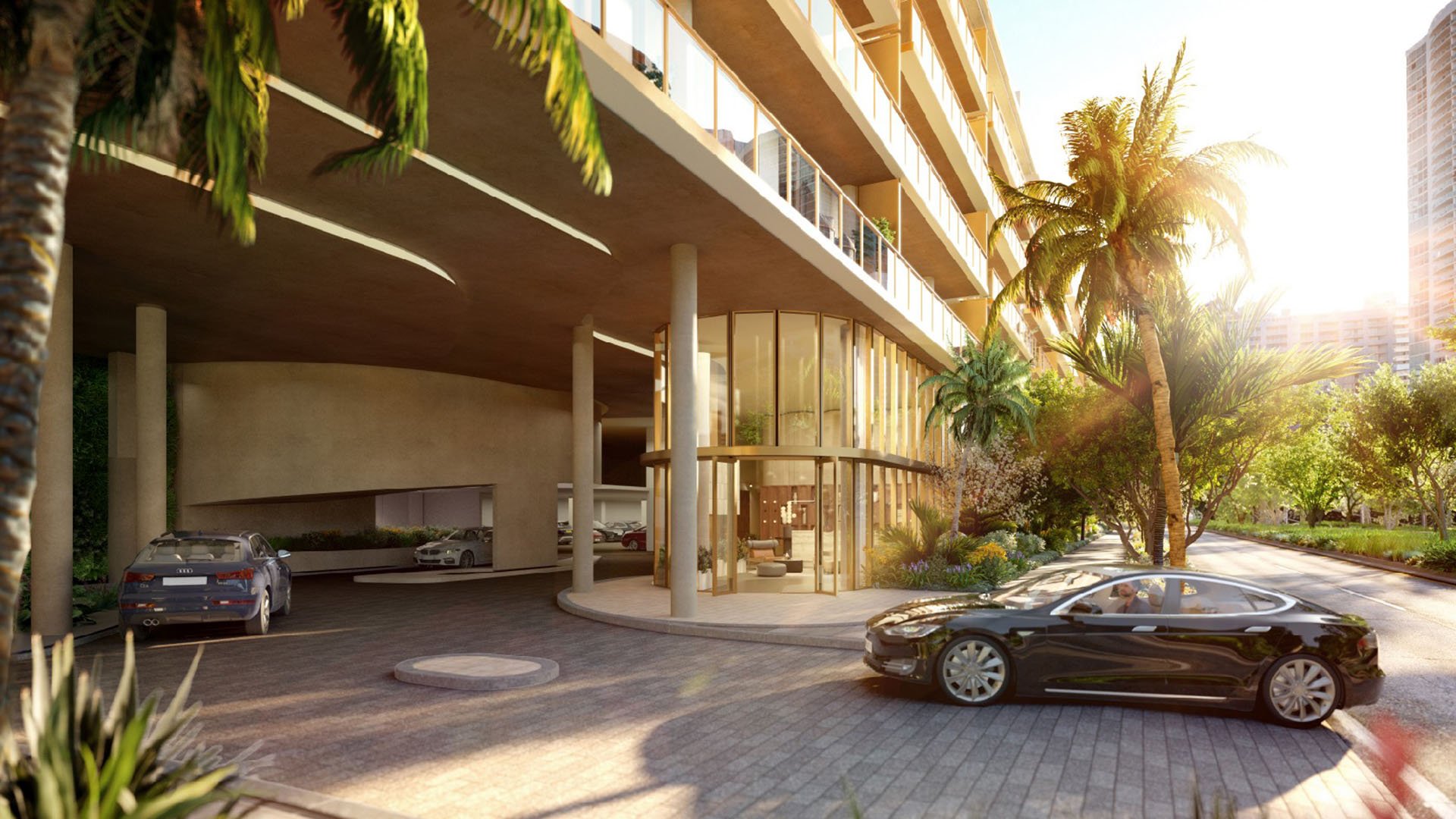
Privacy is often marketed as a feature, but at the highest level it is a system. It includes arrival sequence, elevator logic, staff circulation, guest flow, service access, acoustic separation, amenity design, and how easily a resident can live without becoming part of the building’s social theater.
That is why two residences with similar views can feel entirely different to the same buyer. One may photograph beautifully but require too much exposure to enjoy. Another may be less theatrical yet far easier to inhabit quietly. Privacy is not the absence of neighbors. It is the ability to choose when to be visible.
In Miami Beach and Surfside-adjacent conversations, this often becomes a study in atmosphere. The right building should let the owner host elegantly, return home without ceremony, and maintain personal rhythm. A residence such as The Perigon Miami Beach may enter a buyer’s consideration not because every buyer wants the same lifestyle, but because the coastal setting invites a more deliberate analysis of retreat, access, and exposure.
Pool, wellness, dining, and lounge spaces can either enhance privacy or dilute it. The difference is not just the amenity itself, but how it is used, where it sits, and whether the resident can engage without performing.
The old trophy purchase was about being seen. The modern ultra-premium purchase is increasingly about being able to pivot. Optionality means the property can serve multiple future scenarios: primary residence, seasonal base, family gathering point, work retreat, guest residence, or long-term hold.
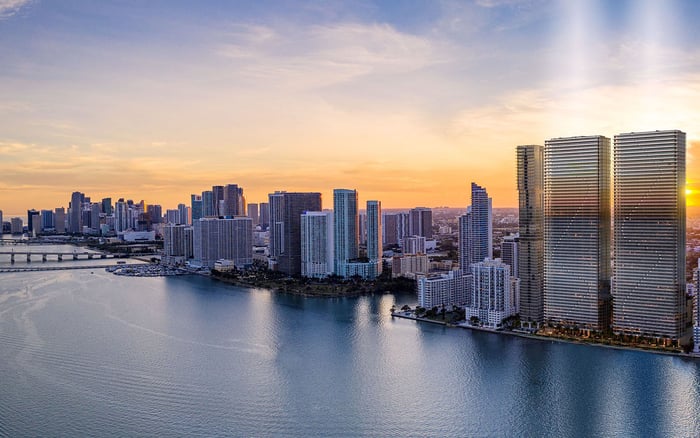
Optionality also applies to geography. A buyer may love the energy of Downtown but still want access to quieter evenings in Edgewater, Coconut Grove, Aventura, or the beaches. The best Miami strategy is rarely one-size-fits-all. It is a portfolio of personal use cases.
Consider Villa Miami in Edgewater. The buyer is not merely asking whether the view is compelling. The deeper question is whether the location supports a flexible Miami life, with access to culture, dining, waterfront calm, and the broader city without locking the owner into one identity.
Downtown can serve a different purpose. A purchaser looking at Waldorf Astoria Residences Downtown Miami may be thinking about a vertical address with strong city connectivity, while still considering how often the residence will be used, who will manage it, and how it fits into a wider global pattern of movement.
Investment at this level should not be reduced to a resale spreadsheet. Capital preservation matters, but so does the cost of inconvenience, the risk of unwanted visibility, and the opportunity cost of buying a property that cannot adapt.
A disciplined buyer asks several questions. Can the residence be held quietly? Does the building culture match the owner’s desired level of engagement? Is the floor plan flexible enough for changing household needs? Does the location remain useful across different seasons of life? Can the owner arrive, entertain, work, rest, and leave with minimal friction?
Aventura illustrates another kind of optionality. It can appeal to buyers who want access to North Miami-Dade, shopping, marinas, schools, family networks, and regional movement without committing exclusively to the beach or the financial core. A project such as Avenia Aventura can therefore be viewed through a practical lens: how well does the address support the buyer’s actual patterns rather than an abstract idea of prestige?
The most sophisticated luxury buyers do not confuse attention with strength. They prefer assets that work even when no one is watching.
Before choosing a residence, the ultra-premium buyer should define three non-negotiables.
First, control: who enters the property environment, how movement is managed, and whether daily life can be conducted on the owner’s terms. Second, privacy: whether the residence protects personal identity, family routine, guests, and staff operations. Third, optionality: whether the property remains useful if business, family, tax residency, travel, or lifestyle priorities change.
This filter can clarify decisions across Brickell, Edgewater, Downtown, Aventura, the beaches, and more secluded waterfront settings. It shifts the conversation from “Which property is impressive?” to “Which property gives the owner the greatest command of time, movement, and information?”
That is the core lesson. At the highest end, Miami real estate is not about buying more. It is about needing less permission.
What does Page-scale wealth mean in a Miami real estate context? It refers to a level of buying discipline where control, privacy, and optionality matter more than public display or simple trophy value.
Why is control so important for ultra-luxury buyers? Control helps a buyer manage timing, access, negotiation posture, daily movement, and the visibility of personal decisions.
Is privacy only about gated homes? No. Privacy can exist in towers, waterfront residences, and urban settings when arrival, circulation, amenities, and service access are designed thoughtfully.
How should a buyer compare Brickell with quieter areas? Brickell may suit buyers who want urban proximity, while quieter areas may better support retreat, family rhythm, or lower daily visibility.
What makes optionality valuable? Optionality lets a residence serve different future uses, from seasonal living to family gathering, business travel, or long-term holding.
Should a buyer prioritize views or privacy? The strongest purchase balances both, but privacy often determines how comfortably the residence can be used over time.
Can a condo offer enough discretion for major wealth? Yes, if the building’s access, service patterns, resident culture, and private spaces align with the buyer’s expectations.
Why does building culture matter? Building culture shapes whether residents feel discreetly served, socially exposed, overly managed, or comfortably independent.
Is investment value only about appreciation? No. For ultra-premium buyers, investment value also includes privacy, flexibility, ease of use, and the ability to hold quietly.
What should buyers decide before touring properties? They should define confidentiality needs, ownership structure preferences, lifestyle priorities, and the level of visibility they will accept.
For a confidential assessment and a building-by-building shortlist, connect with MILLION.
If branded residences are on your mind — as a home or as an allocation — we would be glad to share what we are seeing, privately.
Begin a quiet conversation