In Bal Harbour, the choice between a delivered oceanfront address and a pre-construction “sky villa” concept comes down to timing, deposits, operating costs, and tolerance for construction drift. This MILLION Luxury guide compares Oceana Bal Harbour’s resale reality with Rivage Bal Harbour’s milestone capital staging, and offers a buyer-oriented framework for underwriting both.

Bal-harbour buyers rarely shop for “a condo.” They shop for an outcome: true oceanfront privacy, service that runs on a predictable cadence, and a capital plan that aligns with how wealth is actually deployed. In this pocket of South Florida, the conversation keeps circling two very different routes to the same address-level prestige.
One route is a delivered, fully operating building such as Oceana Bal Harbour, completed in 2017 and designed by Arquitectonica. The other is a pre-construction thesis such as Rivage Bal Harbour, an oceanfront project at 10245 Collins Ave with architecture by Skidmore, Owings & Merrill and a multi-year horizon marketed publicly around 2027.
This is not primarily an aesthetic debate. It is a Resale versus Pre-construction decision, and the dominant risk shifts accordingly. With resale, your main exposure is today’s market pricing. With pre-construction, calendar timing and milestone obligations move to the front of the underwriting.
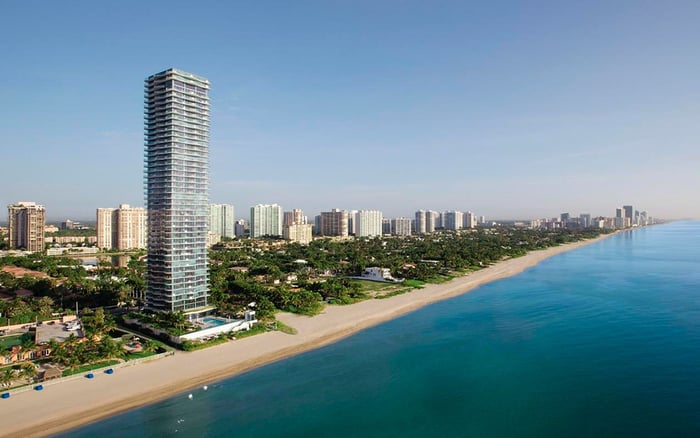
Oceana is an oceanfront condominium delivered to owners in 2017. It rises 28 stories and includes 240 residences, a meaningful unit count for Bal Harbour. For many buyers, that scale translates into an established operating rhythm: a visible owner community, a settled pattern of staffing and service, and fewer unknowns about how the building actually lives day to day.
Because the building is delivered, the transaction typically follows conventional resale mechanics. You can contract, complete diligence, and close on a standard schedule rather than waiting for construction milestones. The advantage is straightforward: immediacy. You are buying a product you can tour, inspect, and evaluate as it exists now.
From a capital perspective, Oceana’s development era is well documented, including reported developer financing such as a $332 million construction loan during its creation. For a buyer today, that is less a forward risk factor and more a reminder that you are stepping into a stabilized asset, not underwriting a promise that still needs to be built.
The trade-off is also clear. In a mature, coveted oceanfront address, resale pricing is typically tethered tightly to current market conditions. You are not locking a pre-construction basis years in advance. You are paying for certainty, views, and a known level of finish and operations.
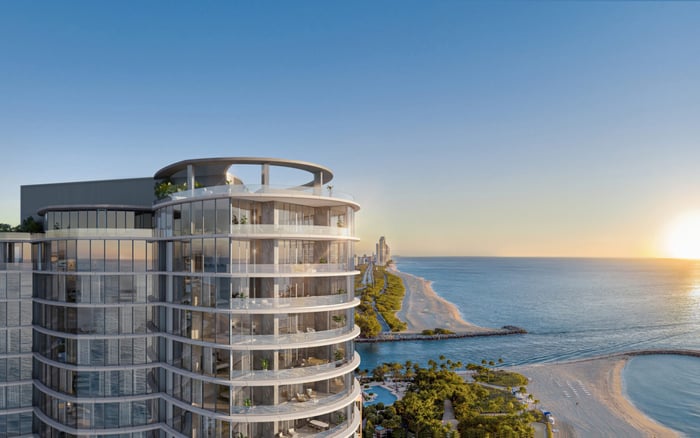
Rivage is positioned publicly as a low-density “sky villa” concept, with marketing that commonly cites roughly 56 residences. Development is by Related Group, Two Roads Development, and Rockpoint, and publicly reported financing includes a $424 million construction loan.
The buyer experience is milestone-driven by design. Rivage’s published deposit schedule is 20% at contract, plus 10% at groundbreaking, plus 10% at top-off, with the remaining 60% due at closing. Put simply, a buyer typically stages 40% before the building is ready to close.
That structure can appeal to buyers who prefer phased capital deployment instead of a single, near-term closing event. At the same time, it requires discipline: those deposits are committed while the move-in date remains tied to construction progress and the definitions embedded in the contract.
Rivage also publicly discloses an estimated HOA or maintenance figure of about $2.10 per square foot. By Miami condo standards, that is a serious recurring line item. For larger residences in particular, the annual operating burden can rival or exceed the impact of small shifts in purchase price. It is not a footnote. It is part of the decision.
Most ultra-prime buyers can afford either option. The more relevant question is what kind of liquidity story you want to tell, and how much capital you are willing to have committed while time does its work.
With resale, the timeline is compressed. You are typically working toward one closing event, with cash or financing arranged around a defined date. With pre-construction, you are intentionally stepping into a multi-year schedule, and you are tying up substantial capital long before keys are delivered.
Rivage’s milestone structure is typical of Miami pre-construction practice: a contract deposit, additional deposits tied to construction events, then a large final payment at closing. The nuance is that “time in escrow” can lengthen if milestones shift. That extends opportunity cost, which should be modeled alongside any other carry item.
For buyers who keep capital actively working, opportunity cost is not theoretical. It is part of the return profile. A clean underwriting treats it with the same seriousness as taxes, maintenance, and insurance.
Even sophisticated buyers can underestimate how personal the calendar becomes. A delivery marketed around 2027 sounds like a simple wait until you layer in seasonal usage, staffing plans, school transitions, and the practical reality that “top-off” and “closing” are defined by contract language.
This is where a delivered building like Oceana can win decisively on lifestyle certainty. You can plan occupancy, renovations, and day-to-day use now. Your decisions are anchored to what is already operating.
Rivage can work exceptionally well for buyers with flexible timing, or for those who want to secure a future Bal-harbour position while maintaining a primary residence elsewhere. In that scenario, you are buying optionality and future product freshness, but you must be comfortable with the long runway.
If you need to bridge the years, some buyers temporarily prioritize turnkey service in Miami-beach. For example, Setai Residences Miami Beach and The Ritz-Carlton Residences® Miami Beach sit in a different neighborhood cadence and operating profile, but they illustrate a practical strategy: align short-term living comfort with long-term acquisition timing.
Luxury ownership is rarely undone by purchase price alone. It is more often undone by an annual cost model that was too optimistic.
Rivage’s disclosed estimated HOA of approximately $2.10 per square foot should be treated as a diligence starting point, not a guarantee. Still, it signals what seasoned buyers already know: low residence counts and amenity-forward positioning can push per-unit operating burdens higher.
Rivage markets around 25,000 square feet of resort-style amenities. That level of programming is part of the appeal, and it must be funded through ongoing operations.
A delivered building like Oceana offers an advantage that is hard to replicate on paper. You can observe staffing levels, evaluate service delivery, and get a real feel for the property’s tone. While every building evolves, you are making decisions from evidence, not projections.
Bal-harbour and Surfside remain among the most watched micro-markets in South Florida because supply is constrained and demand is global.
In a Q3 2025 luxury condo market report covering Surfside plus Bal Harbour, activity was described as strong, including a reported 50% year-over-year sales increase. The same report cited $1,297 per square foot for Surfside plus Bal Harbour and approximately 4.5% year-over-year growth in price per square foot.
For a buyer choosing between resale and pre-construction, those figures reinforce a key idea: price discovery is ongoing. Resale pricing is marked to today’s market. Pre-construction pricing is a bet on where the market will be when the building delivers, with the additional overlay of time and carry.
In Florida, condominium buyers generally have a 15-day rescission or cooling-off right after receiving the condo documents, allowing cancellation within that statutory window. This protection is meaningful, and it is time-sensitive. High-performing buyers treat it like an institutional diligence sprint.
Deposit handling is also part of the risk-management story. Pre-construction guides commonly discuss that certain buyer deposits are required to be held in escrow under Florida condominium rules. The details that matter are in the purchase agreement itself: how escrow is structured, when funds may be released, and what constitutes default.
For Rivage, the published deposit schedule is easy to quote, but the contract controls the definitions that matter, including timing triggers, milestone mechanics, and remedies. For Oceana, the emphasis shifts to resale contract terms, condominium disclosures, and the practical realities of inspections and financing timelines.
A simple way to decide:
If your priority is certainty of use, buy delivered. Oceana supports immediate occupancy and gives you a clearer view of how the building operates in real life.
If your priority is product freshness and long-range positioning, and you can stage capital over time, Rivage offers a structured path with milestone deposits and a low-density concept.
If you want oceanfront now but are still shaping your long-term Bal-harbour thesis, consider a temporary Miami-beach plan in an established coastal address like 57 Ocean Miami Beach while you maintain optionality.
Ultimately, the right answer is the one that matches your calendar, your liquidity preferences, and your tolerance for the two central risks: market repricing versus construction timing.
What is the clearest difference between Oceana and Rivage? Oceana is delivered and trades as Resale; Rivage is Pre-construction with milestone deposits tied to construction.
How many stories is Oceana Bal Harbour? Oceana is a 28-story oceanfront condominium.
When was Oceana completed? Oceana was completed in 2017.
Who designed Oceana? Oceana was designed by Arquitectonica.
Where is Rivage Bal Harbour located? Rivage is at 10245 Collins Ave in Bal Harbour.
Who is developing Rivage? Rivage is being developed by Related Group, Two Roads Development, and Rockpoint.
What is Rivage’s published deposit schedule? 20% at contract, 10% at groundbreaking, 10% at top-off, and 60% at closing.
How much is typically deposited before closing at Rivage? Based on the published structure, buyers typically deposit 40% before closing.
What HOA level has Rivage estimated publicly? Rivage has disclosed an estimated HOA or maintenance of about $2.10 per square foot, which can materially affect carrying costs.
What buyer protection exists after receiving condo documents in Florida? Florida condo buyers generally have a 15-day rescission period after receiving the documents.
For private guidance on Bal-harbour strategy, contact MILLION Luxury.
If branded residences are on your mind — as a home or as an allocation — we would be glad to share what we are seeing, privately.
Begin a quiet conversation