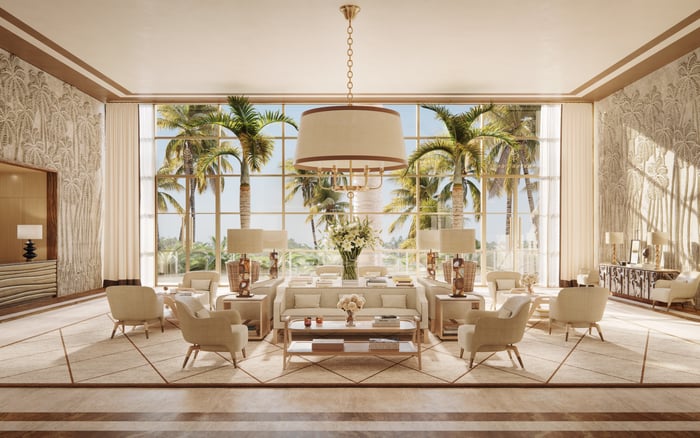
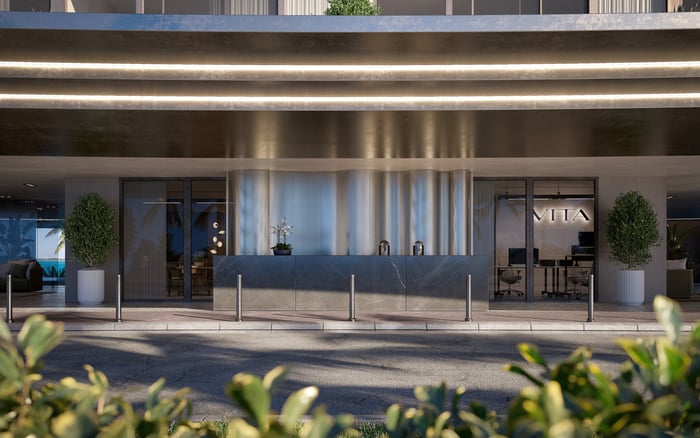
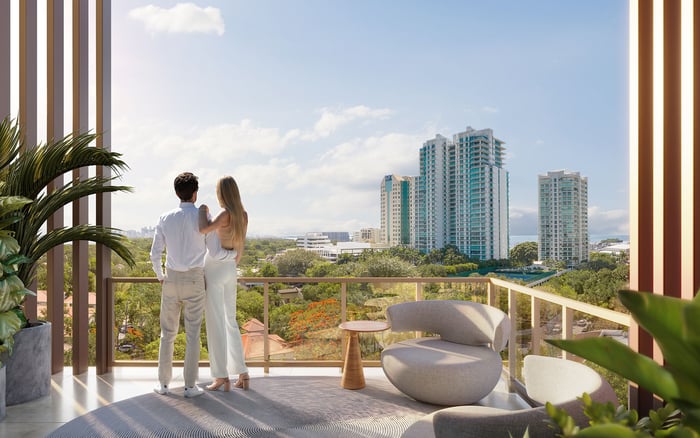
In South Florida’s luxury market, “amenities” are only half the story. For buyers who host often, travel frequently, or maintain a second residence, the more decisive question is operational: how does the building handle arrivals, deliveries, vehicles, and the quiet logistics of everyday hospitality? Using publicly reported details, this MILLION Luxury editorial looks at two distinct Coconut Grove archetypes: a new, green-certified boutique concept and an established multi-tower bayfront community with event-forward lifestyle infrastructure. The goal is not to crown a single winner, but to clarify what to prioritize before you buy.
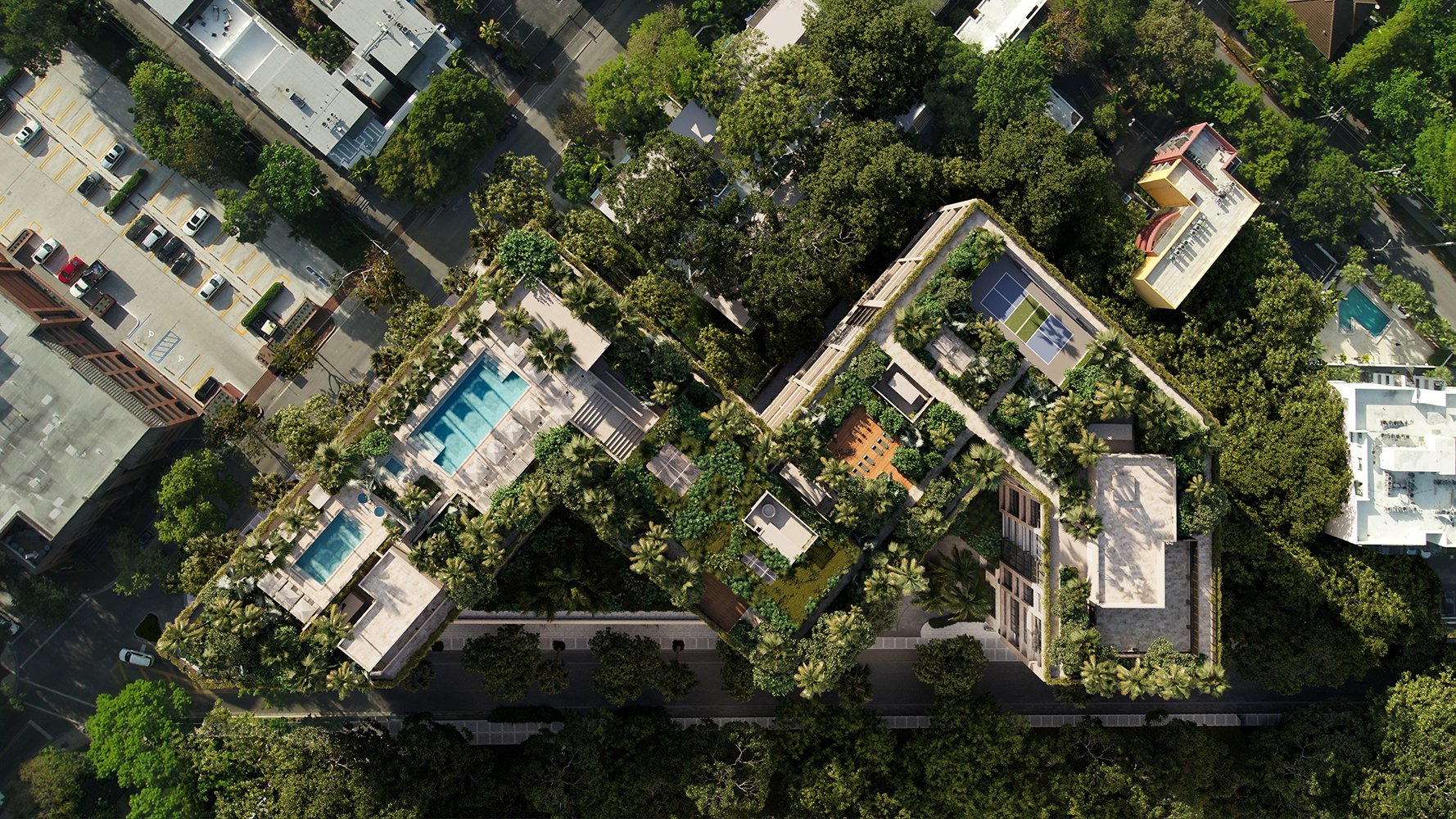
Luxury buyers in South Florida are increasingly evaluating a residence the way an experienced host would. Ceiling height and sightlines still matter, but the deciding factor often lives in the logistics: do guests feel welcomed without fanfare, and does your day stay smooth when arrivals, deliveries, and spontaneous plans stack up?
In Coconut Grove, that host-forward lens is especially useful because the neighborhood offers two distinct luxury experiences. One is an intimate, boutique building that can function like a private club with keys. The other is an established, multi-building bayfront community where residents tap into a broader ecosystem for dining, gatherings, and lifestyle storage.
This is also where new construction can carry real appeal. Newer buildings are more likely to treat service flow, EV infrastructure, and package handling as core systems, not add-ons.
Coconut Grove’s current luxury conversation can be framed through two widely covered examples.
First is The Lincoln Coconut Grove, a green-certified condominium planned at 2650 Lincoln Avenue. It is positioned as an 8-story boutique building with 48 residences and a “full service” amenity program marketed to include a 24/7 attended lobby with concierge-style services. In practice, this signals a building designed to manage the small moments that shape a stay: greeting a car, receiving a delivery, or helping a guest who arrives early.
Second is Park Grove Coconut Grove, a three-tower luxury condominium community on South Bayshore Drive, commonly referenced as One Park Grove, Two Park Grove, and Park Grove Club Residences. Widely reported totals place the community at 284 residences. It is marketed with concierge and front-desk services and valet parking, and it leans into hosted lifestyle infrastructure including private dining or event dining space, a private screening room, and wine storage amenities.
At a high level, the contrast is straightforward: the boutique model prioritizes discretion and speed, while the campus model prioritizes options and scale.
A truly guest-ready building consistently choreographs three moments: arrival, access, and departure.
Arrival is where service either feels effortless or becomes visible in the wrong way. Valet parking is a telling signal because it reduces the cognitive load for residents and visitors alike. The Lincoln markets valet as part of day-to-day convenience, and Park Grove similarly promotes valet as part of its arrival experience. For frequent hosts, the value is not status. It is timing, predictability, and the ability to welcome someone without managing the curb.
Access is the second moment. A 24/7 attended lobby, as The Lincoln markets, suggests someone is always present to receive guests and support the “soft security” many luxury buyers prioritize. In larger communities, concierge and front-desk services can provide comparable reassurance, but the lived experience can vary with peak hours, guest volume, and protocols.
Departure is where operational polish shows up. Packages, forgotten items, and last-minute pickups are common in households that host. A dedicated package or parcel receiving room, like the Lincoln includes, signals that deliveries are treated as a system, not a nuisance. It also helps the building maintain a calm lobby and a controlled flow of handoffs.
Luxury buyers often focus on closet count, yet hosting is shaped by what the building can hold outside the residence.
The Lincoln markets private storage options beyond in-unit closets, along with secure bicycle storage or a dedicated bike room. In Coconut Grove, that can matter more than it sounds. Residents are as likely to bike to a casual dinner as they are to drive, and keeping bikes and gear out of the unit helps the home stay clean, organized, and guest-ready.
Park Grove’s amenity mix illustrates how storage becomes lifestyle. In addition to bicycle storage, it advertises water-sports storage such as kayak or paddleboard storage, aligning with its bayfront positioning. Wine storage amenities matter in a specific, practical way: they allow entertaining supplies to live offstage. Even without an expansive collection, having space for cases, longer-term bottles, or rotation keeps the residence visually calm while still supporting deliberate hosting.
For many buyers, storage is the difference between a residence that photographs beautifully and a residence that functions beautifully.
In high-end living, parking rarely reads as glamorous, yet it is one of the most frequent daily touchpoints.
The Lincoln is marketed with 88 parking spaces serving its 48 residences, roughly 1.8 spaces per unit. Exact allocations can vary by unit type and building rules, but the headline number suggests a plan that anticipates multi-car households, staff or vendor visits, and guest convenience. It also promotes EV-capable or EV-ready infrastructure, an increasingly baseline expectation for buyers who want optionality without future retrofits.
Even in a building with valet, underlying capacity still matters. It shapes guest flexibility, contractor access, and how smoothly a household operates during seasonal peaks.
The most common mistake in luxury buying is assuming that “full service” means the same thing everywhere.
In a boutique environment like The Lincoln’s positioning, the value proposition is typically intimacy and reduced friction: fewer residences to manage, a more private lobby feel, and services that can read as more personal. For buyers who travel often, it can also mean fewer variables. Preferences are easier to remember, and routines are easier to protect.
In a multi-tower community like Park Grove, the value proposition tilts toward breadth. Private dining or event dining spaces and a screening room extend your hosting footprint beyond your residence. For households that entertain frequently, that can be the quiet luxury: keeping the home serene while still having a place to gather a larger group.
Neither approach is inherently better. The better fit is the one that aligns with how you want to live, host, and move through the Grove.
Even committed Coconut Grove buyers often compare their shortlist against Miami Beach, especially when the purchase also functions as a second home or a lock-and-leave base.
Miami Beach can appeal for different reasons: walkability patterns, beachfront adjacency, and a social cadence that feels more arrival-driven. When a calendar splits between Grove dinners and Beach weekends, it is common to see buyers compare newer inventory like Five Park Miami Beach while still preferring the Grove’s residential calm for primary living.
Within Coconut Grove itself, buyers also look at other branded or lifestyle-led addresses to calibrate service expectations. For example, Mr. C Tigertail Coconut Grove is often considered by purchasers who prioritize a hospitality-leaning experience, even when final decisions hinge on floorplan fit and governance.
The takeaway is simple: you are not just buying a residence. You are choosing a service philosophy.
Before falling in love with a model unit, align the building with your household’s real life.
Start with operations. Ask how the front desk handles guest registration, after-hours arrivals, and vendor access. Confirm package handling in detail, especially if you shop frequently or travel. If you entertain, understand the rules around common-area reservations and any private dining or event spaces.
Then move to mobility. Clarify parking rights, guest parking procedures, and how valet integrates with your routine. If EV readiness matters, ask what “EV-ready” means in practice for your household and timeline.
Finally, scrutinize storage. Bike rooms, private storage options, and lifestyle storage such as wine lockers or water-sports storage can determine whether the home feels curated or crowded.
What does “green-certified” signal for a luxury buyer? It typically signals a focus on efficiency and building standards, which many buyers value for long-term comfort and operational discipline.
How large is The Lincoln Coconut Grove concept as publicly reported? It is reported as an 8-story boutique building with 48 condominium residences.
What service element is most important for frequent hosts? A consistently attended lobby or concierge function, because it governs arrivals, access, and everyday requests.
Does The Lincoln Coconut Grove include dedicated package handling? It is described as including a package or parcel receiving room.
What parking considerations should buyers prioritize first? Start with rights and procedures: assigned spaces, guest handling, and how valet integrates with daily life.
What is notable about The Lincoln’s parking capacity as marketed? It is marketed with 88 parking spaces serving 48 residences, suggesting strong baseline capacity.
What kind of amenity mix makes Park Grove feel “event-ready”? It is marketed with private dining or event dining space, a private screening room, and wine storage amenities.
Why does bicycle storage matter in Coconut Grove? It supports local mobility and helps keep residences cleaner and more visually calm.
What lifestyle storage is highlighted at Park Grove? It advertises water-sports storage such as kayak or paddleboard storage, alongside bicycle and wine storage features.
If I split time between Coconut Grove and Miami Beach, how should I compare buildings? Compare service consistency, arrival logistics, and the rules that affect hosting, then decide whether you prefer a boutique rhythm or a larger amenity ecosystem; for tailored guidance, connect with MILLION Luxury.
If branded residences are on your mind — as a home or as an allocation — we would be glad to share what we are seeing, privately.
Begin a quiet conversation