Bal Harbour and Sunny Isles Beach sit minutes apart, yet they deliver distinct versions of oceanfront luxury. Here is how buyers typically compare privacy, branding, fees, and future supply when choosing a primary or second-home address.
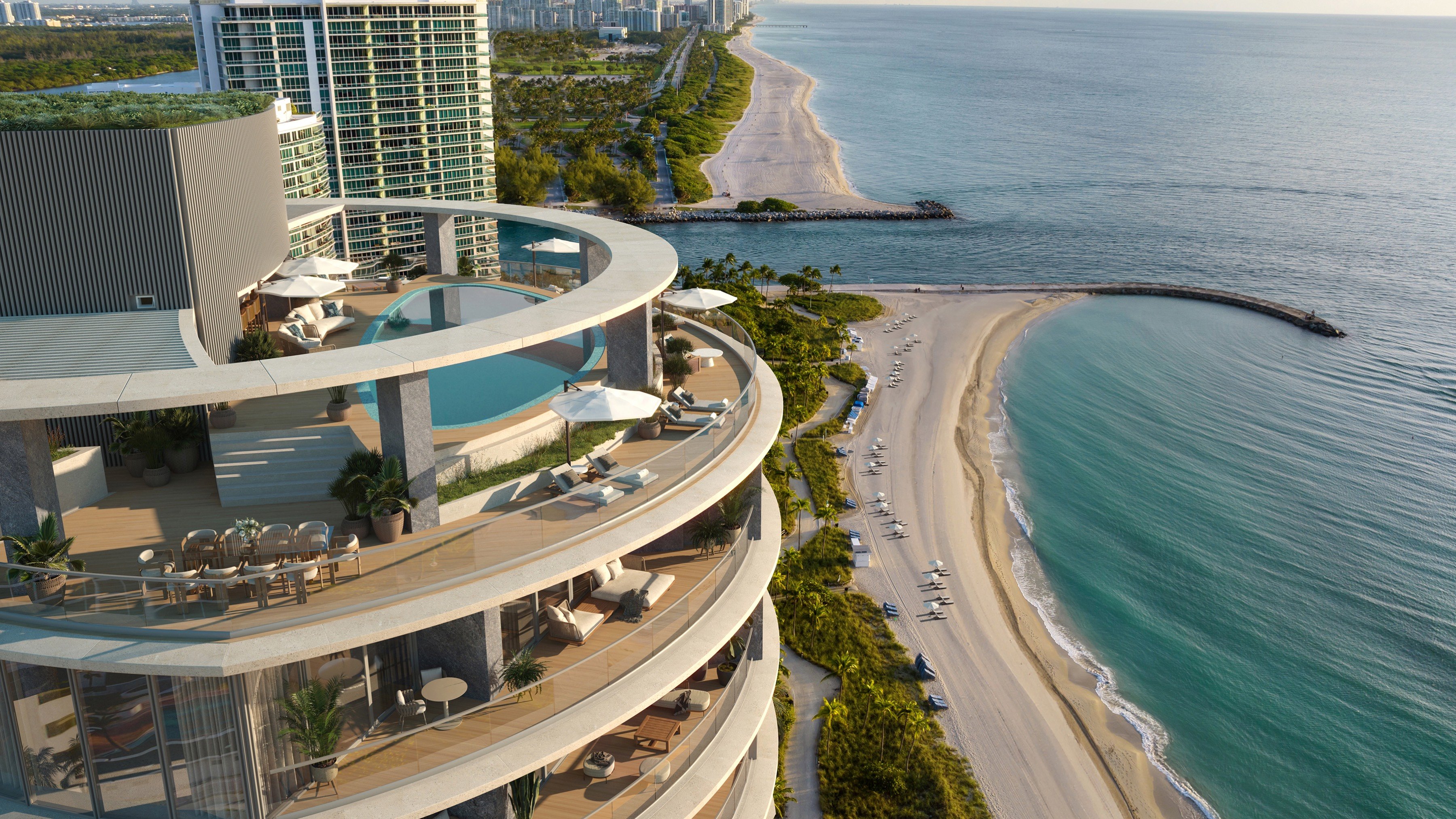
Bal Harbour and Sunny Isles Beach are both oceanfront addresses with global name recognition, but they trade on different currencies: Bal Harbour favors a boutique, tightly held feel, while Sunny Isles Beach is defined by vertical, resort-style living and a notably deep pipeline of headline-making pre-construction inventory.
For a luxury buyer, this is rarely just a price-per-foot conversation. It is about how you want your day to feel, how much density you are comfortable with, what level of service you expect, and how much future supply you are willing to underwrite in your long-term value thesis.
Bal Harbour’s identity is famously compact and deliberately curated. Much of the lifestyle orbits Bal Harbour Shops, the luxury retail center that also functions as a social anchor, with on-site dining that includes Makoto and Carpaccio. The local tourism bureau positions the village as a top shopping destination, and on the ground the experience reads as convenience-first and privacy-forward.
Residentially, the market is shaped by scarcity, and scarcity tends to sharpen buyer priorities. Owners often hold for longer periods, which can compress available inventory even when demand remains steady. That is a central reason Bal Harbour continues to resonate with second-home buyers who want a quiet arrival, an efficient routine, and the kind of prestige that does not need to announce itself.
For a reference point on established oceanfront ownership, Oceana Bal Harbour is illustrative. The development is at 10201 Collins Ave and was completed in 2016. Market guides commonly describe pricing that can run from a few million dollars into ultra-luxury penthouse territory, underscoring a key Bal Harbour trait: the same address can be both an entry into the enclave and a top-of-market statement, depending on residence size, view, and finish.
Sunny Isles Beach presents a different thesis. Here, the skyline is not just the backdrop, it is part of the product, with successive towers competing on amenities, branding, and spectacle. It is also a market where the narrative often begins with what is next, and where buyers can see future competition clearly.
The branded-residence wave is especially visible. St. Regis® Residences Sunny Isles is marketed as a residential-only concept with “no hotel,” offering 194 residences across 62 stories. Published materials emphasize privacy-oriented planning, including private elevator entry and foyers, supported by an amenity program promoted at more than 70,000 square feet. Pricing has been marketed from roughly $3.9 million, with maintenance estimates around $1.75 per square foot, with the standard caveat that these figures can change as budgets and remaining inventory evolve.
At the more automotive and design-forward end of the spectrum, Bentley Residences Sunny Isles is planned as a 62-story luxury tower with 216 residences and “starting from” pricing around $5.8 million. Its signature differentiator is the Dezervator system, vehicle elevators designed to bring residents’ cars up to private in-unit sky garages. Public reporting also cited a $630 million construction loan from Madison Realty Capital, a data point that signals institutional conviction in the market’s high-end depth.
Sunny Isles has also been shaped by redevelopment headlines. Plans were revealed for a new luxury tower at 19051 Collins Avenue, the former Miami Beach Club site, described as 62 stories and 145 units with a projected 2031 completion target. For buyers, the takeaway is not simply “more supply.” It is that the future competitive set is visible and time-stamped, which can influence negotiating posture today.
In coastal condo markets, reported price per foot can move dramatically based on view corridor, interior condition, and building stature. Still, macro signals help frame where each submarket sits in the luxury conversation.
Zillow’s Home Value Index puts Bal Harbour’s typical home value at about $1,838,396 (Aug 2025), down about 3.3% year over year. For Sunny Isles Beach, Zillow’s typical home value is about $643,584 (Nov 2025), down about 7.5% year over year. These are index-style estimates rather than condo-only median sale prices, but they reinforce a consistent buyer perception: Bal Harbour often reads as “expensive by default,” while Sunny Isles spans a wider spectrum, from comparatively attainable condos to trophy-level new development.
At the county level, demand for true trophy assets remains a defining narrative. Miami Realtors reported 262 Miami-Dade sales above $10 million through July 2025, putting the county on pace for roughly 426 $10M-plus sales for the year. That level of velocity matters in practice because it expands the pool of buyers who can choose among oceanfront submarkets based on nuance, not necessity.
For the broader luxury condo segment, a Corcoran-inhabitat report cited 152 closed sales in Miami’s $2 million-plus condo segment in Q3 2025, up 15.2% year over year, with an average around $1,445 per square foot. The implication for Bal Harbour versus Sunny Isles is subtle: both benefit from a deep luxury bid, but the ownership and resale experience can diverge depending on building scarcity, brand gravity, and incoming competition.
Luxury buyers often accept higher monthly carrying costs when staffing, service, and amenities are genuinely differentiated. Even so, fee structure has become a central part of sophisticated due diligence, especially for second-home owners who may not fully use every feature they are paying to support.
Bal Harbour offers a spectrum, from established luxury condos to newer boutique propositions. In the St. Regis Bal Harbour condo market, local tracking has listed maintenance fees around $1.35 per square foot, with typical listings in the multi-million-dollar tier. The St. Regis Bal Harbour Resort itself operates at 9703 Collins Ave, reinforcing a core Bal Harbour theme: service and prestige delivered with a deliberately controlled tone.
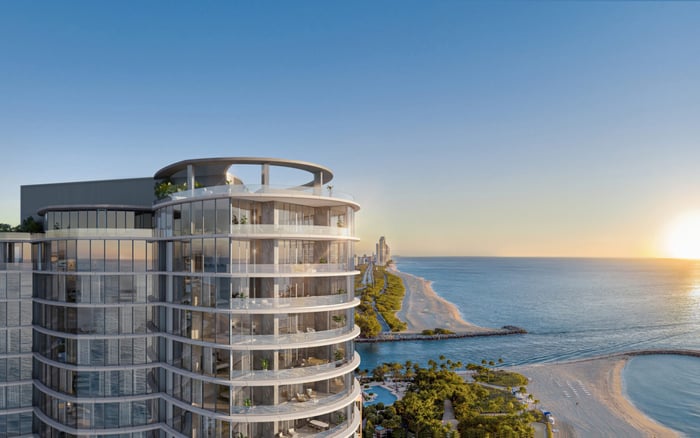
On the new-build side, Rivage Bal Harbour has been described as a pre-construction oceanfront condominium planned as a 24-story tower with 56 residences. Published positioning includes a reported maintenance figure of about $2.10 per square foot and “starting from” pricing around $7 million, alongside amenity highlights such as multiple pools and wellness and spa programming designed for a low-unit-count luxury building. Strategically, the question is whether you would rather fund a maximal amenity menu shared across hundreds of residences, or a tightly held program shared among a far smaller ownership base.
In Sunny Isles, fees and services vary widely by building age and operating model, but the newer branded inventory tends to frame ownership as a fully managed lifestyle, often supported by expansive amenity square footage. If your priority is curated programming and day-to-day activation, Sunny Isles is structurally advantaged.
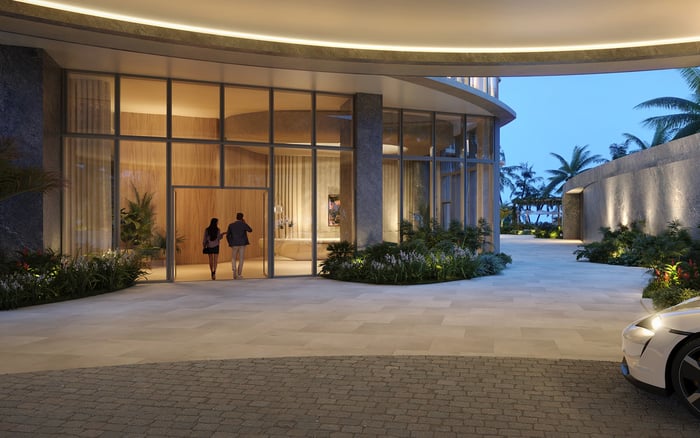
Bal Harbour is built for buyers who equate luxury with calm. The day can be intentionally small: morning beach time, a short and simple route to the Shops, lunch that feels closer to a private club than a public venue, and evenings that do not require a neighborhood tour to feel complete.
Sunny Isles Beach is better suited to buyers who want energy on demand, more building choice, and the sensation of living inside a vertical resort. The neighborhood also reads as inherently more international, which can be a feature if you enjoy a cosmopolitan cadence and the steady refresh that comes with new towers and new openings.
For second-home owners, the practical differentiator is arrival and friction. If you value a seamless arrival experience with high privacy and minimal wait times, boutique buildings and lower unit counts can matter as much as interior finishes. If you value a year-round social atmosphere, extensive amenities, and newer building systems, larger branded towers can feel more aligned.
Consider these four decision points, which are often more predictive than headline pricing.
First, supply certainty. In Bal Harbour, the market’s character is shaped by limited inventory and fewer large-scale development storylines. In Sunny Isles, future supply is a known variable, with publicly discussed projects and timelines that can shape how buyers think about today’s pricing and tomorrow’s competition.
Second, service culture. If you want hotel-adjacent standards without necessarily living in a condo-hotel structure, branded residences and resort-style buildings can deliver a clear operating model. If you prefer a quieter service posture and fewer neighbors, Bal Harbour’s boutique bias is persuasive.
Third, fee tolerance versus utilization. Higher fees can make sense when you will actually use wellness programming, dining, lounges, and entertainment spaces. When you will not, low-unit-count luxury buildings with a tightly curated amenity set can offer a better personal value equation, even when fees are not objectively “low.”
Fourth, resale audience. Sunny Isles’ branded pipeline can keep attracting new global buyers, but it also means your resale may compete with new inventory more often. Bal Harbour’s scarcity can support price resilience, but trading volume can be thinner, and the right buyer may take longer to surface.
Is Bal-harbour or Sunny-isles generally more expensive? Bal Harbour typically reads as the higher-priced address overall, while Sunny Isles Beach spans a wider spectrum, from mid-tier condos to top-end branded new development.
What is the advantage of a low-unit-count tower like Rivage Bal Harbour? A smaller ownership base can translate into a quieter building, more privacy, and amenities that feel less crowded, though reported fees and pricing should always be reviewed against the complete offering.
Do branded residences in Sunny Isles change the ownership experience? Often, yes. Projects like St. Regis® Residences Sunny Isles and Bentley Residences Sunny Isles emphasize service, programming, and signature concepts that position the building itself as a lifestyle product.
How should buyers use “typical home value” indexes? As a directional signal. Index values can provide macro context, but condo pricing still hinges on building profile, view, condition, and active inventory at a given moment.
For a private discussion on positioning, timing, and inventory across Bal Harbour and Sunny Isles Beach, connect with MILLION Luxury.
If branded residences are on your mind — as a home or as an allocation — we would be glad to share what we are seeing, privately.
Begin a quiet conversation