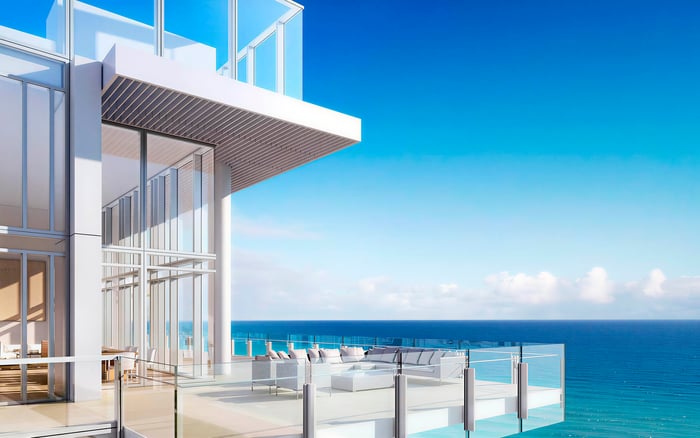
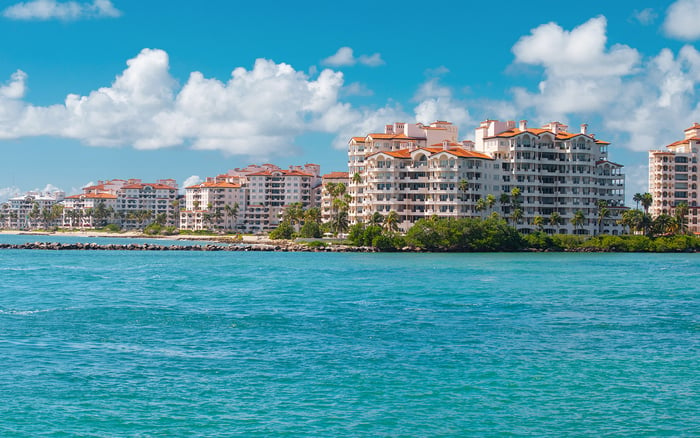
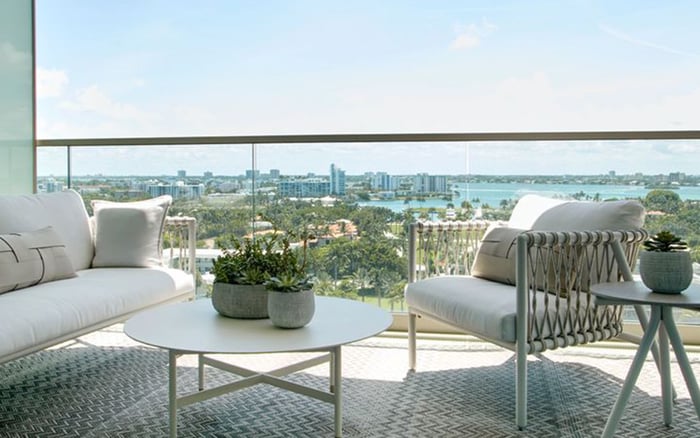
Bal Harbour pairs one of South Florida’s smallest oceanfront municipalities with one of its most internationally recognized luxury retail experiences, creating a lifestyle micro-market where privacy, walkability, and beachfront living converge. From its postwar incorporation to today’s ultra-luxury redevelopment cycle, the village’s appeal rests on a simple equation: limited land, enduring demand, and a daily rhythm anchored by the Atlantic on one side and the bay on the other.
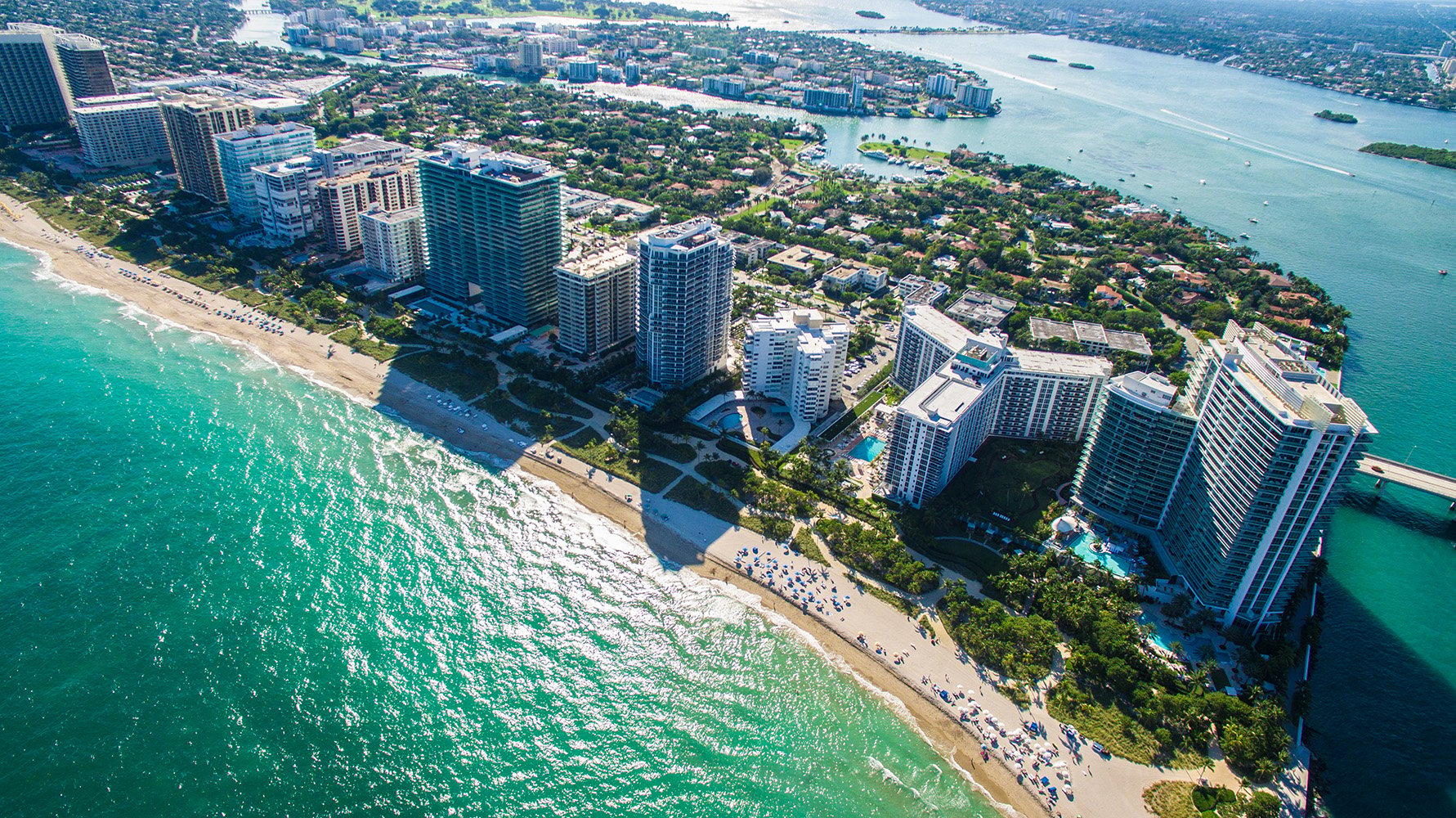
Bal Harbour is not large-and that is precisely the point. At roughly 2.6 square miles, the village’s scale keeps the experience intimate while keeping housing supply structurally constrained. Geography is core to the identity. The name itself reflects the setting between Biscayne Bay and the Atlantic: a thin, luminous strip where water frames nearly every errand, arrival, and view corridor.
The modern village is also a product of timing. Early planning dates back to the late 1920s, but World War II delayed civilian development when the property was used by the U.S. military for war-related functions. When Bal Harbour was incorporated on August 14, 1946, it entered the postwar period with unusually clean lines for South Florida: a small, purposeful municipality with a long-run orientation toward quality and control.
For buyers, that history matters less as trivia and more as market structure. Smaller jurisdictions with limited developable frontage tend to exhibit two qualities: price resilience and a persistent premium for address clarity. In Bal Harbour, that premium is reinforced by a lifestyle engine next door.
Bal Harbour’s global recognition is inseparable from Bal Harbour Shops, which opened in 1965 and was conceived as an open-air luxury destination. The positioning is experiential by design-often described as a “Theater of Shopping”-where landscaping, light, and circulation are as curated as the storefronts.
The real estate implication is subtle but powerful. In many coastal markets, “walkability” is a marketing claim that means a sidewalk and a café. In Bal Harbour, it can mean stepping from a residence into one of the country’s most rarefied retail environments without leaving the village’s composed atmosphere.
Bal Harbour’s shoreline has undergone a visible transition-from mid-century resort culture to the contemporary era of branded luxury. A milestone moment came in 2007, when the famed Bal Harbour hotel, known in later years as the Sheraton Bal Harbour and previously as the Americana, was demolished. In its wake, the St. Regis Bal Harbour Resort opened, reflecting the broader repositioning of prime oceanfront sites toward ultra-luxury standards.
For buyers and sellers, these resets can create two parallel markets that often trade at different tempos.
First is the ultra-luxury, service-forward product that appeals to second-home owners who value turnkey living, staff, and security as much as square footage. Second is the established condo stock: buildings with proven views and direct beachfront presence where value can be driven by renovation quality, floor elevation, and the timelessness of the footprint.
Penthouse pricing in Bal Harbour has reinforced the village’s position in the top tier of U.S. coastal markets. Even when individual listings are singular, the signaling effect is real: global buyers track the ceiling because it influences how they underwrite everything below it.
A sophisticated Bal Harbour search is rarely about “new versus old.” It is about fit.
Established oceanfront buildings remain a defining layer of the village. Bal Harbour Tower at 9999 Collins Ave is one of those recognizable, longstanding presences-part of the inventory that anchors Bal Harbour’s reputation for direct beachfront living. Similarly, The Palace is an oceanfront building within the village’s condo ecosystem, offering another established option for buyers who prioritize a classic oceanfront address.
On the newer side, Oceana Bal Harbour has helped define the modern era, with amenities and design that align with contemporary expectations for privacy, arrival experience, and indoor-outdoor living. For many buyers, that difference is not merely aesthetic. It is operational. Newer buildings often express luxury through back-of-house competence: parking flow, layered security, package handling, service corridors, and the quiet choreography that keeps daily life feeling effortless.
Finally, the pipeline matters. Rivage Bal Harbour has been introduced publicly as a planned ultra-luxury oceanfront condominium, and early positioning suggests continued demand for next-generation product in the most constrained coastal pockets.
Bal Harbour does not behave like a broad metro market. It behaves like a micro-market where a marginal listing can move expectations.
Inventory in adjacent Surfside and Bal Harbour is frequently tracked as its own submarket in luxury condo market coverage, underscoring how distinct the buyer pool and pricing psychology can be. In practical terms, the village is influenced by three overlapping forces.
One is the scarcity loop. Limited land and limited inventory compress choices, keeping quality assets in persistent contention.
Second is the redevelopment signal. When landmark sites reset from prior-era hospitality into ultra-luxury, neighboring product tends to reprice-especially where views and walkability align with the newer standard.
Third is micro-location. In Bal Harbour, the difference between a quiet residential stretch and a more animated corridor is not a few minutes. It is a feeling. Buyers should tour at multiple times of day, including early morning and evening, to understand wind, light, and sound.
Bal Harbour competes less on quantity and more on a particular type of refinement. That refinement becomes clearer when you compare it to neighboring luxury choices.
Surfside can offer a similarly discreet oceanfront lifestyle with a different architectural cadence. For buyers who like Surfside’s intimacy but want a contemporary, design-forward building, Eighty Seven Park Surfside often enters the conversation. Those seeking a private-club sense of arrival in Surfside may also look toward The Surf Club Four Seasons Surfside as a reference point for service and legacy.
Miami-beach, by contrast, is a broader palette. It can deliver energy, dining density, and a larger supply of luxury towers, which can be attractive for buyers who want lifestyle variety at the doorstep. If that resonates, a more boutique oceanfront option like 57 Ocean Miami Beach can feel directionally similar to Bal Harbour’s preference for discretion.
Further north, Sunny-isles offers newer high-rises and a different skyline scale. For buyers who want dramatic height and modern tower living, Bentley Residences Sunny Isles can serve as a useful counterpoint in the search process.
These comparisons do not replace Bal Harbour. They sharpen the question of what you are really buying: a village-scale lifestyle with global retail gravity, or a bigger-market variety with more moving parts.
In Bal Harbour, the right purchase is usually the one that feels effortless over time. A practical checklist helps keep that focus.
Start with the building’s operating culture. Service levels, lobby privacy, and guest handling can matter as much as amenities.
Then consider view permanence. Oceanfront is intuitive, but sightlines can still be impacted by future redevelopment along the corridor.
Assess walkability as a daily habit. The village’s appeal is often tied to how frequently you actually use the Shops and the beachfront without getting in a car.
Finally, underwrite renovations realistically. In established buildings, the spread between “dated but well located” and “fully resolved” can be meaningful-and timelines matter for second-home owners.
When was Bal Harbour incorporated? Bal Harbour Village was incorporated on August 14, 1946.
How did Bal Harbour get its name? The name reflects its geography between Biscayne Bay and the Atlantic Ocean.
How large is Bal Harbour? It is a small municipality of about 2.6 square miles at the northern end of Miami Beach.
When did Bal Harbour Shops open? The Shops opened in 1965 as an open-air luxury shopping destination.
What does “Theater of Shopping” mean in Bal Harbour? It refers to an experiential, landscaped open-air environment rather than a conventional enclosed mall.
Who owns and operates Bal Harbour Shops today? The Shops are still family-owned and operated by the Whitman family.
Has Bal Harbour Shops announced an expansion? Expansion plans have been publicly outlined, including major financing that has been reported for redevelopment.
What happened to the former Sheraton/Americana in Bal Harbour? The hotel was demolished in 2007, and the site later transitioned into an ultra-luxury resort era.
Is Bal Harbour primarily a condo market? Much of the village’s residential identity is expressed through oceanfront condominium buildings.
What is a key advantage of buying in Bal Harbour versus larger Miami-beach areas? Many buyers value the village scale, privacy, and naturally limited inventory.
If you'd like a private walkthrough and a curated shortlist, connect with MILLION Luxury.
If branded residences are on your mind — as a home or as an allocation — we would be glad to share what we are seeing, privately.
Begin a quiet conversation