A discreet, buyer-oriented look at how accelerating sea-level rise is reshaping design, underwriting, and value across South Florida’s ultra-prime residential market.
South Florida’s luxury market has always been a story of water: ocean horizons, bayfront sunsets, private docks, and the clean geometry of glass facing the Atlantic. What’s changing isn’t the desire for that lifestyle-it’s the baseline it depends on.
Recent tide-gauge observations around central Miami indicate sea level rising at roughly an inch every three years, a cadence that quietly compounds over an ownership horizon. Common Florida planning scenarios place roughly 10 to 12 inches of rise by around 2050 and about 1 to 2 feet by around 2060 under intermediate assumptions. In a region where the line between a dry street and a wet one can be measured in inches, those numbers don’t stay theoretical for long.
For buyers, sellers, and developers, the translation is straightforward: “sunny-day” flooding-once a king-tide novelty-has become far more frequent as higher background water levels push ordinary tides into low-lying streets, garages, and utility corridors. In a market built on predictability, the new luxury isn’t only view and finish. It’s continuity of access, operations, and insurability.
In many coastal cities, seawalls and surface barriers can feel like a complete solution. In South Florida, geology disrupts that assumption. Porous limestone and a shallow water table can drive flooding from below, so even a formidable edge barrier doesn’t always stop groundwater from rising into basements, garage slabs, and underground infrastructure.
That “from below” reality matters because so much premium residential product depends on subterranean space-parking, storage, back-of-house service areas, and, in some cases, amenities. A widely discussed Surfside-area case study showed how often high tides exceeded the level of an underground garage floor, and how those exceedances increased markedly over time. The broader lesson isn’t about one address; it’s that underground conditions can deteriorate quietly, well before an owner sees obvious ponding at the curb.
This is why many of the most sophisticated resilience moves in luxury development aren’t aesthetic-they’re infrastructural: higher finished-floor elevations, more robust drainage and pumping strategies, and relocating critical mechanical and electrical systems above likely flood levels. The objective is to reduce the chance that a single water event becomes a building-wide operational crisis.
A premium buyer’s first screen has historically been location, lifestyle, and pedigree. Increasingly, it also includes risk underwriting. Flood exposure is now evaluated well beyond FEMA’s mapped zones, and third-party models have underscored substantial “hidden” risk outside the highest-risk designations.
Nationally, millions of homes worth trillions sit inside FEMA Special Flood Hazard Areas, and independent modeling suggests millions more may face comparable flood risk outside those areas. The point isn’t to dismiss maps-it’s to understand what they are (and aren’t): a regulatory tool, not a parcel-specific assessment of elevation, drainage, and storm-water pathways.
At the ultra-luxury end, this shifts the rhythm of a purchase.
In practice, this is why two homes with the same view can perform very differently once buyers begin pricing the difference between exposure and manageability.
Luxury markets can absorb many kinds of friction, but flood risk is uniquely persistent because it reaches financing, insurance, and day-to-day operations. Transaction research has found that homes exposed to sea-level-rise risk and located inside the 100-year floodplain have traded at a measurable discount-roughly in the mid-single digits-compared with comparable homes outside those conditions.
Equally telling is the second-order insight: historically, homes exposed to sea-level-rise risk but outside mapped floodplains did not consistently show a discount and sometimes even showed a premium-suggesting risk can remain underpriced until perception catches up.
That matters in South Florida because the market isn’t monolithic. Prime waterfront can remain liquid while older or operationally vulnerable stock sees widening negotiation. The gap is often created by details that don’t photograph well: where generators are located, whether the garage slab sits at a point of frequent tidal exceedance, and whether the building has a credible path to remain functional even when nearby streets flood.
The Surfside tragedy reshaped the conversation around coastal condominium ownership, particularly for older buildings. Post-event investigations highlighted how coastal environments can accelerate corrosion risk-and how design or construction issues can become consequential over time.
In response, Florida’s condo safety regime now requires milestone inspections for many condominium and cooperative buildings three stories or higher, generally at 25 years if within three miles of the coast (30 years if farther inland), with follow-up inspections every 10 years. For buyers, this isn’t a compliance footnote. It can influence the timing of special assessments, reserve strategies, and a building’s ability to plan major work with minimal disruption.
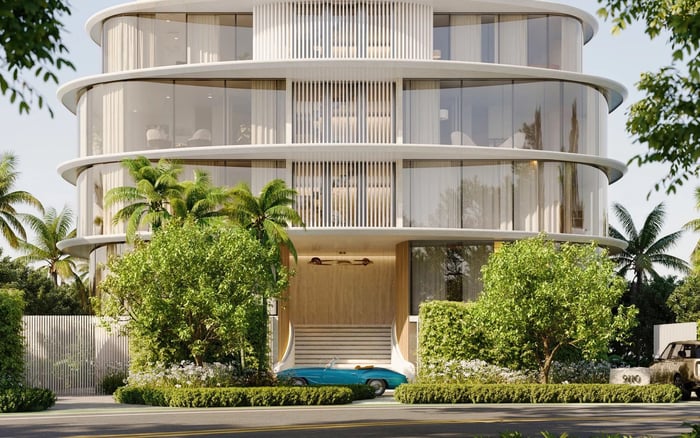
In high-design, newer product, resilience and structural longevity are increasingly part of the value proposition-even when they aren’t marketed as such. A buyer comparing modern waterfront condominiums in Miami Beach may weigh not only architecture and amenities, but also elevation strategy and systems placement. In that context, projects such as Five Park Miami Beach and 57 Ocean Miami Beach sit within a broader shift toward more future-aware coastal design.
In ultra-premium real estate, “resilience” once implied compromise. Today, the best executions are invisible, integrated, and lifestyle-preserving.
Elevation as a design language. Higher first floors, elevated lobbies, and reimagined arrival sequences are becoming standard in coastal contexts. A frequently cited early Miami Beach example is Monad Terrace, which incorporated elevated interior and garage access as a resilience feature.
Systems above water. Critical mechanical and electrical components placed above likely flood levels reduce downtime risk and can simplify recovery after events.
Drainage and pumping, designed as operations. More robust pumping strategies are only as strong as maintenance and power continuity. Sophisticated buyers ask how systems perform during prolonged rain combined with high tides-not just in a textbook storm.
Regulatory adaptation. Some municipalities have begun revising how height is measured so flood-elevated buildings aren’t penalized. Surfside, for example, proposed measuring allowable height from Design Flood Elevation rather than street grade-a signal that code frameworks are evolving to accommodate higher floors.
Luxury waterfront living has long been drawn to the aesthetics of dunes, mangroves, and tranquil edges. Those landscapes are now gaining a second identity as risk-reduction infrastructure.
Mangroves have been shown to measurably reduce coastal flood losses, with large avoided-damage benefits during major hurricanes. Separately, analyses of adaptation approaches have found that nature-based strategies can deliver higher benefit-cost ratios than purely “gray” infrastructure like seawalls in many settings.
For buyers, this reframes the neighborhood conversation: not only “What is my seawall condition?” but also “What is the shoreline strategy nearby?” Miami Beach has promoted living-shoreline approaches that use natural materials and vegetation to stabilize edges and reduce erosion. When done well, these interventions protect value while preserving the character that made the waterfront desirable in the first place.
As coastal risk becomes more legible, investment interest can shift toward relatively higher-ground neighborhoods-a dynamic often described as climate gentrification. In Miami, this has contributed to displacement pressures in historically marginalized communities as capital chases perceived safety.
From a market perspective, the implication is that “resilience” can create its own premium geography. Sophisticated buyers track not only today’s flood frequency, but also the direction of public investment-where pump projects, road elevations, and shoreline work are concentrated. That public-realm spending can become a proxy for long-term habitability.
In Brickell and the urban core, the resilience conversation often centers on vertical living, operational continuity, and access. Iconic high-rise lifestyle offerings such as 2200 Brickell and The Residences at 1428 Brickell sit within a district where buyers increasingly evaluate not only the building, but also surrounding streets, utilities, and how quickly normal city life resumes after extreme weather.
In the current market, the most effective questions are specific, operational, and tied to ownership experience.
Where is the building’s critical infrastructure? Mechanical, electrical, generators, elevator controls, and fire systems.
How does water behave on-site? Look for a coherent story across grading, drainage, and garage design.
What is the inspection and reserve posture? Particularly for older coastal condos subject to milestone inspections.
How is resilience reflected in rules and governance? A well-run association treats pumping and waterproofing as a program, not a reaction.
What is the neighborhood’s adaptation trajectory? Road elevations, shoreline strategy, and the credibility of long-term planning.
In Bay Harbor and other close-in islands, buyers are increasingly attentive to how a small geographic footprint can amplify both lifestyle benefits and logistical vulnerability. Newer boutique product, including The Well Bay Harbor Islands, often appeals to purchasers who want proximity to the water and the city, with an emphasis on systems planning that reflects modern expectations.
Is sunny-day flooding really increasing in Miami? Yes. Higher baseline sea levels are making ordinary high tides flood-prone more often.
How fast is sea level rising locally? Recent observations around central Miami show roughly an inch of rise about every three years.
What do mid-century projections look like for South Florida? Common planning scenarios point to roughly 10 to 12 inches by around 2050.
Why don’t seawalls fully solve flooding here? Porous limestone and a shallow water table can push water up from below, bypassing surface barriers.
If a home is outside a FEMA flood zone, is it “safe”? Not necessarily. Many properties outside mapped zones can still face comparable modeled flood risk.
Does flood risk affect prices in luxury markets? It can. Transactions in mapped high-risk areas have shown measurable discounts versus comparable homes.
What are Florida’s milestone inspections for condos? Many 3+ story condos require inspections at 25 years near the coast (30 inland), then every 10 years.
What resilience features should I look for in a condo tower? Elevated access, critical systems placed above flood levels, and robust drainage and pumping plans.
Are nature-based solutions like mangroves actually protective? Yes. Mangroves can reduce coastal flood losses, and green approaches can outperform gray infrastructure in cost-effectiveness.
Will higher-ground neighborhoods become more expensive? They often attract investment as risk perceptions shift, which can push prices up and intensify displacement pressures.
For a confidential assessment and a building-by-building shortlist, connect with MILLION Luxury.
If branded residences are on your mind — as a home or as an allocation — we would be glad to share what we are seeing, privately.
Begin a quiet conversation