For South Florida’s ultra-premium buyer, the condo versus single-family decision is no longer just lifestyle. It is governance, insurance exposure, liquidity, and the cost of certainty. In 2026, elevated operating costs, tighter safety expectations for older towers, and a more buyer-friendly condo supply dynamic have made due diligence the defining luxury amenity. This guide breaks down what you truly own, what you delegate, where the hidden volatility lives, and how to choose the right form of ownership for privacy, flexibility, and long-term control.
In South Florida, “condo or house?” is often shorthand for a far more consequential decision: curated convenience versus absolute control. Both can be unequivocally luxurious. The difference is how risk, responsibility, and decision-making are allocated.
A single-family home typically means you own the structure and the land beneath it. A condo typically means you own the unit interior and share ownership of common elements managed by a condominium association. That governance layer can be the ultimate stress reducer-or the most expensive line item you didn’t anticipate.
As Miami’s luxury landscape deepens and million-dollar inventory remains abundant, the decision has become more precise: how you travel, how you want your property to perform when you are away, and how much variability you will tolerate in monthly carrying costs.
Luxury is often described as “turnkey.” In practice, it’s clarity-who does what, when, and at whose expense.
With a condo, much of the building and exterior maintenance is typically handled by the association. That can include elements you may never want to personally manage: façade work, elevators, pool decks, staffed lobbies, security systems, and shared mechanical components. The tradeoff is that your autonomy runs through rules, budgets, and votes.
With a single-family home, you control the property end-to-end. Renovation timing, vendor selection, landscaping standards, security technology, and even how aggressively you harden for storms are yours to decide. The cost is that every repair-and every preventative decision-is yours to finance and execute, whether you are in town or not.
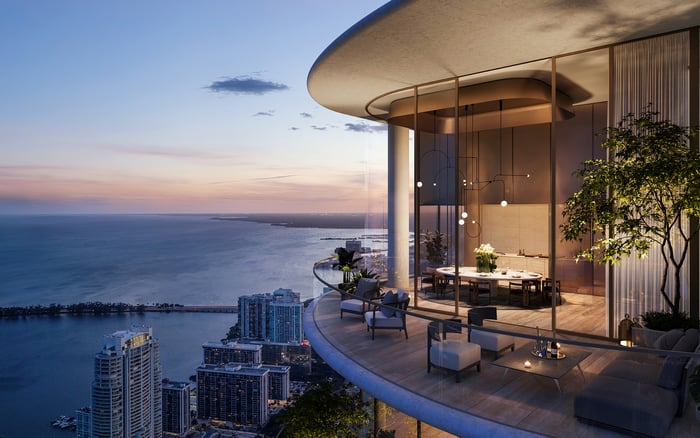
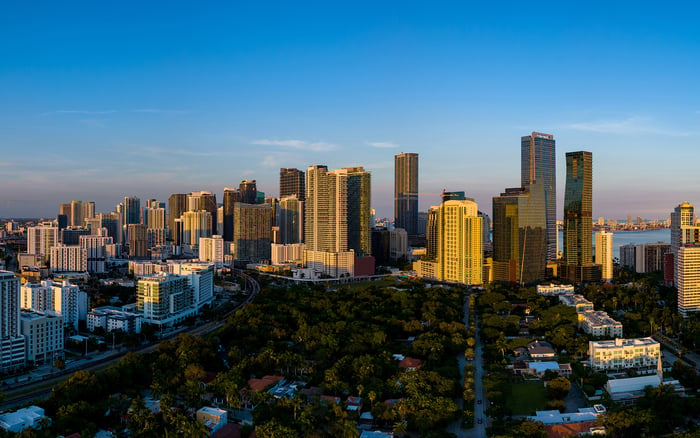
For buyers who value a staffed arrival, consistent day-to-day operations, and an elevated lock-and-leave rhythm, a high-caliber tower can function like a private club. In Brickell, that lifestyle is exactly what draws interest to new, service-forward projects such as 2200 Brickell.
Monthly costs are where the condo-versus-house decision gets truly nuanced.
Across Miami, HOA fees have climbed sharply in recent years, with median monthly fees cited as rising from roughly the mid-$500s in 2019 to about $900 by 2024. In practice, the number that matters isn’t the headline HOA amount-it’s the operating logic behind it: staffing, insurance premiums, reserve posture, and the building’s maintenance cycle.
After the Surfside tragedy, Florida introduced additional condo safety and structural requirements. For many older buildings, the downstream effect has been higher fees and, in some cases, large one-time charges tied to repairs and reserve funding. Special assessments are a central condo risk because associations can levy charges on owners to address major projects or budget shortfalls.
Single-family homes carry their own volatility: insurance. Florida homeowners insurance has risen materially, with industry summaries noting a steep increase across the 2015 to 2023 period. A house gives you control, but it does not shield you from the market pricing of wind coverage, flood considerations, or the cost of rebuilding in a high-demand coastal region.
A practical luxury heuristic: condos concentrate unpredictability into governance and assessments; houses concentrate unpredictability into insurance, maintenance, and capex scheduling. Choose the uncertainty you can manage.
Pricing power isn’t constant across property types.
Late-2025 market snapshots showed a meaningful split in supply: single-family inventory sat around 6.2 months, while existing condos were closer to 13.2 months. Put plainly, condos have presented more buyer-favored conditions than single-family homes-often translating into greater negotiating leverage, more seller concessions, or simply more time to diligence.
At the same time, the high end of the condo market has remained active. Luxury condo sales at the $2 million and above tier increased year-over-year in 2025, and price-per-square-foot levels have been resilient even as the market absorbed new inventory.
For buyers, the implication is strategic: if you want best-in-class views, amenities, and a newer building profile, the condo segment may offer more choice and more patience from sellers. If you want land, privacy, and architectural control, single-family options can still feel comparatively scarce-especially in the most established neighborhoods.
In ultra-premium transactions, diligence is less about discovering defects and more about confirming that the ownership structure matches your expectations.
Condo diligence should center on the building’s financial posture and governance realities. Review budget trends, reserve funding philosophy, recent and planned major projects, and the association’s authority around rentals and renovations. Short-term rental rules can be shaped by both local regulations and association documents, so this is not a detail to “figure out later.”
You are also underwriting future assessments. Even in impeccably run buildings, major work follows a calendar: waterproofing, concrete restoration, mechanical upgrades, and life-safety modernization. Your goal is to understand whether those cycles are already funded-or likely to arrive as a lump-sum obligation.
Single-family diligence is more operational. Confirm the condition of the roof, windows, pool systems, seawall where relevant, and drainage. Model insurance with realistic assumptions. If your plan includes periodic vacancy, evaluate smart security, backup power strategy, and vendor redundancy.
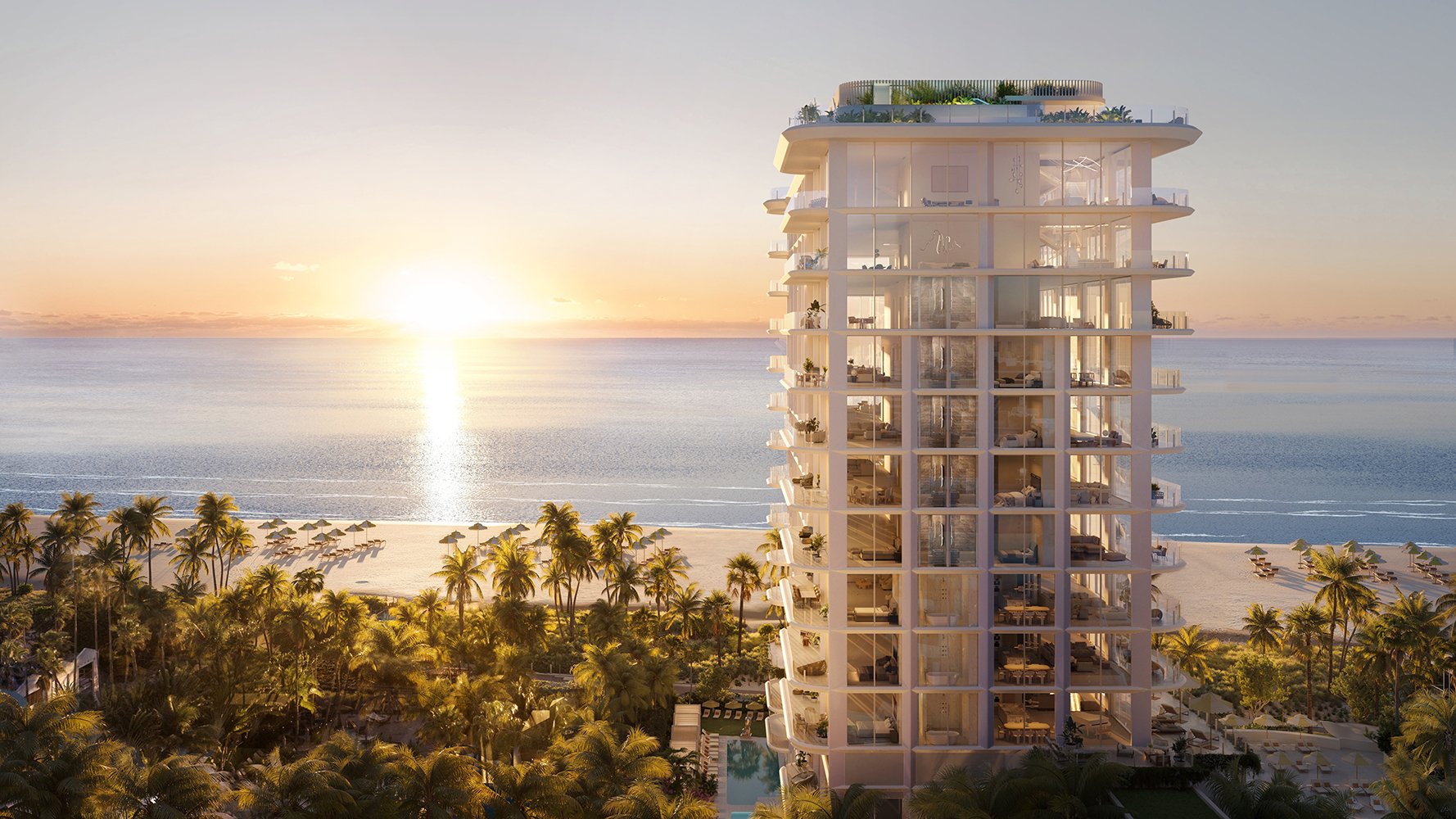
In Miami Beach, where lock-and-leave is often the point, buyers frequently gravitate toward newer boutique product that emphasizes privacy and simplicity of ownership. That is part of the appeal of 57 Ocean Miami Beach, where the lifestyle proposition is streamlined coastal living rather than sprawling property management.
The single-family home’s intangible is separation: fewer shared surfaces, fewer stakeholders, and a different relationship to sound, arrival, and outdoor life. In South Florida, that often includes pools, gardens, and true indoor-outdoor entertaining.
The condo’s intangible is elevation and orchestration: panoramic vantage, staffed security, package handling, and amenity ecosystems that can replace an entire roster of private vendors. For global owners and frequent travelers, the ability to leave for weeks while the building maintains the exterior, common areas, and security posture isn’t convenience-it’s freedom.
A sophisticated approach is to match property type to the highest-value moments of your year. If your peak usage is holiday entertaining and multi-generational visits, land and outdoor space may dominate. If your peak usage is Art Basel week, business travel, or seasonal stays, a well-run condo can deliver maximum experience with minimal friction.
Many luxury buyers are also investors-or at least want optionality.
Condo associations can restrict rental policies through governing documents, so two buildings on the same street can have dramatically different income potential. If short-term rental flexibility is a priority, treat it as a first-order filter, not a negotiation point.
Single-family homes can also face local short-term rental rules, but the governance layer is typically different. You are not navigating a condominium board vote or a building-wide policy shift. You still need compliance, but the control is more direct.
For buyers who want strong personal-use value with a measured investment lens, newer, branded and design-led residences can feel like a middle path: personal enjoyment first, with clearer operational standards. In Edgewater, Aria Reserve Miami speaks to that preference, emphasizing scale and amenity in a setting that supports both daily living and seasonal ownership.
Water remains one of South Florida’s enduring value drivers. Nationally, waterfront homes have been shown to command a substantial premium over non-waterfront properties, even as buyers increasingly weigh climate and sea-level considerations.
In a single-family context, waterfront can mean docks, seawalls, and direct boating access-alongside heightened maintenance and insurance complexity. In a condo, waterfront is often expressed as views and proximity rather than direct responsibility for shoreline infrastructure.
For some buyers, the most rational move is to concentrate waterfront enjoyment in a condo and keep land exposure modest. For others, the point is direct access and the privacy of a private shoreline. Neither is universally “safer.” The better question is which resilience costs you prefer to manage personally.
If you want a clean decision, avoid “condos are easy” or “houses appreciate more” generalities. Instead, align to your operating style.
Choose a luxury condo when:
Choose a luxury single-family home when:
For buyers who want the emotional resonance of a true home while staying close to an urban lifestyle, Coconut Grove can be compelling. A residential-forward enclave such as Arbor Coconut Grove reflects the neighborhood’s appeal: design, discretion, and proximity without surrendering identity to a high-rise corridor.
What do I actually own in a condo versus a single-family home? A condo owner typically owns the unit interior and a shared interest in common areas; a house owner generally owns the structure and the land.
Why have condo HOA fees been rising in South Florida? Operating costs like insurance, maintenance, and building expenses have been climbing, and many buildings have adjusted budgets accordingly.
What is a condo special assessment? It is a one-time charge an association can levy on owners to fund major repairs or address budget shortfalls.
Are condos or single-family homes more buyer-friendly right now? Recent inventory comparisons have shown condos with more months of supply than single-family homes, which can favor buyers.
Does a higher HOA fee always mean a better building? Not necessarily; the key is what the fee funds, how reserves are managed, and whether major projects are already budgeted.
Is condo financing harder than financing a house? It can be, because condo underwriting may involve additional building-level requirements that do not apply to single-family homes.
Can a condo restrict rentals or short-term stays? Yes, associations can set rental rules in governing documents, and local regulations can also apply.
Which option is better for a part-time resident? Many part-time residents prefer condos for lock-and-leave convenience, while others prefer houses for privacy and outdoor space.
Do waterfront homes always command a premium? Waterfront properties often trade at a sizable premium, though coastal risk considerations can influence pricing and demand.
What is the single most important diligence step for condo buyers in 2026? Review the association’s financials and planned capital projects to understand fee trajectory and assessment risk.
For a tailored shortlist and next-step guidance, connect with MILLION Luxury.
If branded residences are on your mind — as a home or as an allocation — we would be glad to share what we are seeing, privately.
Begin a quiet conversation