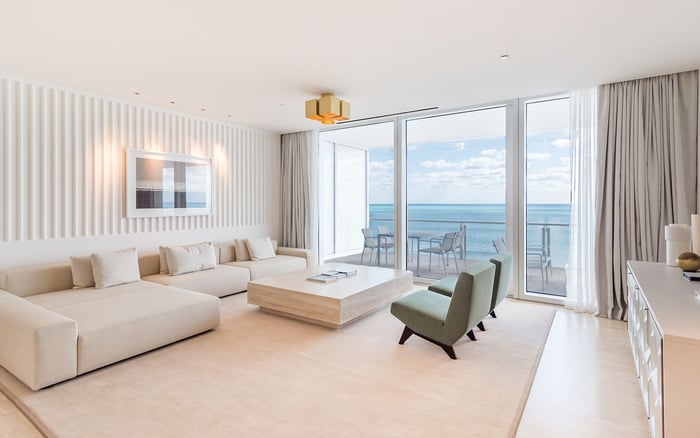
A discreet, buyer-oriented guide to how the EB-5 Immigrant Investor Program intersects with South Florida’s luxury real estate, from investment thresholds and TEA structure to timing, risk, and lifestyle-driven neighborhood selection.
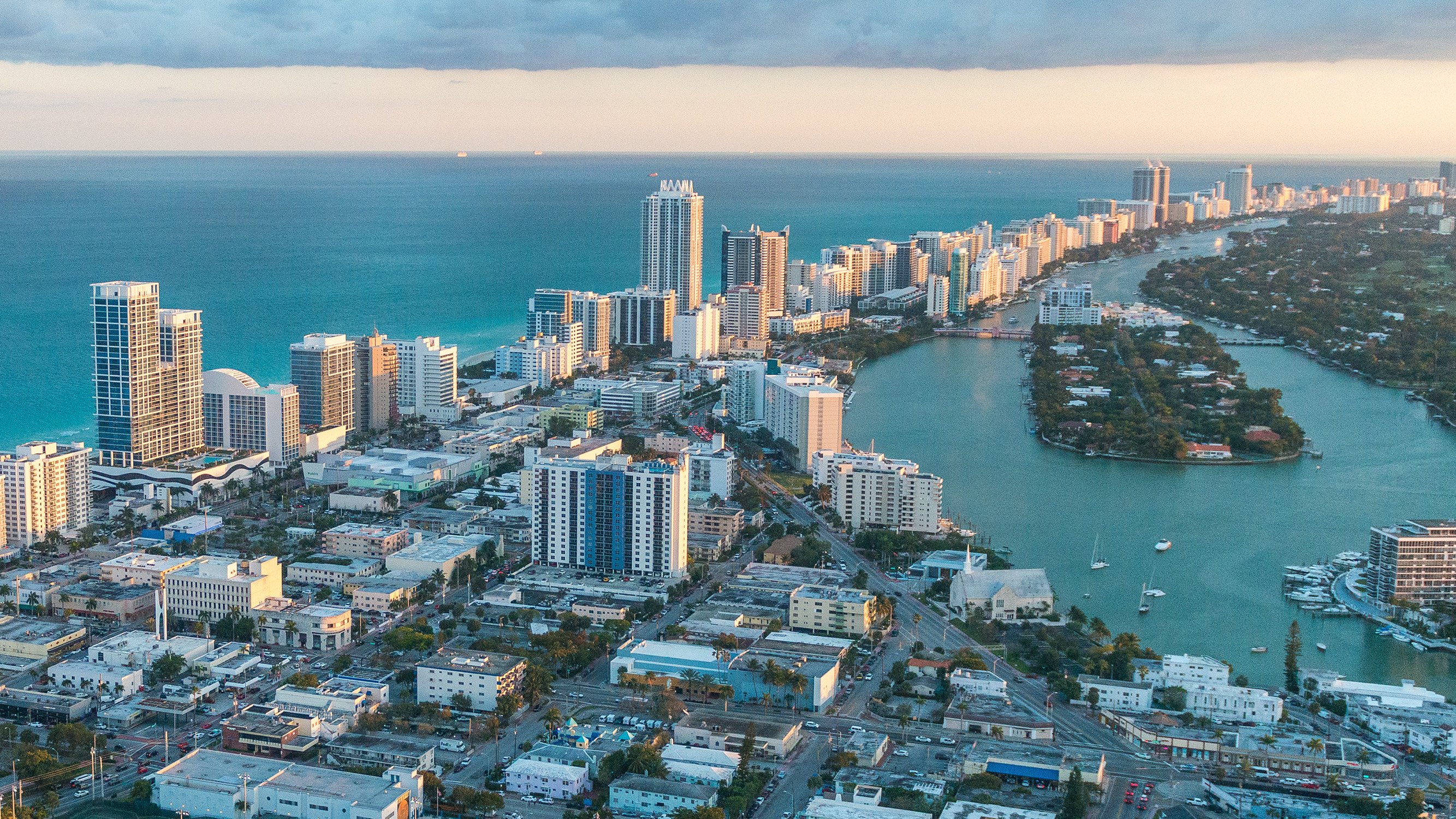
For globally mobile families, South Florida delivers a rare mix: year-round oceanfront living, strong connectivity, and a market with enough depth to support both end-user purchases and long-hold capital. In that setting, the EB-5 Immigrant Investor Program often enters the conversation-not as a real estate strategy, but as a residency strategy that can run alongside a lifestyle acquisition.
EB-5 was created by Congress in 1990 and is, at its core, a U.S. job-creation program. In broad terms, it requires an investor to place capital into a U.S. business that creates at least 10 full-time jobs, with the potential to obtain permanent residence for the investor and qualifying family members. That distinction is consequential: the immigration outcome hinges on job creation and program compliance, while the appeal of a condo or home hinges on location, design, privacy, and resale liquidity.
In 2026, the more useful question for luxury buyers is not “Should I do EB-5?” It is: “How do I keep an immigration investment decision separate from a trophy-property decision-without compromising either?”
Under current rules, the minimum EB-5 investment is generally $800,000 for qualifying Targeted Employment Area (TEA) projects and $1,050,000 for non-TEA projects. TEAs can include rural areas and high-unemployment areas, and TEA status can shape not only the required minimum but also how some applicants think about visa availability and set-asides.
For a South Florida luxury audience, TEA is often misread as a proxy for “location quality.” It is not. TEA is an immigration and economic-geography designation. A buyer can favor a prime coastal address and still choose a TEA-qualified EB-5 project elsewhere for the immigration component-keeping the residence purchase purely lifestyle-led.
That separation is especially important in markets like Brickell, Miami Beach, Surfside, and waterfront enclaves, where scarcity, views, and brand alignment command a premium no TEA map is designed to capture.
In EB-5, timing is not only personal-it can be mathematical. Under the EB-5 Reform and Integrity Act framework, investment minimums are required to adjust for inflation every five years starting in 2027, using CPI-U. Ahead of that adjustment, many conversations focus on the possibility that higher required amounts could influence investor timing, along with how projects structure and pace fundraising.
For an affluent family balancing residence, tax planning, education, and a South Florida base, the takeaway is not urgency for urgency’s sake. It is to treat 2026 as a year to build optionality: align counsel, confirm liquidity-source documentation expectations early, and decide whether you prefer a “file sooner at today’s thresholds” posture or a “wait for more clarity” posture. Either can be rational depending on where the family lives today, how soon they want U.S. work authorization, and how much risk they are willing to accept in exchange for flexibility.
Luxury buyers tend to evaluate risk through tangible assets. EB-5 requires a different lens: jobs are the measurable output. In many regional center EB-5 structures, investors can count indirect job creation-alongside direct jobs-toward the 10-job requirement. Indirect job creation is typically supported through economic modeling based on spending and multipliers, rather than payroll records alone.
That difference can materially change what “low execution risk” feels like. Some investors value the idea that a construction-heavy project can generate substantial modeled job counts through spending; others prefer the clean logic of payroll-based direct job creation. There is no universal best answer. There is, however, a universal best practice: ensure the job-creation thesis is understandable in plain language, then confirm it aligns with the offering documents and the project’s real-world progress.
In South Florida, where ground-up development is a familiar backdrop to wealth, the discipline is remembering that EB-5 is not a condo deposit. It is a regulated investment built to produce jobs, with real estate often functioning underneath as collateral, sponsor experience, or economic activity.
For some applicants already in the U.S., concurrent filing can be a meaningful planning lever because it may allow an eligible applicant to seek work authorization and advance parole while the EB-5 petition and adjustment are pending. Practically, that can shape decisions luxury families care about: business continuity, smoother travel, and how quickly a spouse can work or a student can transition.
Separately, “grandfathering” has become a central planning consideration in recent years. Investors often aim to file ahead of statutory or program deadlines to reduce legal uncertainty. The more sophisticated approach is to place this inside the household timeline: school calendars, corporate moves, and the anticipated completion date of a future primary residence.
A discreet South Florida base can support that cadence. A wellness-forward, design-centric neighborhood such as Bay Harbor Islands can feel intentionally quiet while remaining close to the energy of the urban core-which is why buyers often consider properties near The Well Bay Harbor Islands when they want privacy without isolation.
For EB-5-aligned families, this creates a two-track decision:
When those tracks blur, buyers can end up compromising on the home or taking on immigration risk that does not fit. The stronger approach is to define what “home” must deliver, then shop for EB-5 separately-even if both decisions unfold in the same season.
In Brickell, for example, new luxury vertical living often appeals to buyers who want proximity to finance, dining, and the cultural calendar. If your definition of convenience includes walkability and lock-and-leave ease, residences such as 2200 Brickell can sit naturally in the lifestyle conversation, independent of any EB-5 selection.
EB-5 is not insulated from disputes. Litigation and fraud risk are part of the broader EB-5 landscape. For sophisticated investors, the protective posture is simple: rely on diligence and alignment-not optimism.
Key underwriting questions luxury families tend to prioritize:
In South Florida, some luxury developments have openly marketed an EB-5 option, underscoring that EB-5 capital can be part of the financing toolkit even at the premium end. That does not make any project suitable. It simply confirms the channel exists.
While the EB-5 process moves forward, many families want a home that works immediately-school runs, wellness, entertaining, and a sense of belonging. The most common lifestyle archetypes are distinct.
Oceanfront privacy (Miami Beach and Surfside). Buyers who prioritize beach access and discreet luxury often gravitate to low-density, high-design beachfront buildings. In Surfside, a branded, service-oriented environment can be compelling for families who want a residential experience that feels globally familiar-which is why The Surf Club Four Seasons Surfside often comes up in conversations about polished, turnkey beachfront living.
High-rise cosmopolitan (Brickell). Brickell appeals to executives and founders who want proximity to business and a modern skyline identity. Here, the home is often a base between travel weeks, making security, valet flow, and amenities as important as square footage.
Resort-like coastline with value depth (Hallandale). For buyers who want ocean access and strong lifestyle amenities in a market that can still offer relative value compared to the most trophy-constrained pockets, Hallandale continues to draw attention. Homes in and around 2000 Ocean Hallandale Beach can match the profile of a primary residence for seasonal families or a long-term hold for those who prefer a quieter coastal rhythm.
The common thread is clear: buy the home you would want even if EB-5 did not exist. That mindset tends to produce cleaner decisions-and better long-term satisfaction.
EB-5 can be an elegant solution for the right investor, but elegance comes from structure. The most successful luxury families tend to do three things well.
First, they keep the EB-5 investment thesis job-centric and compliance-first. Second, they keep the South Florida residence decision lifestyle-first, with resale and liquidity as quiet second-order checks. Third, they synchronize the calendars: travel, school admissions, corporate transitions, and expected processing milestones.
When those pieces align, South Florida becomes more than a purchase. It becomes a platform: a place to live exceptionally while the immigration timeline unfolds in the background.
What is the core requirement of EB-5? An EB-5 investment must generally be tied to creating at least 10 full-time U.S. jobs.
What are the current minimum EB-5 investment amounts? Many projects require $800,000 in a TEA or $1,050,000 outside a TEA under current rules.
What is a TEA and why does it matter? A TEA is a targeted area such as rural or high-unemployment zones that can lower the minimum.
Will EB-5 minimums change soon? Investment thresholds are set to adjust for inflation every five years starting in 2027.
Can regional center projects count indirect jobs? Yes, regional center structures can count indirect jobs in addition to direct jobs.
How are indirect jobs typically proven? They are commonly supported by economic modeling tied to spending and multipliers.
What is concurrent filing in EB-5? When eligible and already in the U.S., some applicants may file to seek work and travel permits.
Is EB-5 risk-free because it involves real estate? No, EB-5 carries investment and compliance risk, including the possibility of disputes.
Should my South Florida home purchase be the EB-5 investment? Typically, no; many families keep the residence purchase separate from the EB-5 investment.
How should a luxury buyer approach timing in 2026? Coordinate legal, financial, and lifestyle calendars, especially with 2027 inflation adjustments ahead.
For a confidential assessment and a building-by-building shortlist, connect with MILLION Luxury.
If branded residences are on your mind — as a home or as an allocation — we would be glad to share what we are seeing, privately.
Begin a quiet conversation