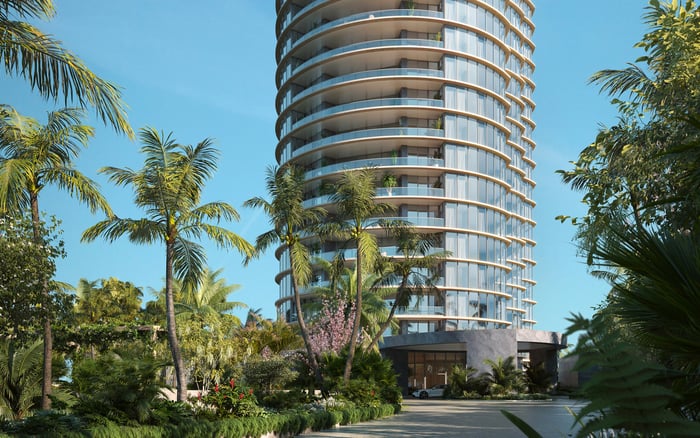
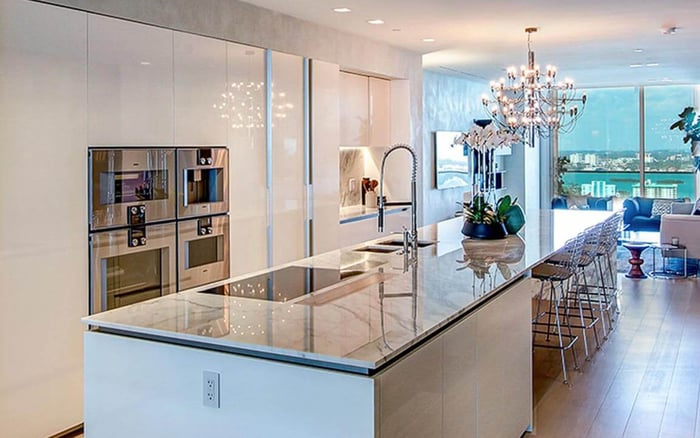
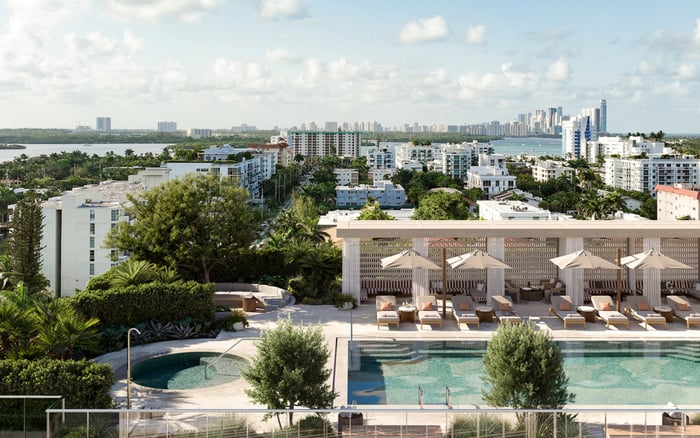
Rivage Bal Harbour is framed for buyers who value residential control, privacy, service reliability, and a low-friction ownership experience on one of South Florida’s most tightly supplied oceanfront corridors.
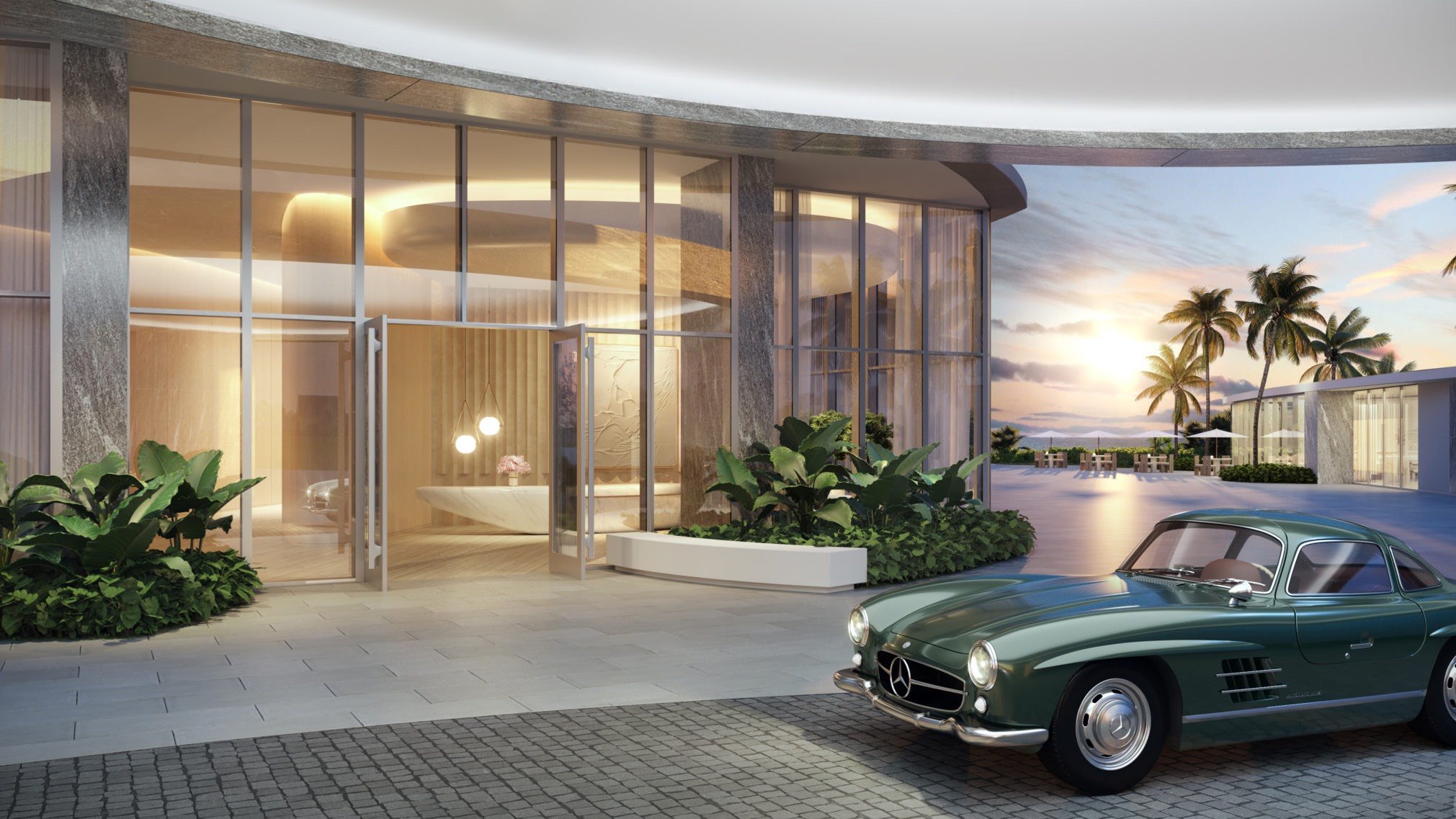
For the ultra-premium buyer, the question is no longer simply whether a residence is beautiful, oceanfront, or well serviced. The sharper question is whether the building returns ownership to the owner: control over use, predictability in daily life, privacy in shared spaces, and ease when the residence is part of a broader global portfolio. That is the case being made by Rivage Bal Harbour.
Rivage Bal Harbour is positioned as an ultra-luxury oceanfront condominium for buyers who want a residential environment rather than a hospitality-adjacent one. The distinction matters. In South Florida, many high-end addresses pair glamour with a degree of transient energy, whether through hotel operations, frequent short-term occupancy patterns, or the sheer intensity of large coastal towers. Rivage is framed differently: low-density, ownership-oriented, and focused on privacy, control, and ease.
That makes the project especially relevant for a buyer who already understands luxury. This is not an introductory purchase driven by spectacle. It is a more mature decision, centered on how the property will function when the owner is present, when the owner is away, and when consistency matters more than novelty.
Control is often invisible until it is missing. It shows up in elevator patterns, lobby traffic, poolside atmosphere, guest turnover, staffing rhythms, and the character of the residential community. In a strictly residential building, owners can reasonably expect a quieter baseline than in a product shaped by hotel-style turnover. For buyers prioritizing privacy, that predictability can be as valuable as a view.
Rivage’s low-density positioning speaks directly to this concern. Fewer layers of daily building traffic can support a more composed experience in shared spaces. The goal is not isolation, but refinement: a building where common areas feel like an extension of private ownership rather than public-facing hospitality.
This is where lifestyle and asset logic meet. A residence may be used seasonally, periodically, or as part of a rotation among homes in multiple cities. In each case, the owner benefits from a building that is not constantly recalibrating around temporary guests. The experience should feel familiar each time the door opens.
Bal Harbour strengthens the argument because the village already carries a reputation for controlled luxury. It is quieter than more entertainment-driven coastal areas, more residential in tone than many urban waterfront districts, and defined by a limited supply of true oceanfront development opportunities. In a market where new inventory can be abundant in some neighborhoods and scarce in others, that scarcity gives Bal Harbour a distinct ownership context.
The micro-market also has established reference points. Buyers evaluating Rivage will naturally consider the language of nearby luxury condominium benchmarks, including Oceana Bal Harbour, which has helped define the area’s ultra-luxury condominium conversation. Rivage’s role is not simply to join that set, but to appeal to a buyer who wants the next residence to feel more controlled, more residential, and easier to own.
Bal Harbour also sits within a broader northern Miami Beach and Surfside luxury corridor. To the south, projects such as The Surf Club Four Seasons Surfside and The Delmore Surfside reinforce the appeal of discreet coastal living. Yet Bal Harbour remains its own proposition, with an atmosphere that favors calm over spectacle.
The lock-and-leave concept is frequently used in luxury real estate, but at the highest level it requires more than a concierge desk and amenities. It requires operational trust. Owners want confidence that the residence can be left for extended periods without creating management friction, and that returning will feel seamless rather than administrative.
Rivage’s ownership case centers on that reduced-friction model. Its amenity and service posture is framed around a high-touch residential experience with less owner involvement in day-to-day logistics. For a globally mobile buyer, this is not a convenience feature. It is central to the value proposition.
The second-home buyer benefits in particular from this approach. A secondary residence should not behave like a second job. Security, service reliability, and a predictable residential environment all support the reason many buyers choose Bal Harbour in the first place: to have a private coastal base that feels composed even when life elsewhere is in motion.
South Florida offers several versions of luxury. Some buyers want the energy of branded residences with hospitality adjacency. Others prefer the scale and visibility of high-density towers. Rivage is positioned for a different preference: less traffic, fewer transient patterns, and a more ownership-led rhythm.
That contrast does not make one model universally better. It clarifies fit. A buyer who expects restaurants, nightlife, and hotel services to be central to the residential experience may prefer a more animated setting. A buyer who places privacy, residential consistency, and controlled circulation at the top of the list will read Rivage differently.
This is also why Rivage’s non-hotel operating model matters. The more a building behaves like a private residential address, the more the owner can understand the property as a home first. For ultra-luxury buyers, that distinction can influence everything from daily comfort to long-term satisfaction.
The likely Rivage buyer is not chasing maximum activity. This is a buyer who values an oceanfront position but wants the building to feel calm, secure, and manageable. They may spend only part of the year in South Florida. They may own in New York, London, São Paulo, Mexico City, or the Caribbean. They may be comparing branded, boutique, and purely residential options across the region.
For that audience, control is not about austerity. It is about discretion. The building should support family use, hosting, wellness, travel, and absence without forcing the owner into constant supervision. The best luxury residences do not demand attention every week. They perform quietly.
Rivage Bal Harbour’s long-term value proposition is tied to this exact combination: Bal Harbour scarcity, oceanfront prestige, residential predictability, and demand from buyers who increasingly prefer controlled environments over high-turnover luxury.
Even in a compelling ownership case, diligence remains essential. Buyers should understand the building’s residential use framework, governance structure, service expectations, and how shared spaces are intended to operate. The appeal of low density is strongest when the operating culture protects it.
They should also evaluate how the residence will be used. A primary resident may prioritize daily quiet and building intimacy. A seasonal owner may prioritize service reliability while away. A family buyer may focus on privacy, security, and the ease of arrivals and departures. The same project can satisfy different needs, but the decision should be anchored in use, not presentation.
Rivage’s strength is that its positioning is unusually clear. It is not trying to be every version of South Florida luxury. It is making a disciplined argument for the buyer who wants Bal Harbour, oceanfront living, and a calmer form of ownership.
What is the core ownership case for Rivage Bal Harbour? Rivage is positioned around privacy, control, and ease of ownership in a low-density oceanfront residential setting.
Is Rivage Bal Harbour framed as a hotel-style residence? No. Its positioning emphasizes a strictly residential environment rather than a transient hospitality product.
Why does low density matter to luxury buyers? Low density can support more controlled shared spaces, quieter circulation, and a stronger sense of residential privacy.
Who is the ideal buyer for Rivage Bal Harbour? The project speaks to buyers who value privacy, service reliability, and a lock-and-leave lifestyle in Bal Harbour.
Does Rivage appeal to second-home owners? Yes. Its reduced-friction ownership model is well suited to globally mobile buyers who may be away for extended periods.
How does Bal Harbour support the project’s value proposition? Bal Harbour offers a quieter luxury environment and limited true oceanfront development opportunities.
How does Rivage compare with branded condo-hotel models? Rivage is positioned for owners seeking residential predictability rather than hotel-style turnover or tourism exposure.
Why is oceanfront scarcity important here? Scarcity can strengthen long-term demand for new luxury inventory in tightly supplied coastal micro-markets.
Should buyers compare Rivage with other Bal Harbour buildings? Yes. Comparing it with established local benchmarks helps clarify its emphasis on control and residential ease.
What should buyers review before purchasing? Buyers should review use rules, governance, service expectations, and how the building preserves its residential character.
To compare the best-fit options with clarity, connect with MILLION.
If branded residences are on your mind — as a home or as an allocation — we would be glad to share what we are seeing, privately.
Begin a quiet conversation