A practical MILLION guide to evaluating staff-ready residences in and around Miami Design District, with a focus on privacy, service circulation, adaptable planning, and durable long-term value.

In Miami Design District, a serious long-term residence is not measured only by ceiling height, stone selection, or a cinematic view. Those details matter, but they are only the visible layer. For an owner who lives with household staff, hosts frequently, travels often, or expects the residence to function through changing family needs, the deeper question is operational: does the home work when life becomes busy?
A staff-ready residence is not necessarily the largest residence. It is the one with the clearest hierarchy of movement. Owners, guests, deliveries, housekeeping, private chefs, security, and maintenance should be able to move through the property without constant overlap. At its best, the home feels calm because its service logic is quiet, legible, and built into the plan rather than improvised after closing.
That distinction is especially important near the Design District, where the buyer is often design-literate and globally mobile. The neighborhood’s appeal is aesthetic, cultural, and lifestyle-driven, but a long-term purchase must go beyond the romance of proximity. It should support privacy, routine, entertaining, and resale flexibility with equal discipline.
A staff-ready floor plan begins with circulation. A residence may photograph beautifully and still fail if the service route cuts through formal living space, if deliveries have nowhere discreet to land, or if housekeeping storage is too far from the rooms it supports. In a daily-use home, these small inefficiencies become permanent irritations.
Buyers should study the sequence from arrival to residence, then from entry to kitchen, bedrooms, laundry, terraces, and back-of-house zones. The question is not whether staff can technically move through the home. The question is whether they can do so without interrupting the owner’s experience.
This is where large open plans deserve particular scrutiny. Openness can be elegant, but it should not erase the practical distinction between public, private, and service areas. A well-planned residence allows dinner to be prepared, a guest suite to be refreshed, or luggage to be handled while the principal rooms remain composed.
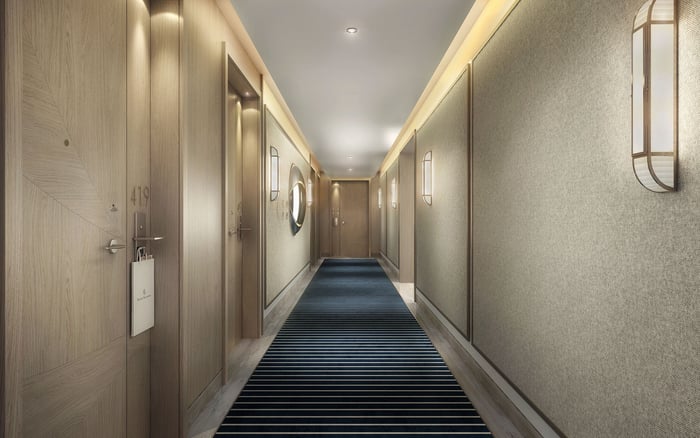
In a staff-ready home, privacy is architectural, not merely procedural. Doors, vestibules, secondary corridors, acoustic separation, and thoughtful bedroom placement all matter. The goal is not isolation. It is controlled access.
For long-term owners, privacy must also extend beyond the unit. Building entries, elevator protocols, parking arrangements, package handling, and guest management can either reinforce the residence or undermine it. A beautifully planned home loses value if every daily function requires negotiation at the lobby or garage level.
This is why buyers comparing Design District options may also look at nearby luxury corridors for perspective. A project such as Kempinski Residences Miami Design District places the conversation directly in the Design District context, while Miami Design Residences Midtown Miami may be considered by buyers who want proximity to the same cultural orbit with a different residential rhythm. The key is not simply the address. It is whether the building and residence can protect daily privacy over years of ownership.
Inside the home, staff-readiness is expressed through practical details. A secondary prep zone can be more valuable than an oversized show kitchen if the owner entertains often. A laundry room with real working space matters more than a decorative closet labeled for laundry. Storage for linens, serviceware, luggage, cleaning equipment, and seasonal items should be planned as infrastructure, not treated as an afterthought.
The same principle applies to staff accommodation. Some buyers need a dedicated staff room. Others need a flexible suite that can shift between staff, guest, wellness, office, or security use. Long-term value usually favors adaptability, especially when family structure, work habits, and travel patterns can change.
Finishes should also be judged through a durability lens. In an ultra-premium residence, durability does not mean commercial harshness. It means surfaces, hardware, millwork, flooring, and outdoor materials that can handle real occupancy without losing their elegance. A residence intended for constant service should age with dignity, not demand delicate behavior from everyone who enters.
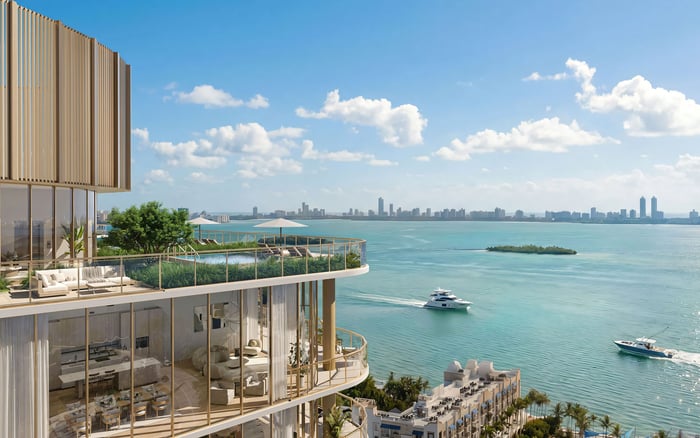
The Design District offers a particular kind of Miami value: cultural access, architectural appetite, fashion, dining, art, and a more urban rhythm than the beachfront markets. For a lifestyle buyer, that combination can be compelling. For an investment buyer, it requires more careful analysis.
Long-term value is rarely created by novelty alone. It is created by a residence that remains usable when the market’s attention moves elsewhere. That means practical bedroom separation, intelligent storage, secure parking, a credible arrival experience, and building operations that match the promise of the architecture.
New construction can be attractive because it may offer contemporary layouts and current expectations around wellness, technology, and amenity programming. Yet buyers should resist assuming that new automatically means staff-ready. The best question is always operational: how will the home perform on a Monday morning, during a dinner party, after a long flight, or when the principal owner is away?
Boutique residences can appeal to Design District buyers because they often feel more private, more residential, and less anonymous. Boutique scale may also reduce the sense of hotel-like turnover. The tradeoff is that staffing, maintenance depth, and service consistency must be examined closely.
Larger branded or hospitality-influenced residences may offer a different kind of comfort, particularly for owners who travel and want a recognizable service culture. A buyer comparing Miami’s premium urban options might look beyond the Design District to understand standards of arrival and service at The Residences at Mandarin Oriental, Miami or the more commercially intense Brickell environment around 619 Residences by Foster + Partners + Nobu Hospitality. The comparison is not about replacing one neighborhood with another. It is about sharpening expectations.
Brickell may offer a denser vertical lifestyle, while the Design District offers a more design-forward cultural identity. A long-term buyer should decide which daily pattern is more durable, then evaluate whether the residence itself can support a staff-assisted life with minimal friction.
A staff-ready residence has a narrower but often more decisive buyer pool. When the right buyer appears, they tend to recognize whether the residence has genuine operational intelligence. They notice where staff would enter, where bags would go, whether the kitchen can support catered entertaining, and whether private rooms are protected from the social core.
This is why operational clarity can support resale discipline. A future buyer may change furniture, art, lighting, or wallcovering, but they are less likely to change the fundamental circulation of the home. If that circulation is wrong, the discount is structural. If it is right, the residence can adapt across tastes and ownership cycles.
For South Florida’s ultra-premium audience, the most durable homes are not the loudest. They are the ones where elegance is supported by invisible systems. In the Design District, that means a residence that can live as beautifully as it looks.
Before making a serious offer, buyers should walk the residence as both owner and operator. Where would staff arrive? Where would groceries be unpacked? How would a private chef stage dinner? Can housekeeping work without crossing the primary suite? Is there a discreet place for luggage after a late flight? Can terraces be serviced without disturbing guests?
The answers should be specific. If every solution depends on future customization, the residence may still be desirable, but it is not fully staff-ready. If the plan already anticipates movement, privacy, storage, and service, the home is better positioned for long-term ownership.
The most refined purchase is the one that reduces future compromise. In Miami Design District, that means looking past the first impression and asking whether the residence can support a private, staffed, design-conscious life for many years.
What is a staff-ready residence? It is a home planned for smooth owner, guest, and household staff movement, with privacy, storage, service access, and operational flexibility built in.
Does staff-ready always mean a staff bedroom? Not always. Some buyers need dedicated accommodation, while others need a flexible suite that can serve staff, guests, office, wellness, or security needs.
Why does circulation matter so much? Circulation determines whether daily service can happen discreetly. Poor circulation forces staff, deliveries, and owners into the same spaces too often.
Is the Miami Design District a long-term residential location? It can be compelling for buyers who value design, dining, art, and an urban Miami lifestyle, provided the residence itself has strong functional planning.
Are larger residences automatically better for staff? No. Size helps only when the plan separates public, private, and service functions with clarity and efficiency.
Should buyers prioritize new construction? New construction may offer current layouts and systems, but buyers still need to verify service logic, storage, privacy, and building operations.
What should entertainers look for first? Focus on kitchen support, prep areas, guest arrival, powder room placement, terrace service, and whether staff can work without disrupting the main rooms.
How does staff-readiness affect resale? It can make a residence more attractive to sophisticated buyers because operational strengths are difficult to add later.
Is boutique scale an advantage? Boutique scale can feel more private, but the buyer should confirm that building staffing and service procedures match the residence’s ambitions.
What is the simplest red flag? If groceries, luggage, housekeeping, and catering all move through the same formal path as guests, the residence may not be truly staff-ready.
When you're ready to tour or underwrite the options, connect with MILLION.
If branded residences are on your mind — as a home or as an allocation — we would be glad to share what we are seeing, privately.
Begin a quiet conversation