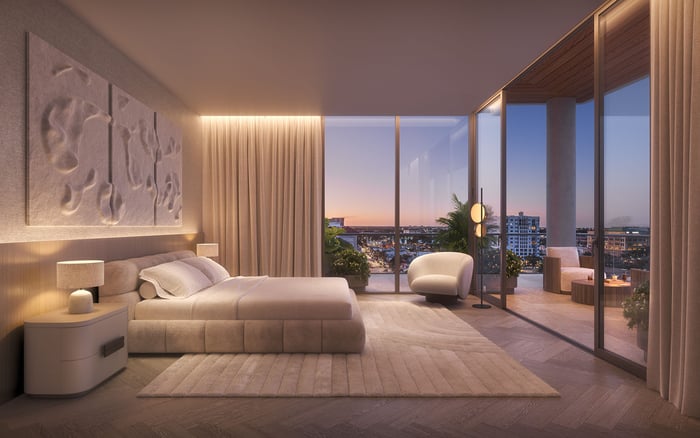
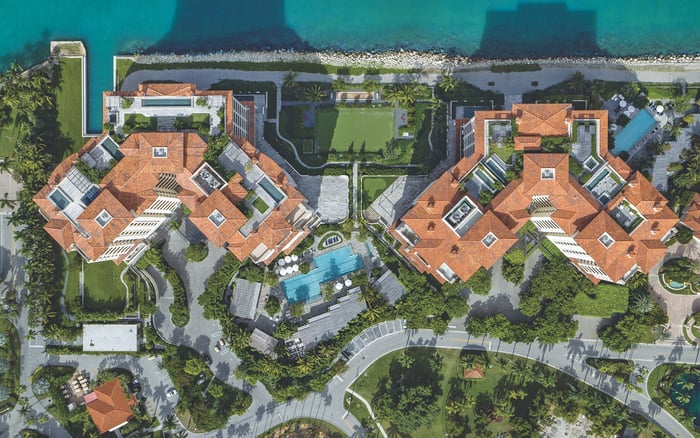
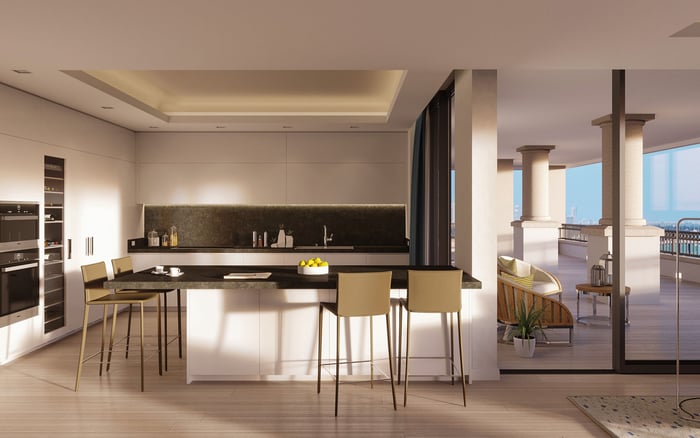
A buyer-focused look at Palazzo della Luna on Fisher Island, where private-home boundaries, discreet support, and controlled circulation define a more residential form of effortless entertaining.
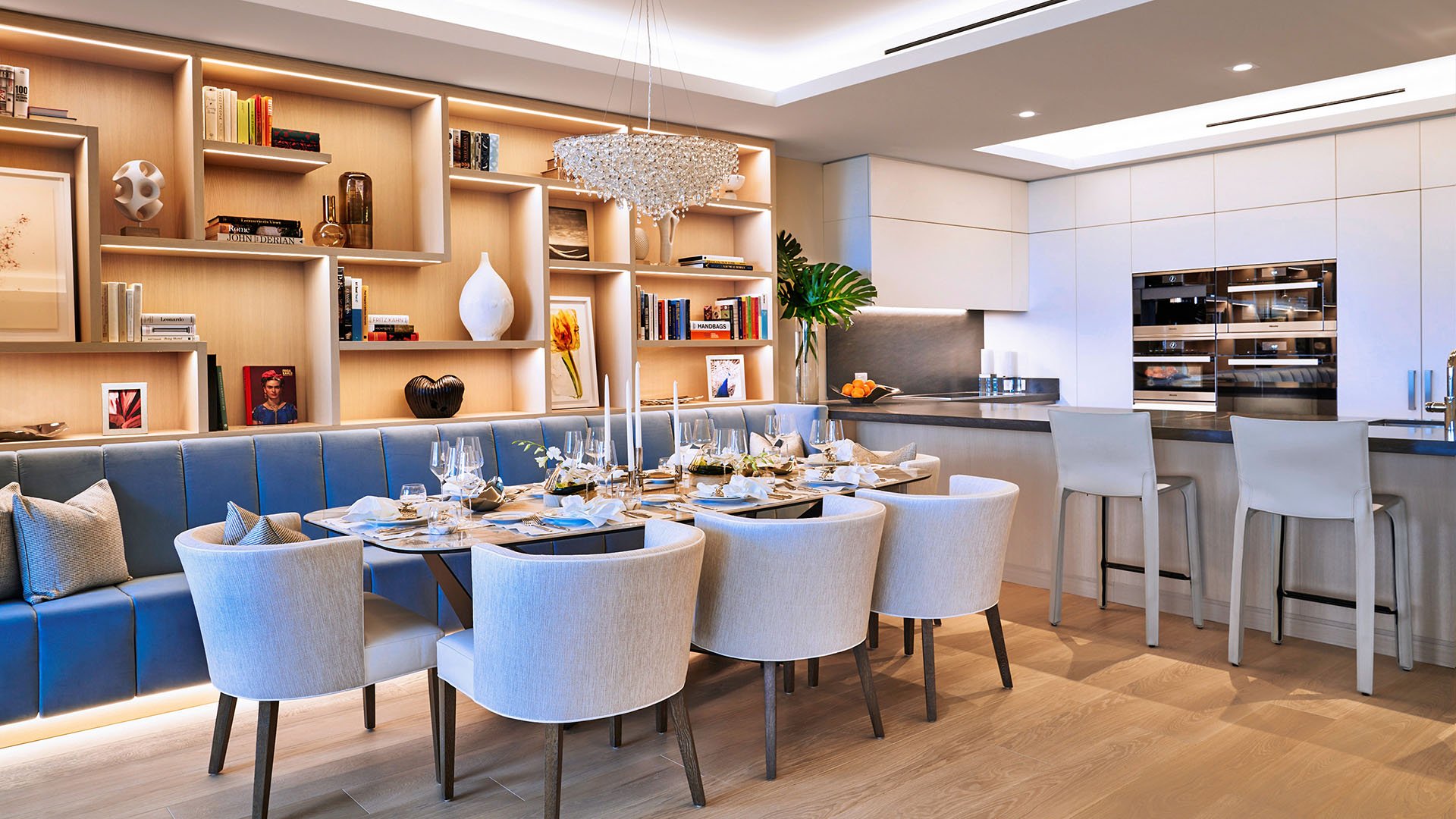
For the South Florida buyer who already understands service, the question is no longer whether assistance exists. It is how that assistance behaves within the boundaries of a private home. Palazzo della Luna on Fisher Island is compelling because its luxury proposition is not built around hotel theater. It is framed as ultra-prime residential living, with support that helps owners host beautifully while preserving the authority, privacy, and emotional quiet of home.
That distinction matters. In many hospitality-led residential models, service becomes part of the atmosphere: visible staff movement, branded identity, visitor flow, and the sense that the building is always performing. Palazzo della Luna takes a more restrained position. Its appeal is the ability to host family gatherings, business dinners, and social evenings with less friction, without making the residence feel public or operational.
The phrase often associated with the property, a private estate in the sky, is useful because it clarifies the priority. This is not about importing a hotel into a residence. It is about giving a private residence the backup systems that make entertaining feel composed.
Fisher Island gives this concept a natural setting. The island’s controlled environment supports a quieter, more discreet residential rhythm for owners, guests, and authorized staff. For buyers comparing mainland towers with private-island living, that difference is not simply geographic. It changes the mood of arrival, the tone of social circulation, and the psychological threshold between public life and private residence.
That threshold is central to Palazzo della Luna Fisher Island. The property’s positioning avoids the branding, foot traffic, and public-facing energy that can accompany hotel-style luxury living. On Fisher Island, privacy is not treated as a decorative amenity. It is part of the lifestyle architecture.
The broader Fisher Island residential conversation includes properties such as Palazzo del Sol, The Residences at Six Fisher Island, and The Links Estates at Fisher Island, each part of a market where seclusion, ownership, and controlled access carry unusual weight. Palazzo della Luna’s specific editorial point is how those values extend into entertaining, not through spectacle, but through restraint.
The most sophisticated entertaining infrastructure is often the least visible. At Palazzo della Luna, the service idea is intended to feel discreet and available on demand, rather than constantly present. Staff and shared infrastructure remain largely invisible until a resident needs them. That creates an important distinction between being supported and being observed.
For an owner hosting a business dinner, the residence should still feel like their domain. For a family gathering, assistance should reduce friction without changing the intimacy of the occasion. For a larger social evening, support should make the experience smoother without turning the home into a venue. This is supportive but not servile luxury: help is available, but the resident remains in control of the environment.
That control is why the model resonates with buyers who already have access to private clubs, travel concierges, and full-service hospitality. They are not looking for more visible service. They are looking for less interruption.
Hotel-style luxury can be effective when a buyer wants brand recognition, consistent programming, and a more animated sense of service. But it also introduces a different energy. Guest circulation can feel more public. The building identity can become more prominent than the private residence. Service can become atmospheric, always nearby, always legible.
Palazzo della Luna’s quieter proposition is more residential. The home remains the center. The owner decides when support appears, how it is used, and when it recedes. This matters for buyers who entertain across multiple registers: a formal dinner one evening, grandchildren the next morning, a board-level conversation later in the week.
The best version of this model does not ask the owner to choose between ease and privacy. It allows both to coexist. That is where the property becomes a case study in entertaining infrastructure without overt hospitality intrusion.
Because the property’s positioning emphasizes privacy and home-like boundaries, buyers should evaluate it through the lens of lived experience rather than a checklist. The key question is not simply what support exists. It is whether the residence can absorb support without changing character.
Design and architecture choices become important here. Flow, arrival sequence, separation between resident life and service movement, and the ability to host without visual clutter all shape the experience. Even without focusing on specific rooms or amenity names, the larger principle is clear: the residence should feel composed before, during, and after an event.
Waterfront living can intensify this expectation. Owners often want the view, the arrival, and the atmosphere to feel effortless. Yet effortlessness, at this level, is not casual. It is planned invisibility. The less guests notice the mechanics, the more successful the evening feels.
This is also why the concept is relevant beyond penthouses. Ultra-prime buyers at many elevations want the same thing: a residence that can host with grace while still feeling unequivocally private.
The strongest luxury real estate creates a sense of possession, not just access. Palazzo della Luna’s appeal depends on preserving the psychological and spatial boundaries of home while offering high-touch support. That is a subtle balance. Too little support, and entertaining becomes work. Too much visible support, and the home can feel managed by someone else.
For many Fisher Island buyers, the ideal is a residence that anticipates without intruding. The owner should feel assisted, never displaced. Guests should feel cared for, never processed. The building should provide confidence without announcing itself.
Lifestyle, in this context, is not about constant activation. It is about the freedom to host on one’s own terms. Among buyers who view Fisher Island as an exclusive-area choice, that freedom is part of the premium.
In South Florida’s highest tier, the entertaining conversation has matured. The loudest room is not always the most desirable one. Buyers increasingly understand that privacy, controlled movement, and quiet execution can be more valuable than visible abundance.
Palazzo della Luna fits that evolution. It borrows convenience from hospitality while rejecting the feeling of hotel intrusion. It enables social life without making social life the building’s public identity. That is a meaningful distinction in a market where branded experiences and public-facing glamour often dominate the conversation.
For the right buyer, this is top-project territory not because it shouts, but because it knows when not to. The highest compliment after an evening at home may be that everything felt natural.
Is Palazzo della Luna a hotel-branded residence? No. It is positioned as an ultra-prime residential building on Fisher Island rather than a hotel-branded hospitality property.
What makes its entertaining concept different? The emphasis is on private-home entertaining with discreet backup, not a constantly visible service environment.
Why is Fisher Island important to the experience? Fisher Island’s controlled private-island setting reinforces discretion for owners, guests, and authorized staff.
Does the building aim to provide hotel-style service? Its positioning is more nuanced: convenience and support are available, but the home is intended to remain private and residential.
Who is this model best suited for? It suits buyers who host often but prefer quiet execution, controlled access, and a strong sense of ownership.
How should buyers evaluate the service model? They should focus on whether support feels available on demand while remaining largely invisible when not needed.
Is the appeal mainly about amenities? Not exclusively. The larger appeal is the balance between high-touch support, privacy, and home-like boundaries.
How does it compare with mainland luxury towers? The private-island context helps distinguish it from more public, high-traffic mainland residential environments.
Can it work for both family and business entertaining? Yes. The concept is framed around reducing friction for family gatherings, business dinners, and social events.
What is the core buyer takeaway? Palazzo della Luna is about effortless hosting without sacrificing discretion, privacy, or the feeling of home.
To compare the best-fit options with clarity, connect with MILLION.
If branded residences are on your mind — as a home or as an allocation — we would be glad to share what we are seeing, privately.
Begin a quiet conversation