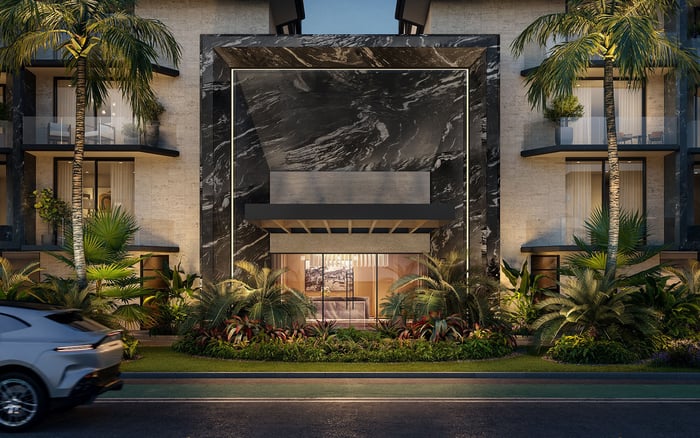
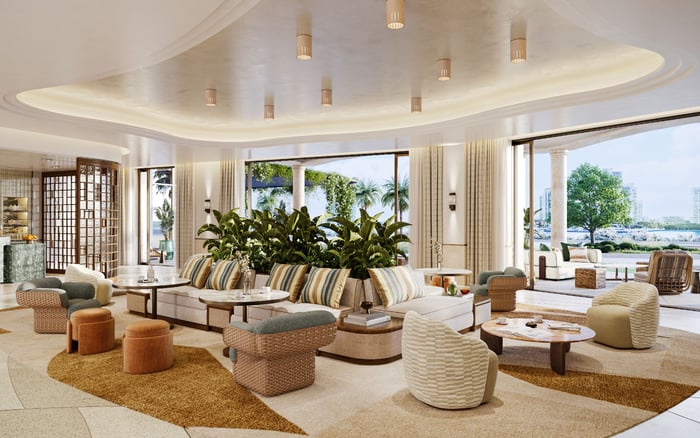
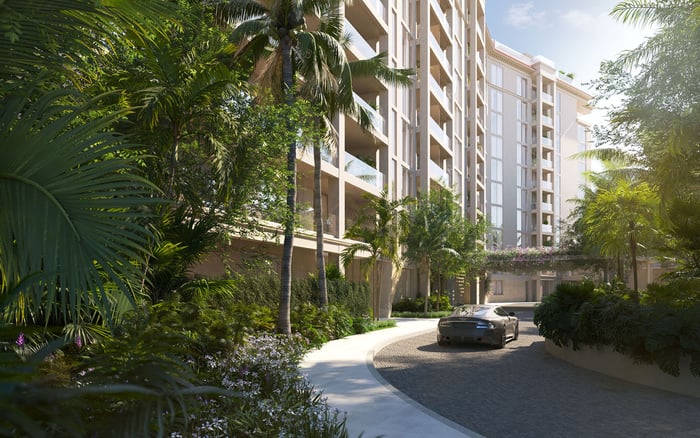
A buyer-focused comparison of three distinct South Florida luxury archetypes: boutique waterfront condominium living, private-island estate ownership, and branded urban resort residences.
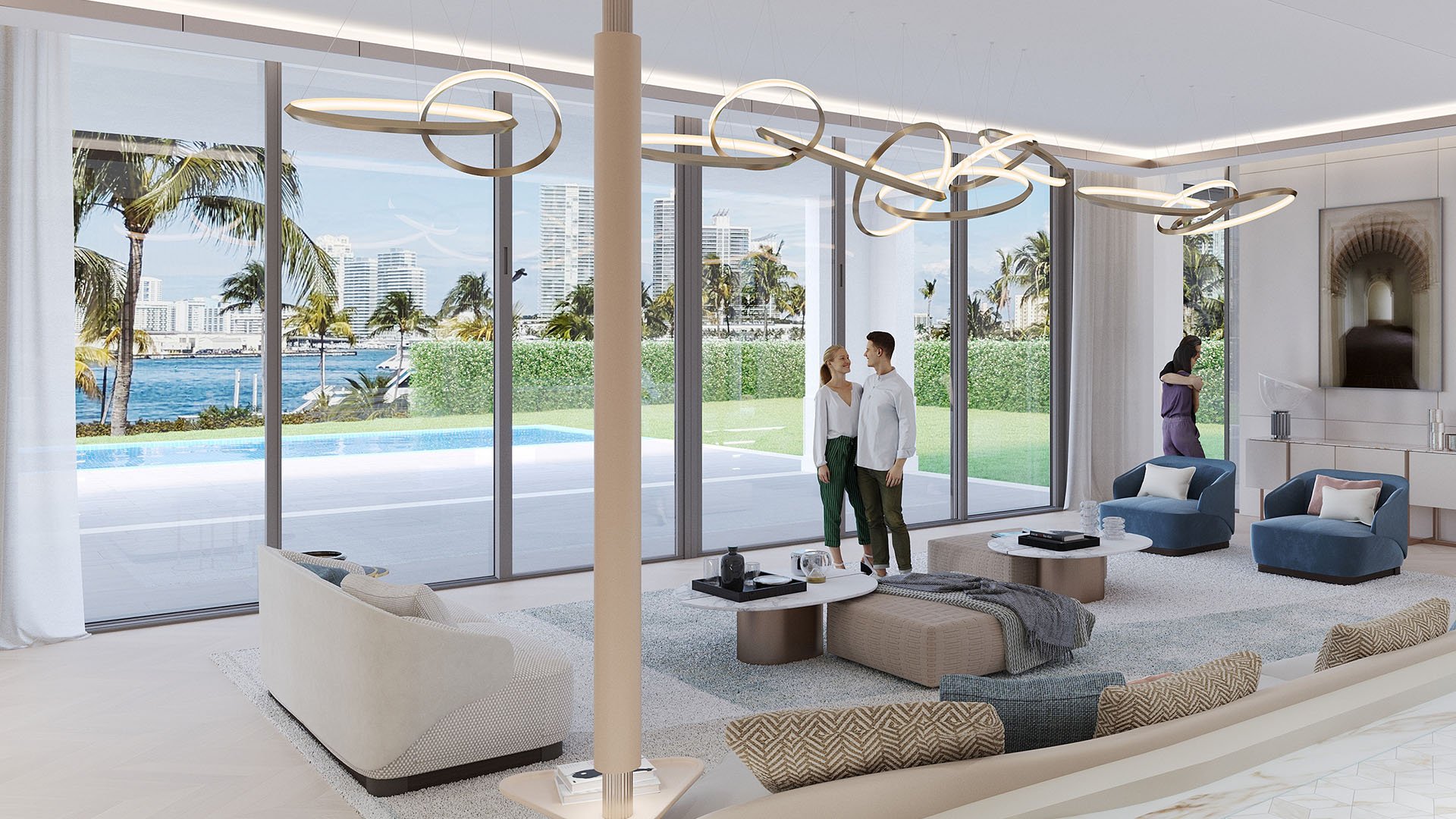
For the most sophisticated South Florida buyer, a short list is rarely a collection of lookalike options. More often, it is a set of reference points, each answering the same essential questions from a different angle: How much privacy is enough? How important is service? Should the daily rhythm feel residential, resort-like, club-oriented, or city-connected? Within that framework, Bay Harbor Towers, The Links Estates at Fisher Island, and The Residences at Mandarin Oriental, Miami merit consideration together not because they are interchangeable, but because they clarify distinct versions of luxury living.
The comparison is useful because each property expresses a different archetype. Bay Harbor Towers speaks to boutique waterfront condominium living in a quieter residential-island setting. The Links Estates at Fisher Island represents the private-island estate side of the market, where seclusion, controlled access, and a private-club environment shape the ownership proposition. The Residences at Mandarin Oriental, Miami brings in the branded-residence and urban resort-living model, giving buyers a Miami urban-core counterpoint to quieter island settings.
Seen together, the trio helps buyers move beyond surface preference. The question becomes less about which address is most prestigious and more about which format best supports the way the owner expects to live, host, arrive, retreat, and be served.
Bay Harbor Towers is best understood as a benchmark for buyers who want condominium living without the intensity of a more urban high-rise environment. Its relevance comes from the boutique waterfront condominium archetype: a quieter residential-island context, a waterfront orientation, and a lower-density setting compared with Miami’s more vertical, city-centric neighborhoods.
For a buyer beginning with the assumption that a condominium is the right format, Bay Harbor Towers helps refine the details. Does the buyer want the convenience of lock-and-leave ownership? Does the household prefer a smaller-scale island environment over a skyline-first address? Is privacy defined by fewer daily frictions rather than by the acreage and autonomy of an estate?
This is where Bay Harbor Islands becomes a meaningful lens. The appeal is not just proximity to the water, but the softer cadence of residential-island living. Buyers weighing a broader short list can use Bay Harbor Towers to test whether boutique condominium convenience offers enough privacy, or whether the search should continue toward something more estate-driven.
The Links Estates at Fisher Island belongs on the same short list for the opposite reason. It does not answer the condominium question; it challenges it. For buyers evaluating estate-style living rather than a high-rise residence, The Links Estates at Fisher Island helps define how much seclusion, controlled access, and private-club lifestyle matter.
Fisher Island carries a different rhythm than Bay Harbor Islands or Miami’s urban core. The value proposition is not simply space. It is separation, arrival, and an island environment where privacy is embedded into daily life. For some buyers, that controlled sense of retreat is the defining luxury. For others, it may feel too removed from the spontaneity and connectivity they want from South Florida.
That is why The Links Estates at Fisher Island is so useful in a short-list exercise. It asks a buyer to be honest about the trade-off between estate-style privacy and condominium simplicity. It also frames a broader question: is the desired lifestyle fundamentally about retreat, or about access with refined service?
The Residences at Mandarin Oriental, Miami introduces a third axis: branded residences as an urban resort-living model. Where Bay Harbor Towers clarifies boutique waterfront condominium preferences and The Links Estates at Fisher Island clarifies private-island estate priorities, The Residences at Mandarin Oriental, Miami clarifies the buyer’s appetite for hotel-branded service in a Miami setting.
This is not only a location comparison. It is a service comparison. The branded-residence model can appeal to buyers who want the polish, structure, and hospitality cues associated with a globally recognized hotel environment. It also offers a different kind of convenience than a boutique condominium or a private-island estate, one tied to service culture and urban access rather than quiet island separation.
For buyers who move fluidly between international cities, this distinction can be decisive. A branded urban residence may feel intuitive if the owner values predictability, staff-supported ease, and proximity to Miami’s core energy. Studied beside Bay Harbor Towers, it highlights the difference between skyline-centric branded living and quieter boutique waterfront condominium life. Studied beside The Links Estates at Fisher Island, it draws the line between private-club seclusion and hospitality-led service.
The strategic value of this three-property exercise is that it creates a clean decision framework. Bay Harbor Towers tests whether boutique island condominium living is enough. The Links Estates at Fisher Island tests whether the buyer wants estate-style privacy within a private-island environment. The Residences at Mandarin Oriental, Miami tests whether branded urban resort living is the better match.
Each option changes the meaning of convenience. In a boutique waterfront condominium, convenience may mean a more manageable residence in a calmer island setting. In a private-island estate context, convenience may mean control, security, and retreat. In a branded urban residence, convenience may mean service, access, and the ability to live with a hospitality infrastructure already surrounding the home.
For high-net-worth buyers, the exercise is not about ranking one against another. It is about eliminating ambiguity. A buyer who begins by saying they want privacy may discover that they mean quiet and low-density, which points toward Bay Harbor Towers as a relevant benchmark. Another may mean controlled access and estate-style separation, which makes The Links Estates at Fisher Island the clearer reference. A third may mean privacy delivered through polished service and effortless urban living, which makes The Residences at Mandarin Oriental, Miami more instructive.
A disciplined buyer can use these three properties as calibration points before committing to a narrower geographic search. Start with format. If condominium living feels more natural than single-family or estate ownership, Bay Harbor Towers and The Residences at Mandarin Oriental, Miami become more directly informative. If autonomy, scale, and private-island seclusion are central, The Links Estates at Fisher Island deserves more weight.
Then evaluate access. Some buyers want to feel removed from the city without leaving the Miami orbit. Others want the city at their doorstep, with resort-like service smoothing the edges. Others still want an island environment where arrival itself creates a sense of separation.
Finally, examine service. Boutique condominium life, private-club living, and branded hospitality are not minor lifestyle differences. They affect staffing expectations, guest experiences, maintenance rhythms, and the way a residence functions when the owner is away. The strongest short list is the one that makes those choices visible early, before a buyer becomes attached to a view, floor plan, or address.
Are Bay Harbor Towers, The Links Estates at Fisher Island, and The Residences at Mandarin Oriental, Miami direct competitors? No. They are better viewed as strategic benchmarks for different luxury living models across South Florida.
What does Bay Harbor Towers help a buyer evaluate? It helps clarify interest in boutique waterfront condominium living within a quieter residential-island environment.
Why include The Links Estates at Fisher Island in the comparison? It helps buyers test the appeal of private-island estate living, controlled access, and private-club seclusion.
What does The Residences at Mandarin Oriental, Miami add to the short list? It introduces the branded urban resort-residence model and a service-led Miami counterpoint.
Which option is most relevant for buyers focused on condominium convenience? Bay Harbor Towers is a useful benchmark for condominium living, especially in a quieter island setting.
Which option best frames estate-style privacy? The Links Estates at Fisher Island is the clearest reference point for estate-oriented island privacy.
How should buyers think about branded residences in this context? Branded residences can clarify whether hotel-style service is more important than private-club seclusion or boutique scale.
Is waterfront living the main common thread? Waterfront context matters, but the deeper comparison is about format, privacy, access, and service.
Can this framework help before choosing a neighborhood? Yes. It helps buyers refine lifestyle priorities before narrowing by location, building type, and service model.
Who benefits most from this type of comparison? Buyers with flexible budgets and multiple lifestyle possibilities benefit most because the comparison sharpens priorities.
When you're ready to tour or underwrite the options, connect with MILLION.
If branded residences are on your mind — as a home or as an allocation — we would be glad to share what we are seeing, privately.
Begin a quiet conversation