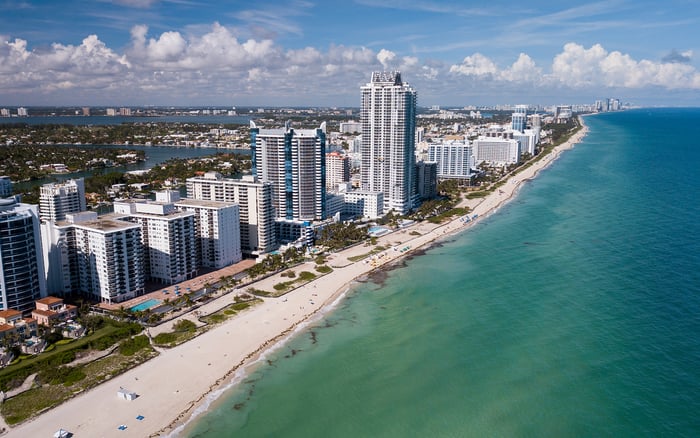
A practical MILLION guide to the questions cash buyers should ask before purchasing luxury real estate in Miami Beach, from proof of funds and escrow to title, association timing, privacy, insurance and closing readiness.

In Miami Beach, a cash purchase can feel like the most elegant path to ownership: fewer financing contingencies, fewer lender approvals, and often a cleaner message to the seller. Yet removing the mortgage does not remove complexity. It shifts the work to liquidity, documentation, title, escrow, insurance, association review and closing coordination.
For a luxury buyer, the question is not only whether the funds exist. The sharper question is whether those funds can be verified, moved, protected and deployed on the precise timeline the contract requires. That distinction matters in a market where desirable oceanfront and waterfront residences may attract sophisticated buyers who are equally capable on paper.
This buyer's guide approach is designed for discretion and control. Before pursuing a Miami Beach residence, ask the following questions so your cash position becomes a strategic advantage rather than an administrative scramble.
A cash offer usually needs credible proof that the buyer can close without financing. Ask what form of evidence will satisfy the seller before the offer is submitted. Some sellers may want a bank letter, a redacted account statement, a brokerage letter, or confirmation from a private banker. The goal is to show strength without revealing more than necessary.
Privacy should be planned early. High-net-worth buyers may hold capital across entities, managed accounts, family offices, trusts or international banks. Ask whether the proof should match the purchasing entity, whether funds need to be seasoned in a particular account, and who will receive the documentation. The most polished offers present clear financial capacity while keeping sensitive details limited to essential parties.
Cash buyers should clarify the full deposit schedule before signing. Ask when the initial deposit is due, when any additional deposit is due, where escrow will be held, and what happens if a deadline falls near a bank holiday or travel period. A purchase may be all cash, but missed timing can still create avoidable risk.
Wire security deserves special attention. Ask who will send wiring instructions, how those instructions will be verified, and whether verbal confirmation is required before any transfer. In luxury transactions, the deposit itself may be significant enough to justify a formal internal protocol. Buyers using a family office or private banking team should coordinate contact names, approval chains and cut-off times before the contract is live.
A cash closing should not mean a casual title review. Ask who is examining title, what exceptions may remain, whether any open permits or liens require attention, and whether the proposed vesting structure has been reviewed in advance. If the buyer is using an entity, trust or other ownership vehicle, the title and closing team should know early.
Entity ownership can add elegance and privacy, but only when organized. Ask whether the entity is already formed, whether it is authorized to purchase Florida real estate, who has signing authority, and what documentation the title company will require. If funds are held by one party and the buyer is another, clarify how the flow of money will be documented. The cleaner the ownership structure, the calmer the closing table.
Miami Beach luxury real estate often involves condominium associations, building rules and transfer procedures. Ask whether the building requires an application, interview, orientation, right of first refusal process, move-in deposit, elevator reservation or certificate of approval. Even when a buyer does not need lender approval, the association may still have its own calendar.
This is especially important when evaluating prominent Miami Beach addresses such as The Perigon Miami Beach or Shore Club Private Collections Miami Beach, where a buyer should understand building procedures before compressing the closing timeline. A strong cash offer is not simply fast. It is realistic.
For resale residences, ask for association financials, current rules, pending assessments if any are disclosed, insurance information and renovation policies. For new-construction purchases, ask how deposits are structured, when closing is expected, and what documents govern the buyer's rights before completion. The cash buyer's leverage is strongest when diligence is aligned with the property's actual process.
Cash buyers sometimes underestimate insurance because no lender is requiring a policy as a condition of closing. That can be a mistake. Ask what coverage is prudent for the residence, what the association's master policy covers, what personal property or liability coverage may be appropriate, and whether wind, flood or excess liability considerations should be reviewed with a specialist.
The post-closing plan also deserves precision. Ask when possession transfers, how keys and access devices are delivered, when utilities should be placed in the buyer's name, and how staff, designers or property managers will access the residence. For seasonal owners, the transition plan may matter as much as the closing itself.
At buildings such as 57 Ocean Miami Beach and The Ritz-Carlton Residences® Miami Beach, the lifestyle may feel effortless once owned. The purchase process, however, still benefits from a deliberate checklist that connects legal, financial and operational details.
Cash can make an offer more appealing, but it should not be treated as a universal discount code. Ask what the seller values most: price, certainty, speed, leaseback flexibility, a limited inspection period, or a closing date that matches their next move. A well-structured cash offer can solve a seller's problem without necessarily overpaying.
Buyers should also ask how much diligence they are willing to waive. In the ultra-luxury segment, confidence is valuable, but so is restraint. A cash buyer may choose to shorten timelines while still preserving the right to inspect, review association documents and confirm title. The best offers are not reckless. They are decisive because the buyer has prepared before entering the room.
For investment-minded buyers, the questions expand further. Ask how ownership costs, association rules, rental restrictions if any, tax planning, maintenance and exit strategy fit the broader portfolio. Even a trophy residence should be assessed as a capital decision, not only an emotional acquisition.
Before touring seriously, gather the advisory team: real estate advisor, attorney, title contact, tax counsel where appropriate, insurance advisor, banker and property manager. Ask each party what they need to act quickly. Then identify who has authority to approve documents, wire funds, sign contracts and negotiate revisions.
Also prepare a closing calendar. Work backward from the desired closing date and mark contract deadlines, deposit dates, inspection windows, association submission dates, insurance binding dates and final walk-through timing. Cash simplifies one layer of the transaction, but it does not eliminate sequencing.
The most prepared buyers can move with quiet confidence. They know what they will disclose, what they will not disclose, how they will close, and where the boundaries are. In Miami Beach, that discipline can be more persuasive than speed alone.
Does a cash purchase mean I can close immediately? Not necessarily. Title review, association requirements, escrow timing, inspections and document preparation can still shape the closing calendar.
Should I show full account statements with my offer? Usually, only necessary information should be shared. Ask what proof is acceptable and redact sensitive details when appropriate.
Can funds come from multiple accounts? They can, but the transfer plan should be organized early. Escrow and title teams need clarity on timing, names and documentation.
Is an attorney still useful in a cash transaction? Yes. A cash buyer still needs contract review, title guidance, entity coordination and closing oversight.
Should I buy in my personal name or through an entity? That depends on privacy, tax, estate and liability considerations. Review the structure before the offer is signed.
Do condo associations matter if there is no lender? Yes. Building approvals, transfer procedures, move-in rules and document reviews may still apply.
Can I waive inspections to make my cash offer stronger? You can, but it may increase risk. Many buyers prefer shorter diligence periods rather than no diligence at all.
What wire precautions should I take? Confirm instructions directly with a trusted contact before sending funds. Never rely solely on emailed instructions.
Do I need insurance without a mortgage? It is still prudent to review coverage. Ownership risk exists even when no lender requires a policy.
What makes a cash offer most compelling in Miami Beach? Certainty, clean documentation, realistic timing and a thoughtful contract often matter as much as the absence of financing.
If you'd like a private walkthrough and a curated shortlist, connect with MILLION.
If branded residences are on your mind — as a home or as an allocation — we would be glad to share what we are seeing, privately.
Begin a quiet conversation