A buyer-focused look at how Design Miami’s collectible, material-led sensibility can influence luxury-home priorities on Fisher Island, from art-ready interiors to private outdoor living.
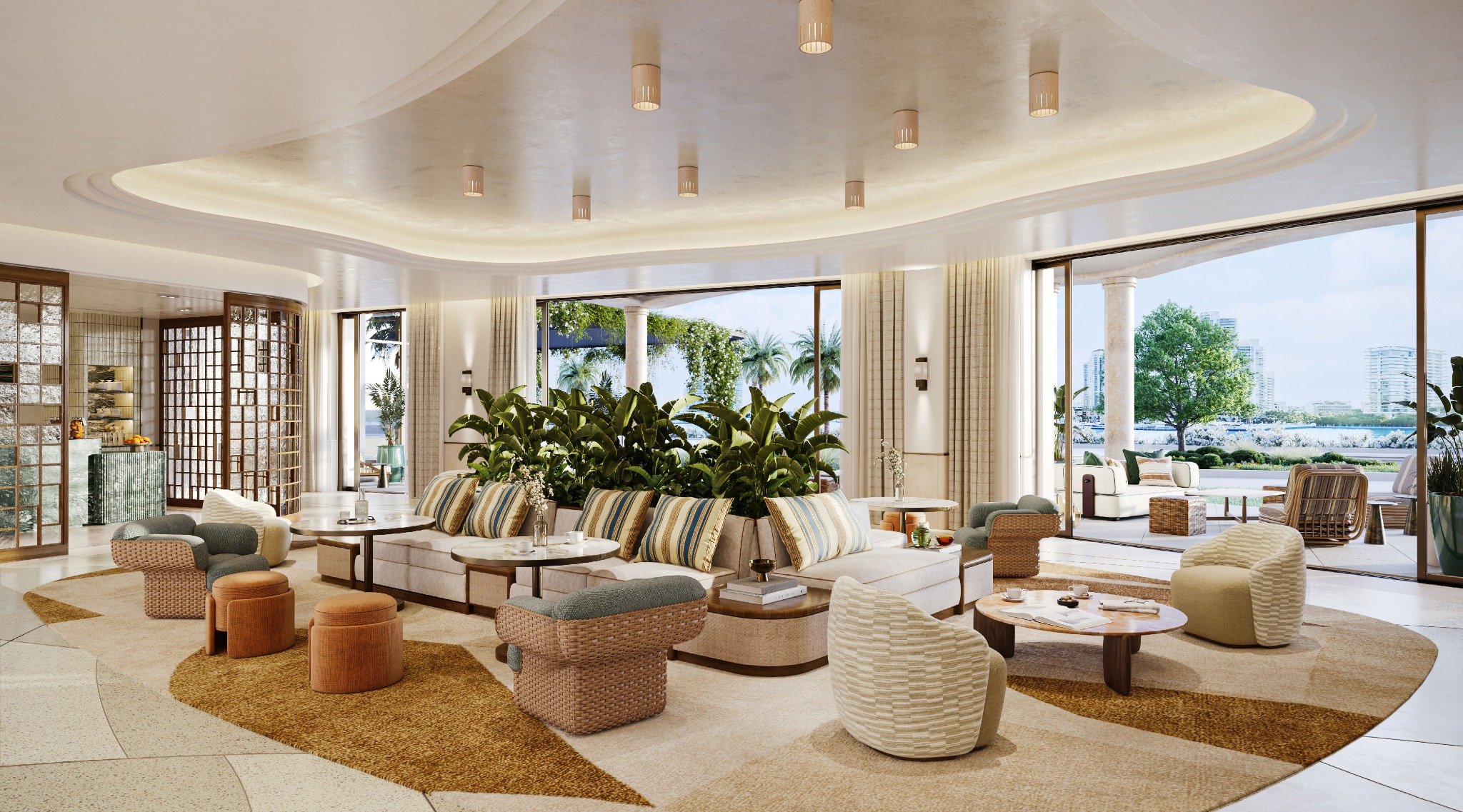
Design Miami has a particular way of changing the conversation. It does not simply celebrate beautiful objects; it trains the eye to notice proportion, provenance, texture, craft, and the discipline of restraint. For Fisher Island buyers, that matters because the island’s most compelling homes are not merely large or private. They are curated environments where architecture, art, furnishings, lighting, and water views must resolve into one coherent experience.
On Fisher Island, luxury is already assumed. The more useful question is which homes feel considered enough for a collector’s life. Design & Architecture has become a practical lens for evaluating that answer. A residence once judged primarily by square footage is now read through subtler priorities: wall planes, ceiling heights, gallery transitions, acoustic comfort, lighting temperature, service circulation, and the quality of indoor-outdoor thresholds.
The wider Art Basel season has also made South Florida buyers more fluent in collectible design. After a week spent with limited-edition furniture, sculptural lighting, rare materials, and museum-caliber art, the home must be ready to receive those choices without visual friction.
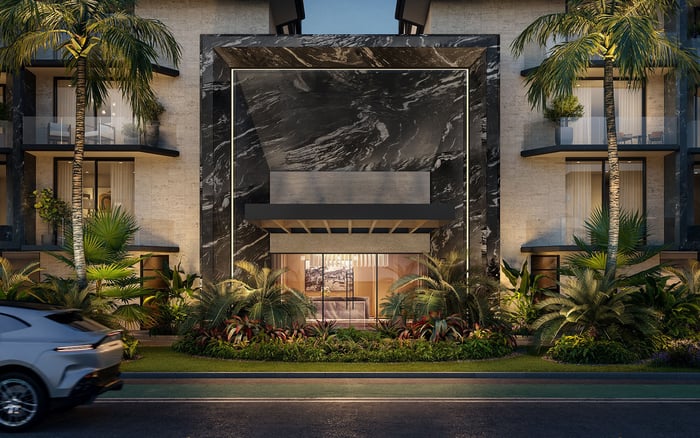
In Fisher Island residences, the first priority is often a sense of arrival that feels private rather than performative. This is where Design Miami’s influence is most visible. Buyers increasingly appreciate foyers that can hold a serious work of art, corridors that feel deliberate rather than residual, and living rooms with enough calm to let furniture and objects breathe.
For residences such as The Residences at Six Fisher Island, the design conversation naturally extends beyond finishes. A buyer may ask whether the plan supports both intimate daily living and a salon-like evening with guests. Can art be installed without competing with television walls? Does natural light flatter materials without compromising conservation? Are there enough quiet corners for reading, working, or retreating after a long social week in Miami?
The best homes answer these questions before a decorator enters the room. They provide order, scale, and flexibility. The result is not a staged look. It is an intelligent backdrop for a life that includes family, collecting, entertaining, and privacy in equal measure.
Design Miami sharpens sensitivity to materials. Stone is no longer just stone. Wood is evaluated by grain, warmth, and tactility. Metalwork is judged by detail, not shine. In Fisher Island, where the setting is inherently rare, buyers often gravitate toward interiors that feel permanent, grounded, and quietly bespoke.
This can make a meaningful difference in how homes are compared. A polished, generic renovation may photograph well, but a residence with honed surfaces, layered lighting, concealed hardware, and carefully proportioned millwork can feel more enduring in person. The goal is not maximalism. It is material intelligence.
At Palazzo del Sol, buyers considering the Palazzo del Sol Fisher Island lifestyle may be especially attuned to this kind of refinement: rooms that support serious furnishings, kitchens that feel integrated rather than theatrical, and primary suites that favor serenity over spectacle. This is where collectible design thinking becomes practical. Every element should earn its place.
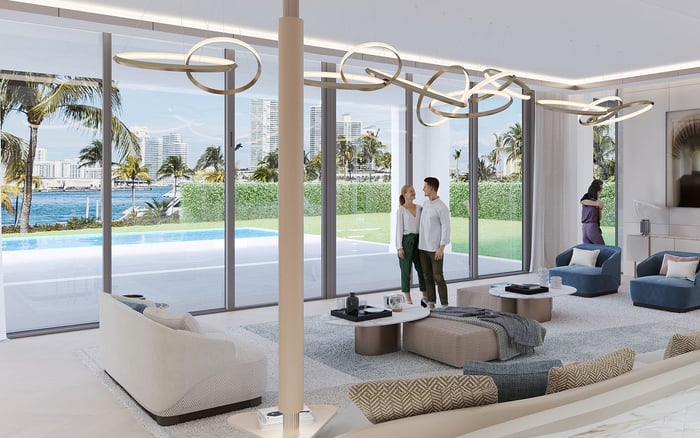
Waterfront is one of Fisher Island’s defining privileges, but Design Miami encourages buyers to look beyond the obvious. A view is only the beginning. The better question is whether the terrace, living room, and primary spaces make the water part of daily life in a comfortable, usable way.
A terrace should not feel like an afterthought. It should be deep enough to furnish with intention, shaded or oriented for real use, and visually connected to the interior palette. The most appealing outdoor rooms feel like extensions of the living space, not balconies waiting for occasional sunset photographs.
This is where homes such as Palazzo della Luna enter the buyer’s imagination. The phrase Palazzo della Luna Fisher Island suggests a standard where privacy, scale, and waterfront atmosphere are part of the same composition. For a design-aware buyer, outdoor furniture, lighting, planters, flooring, and sightlines deserve the same scrutiny as the interior.
The island’s privacy is central to its appeal, but the meaning of privacy is evolving. It is no longer only about controlled access or separation from the city. It is also about a home that allows different rhythms to occur at once: a spouse working quietly, children or guests gathering elsewhere, staff moving discreetly, and owners maintaining a wellness routine without leaving the residence.
Design Miami’s influence can be felt in this shift toward intentional living. A spa-like bath is more convincing when its materials, light, storage, and acoustics support daily calm. A gym or movement room is more valuable when it does not feel carved from leftover space. A media room works best when it can become a retreat, not just a screen.
For buyers studying The Links Estates at Fisher Island, this broader definition of privacy can be especially relevant. The single-family context invites questions about landscape, arrival sequence, outdoor entertaining, and the ability to create a highly personal world within the island.
The clearest lesson from Design Miami is that taste is not the same as decoration. Taste begins with priorities. On Fisher Island, that means looking for residences with strong bones, adaptable rooms, excellent light control, and surfaces that can age gracefully.
Buyers should also think carefully about future collecting. If art and design acquisitions are part of the lifestyle, the home should anticipate them. That includes clean wall runs, appropriate lighting infrastructure, climate-conscious placement, and rooms with enough negative space to make important pieces feel intentional.
Finally, do not underestimate emotional quiet. The most successful Fisher Island homes often have a low, confident register. They do not need to announce wealth. They allow the owner’s eye, collection, and rituals to define the final layer.
How can Design Miami influence a Fisher Island home search? It can help buyers focus on proportion, materials, lighting, art placement, and the long-term flexibility of the floor plan.
Should Fisher Island buyers prioritize interiors or views first? The strongest homes integrate both, pairing exceptional water exposure with interiors calm enough to support art, furnishings, and daily life.
Why does collectible design matter in luxury real estate? Collectible design encourages buyers to value craft, provenance, limited production, and rooms that can support meaningful objects.
What makes a residence feel art-ready? Look for balanced wall planes, controlled natural light, high-quality lighting, suitable ceiling heights, and uncluttered circulation.
Are terraces important for Fisher Island buyers? Yes. A well-planned terrace turns waterfront living into a daily experience rather than a purely visual amenity.
How should buyers evaluate materials? Favor materials that feel authentic, durable, tactile, and harmonious with the architecture rather than finishes chosen only for impact.
Does privacy affect design priorities? Yes. Privacy should shape entries, staff paths, bedroom placement, guest areas, outdoor rooms, and acoustic separation.
Can a branded or new residence still feel personal? Yes, if the plan gives the owner room to layer art, furniture, lighting, and custom details without fighting the architecture.
What is the biggest mistake in designing a Fisher Island home? Overdecorating can weaken the impact of the setting, especially when strong views and collectible pieces need room to breathe.
How should buyers think about long-term value? Homes with excellent proportions, adaptable layouts, quality materials, and disciplined design tend to remain compelling across cycles.
To compare the best-fit options with clarity, connect with MILLION.
If branded residences are on your mind — as a home or as an allocation — we would be glad to share what we are seeing, privately.
Begin a quiet conversation