A buyer-focused look at how Aston Martin Residences Downtown Miami frames privacy, arrival, and circulation as part of a branded waterfront living experience.
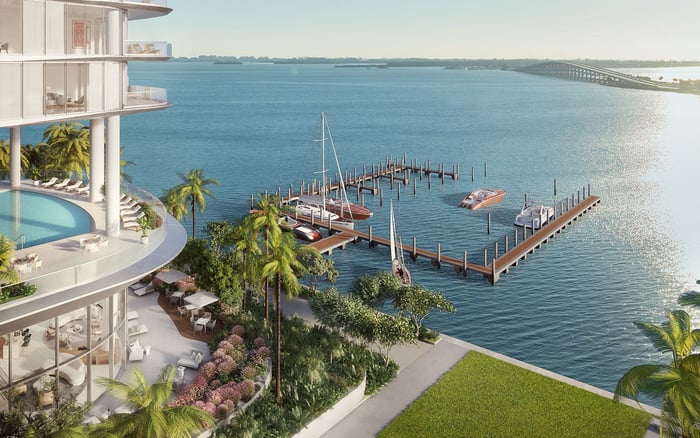
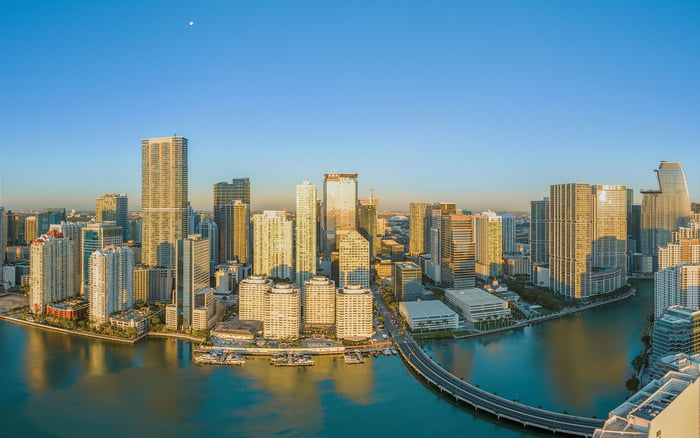
Aston Martin Residences Downtown Miami is more than a branded ultra-luxury condominium tower. It is a study in how a highly visible Downtown Miami waterfront address can create a convincing sense of controlled seclusion for residents. Positioned at the mouth of the Miami River on Biscayne Bay, the tower occupies one of the city’s most public urban edges, yet its residential proposition rests on something more private: the daily progression from arrival point to home.
For the buyer, the relevant language is not only Downtown Miami or Waterfront, but also Branded Residences, Design & Architecture, and Lifestyle. Those terms matter because the experience begins well before a residence door opens. In a building tied to the Aston Martin automotive marque, expectations around precision, design discipline, and exclusivity naturally extend to the way residents arrive, transition, gather, retreat, and move through shared spaces.
That makes Aston Martin Residences Downtown Miami useful as a buyer case study. The question is not simply whether the tower is luxurious. The sharper question is how privacy is organized across thresholds, from the urban edge to lobby areas, elevators, amenities, and residences.
The mouth of the Miami River is an inherently exposed location. It is visually prominent, commercially active, and closely tied to the movement of the city. Biscayne Bay adds the drama of water, light, and skyline perspective, but it also sharpens the contrast between public visibility and private residential circulation.
In this context, privacy cannot rely only on height or views. It must be understood as a system. The street or waterfront approach, the first controlled point of entry, the handoff into semi-private space, and the eventual transition toward a private residence all become part of the property’s luxury value. A buyer comparing the tower with other Downtown Miami addresses such as Waldorf Astoria Residences Downtown Miami is not only comparing silhouettes or branding. The comparison increasingly turns on how each building mediates public city energy and private residential calm.
This is where Aston Martin Residences Downtown Miami feels especially relevant to the current luxury market. In dense urban waterfront settings, discretion is not the absence of activity. It is the careful management of movement.
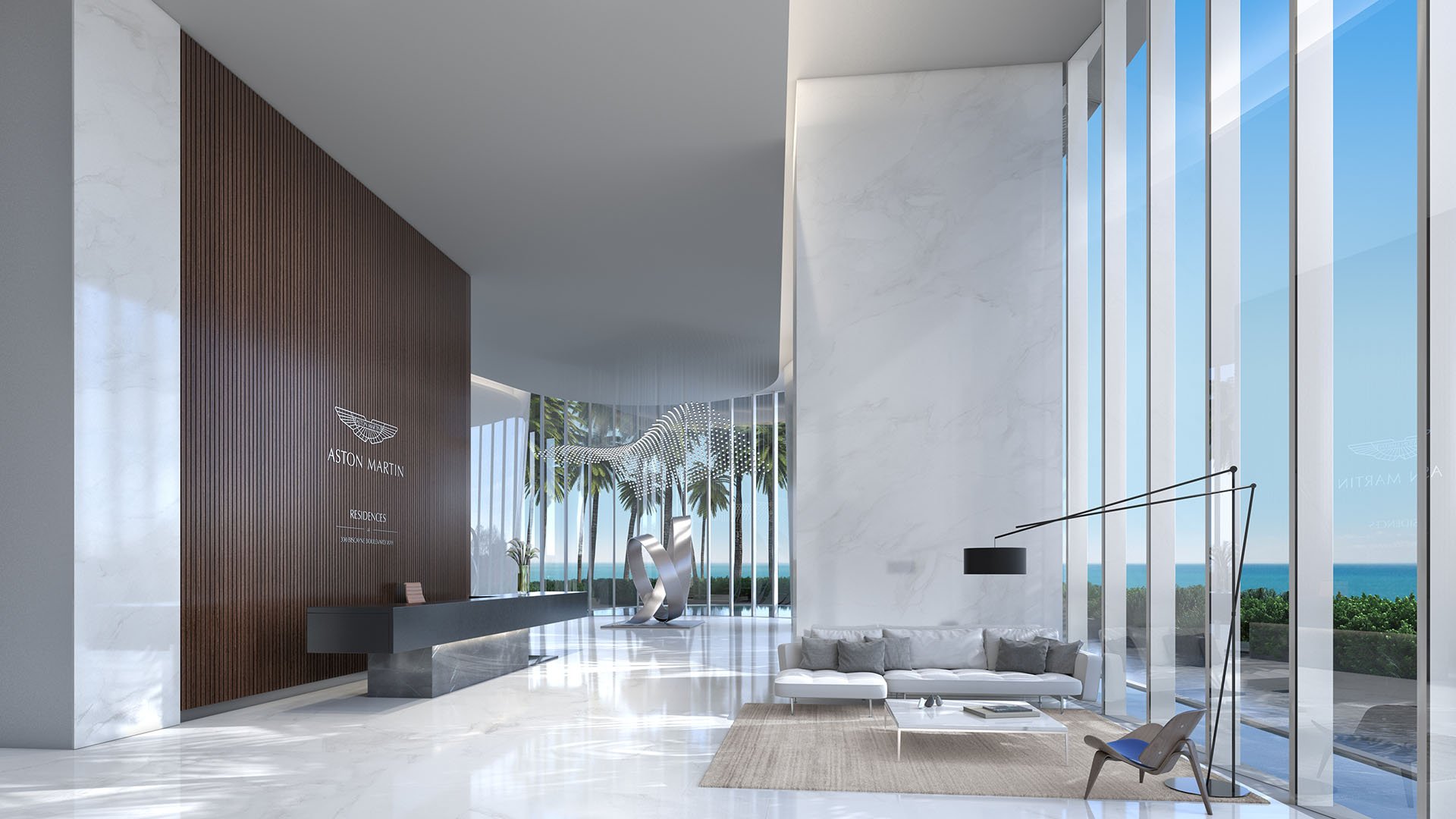
In ultra-premium real estate, arrival is no longer a purely functional matter. It is part of the residence experience itself. At Aston Martin Residences, the arrival sequence is framed as choreographed to reduce friction and create a controlled sense of seclusion. That does not require theatricality. In fact, the strongest arrival experiences in luxury residential design tend to feel calm, legible, and quietly managed.
For buyers, this means considering how a building handles the progression from public to private. Does the approach feel exposed or composed? Is there a clear sense of threshold? Are residents and guests guided in a way that feels intuitive rather than performative? The tower’s experience places movement from street or waterfront arrival points into private residences at the center of the luxury conversation, making circulation a defining part of the building’s value.
The Aston Martin association heightens that expectation. Automotive luxury often depends on the sequence of approach, entry, control, and motion. Translated into residential architecture, that same sensibility suggests a building where transitions matter as much as destinations.
Privacy in a condominium tower is often discussed too narrowly. Buyers may focus on residence layouts, elevator access, or amenity placement, but the more complete analysis is broader. Resident flow involves architecture, operations, and technology working together rather than unit interiors alone.
At Aston Martin Residences Downtown Miami, privacy is best read across multiple scales. The urban edge sets the first condition. Lobby thresholds establish the next layer. Elevators, amenity areas, service zones, and private residences continue the progression. The building is discussed in terms of spatial zoning that separates public, semi-private, and private areas, a structure that matters deeply in a waterfront urban setting where residents may move between home, amenities, service areas, and arrival points several times a day.
This lens also helps explain why buyers evaluating Brickell and Downtown Miami often look beyond finishes. A residence at Baccarat Residences Brickell or Una Residences Brickell may appeal for different reasons, but the same high-level buyer question remains: how does the building turn city density into a private daily rhythm?
Spatial zoning is one of the most understated forms of luxury. In a well-composed residential tower, residents should sense hierarchy. Public areas should not bleed carelessly into private circulation. Semi-private areas should feel socially available without feeling exposed. Amenity areas should be easy to reach without disrupting the feeling of retreat.
This is especially important for a branded condominium, where the promise is not only design but consistency. Controlled access points and staff-managed protocols are part of the privacy strategy for residents and guests, but buyers should avoid reducing that to security alone. The more elegant reading is one of flow control. The building experience should help residents move naturally while limiting unnecessary encounters, confusion, or exposure.
That is the difference between a luxury lobby and a true residential arrival sequence. One impresses for a moment. The other supports daily life.
A sophisticated buyer should walk the building in sequence, not in fragments. Begin with the approach. Notice whether the transition from the city feels abrupt or composed. Observe how the public edge gives way to controlled entry, then to semi-private interior areas. Consider whether the path to amenities feels intuitive and whether the return to the residence feels calm.
Questions should focus on lived experience. How are residents, guests, service needs, and amenity use separated in practice? How does the building preserve privacy during peak arrival times? How does staff presence support discretion without becoming overly visible? These are not minor operational details. They are part of the property’s long-term livability.
The same framework applies when comparing nearby design-led towers such as Casa Bella by B&B Italia Downtown Miami. In the ultra-luxury segment, the strongest buildings do not merely offer amenities. They choreograph movement so the building feels private even when the city around it is active.
What is Aston Martin Residences Downtown Miami? It is a branded ultra-luxury condominium project in Downtown Miami tied to the Aston Martin automotive marque.
Where is the tower positioned? The tower is positioned at the mouth of the Miami River on Biscayne Bay.
Why is privacy such an important theme here? The building occupies a highly visible waterfront urban setting, so private circulation becomes central to the resident experience.
What does arrival sequence mean in this context? It refers to the way residents move from street or waterfront arrival points through controlled thresholds toward private residences.
Is the privacy strategy only about residence interiors? No. Privacy is better understood across the urban edge, lobby thresholds, elevators, amenities, and residences.
How does the Aston Martin brand influence buyer expectations? The marque shapes expectations around design precision, controlled arrival, exclusivity, and a refined sense of movement.
What is resident flow? Resident flow is the daily movement between residences, amenities, service areas, and arrival points.
Why does spatial zoning matter? It helps separate public, semi-private, and private areas so the building can feel composed and discreet.
Should buyers ask about operational details? Yes, but the focus should be on how access, staffing, and circulation support privacy in daily life.
Who is this building most relevant for? It is especially relevant for buyers who want branded waterfront living with a strong emphasis on discretion and controlled movement.
For a discreet conversation and a curated building-by-building shortlist, connect with MILLION.
If branded residences are on your mind — as a home or as an allocation — we would be glad to share what we are seeing, privately.
Begin a quiet conversation