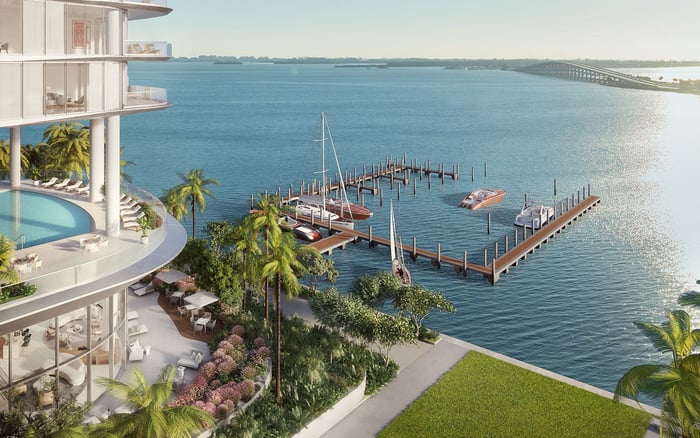
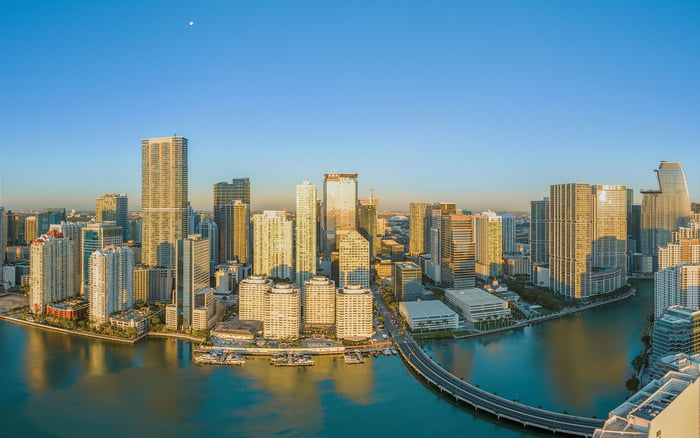
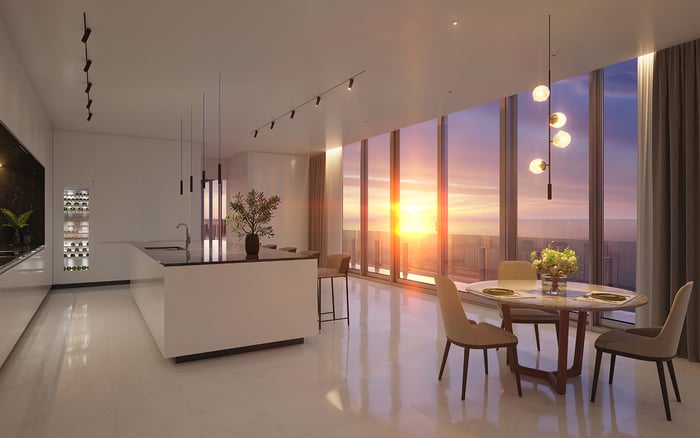
Waldorf Astoria Residences Downtown Miami sits within a broader shift in Miami luxury condominium development, where private residential service is becoming as important as design, amenities, and views. Its branded hospitality context helps buyers think about service not as an occasional convenience, but as part of daily residential life in an urban core.
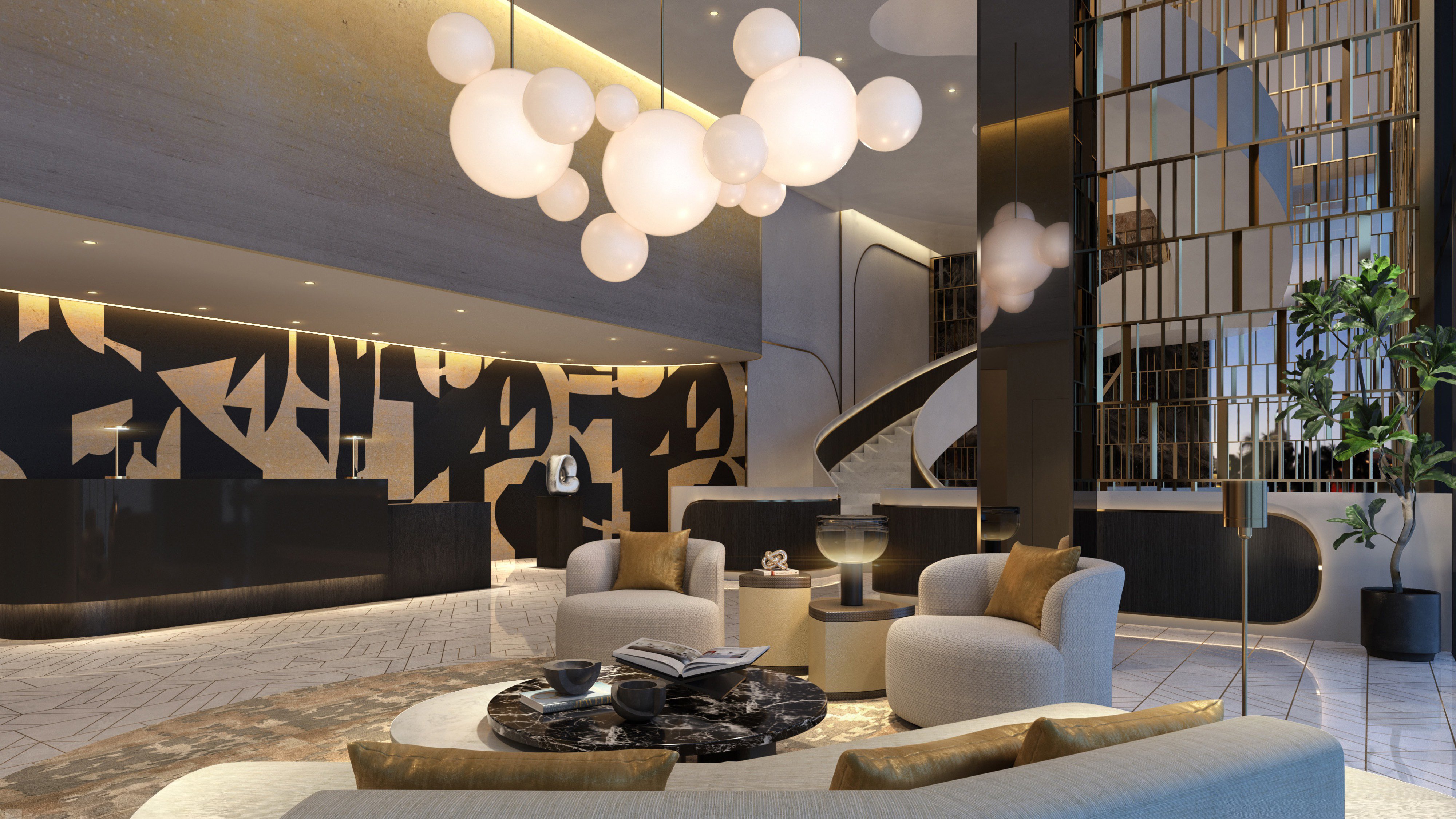
For years, the Miami condominium conversation was led by the visible: skyline architecture, arrival lobbies, wellness decks, pools, lounges, and views. Those elements still matter, particularly in Downtown Miami, where towers compete for attention in one of South Florida’s most vertical luxury markets. Yet the more refined buyer question is changing. It is no longer simply, “What does the building have?” Increasingly, it is, “How completely does the building manage daily life?”
That is where Waldorf Astoria Residences Downtown Miami enters the conversation with unusual relevance. The project is positioned as a luxury branded residential development in Downtown Miami, but its importance extends beyond the presence of a recognizable name. Its broader role is in helping define a service-led model for urban condominium living, where hospitality is not treated as decoration around ownership, but as part of the residence’s core value proposition.
In this context, service becomes less about occasional indulgence and more about continuity. For a global buyer, a second-home owner, or a primary resident with a demanding schedule, an operational layer may be as meaningful as a private terrace or a dramatic lobby.
The project’s defining advantage in the private-service conversation is its affiliation with the Waldorf Astoria hospitality brand. In branded residential real estate, the brand is not only a marketing device. At its best, it provides a recognizable operating language: how residents are received, how requests are handled, how privacy is balanced with attention, and how the residence feels day to day.
That distinction matters. A conventional luxury condominium may offer an impressive amenity package and a capable front desk. A branded residence can suggest a more complete hospitality framework, especially when the brand is associated with high-touch hotel service. For buyers comparing options, the difference is not always found in a single amenity. It is often found in confidence that the building’s service culture has a defined point of reference.
This is particularly relevant in Downtown Miami, where the luxury market is increasingly urban, international, and time-sensitive. Residents may move between business, travel, dining, wellness, boating, and cultural obligations without wanting the friction of traditional home management. The appeal of Waldorf Astoria Residences Downtown Miami is that it frames the private residence as a place where the operational feel of hospitality can become part of ordinary life.
The most important shift is conceptual. Private residential service is not simply another amenity competing with a fitness center or screening room. It is the mechanism that can make every other feature easier to use. A beautiful residence gains practical value when arrivals, deliveries, housekeeping coordination, dining needs, and lifestyle requests are handled with consistency.
That is why the project fits neatly into the broader movement toward “service as luxury” in Miami condominium development. The highest-end buyer is often not seeking more activity, more rooms, or more spectacle. Many are seeking fewer interruptions. In a dense urban setting, that desire becomes even more pronounced. The building that can reduce daily friction has an advantage that is difficult to replicate with design alone.
This service-led point of view also helps explain why Downtown Miami is different from a beach-resort setting. In a resort context, hospitality can feel natural because the surrounding environment already encourages leisure. In Downtown Miami, the proposition is more nuanced. The promise is not simply escape. It is the ability to live privately, efficiently, and elegantly within the city’s core.
Waldorf Astoria Residences Downtown Miami is part of a wider Downtown Miami shift from physical amenities toward managed, hospitality-driven living. The neighborhood has become a proving ground for high-design and brand-associated condominium concepts, and each project contributes a different answer to what luxury should feel like in the urban core.
For example, Aston Martin Residences Downtown Miami brings a distinct design and brand identity into the skyline conversation, while Casa Bella by B&B Italia Downtown Miami speaks to the influence of interiors, taste, and residential atmosphere. Together, these projects show how Downtown Miami has moved beyond generic high-rise luxury into more specific narratives around identity, design, and ownership experience.
Waldorf’s contribution is the hospitality lens. It helps buyers compare branded service models with conventional luxury condominium amenity packages. That comparison is becoming increasingly important because affluent buyers are more sophisticated about the difference between a building that is well appointed and a building that is well managed.
The result is a more mature Downtown Miami market. New-construction buyers are not only evaluating finishes or views. They are evaluating how a building’s operating culture will support daily life after the initial purchase moment has passed.
The service conversation does not stop at Downtown Miami. Nearby Brickell has also become a laboratory for branded and hospitality-influenced residential living. The relevance of Brickell is useful because it shows how buyers in Miami’s urban core are increasingly comfortable assessing residences through the lens of lifestyle management.
Projects such as Baccarat Residences Brickell and Cipriani Residences Brickell place brand identity close to the center of the ownership experience. In different ways, they reflect the same buyer expectation: a residence should not merely contain luxury; it should behave luxuriously.
That phrase is important. Luxury behavior is about consistency, discretion, timing, and ease. It is less visible than architecture, but often more decisive in long-term satisfaction. For a lifestyle buyer who values privacy and efficiency, the difference between a beautiful building and a truly serviced building may become apparent soon after ownership begins.
The key takeaway is not that every buyer needs the same level of service. Some owners prioritize architecture, some prioritize location, and some prioritize privacy above all else. The significance of Waldorf Astoria Residences Downtown Miami is that it makes private residential service a central part of the purchase conversation in Downtown Miami.
For buyers, that means asking more precise questions. How is service integrated into daily living? Is the building’s service identity connected to a recognizable hospitality framework, or is it a standalone condominium program? Does the residence feel managed in a way that supports both privacy and convenience? These questions can reveal more about long-term livability than an amenity checklist alone.
Branded residences are especially relevant because they give buyers a vocabulary for service expectations. The brand does not replace due diligence, but it can clarify the intended standard. In the case of Waldorf Astoria Residences Downtown Miami, the positioning is clear: a private residence in the urban core with the sensibility of hospitality-oriented living.
Downtown Miami’s luxury future will not be defined only by height, skyline presence, or amenity square footage. It will be defined by how well buildings support modern, high-expectation living. That includes privacy, responsiveness, lifestyle coordination, and the reduction of everyday friction.
Waldorf Astoria Residences Downtown Miami helps crystallize that evolution. It places service at the center of the residential value proposition and shows why the next generation of urban luxury may be measured less by what residents can access and more by what they no longer have to manage.
Why is Waldorf Astoria Residences Downtown Miami relevant to private residential service? It connects a private condominium setting with a recognized hospitality framework, making service part of the residential value proposition.
Is the project more than a traditional amenity-led condominium? Its positioning emphasizes hospitality-oriented residential living alongside the private residence itself.
What kinds of service expectations are central to the conversation? The discussion centers on consistency, discretion, responsiveness, lifestyle coordination, and day-to-day ease.
Why does the Downtown Miami location matter? The project brings a service-led residential conversation into an urban core rather than relying on a beach-resort context.
How does a branded residence differ from a conventional luxury condo? A branded residence can offer buyers a recognizable service framework, while a conventional condo may rely on its own standalone program.
Does the Waldorf name matter to buyers? It matters because it gives service expectations a familiar hospitality reference point.
Is service now as important as amenities in Downtown Miami? For many luxury buyers, service is becoming a daily quality-of-life feature rather than a secondary amenity.
How should buyers compare Waldorf with other urban projects? Buyers should look beyond design and amenities to evaluate how each building intends to manage daily residential life.
Is this trend limited to Downtown Miami? No. Nearby Brickell also reflects growing demand for branded and hospitality-driven residential experiences.
What is the main buyer takeaway? The strongest projects are increasingly judged by how well they combine privacy, service, and ease of living.
For a tailored shortlist and next-step guidance, connect with MILLION.
If branded residences are on your mind — as a home or as an allocation — we would be glad to share what we are seeing, privately.
Begin a quiet conversation