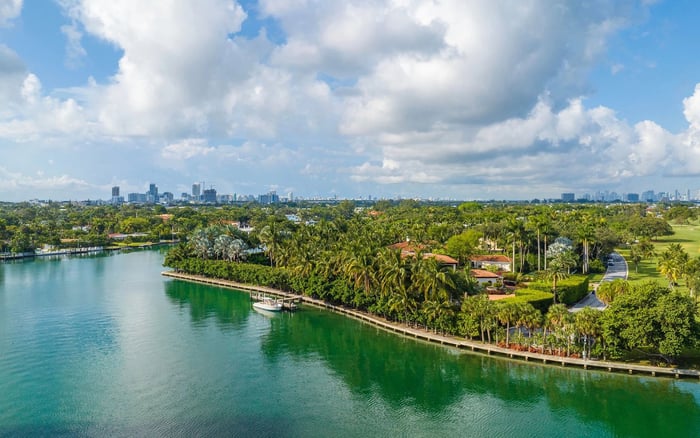
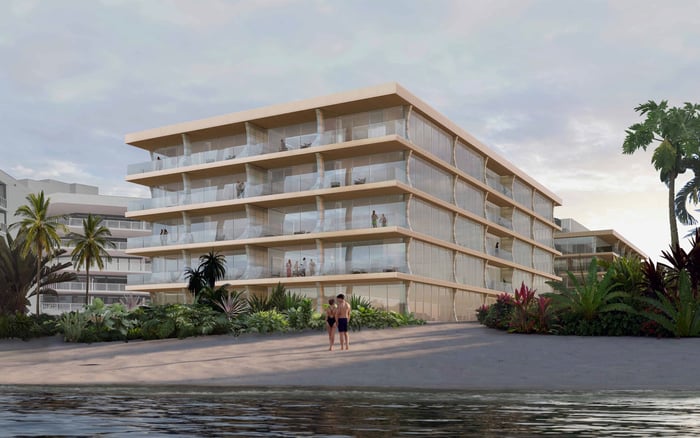
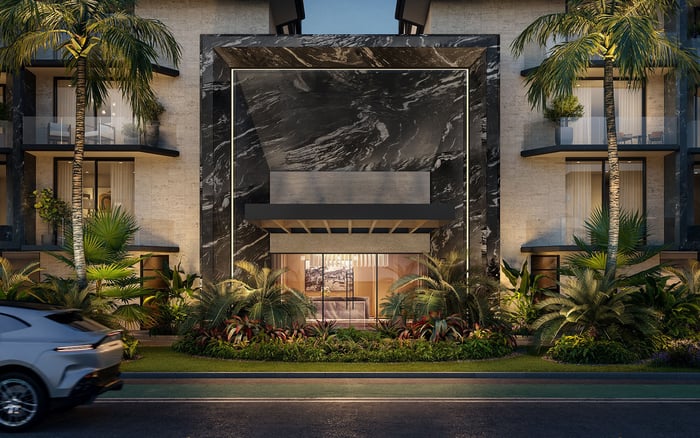
A buyer-focused look at how limited waterfront supply reshapes luxury condo decisions across Miami, Fort Lauderdale, and Palm Beach, from views and boating to privacy and long-term hold discipline.
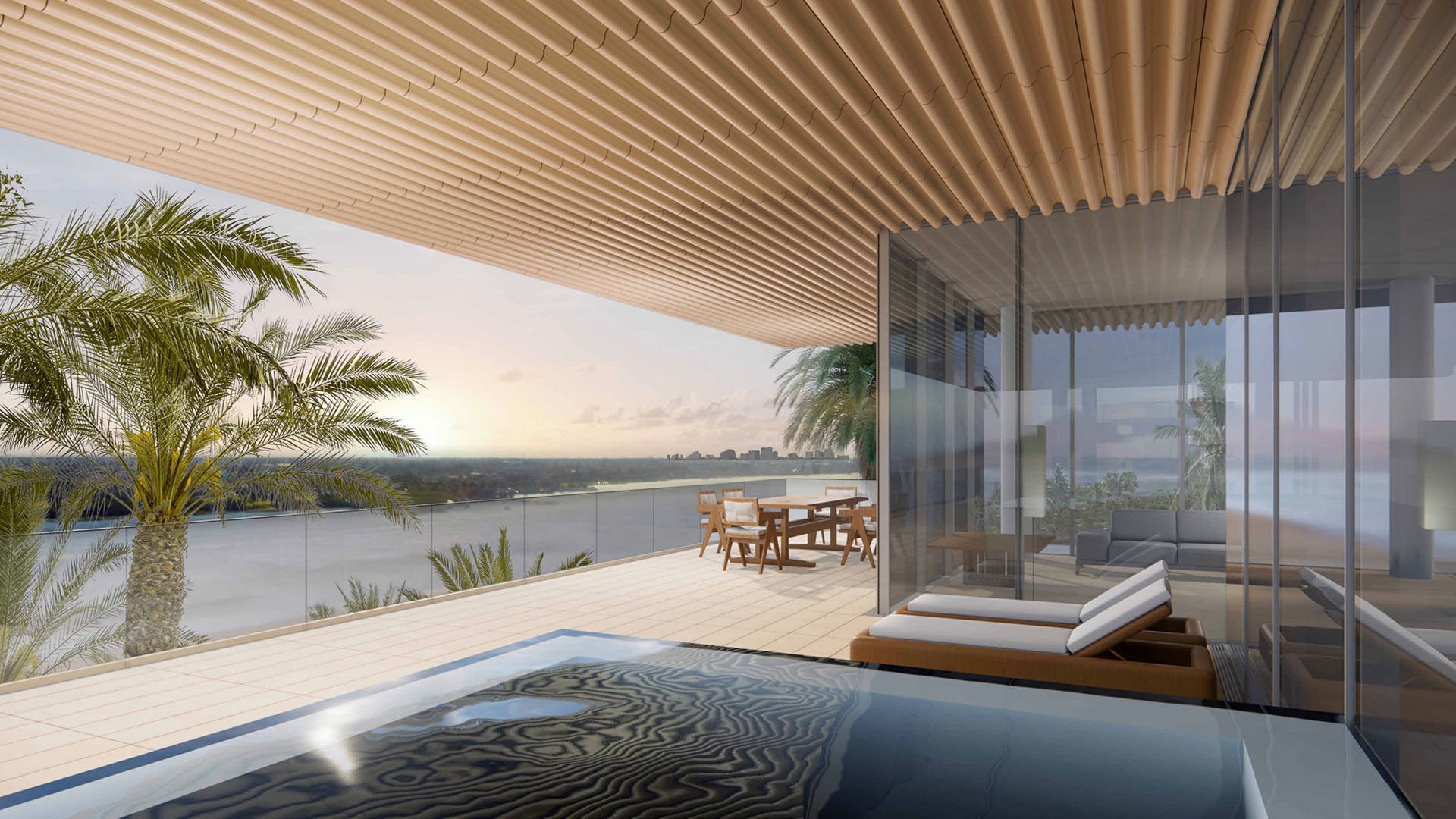
For the luxury condo buyer comparing Miami, Fort Lauderdale, and Palm Beach, waterfront scarcity changes the order of decisions. The first question is no longer simply which city feels most desirable. It is whether the residence offers water in a way that is durable, livable, and difficult to replicate.
That distinction matters. A view can be beautiful and still be replaceable. A tower can carry prestige and still sit one row removed from the experience a buyer imagines. In a market where the best waterfront positions are finite, the shortlist has to move from broad preference to exact condition: the quality of the outlook, the sense of privacy, the relationship between indoor and outdoor rooms, the noise profile, and the daily rhythm created by the water itself.
Buyer shorthand like Miami Beach, Fort Lauderdale, Palm Beach, oceanfront, water view, and boat slip can help at the beginning, but the serious shortlist must go deeper. Scarcity rewards precision. It penalizes vague enthusiasm.
Miami gives buyers the broadest range of waterfront lifestyles among the three markets. The city can feel cinematic, urban, resort-like, or quietly residential depending on the exact pocket. That variety is a strength, but it also demands discipline. Not every water view behaves the same way, and not every prestigious address delivers the same degree of permanence.
For a buyer focused on Miami Beach, the question is often whether the residence feels connected to the ocean lifestyle or merely adjacent to it. A building such as The Perigon Miami Beach belongs in the conversation when the buyer wants a coastal frame rather than a purely urban one. The evaluation should include orientation, terrace usefulness, arrival sequence, and the relationship between the private residence and the public energy nearby.
On the mainland side, waterfront value can be more architectural and skyline driven. Buyers considering an urban waterfront expression may look at Una Residences Brickell as part of a Miami search where water, city access, and vertical living intersect. The trade-off is not necessarily better or worse than beachfront. It is a different form of scarcity, tied to urban convenience and the limited number of residences that can pair water outlooks with a central lifestyle.
The Miami shortlist should therefore separate three categories: true beachfront living, bayfront urban living, and water-view living without the same physical relationship to the shoreline. Those differences can shape daily satisfaction as much as long-term desirability.
Fort Lauderdale brings a different lens to waterfront scarcity. For many buyers, the water is not only a view. It is part of how the day is organized, how guests arrive, how weekends unfold, and how the residence connects to boating culture. The most compelling condos here are often judged by their balance of privacy, access, and ease.
A buyer considering St. Regis® Residences Bahia Mar Fort Lauderdale may be thinking less about the drama of height alone and more about a complete waterfront lifestyle. In Fort Lauderdale, the right residence should feel calm in the morning, functional in season, and gracious when entertaining. The shortlist should ask whether the building supports the water-oriented life the buyer actually lives, rather than simply presenting it in renderings or marketing language.
This is where Fort Lauderdale can be especially compelling for buyers who find Miami too intense and Palm Beach too restrained. The city can offer a middle register: sophisticated, marine-aware, and residential in tempo. Scarcity still applies, but it may express itself through access and usability as much as through pure view prestige.
Palm Beach changes the psychology of the search. Here, scarcity often feels quieter. Buyers are not merely chasing the next new amenity package. They are looking for discretion, proportion, and a setting that will not feel overexposed. The most desirable waterfront residence is one that fits into a refined pattern of life.
In a Palm Beach conversation, Palm Beach Residences can serve as a reference point for buyers who want the island sensibility to remain central. For some, West Palm Beach may also enter the shortlist because it can provide a different balance of access, water outlook, and new-residence energy. A project such as Alba West Palm Beach may be considered by buyers who want to remain connected to the broader Palm Beach orbit while evaluating a different residential rhythm.
The Palm Beach buyer should be especially disciplined about patience. In a scarce market, the best move may not be the first appealing option. The right residence must satisfy lifestyle, privacy, building culture, and hold period. A compromise that feels minor during a short visit can become material after a season of ownership.
The strongest shortlist begins with lifestyle truth. If boating is essential, Fort Lauderdale may deserve a larger role. If cultural access and architectural variety matter most, Miami may remain the anchor. If privacy and social discretion are paramount, Palm Beach may justify a narrower search and a longer wait.
Next, buyers should rank the water itself. Is it ocean, bay, intracoastal, marina, or a distant view corridor? Is the terrace deep enough to use comfortably? Does the exposure feel serene at breakfast and flattering at sunset? Is the view likely to remain meaningful over time? These are not decorative questions. They are the core of waterfront value.
Finally, the buyer should think in terms of scarcity tiers. Tier one is irreplaceable water frontage with privacy and livability. Tier two is strong water orientation with some compromise. Tier three is a pleasant water view that may not carry the same emotional or resale weight. The cities differ, but this discipline travels well across all three.
Waterfront scarcity can feel limiting, but it actually clarifies the search. It helps serious buyers avoid being distracted by finishes, amenity counts, or brand language before the essential real estate question is answered. What, exactly, is scarce here?
When the answer is a rare relationship to the water, the residence deserves attention. When the answer is mostly presentation, the buyer should keep moving. In Miami, Fort Lauderdale, and Palm Beach, the best shortlist is not the longest one. It is the one that understands why certain waterfront positions cannot be easily replaced.
Should I choose the city before choosing the waterfront type? Not always. Many buyers are better served by defining the desired water experience first, then comparing which city delivers it best.
Is an oceanfront condo always more valuable than a bayfront condo? Not necessarily. Value depends on privacy, orientation, building quality, lifestyle fit, and how scarce that specific setting is.
Why does Miami require extra filtering? Miami offers many waterfront expressions, so buyers should separate beachfront, bayfront, and distant water-view residences before comparing prices.
What makes Fort Lauderdale different for waterfront buyers? Fort Lauderdale often puts boating, access, and daily marine lifestyle at the center of the decision, not just the view.
Why do Palm Beach buyers need patience? The best opportunities can be limited and highly specific, so rushing into a partial fit may weaken long-term satisfaction.
How important is terrace usability? Very important. A beautiful view loses practical value if the terrace does not support dining, lounging, or comfortable daily use.
Should brand-name residences dominate the shortlist? Brand can matter, but it should not outrank water quality, privacy, building culture, and the residence’s actual livability.
Can a water-view condo be enough? Yes, if the buyer values skyline, convenience, or price flexibility more than direct waterfront presence and daily shoreline access.
What is the biggest mistake in comparing these markets? Treating all waterfront as equal. Each city expresses scarcity differently, and the best choice depends on the buyer’s lifestyle.
How should a buyer prepare before touring? Define non-negotiables around water type, privacy, boating, terrace use, and city rhythm before viewing individual residences.
When you're ready to tour or underwrite the options, connect with MILLION.
If branded residences are on your mind — as a home or as an allocation — we would be glad to share what we are seeing, privately.
Begin a quiet conversation