A buyer-focused guide to evaluating elevator destination control in luxury South Florida towers, separating practical performance, privacy, and service value from showroom theatrics.
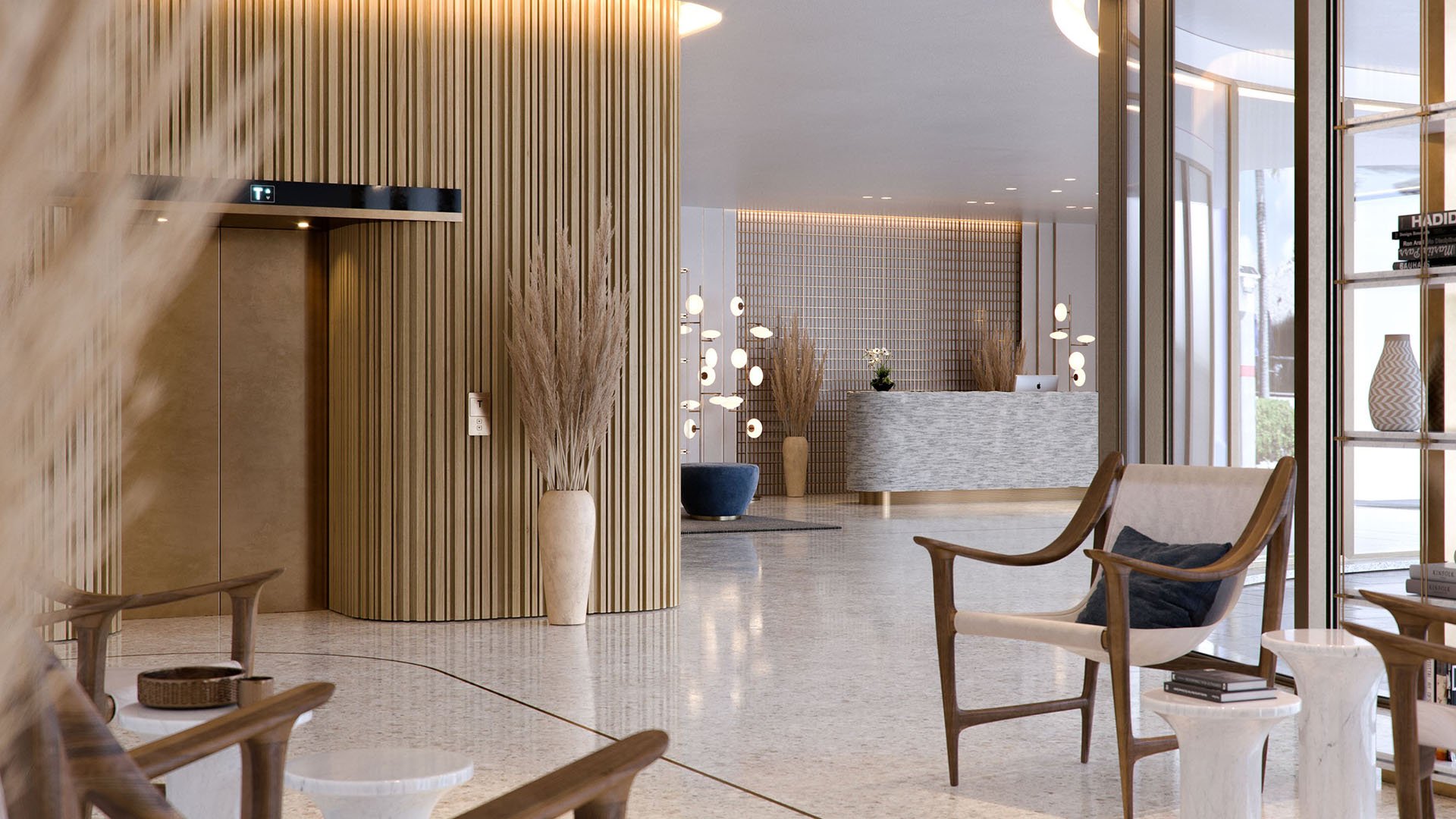
Elevator destination control has become one of the more seductive details in the modern sales gallery. A polished panel, a glowing interface, and a promise of seamless vertical living all fit neatly into the language of contemporary luxury. Yet for serious South Florida buyers, the relevant question is less visual than operational: will the technology make daily life quieter, faster, more private, and more predictable?
Destination control, in simple terms, asks a passenger to select a destination before entering the elevator, then assigns the appropriate car. In a residential setting, the system may be presented as a symbol of intelligence. But useful intelligence is not theatrical. It is measured by how residents, guests, staff, deliveries, pets, luggage, and service teams move through a building without friction.
For buyers comparing vertical living in Brickell, Downtown Miami, Sunny Isles, Miami Beach, or the coastal enclaves north and south of Miami, the elevator conversation deserves the same seriousness as floor plans, views, parking, and building staffing. A residence can deliver a dramatic arrival sequence and still fail the daily-use test.
The best systems reduce uncertainty. They group passengers efficiently, direct people to the right car, and support a calmer lobby experience. In a high-end condominium, that can matter as much as marble, lighting, or art placement, because the elevator lobby is part of the private rhythm of the home.
A useful system should be intuitive for residents who use it every day and legible for guests encountering it for the first time. It should not require a concierge to explain the basics each time someone arrives for dinner. It should respond gracefully when a resident has luggage, when a family is traveling together, when a dog walker is moving between floors, or when a house manager is coordinating staff access.
The true luxury is not novelty. It is the absence of confusion.
In towers such as The Residences at 1428 Brickell, where buyers tend to scrutinize every layer of the residential experience, elevator technology should be evaluated as part of a complete arrival ecosystem: porte cochere, lobby staffing, security posture, private access, service circulation, and the transition from public to personal space.
Sales-gallery theater begins when a feature is presented as transformative without any explanation of how it performs under pressure. A beautiful interface can distract from practical questions. How does the system handle the morning rush? What happens after dinner hours, when residents and guests return at the same time? How are deliveries routed? How are service personnel separated, if at all? How does the system behave if a resident changes plans after selecting a floor?
The wrong presentation emphasizes the gadget. The right presentation explains the choreography.
For a buyer, the most revealing moment is often not the demonstration itself, but the follow-up. Ask the sales team to describe ordinary scenarios rather than idealized ones. A strong answer will be specific about resident flow, guest access, staff protocols, service elevator coordination, and backup procedures. A weak answer will return to adjectives: smart, seamless, advanced, elevated.
Those words may be true, but they are not enough.
In South Florida’s ultra-premium market, privacy is often the defining standard. Destination control can support privacy, but it does not automatically create it. The system must be part of a broader access strategy that considers who can call which cars, how guests are authorized, how staff are routed, and whether residents are repeatedly sharing rides with unrelated traffic.
For buyers considering residences at Baccarat Residences Brickell or Una Residences Brickell, the elevator question should be framed around daily discretion. Does the building minimize unnecessary encounters? Are residential, amenity, parking, and service movements clearly thought through? Is the experience calm at the hour when the building is most active, not merely elegant when empty?
Privacy is not just a matter of elevator speed. It is the feeling that the building knows how to protect the resident’s time, movement, and personal space.
Technology does not replace building staff. In luxury residential life, it should make staff more effective. A destination-control system can be undermined by unclear guest procedures, inconsistent front-desk practices, or a service strategy that was not fully resolved before completion.
Buyers should ask how the concierge, valet, security, and property management teams interact with the system. Can staff pre-clear expected guests? Can access be adjusted for private events? Are move-ins, deliveries, contractors, and housekeeping handled without pushing the burden onto residents? How are elderly guests or less tech-comfortable visitors assisted without making the experience feel clinical?
The most refined buildings do not make residents adapt to technology. They make technology disappear behind hospitality.
This is especially important in Downtown Miami, where vertical density, mixed arrival patterns, and evening activity can make elevator planning a meaningful quality-of-life issue. In the context of branded or skyline-defining towers such as Waldorf Astoria Residences Downtown Miami and Aston Martin Residences Downtown Miami, buyers should look beyond the promise of iconic architecture and ask how daily movement will actually feel.
A polished demonstration is expected. A useful demonstration is testable. The buyer’s goal is to move the conversation from presentation to performance.
Ask to walk through a resident arrival from valet or parking to the private residence. Then ask to walk through a guest arrival. Then ask about a delivery, a private dinner, a contractor appointment, a dog walker, a move-in, and a crowded amenity return. These scenarios reveal whether destination control is integrated into the building or merely attached to it.
Also ask about redundancy. Luxury buyers do not need a technical seminar, but they do need comfort that the system can handle interruptions, maintenance, and unusual traffic patterns. If the answer is vague, keep asking. A residence at this level should not depend on optimism.
Several signs suggest destination control is more than theater. First, the building team can explain the system in plain language. Second, the interface appears simple rather than overdesigned. Third, access control, guest management, and service routes are discussed together. Fourth, the sales team welcomes operational questions instead of deflecting them. Fifth, the system is described as part of residential privacy, not merely as a technological amenity.
The inverse is also telling. If every answer returns to the appearance of the panel, the elegance of the lobby, or the notion that the system is simply “smart,” the buyer should slow down. Smart is not a finish. It is a performance standard.
Destination control is worth caring about, but not because it photographs well. It matters because high-rise luxury is lived vertically. Every day begins and ends with movement through shared space. If that movement feels awkward, delayed, exposed, or overcomplicated, the residence loses a layer of its promise.
The most successful elevator technology does not announce itself. It reduces waiting, clarifies access, supports discretion, assists staff, and gives residents the quiet confidence that the building has been designed around real life rather than a sales moment.
For the ultra-premium buyer, the rule is simple: admire the interface if you like, but interrogate the experience.
What is elevator destination control? It is an elevator approach where a rider selects a floor before entering, and the system assigns an elevator car.
Is destination control always better in a luxury condo? Not automatically. It is valuable only when it improves flow, privacy, staff coordination, and ease of use.
What should buyers ask first? Ask how the system handles residents, guests, staff, deliveries, and peak lobby activity during normal daily life.
Does a beautiful screen mean the system is advanced? No. The interface may look refined, but the real test is how the building manages actual movement.
Can destination control improve privacy? It can support privacy when paired with thoughtful access control, guest authorization, and service routing.
Should I test the system during a tour? Yes. Ask to experience a resident arrival, guest arrival, and amenity return rather than only watching a demonstration.
What is a warning sign? Be cautious if answers focus only on appearance and avoid practical scenarios such as deliveries or crowded periods.
Does staffing still matter if the elevator system is smart? Yes. Luxury technology works best when concierge, valet, security, and management teams are trained around it.
Is this issue more important in taller towers? It often becomes more noticeable as vertical movement, shared amenities, and resident traffic become more complex.
What is the simplest buyer rule? Look for technology that feels intuitive, discreet, and integrated rather than dramatic for its own sake.
For a confidential assessment and a building-by-building shortlist, connect with MILLION.
If branded residences are on your mind — as a home or as an allocation — we would be glad to share what we are seeing, privately.
Begin a quiet conversation