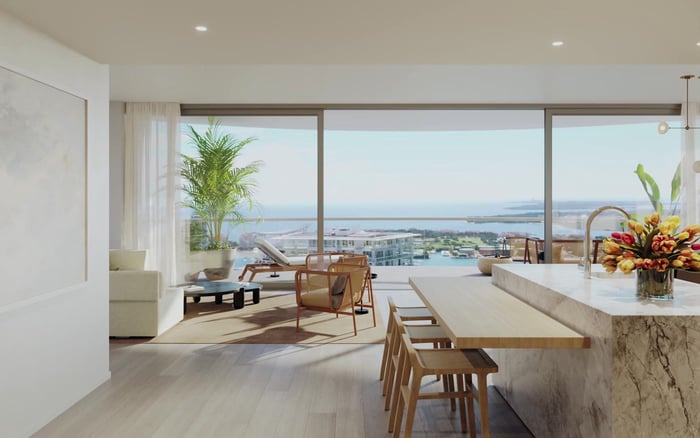
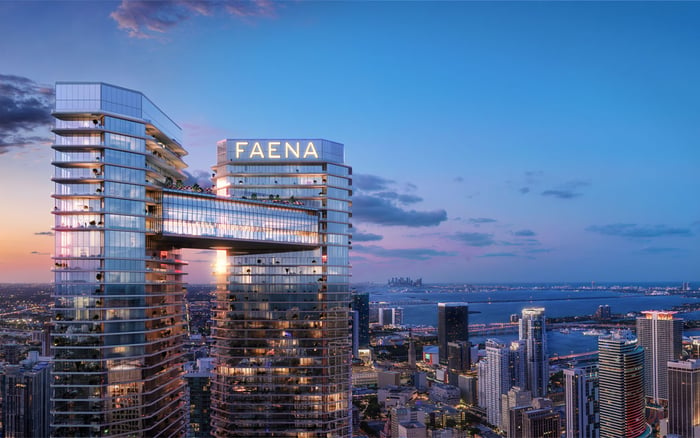
Terrace drainage is a quiet but material part of preconstruction condo ownership in South Florida, shaping maintenance, finishes, usability and resale confidence long after the reservation stage.
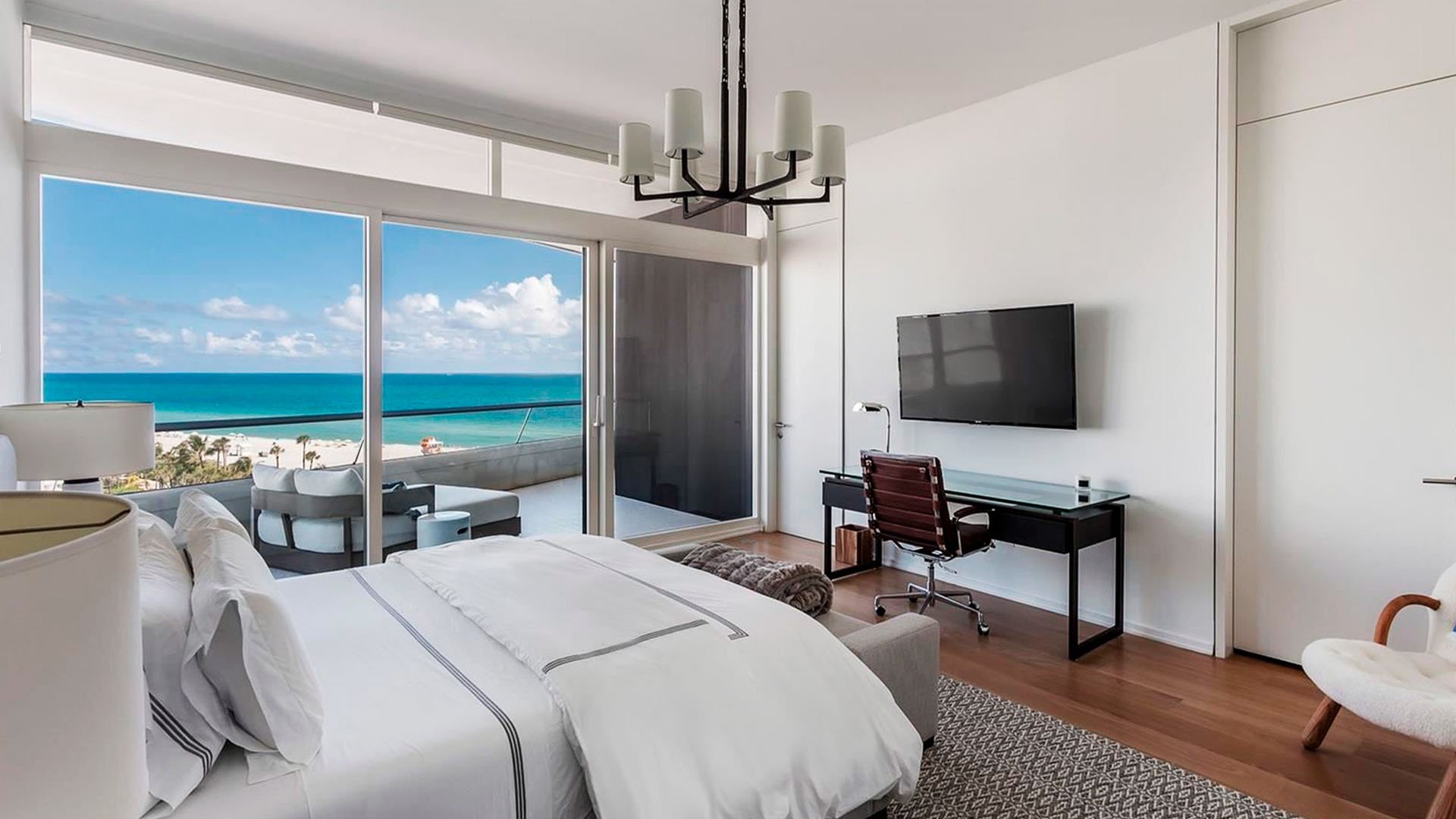
For many South Florida buyers, the terrace is not an accessory. It is the outdoor room, the breakfast table, the evening lounge, and the emotional reason a high-floor residence feels irreplaceable. Yet in preconstruction, terraces are often judged through renderings, view corridors, and square footage, while drainage remains buried in technical drawings and ownership documents.
That is where the real cost can shift. A terrace that drains cleanly can protect finishes, furniture, thresholds, and daily comfort. A terrace whose drainage is poorly understood can become a recurring source of maintenance questions, association disputes, and unexpected repair coordination. The issue is rarely glamorous, but it is central to how a luxury condo actually lives.
In MILLION shorthand, this is a Pre-Construction, Terrace and Balcony conversation as much as a view conversation. The buyer is not simply asking, “How large is the outdoor space?” The better question is, “How will this outdoor space perform when it is used, cleaned, furnished, and exposed over time?”
A deep terrace can look exceptional in a sales gallery. It can also create more surface area for water to cross, more finish transitions, and more points where furniture layouts intersect with drain locations. None of this makes a large terrace undesirable. It means the buyer should price the terrace as a system, not only as square footage.
In a Brickell residence such as St. Regis® Residences Brickell, buyers naturally focus on skyline orientation, ceiling heights, amenities, and service. The drainage conversation belongs beside those considerations. Where are the drains? Are they easy to access for maintenance? Does the proposed furniture plan block them? Are planters, outdoor kitchens, or decorative screens contemplated, and if so, who approves their installation?
The most expensive terrace is not always the largest one. It is the one whose operational details were never clarified. If water movement, waterproofing, thresholds, and maintenance access are treated as afterthoughts, the buyer may inherit limitations that were invisible at contract signing.
Terrace drainage can influence cost in several ways. The first is finish durability. Stone, tile, grout, pedestal systems, and exterior sealants may all perform differently depending on exposure, installation, and maintenance. A buyer does not need to become an engineer, but should understand whether the selected materials are intended for the terrace conditions being sold.
The second is furniture and design. Luxury buyers often envision substantial outdoor settings: dining tables, loungers, potted trees, fire features, or custom millwork. These elements can affect how water moves, where debris collects, and how easily drains can be inspected. A design that looks effortless on a mood board may require approval, additional detailing, or future access panels.
The third is responsibility. In many condominium settings, the terrace occupies a gray area in the buyer’s mind: privately used, yet connected to shared building systems. The documents should clarify who maintains which components, who pays for repairs when a condition emerges, and how access is handled if work must be performed from inside the residence.
The fourth is resale confidence. A future buyer may not ask about drain capacity by name, but they will notice staining, ponding, odors, lifted finishes, or awkward furniture constraints. A well-documented terrace story can help protect the premium attached to outdoor living.
Before moving from reservation to contract, ask for a plain-language explanation of the terrace assembly. The goal is not to challenge the design team. The goal is to understand what is included, what can change before delivery, and what becomes the owner’s obligation after closing.
Key questions include whether terrace slopes are shown in the drawings, whether drain locations are final or subject to adjustment, whether the finish material is fixed, and how waterproofing is protected during any owner upgrades. If an outdoor kitchen, spa, heavy planter, or built-in seating is part of your lifestyle plan, raise it early. Late-stage changes can be more complicated than buyers expect.
At a Miami Beach project such as The Perigon Miami Beach, a buyer may be drawn to the romance of coastal living and expansive outdoor moments. That aspiration should be paired with practical review: wind exposure, furniture anchoring, drainage access, and rules for exterior modifications. None of these questions diminish the lifestyle. They make it more bankable.
Waterfront living magnifies the emotional value of outdoor space. It also magnifies the importance of details. When the view is the main event, buyers are tempted to accept the terrace as presented. A more sophisticated approach is to ask how the terrace will be maintained, cleaned, and protected without compromising the design.
For buyers considering Rivage Bal Harbour, the Waterfront premium is tied to serenity, privacy, and the daily ritual of being outside. Drainage is part of that ritual. A terrace that clears efficiently after weather, supports furniture properly, and allows discreet maintenance can feel effortless for years. A terrace that demands constant work can gradually dilute the experience the buyer paid for.
The same thinking applies in Edgewater at Aria Reserve Miami, where outdoor living and view orientation are central to the purchasing decision. The conversation should include not only what the terrace sees, but how it functions when the residence is occupied full time, seasonally, or by guests.
Preconstruction contracts often allow for design modifications, substitutions, and field adjustments. That flexibility is normal in development, but it matters when evaluating terrace performance. If drain locations, slopes, finishes, or railing details can change, the buyer should know what level of notice or approval is provided.
Ask whether the terrace square footage is approximate, whether exterior finish selections may vary, and how deviations are handled. If the terrace is central to the purchase, preserve the paper trail around representations, plans, and approved upgrades. The value is not only legal. It is practical. Clear documentation helps future managers, contractors, and resale buyers understand what was delivered.
Buyers should also consider insurance and association procedures. If a leak or surface failure appears, who investigates first? Is the owner permitted to hire a preferred contractor, or must the association coordinate? Are decorative surface changes allowed, and do they affect warranties? The right answers vary by building, but the questions belong in every serious review.
A South Florida preconstruction condo is often purchased before the buyer can stand on the finished terrace. That makes due diligence unusually important. Renderings sell the dream, but drainage helps determine how comfortably that dream will be owned.
The best buyers are not alarmist. They are precise. They ask how water moves, who maintains the system, what modifications are permitted, and how terrace finishes are protected. They understand that a beautiful outdoor room is valuable only when its invisible details are equally considered.
For luxury buyers, terrace drainage is not a minor technicality. It is part of the real cost of ownership, the real quality of daily use, and the real defensibility of resale value.
Why does terrace drainage matter in a preconstruction condo? Because the buyer is committing before the finished terrace can be inspected. Drainage affects usability, maintenance, and confidence after closing.
Is a larger terrace always better? Not automatically. A larger terrace can be exceptional, but its value depends on slope, drain placement, finish durability, and maintenance access.
Should buyers ask to see drainage drawings? Yes. Buyers should request a clear explanation of terrace slopes, drain locations, and finish assemblies before making major deposit commitments.
Can outdoor furniture create drainage problems? It can if furniture, planters, or built-ins block drains or trap debris. Layout planning should happen before custom pieces are ordered.
Who usually maintains a condo terrace? Responsibility depends on the condominium documents. Buyers should confirm which components are owner-maintained and which are association-managed.
Can a buyer modify terrace finishes after closing? Possibly, but exterior changes often require approval. Any modification should be reviewed for waterproofing, weight, drainage, and warranty implications.
What is ponding? Ponding is standing water that remains instead of draining away. Buyers should ask how the terrace is designed to prevent persistent standing water.
Does drainage affect resale value? It can. Visible staining, awkward drain access, or recurring maintenance concerns may weaken a future buyer’s confidence in the residence.
Should seasonal owners care about terrace drainage? Yes. A residence that sits unused for periods still needs exterior areas that clear properly and can be inspected or maintained when needed.
What is the smartest first question to ask? Ask how the terrace will drain, who maintains each component, and what changes are allowed before and after closing.
If you'd like a private walkthrough and a curated shortlist, connect with MILLION.
If branded residences are on your mind — as a home or as an allocation — we would be glad to share what we are seeing, privately.
Begin a quiet conversation