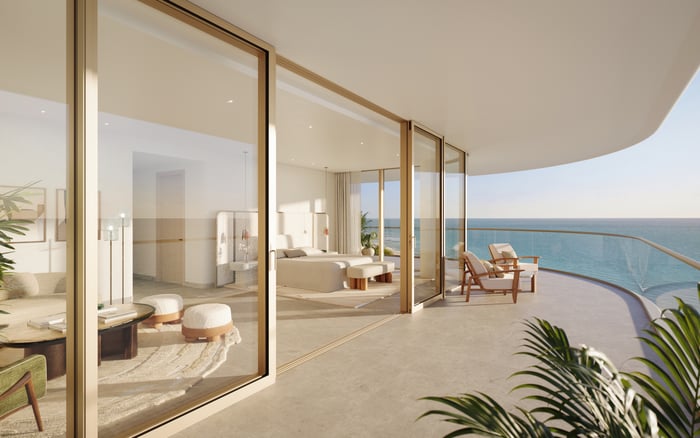
A discreet buyer’s guide to Shore Club Private Collections Miami Beach, focused on reservation terms, privacy, historic approvals, service costs, and South Beach operational diligence before committing to a pre-construction purchase.

The appeal of Shore Club Private Collections Miami Beach is immediate: a pre-construction, ultra-luxury private residence offering tied to one of South Beach’s most recognizable historic hotel sites. For a buyer, that combination is rare. It brings together beachfront scarcity, architectural nostalgia, contemporary service expectations, and the promise of a more limited residential experience.
Yet the first decision should not be emotional. A reservation is the opening move in a high-stakes pre-construction purchase, and the documents deserve the same seriousness as the views. Before wiring funds or signing a reservation agreement, buyers should understand deposit timing, refundability, escrow mechanics, and how the reservation converts into a binding purchase contract. The essential question is simple: what exactly is being reserved, and under what conditions can either side proceed, amend, or exit?
This buyer’s-guide discipline is especially important because Shore Club Private Collections Miami Beach sits at the intersection of Miami Beach, oceanfront scarcity, branded-residence expectations, and historic-property complexity. The strongest buyers will pair aesthetic conviction with rigorous review.
The Collins Avenue and South Beach oceanfront setting is central to the project’s value proposition. True beachfront residential supply in Miami Beach is finite, and parcels with both ocean frontage and architectural legacy are not easily replicated. That scarcity can support long-term desirability, particularly for buyers who want the cultural immediacy of South Beach rather than a more removed resort enclave.
But scarcity is only one side of the ledger. South Beach is dynamic, public, seasonal, and operationally intense. Buyers should walk the neighborhood at different hours, evaluate traffic patterns, study valet access, and consider the effects of restaurants, nightlife, beach activity, and events. Public beach access is part of the area’s lifestyle appeal, but it also makes privacy planning more consequential.
Comparisons can be instructive. A buyer considering South Beach may also study the daily-living feel around Setai Residences Miami Beach or The Ritz-Carlton Residences® South Beach, not to substitute one address for another, but to understand how service, arrival sequence, beach activity, and urban energy shape ownership.
The project’s connection to the historic Shore Club site is part of its intrigue. It also means buyers should treat preservation and design review as practical, not decorative, subjects. Historic-preservation approvals, design-review conditions, façade requirements, and municipal oversight can influence massing, timing, exterior treatment, circulation, and even the way a resident experiences arrival, privacy, and amenities.
Before reserving, buyers should ask whether all key municipal approvals have been obtained and whether any appeals, open conditions, or litigation could affect the development timeline. These questions are not signs of pessimism. They are part of purchasing into an adaptive-reuse context where the finished product depends on architecture, engineering, municipal process, and execution.
A historic hotel site can deliver character that new towers often try to manufacture. But character must be reconciled with modern expectations: quiet mechanical systems, protected residential paths, discreet security, elegant back-of-house movement, and a sense that private owners are not living inside a hospitality lobby.
Because the property has a hotel legacy, buyers should clarify how residential privacy will be separated from hospitality, restaurant, beach club, or public-facing uses. The phrase private collection implies limitation and service, but it does not answer every operational question. How many residences will there be? Which amenities are residential-only? Which spaces, if any, are shared with guests, members, diners, or beach patrons? Who controls access points, elevators, pool decks, valet zones, and service corridors?
The answer matters most for buyers who intend to use the residence for long stays or as a primary home. A pied-à-terre can tolerate a certain amount of theater. A primary residence must support quiet enjoyment, storage, parking, security, family routines, deliveries, staff access, pets if permitted, and a predictable sense of privacy.
This is where buyers should be precise. A residence can be beautifully designed and still feel hotel-forward if the operating model places owners beside public activity. Conversely, a well-planned hybrid property can preserve the convenience of hospitality while protecting the dignity of home. The documents and plans should make the distinction clear.
Architectural and engineering plans should be reviewed with a practical eye. View corridors, ceiling heights, terrace depth, elevator access, parking, service circulation, loading, storage, and construction phasing are not secondary details. They determine whether the residence feels effortless after closing.
The operating budget deserves equal scrutiny. Ultra-luxury service buildings often require significant recurring costs for staffing, insurance, maintenance, reserves, security, valet, beach operations, and hospitality-linked services. Buyers should separate what is included in association dues from what is charged à la carte, including housekeeping, concierge, in-residence dining, beach service, and valet. A low headline estimate can become less meaningful if the desired lifestyle depends on frequent optional charges.
If the project includes branded or hotel-managed services, the management agreement should be read carefully. Term length, fee structure, brand standards, termination rights, owner remedies, and control provisions can shape the experience for years. In branded residences, service is both a lifestyle asset and a contractual obligation.
For context, buyers comparing Miami Beach new development may also look at The Perigon Miami Beach or 57 Ocean Miami Beach to understand how different projects frame privacy, arrival, amenities, and waterfront living. The goal is not to rank them, but to refine the questions that matter.
The developer’s track record, financial capacity, delivery history, and experience with luxury oceanfront or historic-property projects should be part of the review. Buyers are not only purchasing a floor plan; they are relying on an execution team to deliver a complicated asset at the level promised.
Condominium documents should be examined for ownership rights, rental restrictions, pet policies, alteration rights, use restrictions, voting control, developer-reserved rights, and the process for turning over association control. Buyers should also understand whether the project’s rules align with their intended use. A second-home owner, a seasonal family, and a primary resident may all value the same ocean view but require different levels of flexibility.
Legal, tax, financing, and contract issues should be reviewed with qualified advisers before commitment. The most elegant reservation is still a legal document, and the most compelling rendering is still a future condition. For the right buyer, that future may be extraordinary. The discipline is making sure the reservation reflects the home, service model, cost structure, and privacy standard being imagined.
What is Shore Club Private Collections Miami Beach? It is positioned as a pre-construction, ultra-luxury condominium or private residence offering in Miami Beach tied to the historic Shore Club site.
Why does the historic Shore Club context matter? Historic and adaptive-reuse elements can affect approvals, design, timing, façade treatment, and the final resident experience.
What should buyers review before signing a reservation? Buyers should review deposit timing, refundability, escrow provisions, and how the reservation converts into a binding contract.
Is the South Beach location an advantage? Yes, the Collins Avenue oceanfront setting is a major value driver, but it also requires diligence on traffic, noise, valet operations, and public beach activity.
How should buyers evaluate privacy? They should ask how residences are separated from any hospitality, restaurant, beach club, or public-facing uses.
What does “private collection” imply? It suggests a limited, high-service residential model, but buyers should verify the exact residence count, amenity rights, and service entitlements.
Why is the operating budget important? Ultra-luxury service buildings can carry significant recurring costs for staffing, insurance, maintenance, reserves, and hospitality-linked services.
Which services should be clarified? Buyers should confirm what is included in dues versus charged separately, including housekeeping, concierge, dining, beach service, and valet.
What documents deserve special attention? Condominium documents, management agreements, approvals, budgets, plans, and developer-reserved rights should all be reviewed closely.
What is the best way to shortlist comparable options for touring? Start with location fit, delivery status, and daily lifestyle priorities, then compare stacks and elevations to validate views and privacy.
For a tailored shortlist and next-step guidance, connect with MILLION.
If branded residences are on your mind — as a home or as an allocation — we would be glad to share what we are seeing, privately.
Begin a quiet conversation