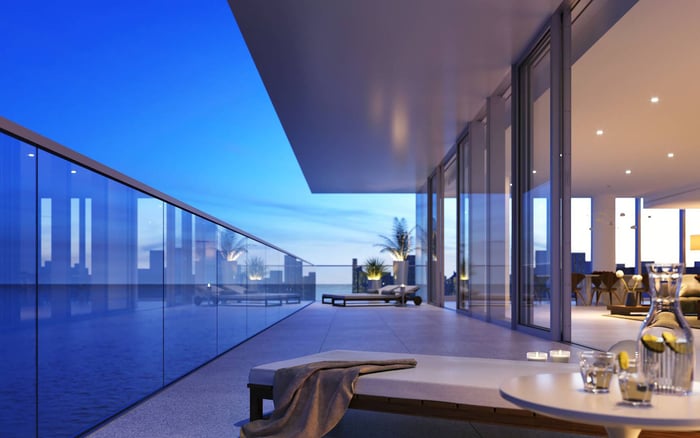
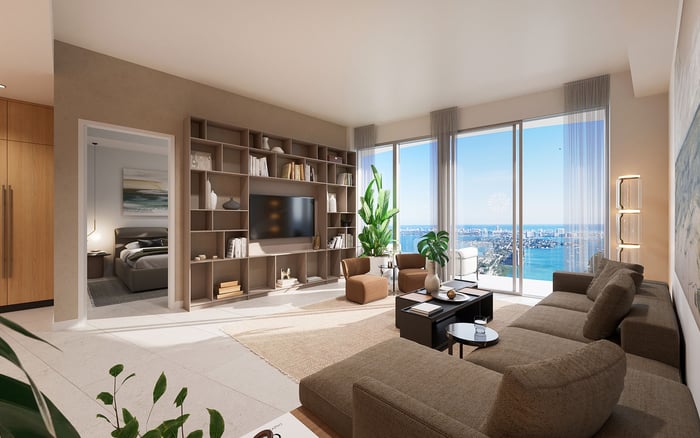
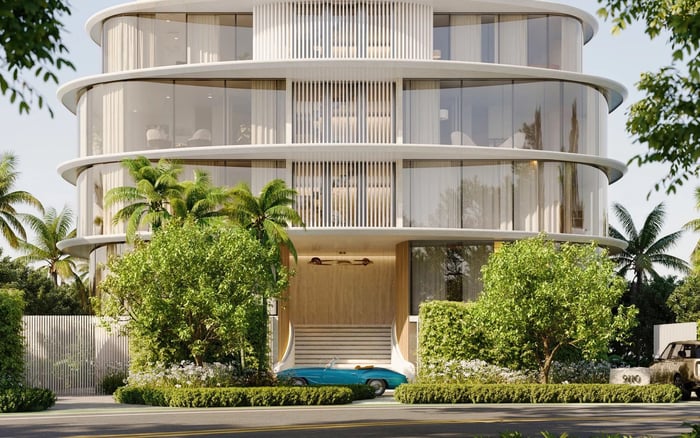
A practical, design-led guide for evaluating whether a Hallandale Beach terrace will feel livable in real heat, glare, humidity, and wind before purchase.
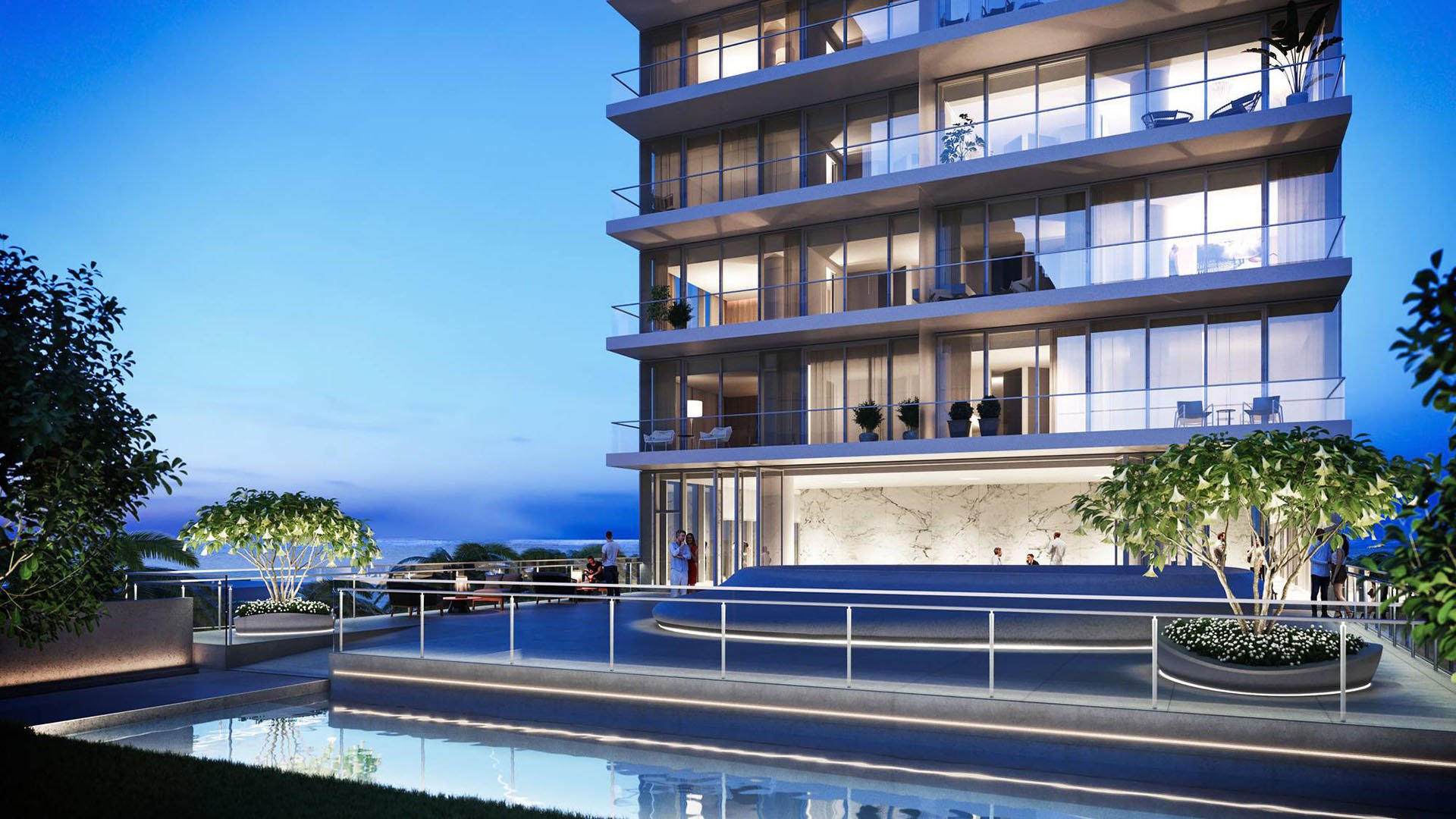
In Hallandale Beach, a terrace can be one of the most seductive line items in a residence. It promises breakfast above the water, sunset cocktails, and an effortless extension of the interior plan. Yet the difference between a beautiful outdoor platform and a genuinely usable living room in the sky often comes down to heat, humidity, glare, wind, orientation, and rules that are easy to overlook during a polished showing.
For luxury buyers, the question is not simply whether a terrace is large. The sharper question is whether it can support the way you actually live. Can four people dine comfortably without shifting chairs into the path of a sliding door? Is there shade during the hours you will use it? Does the railing preserve the view while calming the body’s instinctive awareness of height and exposure? Does the breeze feel refreshing or fatiguing?
This is where a buyer’s eye must become architectural. In a market where indoor and outdoor space are often presented as one continuous lifestyle, the terrace deserves the same disciplined evaluation as a kitchen, primary suite, or private elevator foyer.
Orientation shapes the daily personality of outdoor space. A terrace that feels serene in the morning may become difficult in late-afternoon glare. Another may be shaded for much of the day but feel enclosed if the building geometry limits airflow. There is no universal best exposure, because the right answer depends on how you plan to use the residence.
Before purchasing, visit at the time you expect to use the terrace most. If the terrace is meant for morning coffee, see it in the morning. If it is intended for evening entertaining, experience that hour. Stand where the dining table would sit, not only at the railing. Open the sliders and notice whether the indoor rooms gain pleasant air or whether the exposure introduces glare, heat, or noise that changes how the residence feels.
At 2000 Ocean Hallandale Beach, buyers considering an ocean-oriented lifestyle should think beyond the view itself and study how the terrace mediates between glass, sun, water, and daily comfort. The same principle applies across Hallandale Beach: views create value, but usability creates attachment.
Wind should be evaluated as recurring behavior, not a single impression. A light breeze on one visit may not reveal how a terrace performs when air moves around building corners, through gaps between towers, or along exposed elevations. Higher floors may feel different from lower floors, and corner conditions can create their own microclimate.
Buyers should ask practical questions. Can napkins, cushions, and small objects remain in place? Would candles be impractical? Could a door be opened easily when the terrace is active? Does wind make conversation difficult at the likely seating area? A terrace can photograph beautifully and still discourage daily use if the body reads it as too exposed.
Do not assume that screens, shutters, heavy planters, fans, umbrellas, or heaters will solve every condition. Association rules, architectural standards, and building systems may restrict what can be placed or installed outdoors. A buyer should review these rules before treating the terrace as an adaptable blank canvas.
Heat is not only temperature. It is reflected light, surface warmth, humidity, and the feeling created when glass, flooring, furniture, and railing materials interact. Pale finishes may reduce visual heaviness but still produce glare. Darker furniture may look elegant but become uncomfortable in direct sun. Metal frames, stone tops, and synthetic textiles should be judged by touch, not appearance alone.
Bring the conversation down to the level of use. Where will bare feet land? Where will a child or pet sit? Can a guest lean against the railing comfortably? Is there enough shaded depth for lounge seating, or does the furniture arrangement depend on sun exposure that may be unpleasant for much of the day?
A balcony may satisfy the desire for air, but a terrace must earn the title of outdoor room. The distinction is especially important for buyers comparing floor plans with generous exterior square footage. Depth, cover, and furniture logic can matter more than raw area.
A plan can show dimensions, but it cannot fully explain how a tower behaves in wind and sun. Building corners, recessed terraces, projecting slabs, neighboring structures, pool decks, and tower setbacks all influence the experience. A covered terrace may feel protected and intimate. A projecting terrace may deliver dramatic exposure and openness. Neither is inherently superior; each must match the buyer’s tolerance and intended use.
At Shell Bay by Auberge Hallandale, the broader conversation around indoor-outdoor living makes terrace review especially relevant for buyers who want resort-style ease without sacrificing privacy or day-to-day comfort. The refined buyer should ask how the exterior space is framed, how it connects to interior rooms, and whether it supports quiet routine as well as occasional entertaining.
This is also where comparison helps. Looking at nearby oceanfront residences such as Jade Signature Sunny Isles Beach or Auberge Beach Residences & Spa Fort Lauderdale can sharpen the eye for how different coastal buildings handle outdoor living, even when the final search remains centered on Hallandale Beach.
The most valuable terrace square footage is the part that can be furnished without compromise. Buyers should measure clear depth, door swing or slider paths, column placement, railing height in relation to seated views, and the distance between seating zones. If a terrace is narrow, it may be excellent for standing views but weak for dining. If it is deep, confirm that shaded and sunlit areas both have a purpose.
Ask your advisor to map the terrace like an interior room. Place a dining table, lounge chairs, side tables, planters, and circulation lanes on the plan. Then remove anything that violates rules, blocks doors, or creates clutter. What remains is the truly usable terrace.
For MILLION Buyer's Guides, this distinction is essential. Luxury buyers are not buying abstract square footage. They are buying rituals: morning air, a shaded reading chair, a quiet dinner, a seamless transition from living room to horizon.
Outdoor space in a condominium is never only private. It is also part of the building’s exterior expression, maintenance structure, and safety culture. Before closing, review what the association allows regarding furnishings, grills, lighting, planters, storage, floor coverings, audio equipment, screens, fans, and storm preparation.
This review should happen before emotional commitment hardens. A buyer who imagines a lush outdoor garden may be disappointed if planter weight, drainage, or visual uniformity rules are restrictive. A buyer who expects evening dining may need to understand lighting permissions. A buyer who wants year-round comfort may need clarity on what mechanical or shading additions are allowed.
The best terraces are not improvised after closing. They are selected because the building, rules, exposure, and plan already support the lifestyle.
Before making an offer, stand on the terrace for at least ten minutes and notice how your body responds. Is the air pleasant, restless, hot, or still? Sit if possible, because seated comfort is different from standing admiration. Look toward the view, then back toward the residence, because glare and reflection affect both directions.
Confirm furniture depth, shade, surface temperature, railing comfort, privacy from neighboring terraces, and the path from kitchen to outdoor dining. Ask what can be installed, what must be removed during storms, and what is prohibited. Finally, compare the terrace to the interior rooms it is meant to extend. If the terrace does not improve daily life, it should not command an emotional premium.
In Hallandale, the great outdoor space is not necessarily the largest. It is the one with proportion, protection, airflow, and rules that allow the owner to use it beautifully.
What makes a Hallandale Beach terrace truly usable? Usability comes from shade, manageable wind, comfortable depth, privacy, and a layout that supports real furniture without blocking circulation.
Should I visit the terrace at a specific time of day? Yes. Visit during the hours you expect to use it most, because sun, glare, heat, and wind can change the experience dramatically.
Is a larger terrace always better? Not always. A smaller terrace with better depth, shade, and protection may live better than a larger but exposed platform.
How should I evaluate wind before buying? Sit, stand, open doors, and imagine dining or reading there. If small objects would not stay in place, the space may require caution.
Can I add shade devices after closing? Possibly, but never assume. Association rules may limit umbrellas, screens, awnings, planters, lighting, or exterior attachments.
What is the difference between a balcony and a terrace? A balcony may offer air and a view, while a terrace should function more like an outdoor room with usable depth and furniture zones.
Are higher floors more exposed? They can feel more exposed, depending on building geometry and wind patterns. Buyers should judge the specific residence, not the floor alone.
Why does railing design matter? Railing height, transparency, and placement affect seated views, perceived safety, wind flow, and the overall comfort of the outdoor room.
Should terrace rules affect my offer? Yes. If rules prevent the outdoor lifestyle you expect, the terrace may be less valuable to you than its square footage suggests.
Is Hallandale a good place to prioritize outdoor living? Hallandale Beach can be compelling for outdoor living, but buyers should verify comfort, rules, and exposure before assigning a premium.
When you're ready to tour or underwrite the options, connect with MILLION.
If branded residences are on your mind — as a home or as an allocation — we would be glad to share what we are seeing, privately.
Begin a quiet conversation