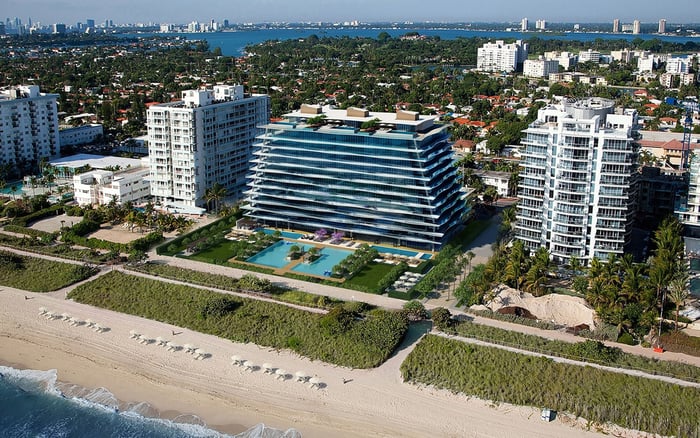
An editorial guide for luxury buyers weighing Surfside real estate through the lens of multi-state residency risk, domicile planning, second-home use, and long-term ownership intent.

For the multi-state luxury buyer, purchasing in Surfside is rarely a purely aesthetic decision. The view, the building, the arrival sequence, and the beach access still matter, but they now sit beside a quieter set of questions: Where is life truly centered? How often will the residence be used? Does the ownership structure support the broader plan? Will the purchase create clarity, or introduce another variable?
That is the lens through which many sophisticated buyers now approach Surfside. The town’s appeal to multi-state purchasers is rooted in discretion, scale, and a coastal lifestyle that can feel more residential than performative. Yet the same qualities that make it attractive as a primary residence, seasonal base, or strategic second home also demand precision. A buyer who splits time across several states is not simply choosing an address. They are deciding how a South Florida residence fits into a documented pattern of life.
This is not a substitute for legal or tax advice. It is a real estate perspective on how residency-related risk influences timing, product selection, and the level of permanence a buyer may want from a Surfside acquisition.
In Surfside, the deeper question is often what kind of ownership best matches the buyer’s intended life. Some purchasers want a residence that can credibly function as a full-time home. Others want an elegant coastal base while maintaining meaningful ties elsewhere. Still others are repositioning their real estate portfolio and want South Florida to play a larger role over time.
Those distinctions matter. A buyer seeking a more permanent South Florida footprint may prioritize storage, privacy, service, parking, wellness spaces, and a floor plan that supports everyday living rather than short seasonal stays. A buyer who expects more limited use may focus on lock-and-leave simplicity, building management, and ease of arrival. Neither approach is inherently superior. Risk emerges when the property selected does not match the stated plan.
That is why buyers comparing The Delmore Surfside with other Surfside options often begin with lifestyle architecture before discussing price. The question becomes whether the residence can support the buyer’s intended pattern consistently, not merely whether it photographs well or satisfies a momentary desire for the beach.
For a buyer with multi-state exposure, value is not measured only in finishes, views, or scarcity. It is also measured in coherence. A Surfside home may be part of a broader residency plan, but that plan must be intentional. The purchase should sit comfortably alongside the buyer’s travel rhythm, family needs, professional obligations, estate planning, and advisory guidance.
This changes the way due diligence is conducted. Instead of asking only which line has the best exposure, the buyer may ask whether the building supports regular use, whether the association framework fits their lifestyle, and whether the property feels practical enough to become a true anchor. The most expensive option is not always the most persuasive option. The most coherent one often is.
Residency questions can also affect timing. Some buyers want to complete a purchase before making broader personal changes. Others prefer to complete advisory work first, then acquire with a clearer view of how the property will be used. In both cases, real estate becomes part of a larger sequence. The strongest decisions are usually made when counsel, family office professionals, and real estate advisors are aligned before the contract becomes urgent.
Oceanfront Surfside has a particular emotional force. It can make the decision feel obvious: acquire the residence, simplify the calendar, and let the coastline do the rest. But emotional clarity is not the same as residency clarity. A buyer may love the setting and still need to define how the home will be occupied, documented, maintained, and integrated into daily life.
This is especially important when evaluating buildings such as Ocean House Surfside or Fendi Château Residences Surfside. The appeal is immediate, but the ownership analysis should remain deliberate. Does the residence encourage longer stays? Does it support hosting family? Does it feel like a home or a hotel-like escape? Does the scale of the building align with the buyer’s privacy expectations?
For some, the right Surfside property becomes a stabilizing asset. It gives the buyer a place to return to repeatedly, with enough comfort and continuity to support a more settled South Florida presence. For others, the purchase remains primarily lifestyle-driven. Both outcomes can be successful, but they should not be confused.
Investment considerations also enter the conversation, even when the primary motivation is personal use. Surfside buyers often think in long horizons, especially when the purchase is tied to family, legacy, or a desire for a quieter coastal base. Residency risk adds another layer: the property should not only be desirable, but also appropriate for the buyer’s future use case.
This is where restraint matters. A residence that seems compelling as a trophy acquisition may be less suitable if the buyer needs daily functionality. A smaller, easier-to-manage home may be insufficient if the family intends to spend extended periods in South Florida. The best investment decision is often the one that avoids contradiction.
Consider a buyer comparing The Surf Club Four Seasons Surfside with other coastal choices. The brand, atmosphere, and address may all appeal, but the residency-driven buyer still needs to ask whether the property reinforces the story they intend to live. The real estate should support the pattern, not merely decorate it.
The most effective buyers do not treat residency risk as an afterthought. They begin by defining the role of the Surfside residence. Is it meant to be a primary home, a seasonal home, a transition asset, or a long-term family base? From there, they evaluate buildings through that frame.
They also avoid casual assumptions. A Florida residence may be part of a carefully considered plan, but that plan depends on consistent behavior and professional guidance. Buyers should speak with the appropriate legal and tax advisors before relying on a purchase to support any residency position.
On the real estate side, this means favoring clarity over improvisation. The buyer should know how often they expect to be in Surfside, who will use the residence, what services are needed, and whether the building will still feel appropriate five or ten years from now. The more complex the buyer’s life across states, the more important it becomes for the property to feel unambiguous in purpose.
Surfside’s strength is that it can accommodate several versions of permanence. For one buyer, permanence means moving more of life to South Florida. For another, it means securing a refined coastal residence the family can return to with ease. For another, it means creating a foothold while maintaining flexibility.
The risk is not in choosing Surfside. The risk is in choosing without defining the role Surfside is meant to play. When the property, advisory plan, and lifestyle pattern are aligned, the purchase can feel quietly powerful. It becomes less about escaping another state and more about building a coherent life in South Florida.
For the ultra-premium buyer, that coherence is the real luxury. It is not only what the residence offers on arrival. It is what the residence makes possible over time.
Does buying in Surfside automatically resolve multi-state residency questions? No. Ownership may support a broader plan, but legal and tax advisors should evaluate the buyer’s full pattern of life.
Why do residency questions affect the type of Surfside residence a buyer chooses? The home should match the intended use, whether full-time living, seasonal use, or a more flexible second-home role.
Should a buyer speak with counsel before signing a contract? Yes. Buyers with multi-state exposure should align advisory guidance before relying on a purchase as part of a residency plan.
Can a Surfside condo work as a primary residence? It can, if the building, floor plan, services, and lifestyle fit the buyer’s daily needs and long-term expectations.
What makes under-planning risky? A property may be beautiful but still fail to support the buyer’s intended pattern of use, documentation, or family rhythm.
Is oceanfront ownership always the best choice for residency planning? Not always. Oceanfront appeal is powerful, but the better choice is the residence that supports consistent, practical use.
How should investment goals be balanced with residency concerns? Buyers should avoid treating the property only as an asset if it must also function as a credible personal base.
Can Surfside work for a second-home strategy? Yes, provided the buyer is clear about frequency of use, household needs, and how the home fits into a broader plan.
What is the most important first step for a multi-state buyer? Define the role of the Surfside residence before comparing buildings, views, or pricing.
Why does discretion matter in this decision? Many buyers value a quieter process because residency, family, and asset planning are personal and often interconnected.
If you'd like a private walkthrough and a curated shortlist, connect with MILLION.
If branded residences are on your mind — as a home or as an allocation — we would be glad to share what we are seeing, privately.
Begin a quiet conversation