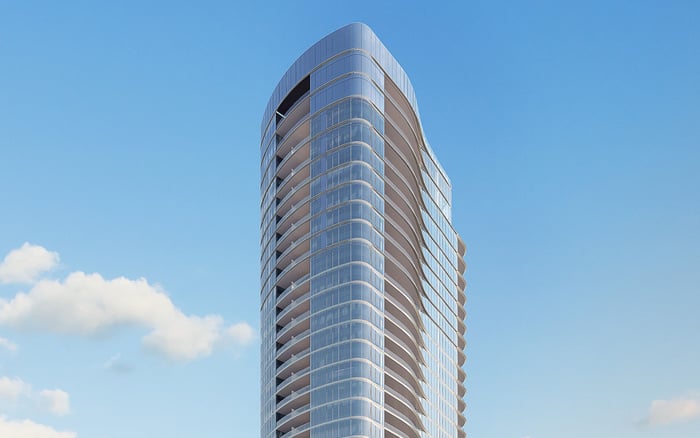
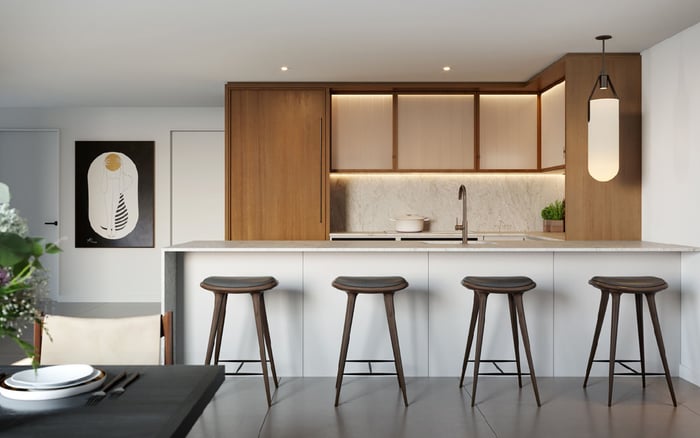
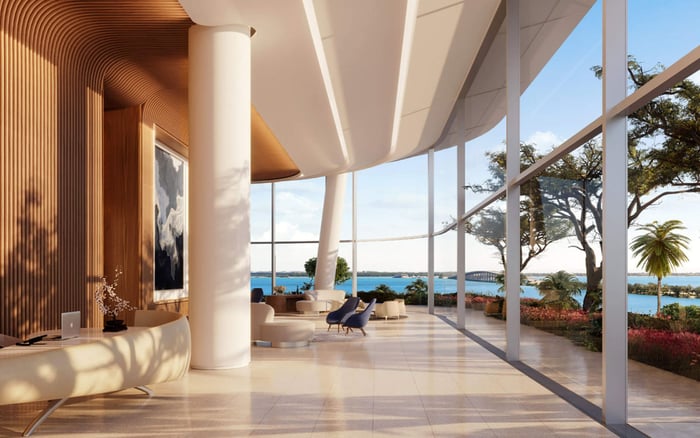
A buyer-oriented look at how House of Wellness Brickell enters Brickell’s evolving luxury conversation, where private residential service, wellness, discretion, and daily ease increasingly define value.
Brickell has long been fluent in polished towers, skyline views, and hotel-caliber arrival sequences. Yet the more revealing conversation among sophisticated buyers is no longer limited to architecture or height. It is about what happens after the door closes, when a residence must make daily life feel quieter, better managed, and more private.
That is the context in which House of Wellness Brickell becomes relevant. Before a buyer studies floor plans or compares finishes, the name itself places the project within a broader shift: wellness is not being treated as a decorative amenity, but as a residential service language. For the Brickell buyer, that distinction matters.
Private residential service is not simply more staff, more amenities, or more programming. At the top end of the market, it is the orchestration of access, privacy, routine, and responsiveness. It is the ability to move through a building with minimal friction, receive support without ceremony, and maintain a life that feels composed rather than publicly managed.
In earlier cycles, luxury condominium service often meant a strong front desk, a fitness room, a pool deck, and a club room. Those elements still matter, but they are no longer enough to distinguish a serious residence in Brickell. Buyers now ask whether a building can support the way they actually live: early starts, irregular schedules, travel, wellness routines, entertaining, family logistics, and privacy expectations.
This is where private residential service becomes infrastructure. It is less visible than marble, but often more decisive. A lobby experience can be beautiful and still inefficient. A spa area can be handsome and still feel public. A concierge desk can be attentive and still fall short of the discretion an ultra-premium household expects.
House of Wellness Brickell fits the conversation because it points toward a more integrated residential proposition. The relevant question is not simply whether wellness amenities exist. The sharper question is whether the building’s service philosophy can help residents protect time, reduce daily friction, and access restorative spaces without turning home into a spectacle.
Brickell’s appeal is inseparable from access. It offers proximity to business, dining, waterfront edges, cultural destinations, and the broader Miami urban core. Yet access creates its own tension. The more active the neighborhood becomes, the more valuable privacy feels inside a residential address.
That tension explains why buyers compare service models as carefully as they compare views. A residence in Brickell must engage the city while creating a private retreat from it. The most successful buildings do not ask residents to choose between energy and calm. They create a controlled threshold between the two.
This is also why nearby projects help frame the discussion. Baccarat Residences Brickell places Brickell within the language of Branded Residences, where design, hospitality cues, and residential identity are part of the value proposition. Cipriani Residences Brickell speaks to another kind of private lifestyle expectation, one informed by service culture and social ease. House of Wellness Brickell enters the same buyer conversation from a wellness-oriented angle.
None of these comparisons needs to become a ranking. For many buyers, the right question is not which building is louder in the marketplace, but which one best matches the rhythm of the household.
Lifestyle is often used loosely in real estate, but at this level it should be understood with precision. Lifestyle is the sum of small moments that either add effort or remove it. It is the morning transition from residence to car, the ability to host without disrupting family life, the feeling of returning home after travel, and the privacy of maintaining wellness routines without leaving the building unnecessarily.
For new-construction buyers in Brickell, service becomes part of the underwriting of daily experience. The best buildings are not simply amenity-rich. They are choreographed. They consider how residents arrive, where they pause, how guests are received, how wellness spaces are accessed, and how public energy is filtered before it reaches the private residence.
In that sense, House of Wellness Brickell appears aligned with a market that increasingly values inner balance as much as external prestige. The project’s relevance is not only that it references wellness. It is that Brickell’s luxury buyers are ready to evaluate wellness as a serious residential category, not a marketing accessory.
Discretion is one of the most important and least photographed attributes in luxury real estate. It rarely appears in a rendering, but it shapes how a building feels to live in. In Brickell, where residents may include executives, entrepreneurs, international families, and frequent travelers, discretion can be as important as design pedigree.
Private residential service works best when it is anticipatory but not intrusive. The resident should feel known, but not observed. Guests should be handled gracefully, but not theatrically. Wellness should be accessible, but not staged as a public performance. The most refined service culture allows residents to use the building fully while preserving the psychological comfort of home.
That is the higher bar House of Wellness Brickell must be considered against. Its strongest potential role is not simply to add another residential option to Brickell. It is to help define what a wellness-forward private service model should feel like in one of Miami’s most active urban neighborhoods.
Brickell’s residential landscape is no longer defined by one luxury formula. Some buyers gravitate toward waterfront silhouettes, some toward brand-led hospitality, some toward design distinction, and others toward wellness, privacy, or the feel of a private club. The result is a more nuanced market, where fit matters more than general prestige.
The Residences at 1428 Brickell contributes to this shift by reinforcing how buyers now scrutinize both architecture and the lived experience behind it. St. Regis® Residences Brickell adds another point of comparison for buyers who see service heritage as central to residential value. Against that backdrop, House of Wellness Brickell is best understood as part of a broader refinement of the neighborhood’s luxury vocabulary.
The buyer who responds to this category is often not looking for the most visible address. They are looking for the most effective one. They want a building that supports health, time, privacy, and movement through the city with fewer compromises.
A polished sales gallery can communicate atmosphere, but buyers should look deeper. The most important questions are practical. How does the building separate public and private circulation? How are guests and service providers handled? Do wellness areas feel integrated into daily life or detached from it? Is the service concept built around genuine residential use, or around a checklist of amenities?
Buyers should also consider how the building will age. A dramatic amenity can feel exciting at launch, but a thoughtful service model can become more valuable over time. In Brickell, where residents may move between work, travel, entertaining, and restoration in a single day, operational intelligence is a form of luxury.
House of Wellness Brickell fits the private service conversation because it encourages buyers to ask more refined questions. In a market with many ways to signal prestige, the most sophisticated addresses increasingly compete on how well they protect the resident’s time, privacy, and sense of ease.
Why is House of Wellness Brickell relevant to private residential service? It reflects a broader Brickell shift toward buildings that support wellness, privacy, and smoother daily routines rather than relying only on visible luxury cues.
Is wellness now a major luxury category in Brickell? Yes, wellness has become part of the way many buyers evaluate residential value, especially when it is tied to privacy and convenience.
How should buyers compare service-focused Brickell residences? Look beyond amenity names and study how arrival, guest handling, wellness access, privacy, and resident support are actually organized.
Does private service mean a building must feel like a hotel? Not necessarily. The most refined residential service feels discreet, personal, and calm rather than overtly theatrical.
What makes Brickell different from quieter luxury neighborhoods? Brickell combines urban access with intensity, so the best residences must create a strong private threshold from the city.
Are Branded Residences part of the same service conversation? Yes, Branded Residences often shape buyer expectations around hospitality, design identity, and service consistency.
Should buyers prioritize wellness amenities or privacy? The strongest choice usually balances both, since wellness spaces feel more valuable when they are easy to access discreetly.
Is new-construction especially important for service design? New-construction can allow service, circulation, and wellness spaces to be planned together from the beginning.
Can service quality affect long-term appeal? Yes, a thoughtful service model can help a building remain desirable after the initial excitement of launch fades.
Who is the ideal buyer for this type of Brickell residence? It suits buyers who value urban access but want home to feel private, restorative, and carefully managed.
To compare the best-fit options with clarity, connect with MILLION.
If branded residences are on your mind — as a home or as an allocation — we would be glad to share what we are seeing, privately.
Begin a quiet conversation