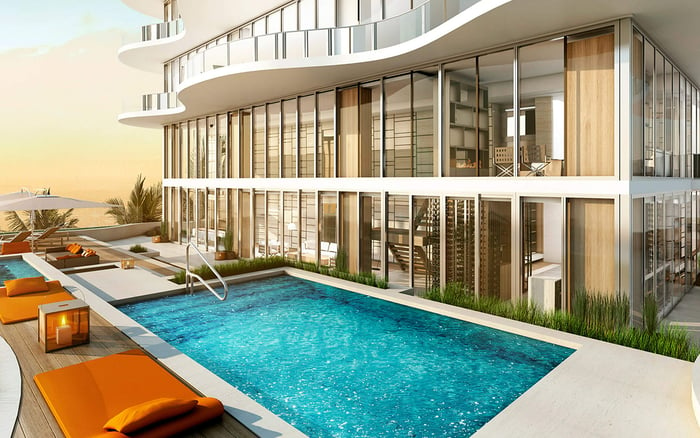
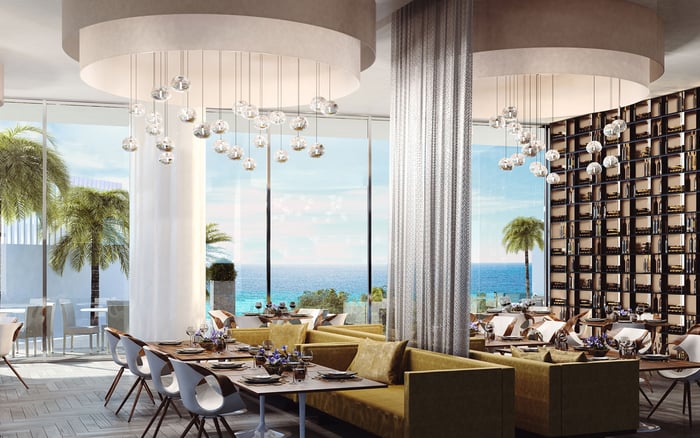
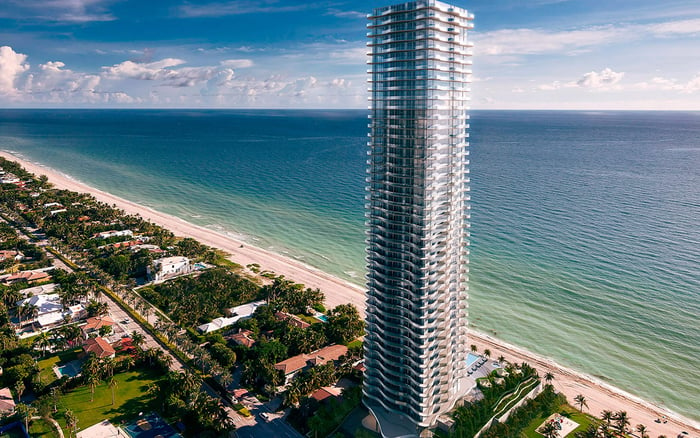
An operational design analysis of Jade Ocean Sunny Isles Beach, focusing on how discreet staff logistics, service circulation, maintenance access, and condominium governance support the visible luxury of oceanfront living.
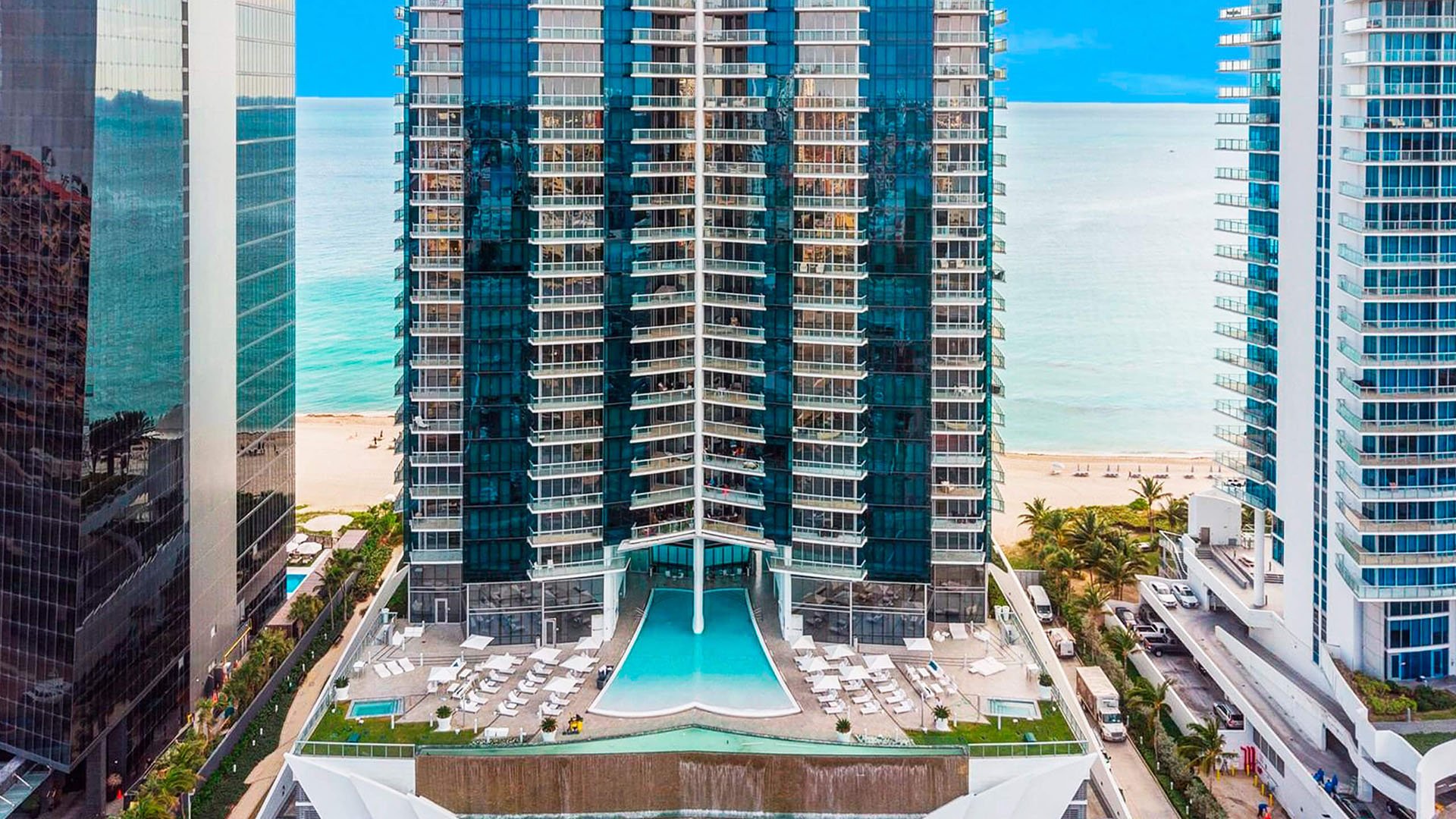
The most persuasive luxury buildings in South Florida do more than photograph well. They function well. At Jade Ocean Sunny Isles Beach, the resident-facing story is clear: oceanfront living, contemporary design, glass-forward architecture, and a resort-style residential atmosphere. Yet the daily experience of such a condominium depends just as much on what residents rarely see.
Staff movement, delivery handling, storage, maintenance access, elevator discipline, and service coordination are not decorative concerns. They are the hidden infrastructure of calm. Jade Ocean is not a transient hotel, and it should not be judged as one. Still, the expectations of owners in a high-end Sunny Isles Beach condominium often resemble hotel-level service in one critical respect: things should happen quietly, promptly, and without disrupting the privacy of home.
That is why back-of-house design matters. In a glassy oceanfront tower, the public impression is transparency, light, and ease. The operational imperative is almost the reverse: keep service activity discreet, separated, legible to staff, and minimally visible to residents and guests.
Sunny Isles Beach is one of South Florida’s most concentrated oceanfront tower environments. Sites along the water are valuable, narrow, and operationally complex. A luxury condominium must stack private residences, amenity areas, parking, mechanical systems, arrival sequences, service zones, and staff circulation within a constrained vertical envelope.
That typology creates pressure. A delivery truck, housekeeping cart, engineer, resident, valet movement, and contractor visit cannot all be treated as casual circulation events. They require choreography. The operational logic suggests that a building like Jade Ocean must rely on clear separation between resident-facing space and service-facing space wherever possible, even if the specific internal layout is not publicly visible.
This is also why buyers comparing Jade Ocean with neighboring luxury towers such as Jade Signature Sunny Isles Beach or Muse Residences Sunny Isles Beach should look beyond lobby finishes. The lasting measure of quality is how consistently a building preserves silence, privacy, cleanliness, and order on ordinary days, not only during a sales tour.
For many buyers, Oceanfront and Waterfront are not just marketing words. They imply a lifestyle where the home feels protected from friction. That protection is partly architectural and partly operational.
The front-of-house experience at a tower like Jade Ocean is designed to feel effortless. Residents arrive, move through polished common areas, and continue toward elevators, amenities, or residences without sensing the coordination behind the scenes. The more refined the building, the less visible the labor becomes.
Back-of-house planning serves several quiet purposes. It gives staff a way to move through the property without constantly crossing social spaces. It gives building operations places to stage supplies without compromising the visual calm of amenity areas. It gives engineers access to mechanical systems without turning maintenance into theater. It gives deliveries a process before they become resident interruptions.
In a condominium setting, this matters differently than it does in a hotel. There is no nightly room-revenue engine to absorb operational shifts in the same way a hospitality property might. Staffing levels, capital improvements, service standards, and operational upgrades typically live within association governance and budgeting. That makes the building’s original planning, and the discipline of its management culture, especially important over time.
The best luxury condominiums make the ordinary feel invisible: the package that arrives, the elevator that remains clean, the corridor that stays quiet, the engineer who solves an issue without spectacle. These are not small details. They are the infrastructure of Lifestyle.
Most buyers will never review proprietary staff plans or service diagrams, and they should not expect to. But they can still ask sophisticated questions. How does the building handle deliveries? Are service movements routed away from primary resident moments when possible? Does staff circulation feel controlled rather than improvised? Are maintenance and engineering tasks handled with minimal interruption to residential life?
The key is not to demand disclosure of sensitive building operations. The key is to understand whether the condominium behaves like a well-run residential environment. A luxury tower can have beautiful materials and still feel chaotic if staff pathways, storage habits, and delivery protocols are weak. Conversely, a mature building can feel exceptionally composed when operations are disciplined.
This is where Design & Architecture becomes more than aesthetics. A glass-forward building like Jade Ocean places more pressure on concealment, timing, and spatial hierarchy. Transparency at the facade increases the need for opacity in operations. The service world must exist, but it should not compete with the residential world.
Comparable high-service Sunny Isles residences, including Turnberry Ocean Club Sunny Isles and The Ritz-Carlton Residences® Sunny Isles, reinforce the same buyer lesson: the luxury promise is only as strong as the systems that deliver it every day.
Jade Ocean’s identity as a high-end residential condominium is essential. Residents are not passing through for a weekend. They are living within a private vertical community where repeat encounters, consistent standards, and long-term maintenance culture define value.
That permanence creates advantages. Staff can learn resident preferences. Management can refine daily rhythms. Association priorities can support the building’s specific needs rather than a hospitality brand’s transient guest cycle. But it also creates obligations. The building must keep investing in operations, not only in visible refreshes.
Back-of-house quality is therefore a form of asset protection. Well-managed service routes can reduce friction. Thoughtful storage practices can protect common areas from clutter. Strong delivery coordination can limit lobby congestion. Engineering access can preserve both comfort and discretion. None of these elements requires spectacle, but all of them shape how expensive a building feels to live in.
For a buyer, the most revealing question may be simple: does the building feel calm under pressure? A true luxury condominium should not lose its composure when packages arrive, vendors are scheduled, staff are changing shifts, or maintenance is underway. Jade Ocean’s visible polish is best understood through that operational lens.
Is Jade Ocean Sunny Isles Beach a hotel? No. Jade Ocean should be understood as a high-end residential condominium, even when its service expectations feel hotel-like.
Why does back-of-house design matter in a luxury condo? It keeps staff movement, deliveries, storage, and maintenance from disrupting the resident experience. In premium buildings, discretion is part of the amenity package.
Can buyers verify Jade Ocean’s exact staff areas? Exact staff counts, service layouts, and back-of-house square footage are not typically part of a public buyer review. Buyers can still evaluate the building’s operational feel during visits.
What should buyers observe during a showing? Look for calm arrival sequences, clean corridors, controlled delivery activity, and staff movement that feels organized rather than improvised.
Why is Sunny Isles Beach especially logistics-sensitive? Oceanfront tower sites are constrained, so residential, amenity, parking, mechanical, and service functions must be carefully stacked and coordinated.
Does glass-forward architecture affect operations? Yes. The more visually open a building feels, the more important it becomes to keep service activity discreet and separated from resident-facing areas.
How do association budgets relate to service quality? In a condominium, staffing and operational upgrades are generally supported through association governance and budgets rather than hotel-style room revenue.
Are delivery systems part of luxury value? Yes. Package handling, vendor coordination, and service elevator discipline can strongly influence privacy, quiet, and daily convenience.
Should buyers compare Jade Ocean with nearby towers? Yes. Comparing operational atmosphere across Sunny Isles Beach buildings can reveal differences that finishes alone may not show.
What is the core lesson of Jade Ocean’s operations? The luxury experience depends on both architectural presentation and invisible operational discipline behind the scenes.
For a tailored shortlist and next-step guidance, connect with MILLION.
If branded residences are on your mind — as a home or as an allocation — we would be glad to share what we are seeing, privately.
Begin a quiet conversation