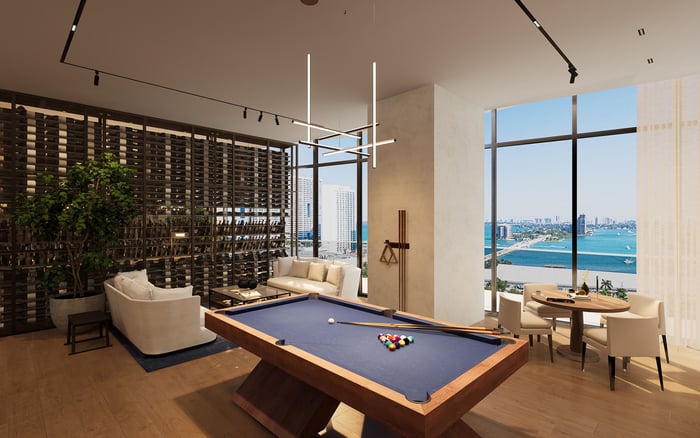
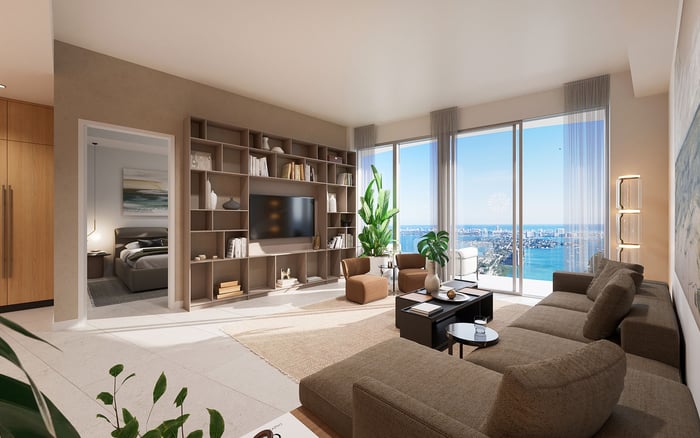
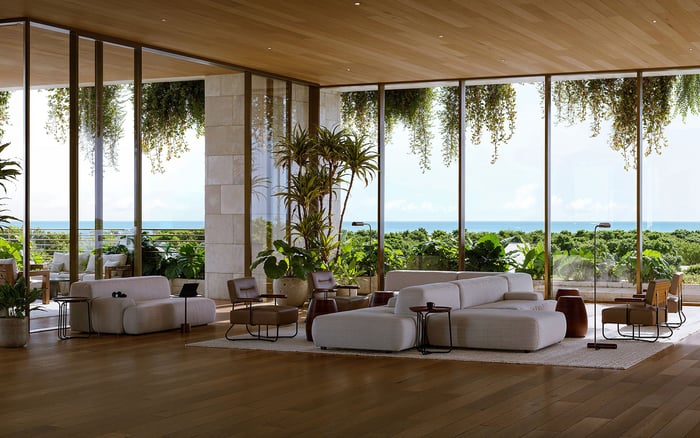
Casa Bella Residences by B&B Italia positions arrival as a defining luxury experience in Downtown Miami, using discretion, Italian design identity and controlled exposure to bring estate-like expectations into a dense urban tower.
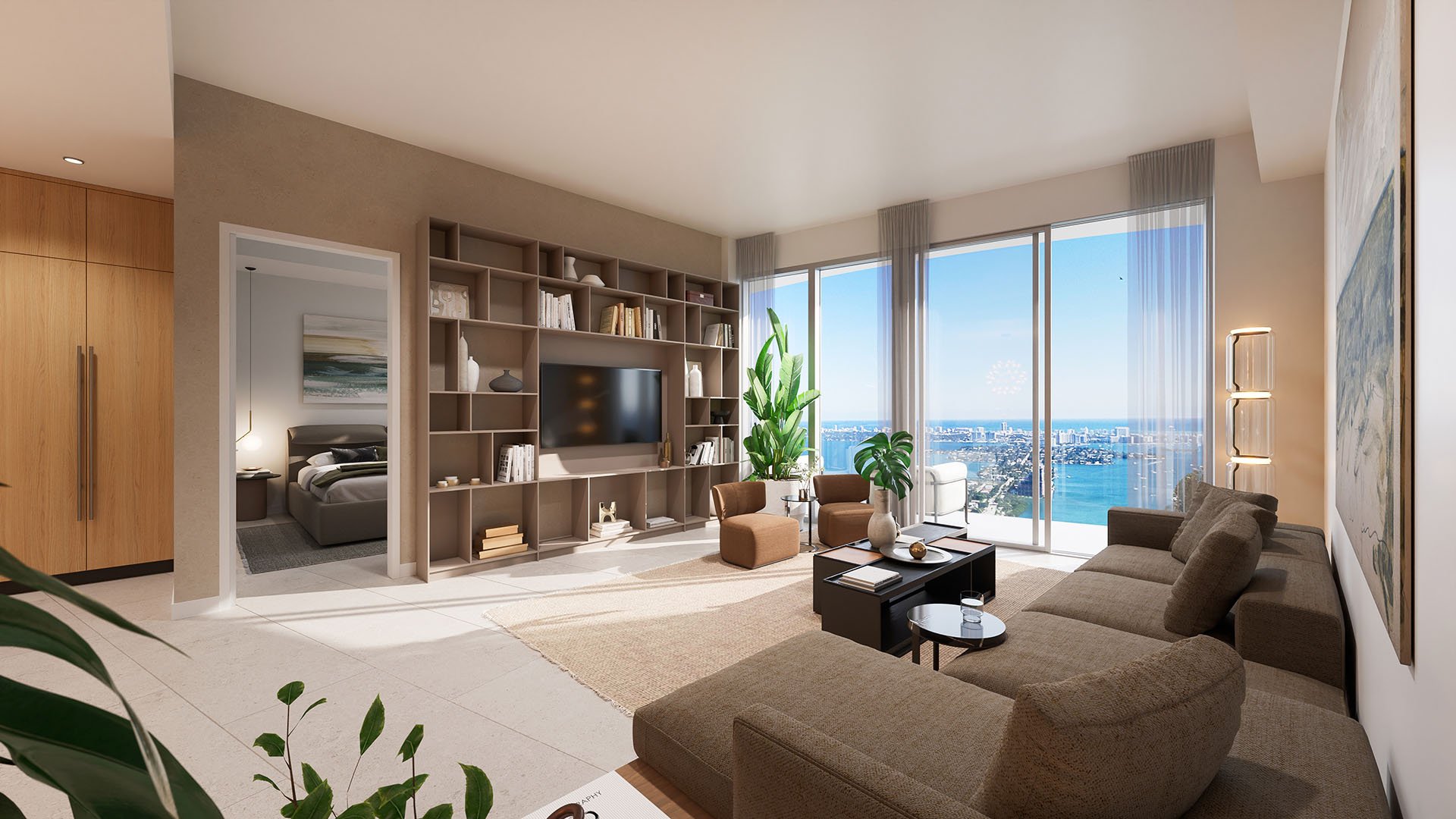
At the most refined tier of urban residential design, luxury is no longer measured only by views, finishes or amenity scale. Increasingly, it is measured by the quality of transition. For a buyer, the question is simple but revealing: what does it feel like to come home?
That question sits at the center of the conversation around Casa Bella by B&B Italia Downtown Miami. The project is a branded luxury residential tower in Downtown Miami, positioned within a newer generation of city residences that treat arrival as part of the private experience rather than a purely functional threshold. Its relevance is not simply that it occupies a visible urban district. It is that it seeks to manage that visibility with discretion.
For affluent buyers, especially those accustomed to estate settings or highly serviced private environments, the first moments after leaving the street matter. An arrival sequence, a lobby experience and the movement toward vertical circulation can either heighten exposure or reduce it. Casa Bella’s argument is that an urban condominium can still deliver a composed, residentially scaled sense of arrival.
The phrase privacy-first arrival is best understood as an editorial lens rather than a formal slogan. At Casa Bella, the idea is rooted in choreography. The experience is framed as closer to entering a private residence than passing through a conventional city condominium lobby. That distinction matters because it shifts attention away from spectacle and toward control.
In Downtown Miami, many luxury towers must balance public visibility with residential seclusion. Casa Bella does not try to deny the energy of its setting. Instead, its positioning suggests a more nuanced response: allow the city to remain present, while making the resident’s transition from street to home more deliberate, shielded and graceful.
The privacy conversation here is not about disappearing from the city. It is about reducing friction between the public realm and the homeowner’s private routine.
Casa Bella’s association with B&B Italia gives the project a specific design vocabulary. Rather than relying on generic luxury cues, the residence uses Italian design identity as a central part of its branding. For buyers, that matters because arrival is not only spatial. It is atmospheric.
A lobby can feel like a hotel, a gallery, a club or a residence. The Casa Bella narrative leans toward the last of those. Its design identity supports the sense that a resident is entering a composed private environment, where materials, proportions and circulation all contribute to a more discreet arrival.
This is where branded residences have evolved in South Florida. The brand is not merely a name on a tower. In the strongest examples, it becomes a promise about how daily life will be shaped. At Casa Bella, that promise is communicated through the entry sequence as much as through the residence itself.
Casa Bella sits within a broader Downtown Miami conversation about towers with strong identity. Nearby luxury buyers may also evaluate projects such as Aston Martin Residences Downtown Miami or Waldorf Astoria Residences Downtown Miami, where the name, design sensibility and expected standard of service all become part of the address.
That context helps explain why Casa Bella’s arrival strategy matters. Downtown Miami is a dense urban setting, so residential privacy cannot be treated the same way it might be in a gated waterfront estate. It must be designed into the path home, from arrival to lobby to elevator sequence. The luxury is in the reduction of unnecessary exposure.
The same buyer may also understand the Downtown Miami market through other identity-driven projects, including Faena Residences Miami Downtown Miami. Yet Casa Bella’s particular distinction is its B&B Italia connection, which places furniture, interiors and Italian design culture close to the center of the residential proposition.
For a sophisticated buyer, the arrival sequence deserves the same scrutiny as the kitchen, terrace or primary suite. The first question is whether the building’s public face gives way to a private rhythm quickly enough. Casa Bella’s discussion around the entry experience, lobby atmosphere and vertical circulation makes that question central.
The second question is whether the arrival feels operationally calm. Privacy is not only about barriers. It is also about predictability, sightlines and the ability to move from car to residence without feeling overexposed. In a high-density district, that choreography can be one of the most meaningful forms of luxury.
The third question is whether the brand identity reinforces the experience. Casa Bella benefits from the association with B&B Italia because the project can frame arrival as a design event, not merely a security checkpoint. For buyers comparing new-construction options, that distinction can separate a polished tower from a more deeply conceived residential environment.
The privacy-first conversation can easily become too narrow if it is reduced to security. Casa Bella’s more interesting proposition is about lifestyle. It speaks to buyers who want Downtown Miami access while preserving the emotional qualities of retreat, composure and sanctuary.
This is a subtle but important shift. In older luxury language, exclusivity often meant separation. In a dense urban condominium, separation is not always the goal. The better goal is managed exposure: a resident can live within the city’s visibility while still feeling that the return home is protected, elegant and personal.
That is why Casa Bella’s arrival idea feels relevant to the next phase of Downtown Miami luxury. The most persuasive projects are not asking buyers to choose between urban energy and residential privacy. They are trying to resolve the tension through design, operations and brand discipline.
Casa Bella by B&B Italia Downtown Miami fits the privacy-first arrival conversation because it treats the act of coming home as a defining part of the ownership experience. The project’s Downtown Miami location gives it public presence, while its positioning emphasizes discretion, controlled exposure and a more residence-like transition into the home.
For buyers, the lesson is practical. When touring or comparing towers, do not begin your evaluation at the unit door. Begin at the curb. Notice how the building receives you, how quickly the city recedes, how the lobby handles visibility and how naturally vertical circulation completes the sequence.
In that sense, Casa Bella is not only a branded residence. It is a case study in how an urban tower can use arrival choreography to express privacy, design authority and residential calm.
What is Casa Bella by B&B Italia Downtown Miami? It is a branded luxury residential project in Downtown Miami connected to B&B Italia’s Italian design identity.
Why is arrival important at Casa Bella? The project frames arrival as part of the luxury experience, linking the path home with privacy, discretion and controlled exposure.
Is privacy-first arrival an official slogan? It is best read as an interpretive description of the project’s positioning rather than a quoted official slogan.
How does Casa Bella differ from a conventional condominium lobby? Its arrival concept is described as closer to entering a private residence than moving through a typical urban condominium lobby.
What parts of the arrival sequence matter most? The entry experience, lobby atmosphere and vertical circulation strategy are central to the way the project communicates discretion.
Why does Downtown Miami make this idea more relevant? Dense urban settings increase the importance of a controlled transition from public street life to private residence.
Does Casa Bella reject the visibility of Downtown Miami? No. Its positioning suggests that visibility can be managed through design and operations rather than avoided entirely.
How does B&B Italia influence the project’s appeal? The association gives Casa Bella a distinctive Italian design identity that helps separate it from unbranded towers.
Who is the likely buyer for this type of arrival experience? It appeals to buyers who want urban access while preserving a sense of sanctuary, composure and privacy at home.
What is the best way to shortlist comparable options for touring? Start with location fit, delivery status, and daily lifestyle priorities, then compare stacks and elevations to validate views and privacy.
For a tailored shortlist and next-step guidance, connect with MILLION.
If branded residences are on your mind — as a home or as an allocation — we would be glad to share what we are seeing, privately.
Begin a quiet conversation