One Thousand Museum Downtown Miami shows how private arrival has become a defining luxury signal, pairing a public architectural landmark with controlled, discreet resident movement.
In luxury real estate, arrival is no longer just a practical sequence. It has become part of the emotional architecture of ownership, especially in dense urban settings where privacy must be designed rather than assumed. That is why One Thousand Museum Downtown Miami holds such an important place in the conversation around private arrival culture in Downtown Miami.
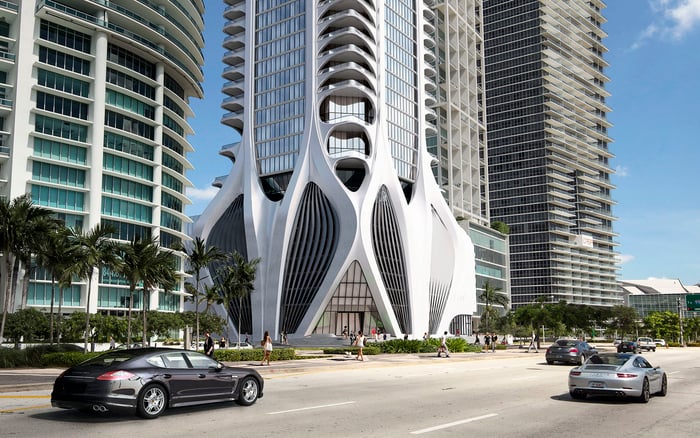
At 1000 Biscayne Boulevard, One Thousand Museum Downtown Miami sits at the edge of Museum Park and Biscayne Bay, beside one of the city’s most visible civic and cultural waterfront settings. Its profile is unmistakable. The tower’s sculptural exoskeleton and fluid exterior form make it a skyline landmark, while the resident experience is shaped by controlled access, privacy, and choreography.
That contrast matters. The building is publicly visible, almost impossible to ignore, yet its luxury proposition for residents is not rooted in public spectacle. It is built around the opposite: the ability to move through the city with discretion, efficiency, and a sense of protection.
Downtown Miami is not a secluded resort environment. It is a civic, cultural, and waterfront district defined by density, movement, and public life. In that context, the luxury buyer is not simply asking whether a residence has views or amenities. The sharper question is how the building manages entry, exit, privacy, and time.
That is where private arrival culture becomes a meaningful lens. In a suburban estate or gated enclave, separation is often created by land. In Downtown, separation must be created through design, service, access control, and vertical movement. A successful ultra-luxury tower allows residents to participate in the energy of the city without being exposed to it at every transition point.
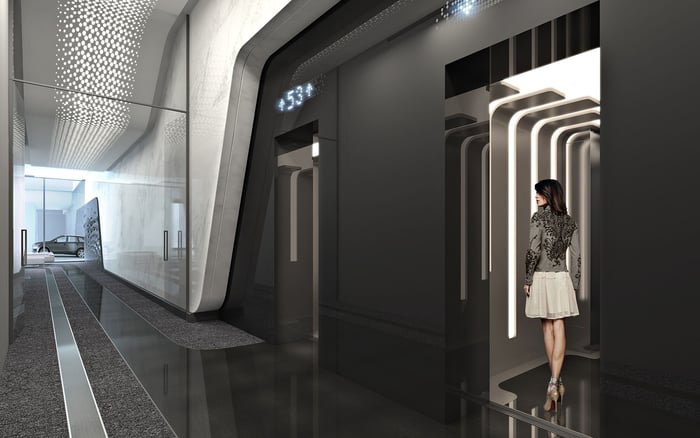
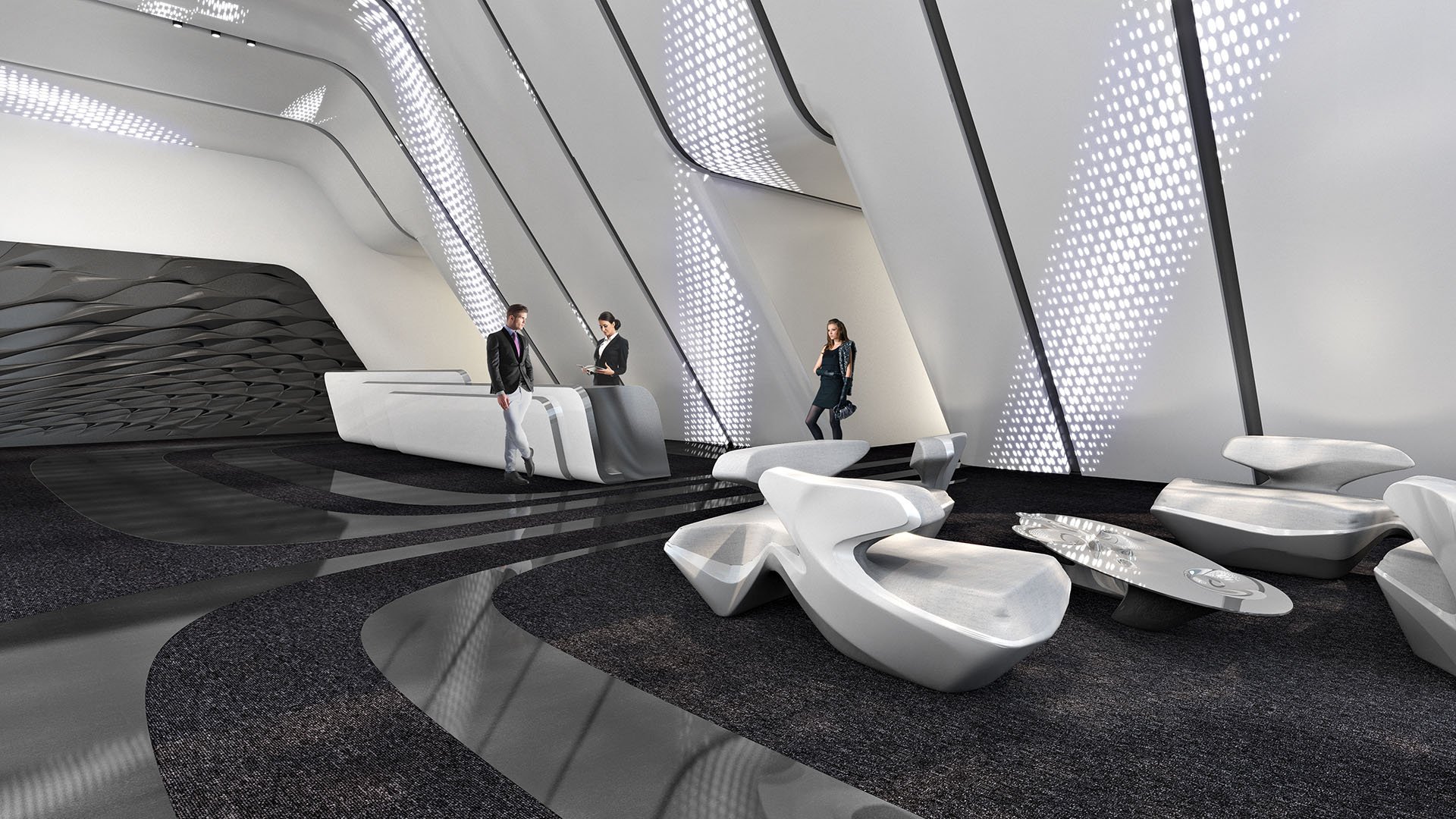
One Thousand Museum treats that transition as part of the product. Its arrival strategy combines ground-level access, private services, and vertical transportation as components of the luxury experience. Rather than reducing arrival to a lobby moment, the tower frames it as a complete sequence from city to residence.
The tower’s architectural identity is central to its appeal. Associated with Zaha Hadid’s sculptural architectural language, One Thousand Museum is not a background building. It contributes to the visual identity of Downtown Miami, particularly from waterfront and park-facing perspectives.
Yet the most interesting aspect for a high-net-worth buyer is not only what the building reveals to the city. It is what the building withholds. The exoskeleton is visible. The skyline presence is visible. The resident pathway is intentionally more private.
This is a sophisticated form of luxury branding. Many towers compete through amenity abundance, but the upper tier of the market increasingly reads privacy as an amenity in itself. Controlled access, careful transitions, and discreet service have become as relevant as pools, wellness spaces, or entertaining rooms. The value is not just in what residents can use, but in how little friction they encounter while using it.
For buyers interested in design and architecture, the building offers an especially clear lesson: iconic form and protected experience can coexist. A tower can be one of the most recognizable objects on the skyline while still making resident movement feel guarded, composed, and personal.
The private residential helipad is one of One Thousand Museum’s defining arrival features. Its significance is both functional and symbolic. Functionally, it allows the tower to participate in a multimodal arrival model that extends beyond car-based access. Symbolically, it communicates a precise idea of ownership: time, discretion, and optionality matter.
For certain buyers, the point is not that every arrival will happen by air. The point is that the building was conceived with an elevated definition of access. The helipad signals that arrival is not an afterthought. It is a core part of the lifestyle strategy.
In the luxury market, rare access features often serve as shorthand. They tell buyers how a building understands its audience. Here, the audience is not simply looking for a Downtown address. It is looking for a protected private identity within the Downtown landscape.
That is why the helipad should not be viewed only as an amenity. It also works as a positioning device for residents who value time savings, privacy, and discretion. In a market where many buildings can offer views, finishes, and service, the ability to redefine how one enters and leaves the property becomes a more distinctive marker.
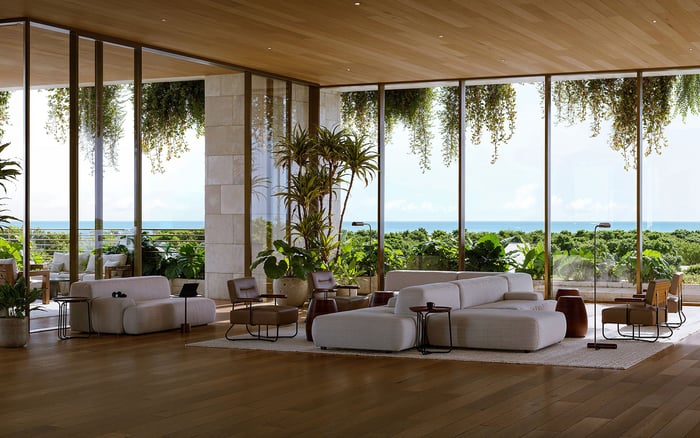
The tower’s location overlooking Museum Park and Biscayne Bay adds another layer to the private arrival conversation. Waterfront proximity gives the address a sense of openness, while the museum-front setting places residents near Downtown Miami’s civic and cultural core. This combination is rare because it pairs urban centrality with a more elevated residential identity.
Waterview value is often discussed in terms of outlook, light, and daily atmosphere. At One Thousand Museum, it also supports the larger idea of calm within density. Residents are positioned beside major public space, yet the building’s access logic is designed to preserve exclusivity.
That balance is increasingly important. The most compelling Downtown residences are not trying to erase the city around them. They are trying to edit the experience of it. The buyer wants proximity without exposure, cultural access without constant public contact, and waterfront presence without sacrificing privacy.
One Thousand Museum’s role becomes clearer when placed in the broader Downtown Miami luxury conversation. Buyers comparing the area may naturally look at other statement addresses such as Aston Martin Residences Downtown Miami, Waldorf Astoria Residences Downtown Miami, Casa Bella by B&B Italia Downtown Miami, or Faena Residences Miami Downtown Miami when thinking about skyline identity, service culture, and residential positioning.
The distinguishing point at One Thousand Museum is how explicitly arrival participates in the identity of the building. Its architecture is already a statement, but the private arrival narrative adds another level of meaning. The tower does not rely only on being seen. It also emphasizes how residents are shielded while moving through a highly visible urban address.
For a buyer, that can shift the evaluation process. Instead of asking only which building has the most dramatic form or the most desirable view corridor, the more refined question becomes: which residence best protects my time, privacy, and daily rhythm?
The lesson of One Thousand Museum is that arrival should be evaluated with the same seriousness as floor plan, view, and service. In ultra-luxury urban living, the path from street to residence is not incidental. It shapes the owner’s relationship with the city.
A private arrival culture is not necessarily about distance from public life. In Downtown Miami, it is about control within public life. One Thousand Museum demonstrates how a tower can stand at a highly visible civic and waterfront address while still creating a more discreet resident experience.
For buyers, that makes the building a useful case study. Its appeal is not limited to its exoskeleton, skyline presence, or bay-facing location. It lies in the way those visible qualities are paired with a more protected, status-driven access model. In that sense, One Thousand Museum marks a shift in Downtown luxury from amenity abundance alone toward controlled, private, and carefully staged arrival.
What is private arrival culture in Downtown Miami? It refers to the way luxury buildings manage entry, exit, privacy, and movement within a dense urban setting. The focus is discretion and control, not just lobby design.
Why is One Thousand Museum relevant to this conversation? One Thousand Museum treats arrival as a core luxury feature through controlled access, private services, and vertical transportation. Its helipad makes that strategy especially visible.
Where is One Thousand Museum located? The tower is located at 1000 Biscayne Boulevard in Downtown Miami. It overlooks Museum Park and Biscayne Bay.
What makes the building architecturally distinctive? Its sculptural exoskeleton and fluid exterior form give it a landmark presence on the Downtown Miami skyline. The architecture is associated with Zaha Hadid’s design language.
Is the helipad only an amenity? No. It is also a market-positioning signal tied to privacy, time savings, and discretion for high-net-worth residents.
Why does privacy matter more in Downtown? Downtown is active, public, and dense, so privacy must be created through design and service. Residents need controlled transitions between city life and home.
How does the waterfront setting influence the experience? The Biscayne Bay and Museum Park outlooks give the address openness and civic presence. The building pairs that visibility with a more protected residential identity.
Should buyers evaluate arrival before buying? Yes. In ultra-luxury urban living, the arrival sequence can affect daily comfort, privacy, and efficiency as much as traditional amenities.
Does One Thousand Museum feel more urban or resort-like? It is framed around ultra-luxury urban living rather than a conventional resort context. Its appeal comes from privacy and control within the city.
What is the main buyer takeaway? One Thousand Museum shows that access can be a luxury feature in its own right. For the right buyer, discretion and time control are part of the value proposition.
For a confidential assessment and a building-by-building shortlist, connect with MILLION.
If branded residences are on your mind — as a home or as an allocation — we would be glad to share what we are seeing, privately.
Begin a quiet conversation