Higher ceilings are one of the quiet tells of a truly premium residence. In South Florida, where glass, light, and horizon lines define daily living, ceiling height shapes everything from emotional comfort to resale positioning. This editorial looks at why ceiling height matters, where the value tends to concentrate, and how to evaluate it without overpaying for a number that does not translate to livability.
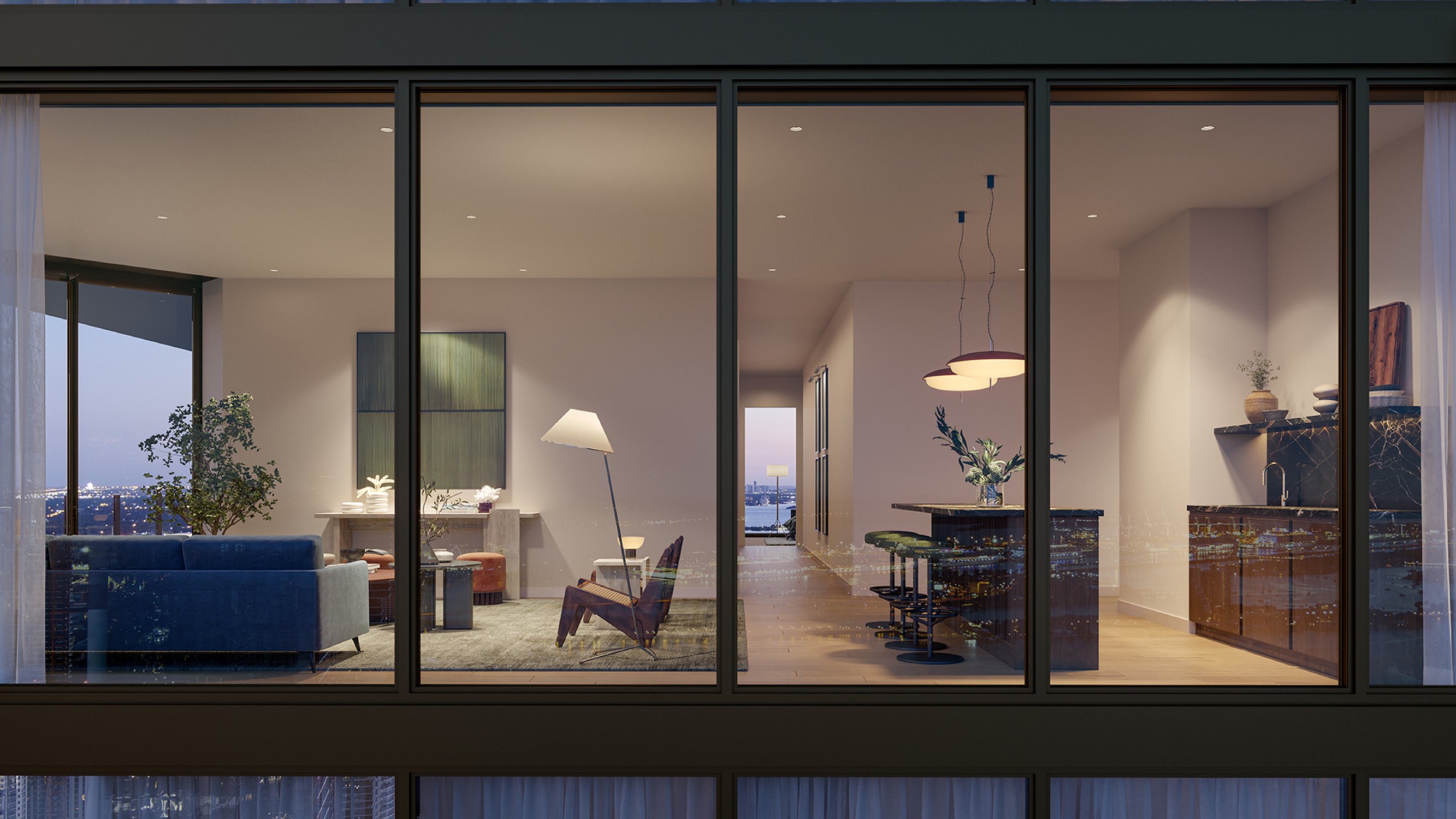
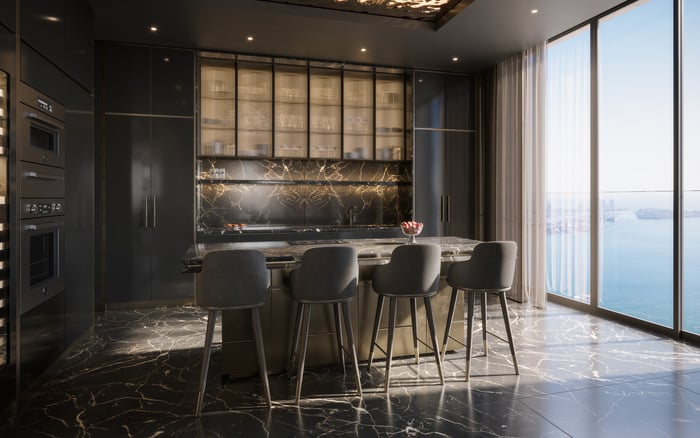
Ceiling height is not a trend detail. It is an architectural signal that shapes perception the moment you step inside. Taller ceilings tend to communicate freedom and mental spaciousness, while lower ceilings can subtly steer the mind toward more constrained, detail-oriented thinking. In a market where buyers pay for how a home feels as much as for square footage, that first impression carries real leverage. In South Florida, the effect is amplified by the region’s design language. Glass walls, corner exposures, and long sightlines to water or skyline depend on vertical proportion to land properly. A 10-foot ceiling paired with floor-to-ceiling glazing can make a residence feel gallery-like and serene. Place the same view behind shorter glass and it can feel compressed, even when the square footage is identical. That is why ceiling height has become an understated status marker. It is not merely “more volume.” It is a more generous framework for light, art, and air, and it changes how furniture, drapery, and even silence register in a room.
In luxury condos, ceiling height often correlates with higher pricing, but the relationship is not linear. Market analysis across multiple major coastal markets has shown a sharp step-up when moving from standard 8 to 9 foot ceilings into the 10 to 11 foot range, with average price per square foot materially higher in that band. The same findings suggest that 12 to 15 foot ceilings can command an even larger premium versus standard heights, while extremely tall ceilings beyond that can deliver diminishing returns. Why the taper? Because ceiling height rarely acts alone. The residences most likely to feature 10 to 12 foot ceilings are often newer, amenity-forward buildings with modern mechanicals, better glass, and stronger common-area experiences. Very tall ceilings, by contrast, can sometimes appear in older conversions where other components do not align with today’s expectations. The ceiling is striking, but the full package may not be. For buyers, the takeaway is straightforward: height has value, but only in context. You are not buying a number. You are buying proportion, light performance, and a building ecosystem that supports the lifestyle you want.
A taller ceiling can be expensive long before you select a sofa. Increasing height impacts structure, facade, and mechanical systems. Added construction cost is commonly estimated at roughly 5% to 10% per additional foot of ceiling height. In a high-finish tower, those cost layers can ripple into building operations and long-term ownership. For owners, the implications tend to surface in practical ways:
Utilities and comfort. More volume can mean more air to condition, and comfort depends on smart mechanical design, not height alone.
Finishes and maintenance. Taller walls raise costs for paint, wallcoverings, art installation, and window treatments. Changing a chandelier is not the same job at 9 feet as it is at 12.
Sound and reverberation. Volume can elevate acoustics, but without soft materials and thoughtful surfaces, it can also create echo. Luxury should feel quiet. These are not reasons to avoid height. They are reasons to treat it as an element that should be engineered and curated, not simply admired.
Ceiling height can be difficult to value precisely because it is not consistently recorded in many datasets, which makes clean comparable sales harder to isolate. That is why sophisticated buyers benefit from a structured lens. Start with four questions.
Is the height consistent where you live? A dramatic foyer means little if bedrooms and primary living areas drop. Ask what the finished ceiling height is in the rooms that matter most.
Does the glazing match the height? Height without proportion can feel awkward. The most convincing residences typically pair taller ceilings with appropriately scaled glass and doors.
Is the plan efficient? High ceilings do not fix poor layout. A chopped-up plan can make height feel performative. Favor open, well-composed rooms where vertical volume reads as calm.
Are there mechanical compromises? Look for soffits, bulkheads, and venting strategies. True luxury hides the infrastructure.
Finally, respect the emotional reality: a premium feature only creates a premium outcome when the rest of the property supports it. Buyers evaluate the whole package, including location, condition, and building quality.
Ceiling height reads differently across South Florida’s prime submarkets. In Brickell, the luxury buyer often wants an urban residence that lives like a modern hotel suite: clean lines, disciplined materials, and a sense of lift on arrival. Buildings aligned with newer luxury expectations tend to treat ceiling height as part of that experience. When comparing newer inventory, focus on how vertical volume reinforces the lifestyle narrative, especially in entertaining spaces. A discreet example of a contemporary Brickell address to explore is 2200 Brickell, where the conversation is less about a single spec and more about overall livability. In Miami Beach, height plays differently. It is not only about modernity; it is about how art, light, and ocean air move through a home. In the Faena District, publicly marketed ceiling heights at Faena House Miami Beach have been described around 10'6", with select floors around 11 feet and penthouses reaching up to about 13 feet. The value here is not just “higher.” It is how that height supports museum-scale walls, large-format photography, and a sense of theatrical ease. In Surfside, where boutique luxury is often defined by privacy and calm, ceiling height can be an amplifier rather than a headline. Marketing materials for Ocean House Surfside describe 10-foot ceilings in residences, with select penthouses reaching 12 feet. That range tends to land in the sweet spot where rooms feel generous without becoming acoustically or operationally fussy.
In many buildings, the most compelling ceiling heights are reserved for the top of the stack, where the buyer is paying for a different kind of living. A penthouse is not only “higher up.” It is often a more architectural product: larger glazing, different structural spans, and volumes designed to support entertaining. In Miami’s luxury vocabulary, 14-foot ceilings are regularly framed as a penthouse-level feature. That number matters because it changes what a residence can comfortably hold: oversized art, taller interior doors, layered lighting, and a sense of procession from entry to view. That said, the question is not whether 14 feet is impressive. It is whether it is usable. If the plan is narrow, the drama can read like a corridor. If the finishes are overly reflective and hard, the space can sound louder than it should. The best penthouses use height to create composure, not spectacle.
In other global luxury markets, ceilings around 8.2 feet have historically been common in new-build inventory, while around 9.8 feet has been treated as exceptional in premium projects. More recently, expectations have shifted upward, with roughly 8.2 feet increasingly treated as a minimum rather than a luxury threshold. South Florida is aligned with that direction, especially in new construction. Buyers who split time between major world cities and Miami often arrive with calibrated expectations: if they are paying for a waterfront lifestyle and a branded amenity experience, they expect air, light, and scale. Ceiling height is one of the clearest ways to feel whether a residence is truly contemporary.
If you already have the height, the next question is how to express it. A few tactics consistently read as refined.
Full-height drapery and clean ceiling details. Let the eye travel uninterrupted.
Overscaled doors where possible. Door height is the silent partner of ceiling height.
Layered lighting. Use ambient, accent, and decorative lighting so the room does not feel cavernous at night.
Art strategy. High ceilings invite larger work, but a single vertical piece can feel isolated. Consider groupings or a salon-style hang that creates intention.
These moves are not decoration for decoration’s sake. They are how you convert vertical volume into everyday luxury.
As a rule of thumb, paying for ceiling height makes the most sense when it improves one of three outcomes:
Daily experience. You feel calmer, lighter, and more at ease in the space.
Entertaining and presentation. The residence supports hospitality, art, and proportion without effort.
Resale clarity. The height is easy to communicate and easy for the next buyer to feel on a showing.
Be cautious when height is used to distract from fundamentals. A great ceiling cannot fix a compromised view corridor, a noisy exposure, or a building that does not match your service expectations. Across South Florida, the most enduring value tends to sit in the 10 to 12 foot range for full-time living, with 12 to 15 feet becoming compelling when the layout and finishes are designed to match. Beyond that, the return can become more personal than financial, which is perfectly acceptable if it aligns with your lifestyle.
What ceiling height feels “luxury” in a South Florida condo? Many buyers perceive 10 to 11 feet as the luxury baseline, with 12 feet reading as notably premium.
Do higher ceilings always mean a higher resale price? Not always; the premium depends on the overall package, including views, layout, and building quality.
Is there a point where ceiling height has diminishing returns? Yes, extremely tall ceilings can show smaller average premiums than the 12 to 15 foot range.
Why can taller ceilings increase ownership costs? More height can increase build complexity and can raise costs for finishes, maintenance, and conditioning.
How can I verify ceiling height during due diligence? Ask for floor plans and disclosures, and confirm in-person since ceiling height is not always consistently recorded.
What matters more: ceiling height or window height? Window height often drives the lived experience because it determines light, view, and proportion.
Do penthouses typically have higher ceilings than lower floors? Often yes; marketing commonly positions taller ceilings as a penthouse-level lifestyle feature.
Can high ceilings make a residence feel noisy? They can if surfaces are overly hard; soft materials and layered furnishings usually resolve it.
Is 9-foot ceiling height still considered upscale? It can be, but in newer luxury inventory many buyers now treat 9 feet as more standard than exceptional.
How should I compare two condos with different ceiling heights? Compare the full experience, including plan efficiency, glazing, mechanicals, and how the space shows.
For tailored guidance, speak with MILLION Luxury.
If branded residences are on your mind — as a home or as an allocation — we would be glad to share what we are seeing, privately.
Begin a quiet conversation