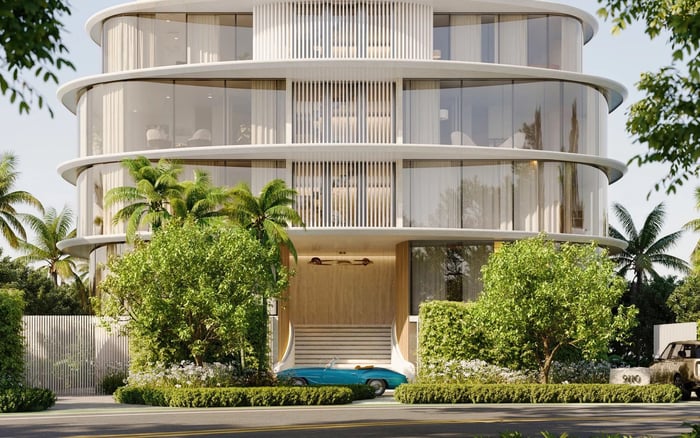
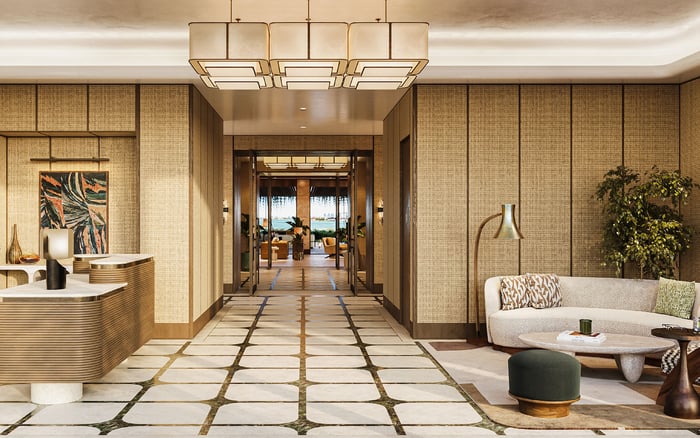
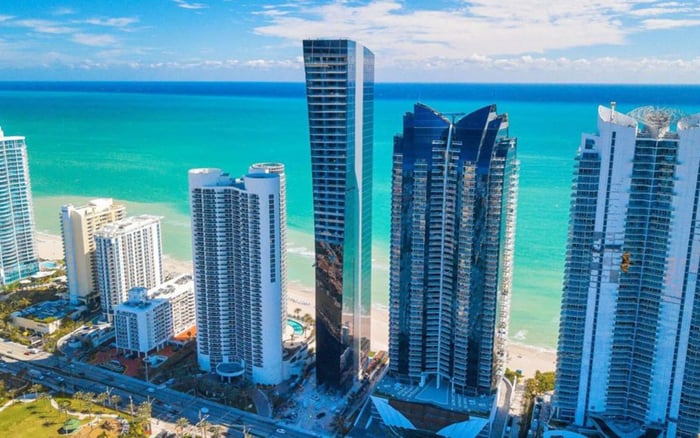
South Florida’s luxury condo market is increasingly defined by scale: adjacent residences and full-floor purchases that are combined into singular “mega-homes” with the services, security, and lock-and-leave ease of premier towers. From Fisher Island to Surfside and Bal Harbour, ultra-high-net-worth buyers are treating vertical living like a bespoke build, shaping layouts early in construction or commissioning complex integrations after closing. The result is a new category of trophy property where privacy, discretion, and hospitality-level operations matter as much as square footage.

South Florida’s ultra-premium buyer has long prized waterfront land, but a parallel trophy market is now unmistakable: the “mansion in the sky.” Instead of trading privacy for proximity, today’s most discerning condo purchasers are acquiring multiple adjacent residences-sometimes an entire floor-and combining them into one bespoke home.
The appeal is specific. A well-executed mega-residence delivers the scale and separation of a single-family property, paired with what a house rarely matches at the same level: discreet staffing, 24-hour security, owner-only amenities, and true lock-and-leave ease. For second-home owners, global executives, and families splitting time among multiple cities, the value is less about downsizing and more about delegation. The home gets bigger; the day-to-day gets easier.
This is also a design-led move. The strongest towers make it possible to live with grand volume without the residence ever reading as “combined.” When adjacency is planned from the outset, the finished home can feel like a single, coherent composition-an intentional entry sequence, gallery walls, entertaining rooms, and bedroom wings that resolve with architectural logic.
Several dynamics are converging to push scale upward.
Second, the luxury tower itself has evolved. Boutique and full-service buildings-often run with hospitality-grade staffing-align with the priorities of high-profile owners: privacy, security, and discretion. That operational backbone is what makes large-format condo living feel effortless rather than exposed.
Third, developers have begun to anticipate the combination play. Floor plates are being conceived with clean adjacencies, rational structural grids, and planning zones that can be reconfigured without compromising essential building systems. Flexibility is being positioned upfront, not negotiated after the fact.
In Brickell, this appetite for scale and service fits the district’s global, time-sensitive lifestyle. For buyers who want a high-functioning home base near finance and dining, 2200 Brickell reflects the broader appeal of newer, design-forward inventory in the neighborhood-without the sprawl of a single-family property.
Combining condos is not as simple as “opening a door.” The most successful projects start with a clear-eyed feasibility review, then move forward as a managed integration.
At the building level, approvals are typically required through a condominium association process and architectural review. That governance is not a nuisance; it protects residents and preserves standards. But it does introduce timelines, documentation, and constraints.
At the technical level, the work often involves structural coordination and MEP integration-mechanical, electrical, and plumbing systems that must be reconciled across what were once separate homes. Even when walls are non-structural, the routing of HVAC, venting, plumbing stacks, and electrical loads needs to be handled precisely to avoid performance issues and to satisfy building requirements.
Design is the final layer, and it’s where mega-residences either feel seamless or read as stitched together. The best outcomes treat circulation as a lived experience: a proper foyer, a gallery-like transition, and a clear separation between entertaining rooms and private suites. Buyers also increasingly expect dedicated program spaces that become attainable at this scale, such as a library, wellness studio, secondary laundry, or staff-support areas.
In Coconut Grove, where privacy and a quieter luxury are prized, the same impulse often takes on a more residential tone. Towers such as Four Seasons Residences Coconut Grove show how service and discretion can pair with a neighborhood that already reads as established, green, and deeply local.
The mega-residence trend is not theoretical; it is already visible in publicly marketed plans and widely covered trophy sales.
On Fisher Island, Palazzo Del Sol has been associated with a combined residence created by merging two floor-plan options into a roughly 10,000-square-foot condominium priced around $17.4 million. It’s a clear case study in how a building can accommodate true estate-scale living within a vertical envelope-particularly in an enclave where privacy is part of the lifestyle.
For buyers drawn to that level of seclusion, Palazzo del Sol is emblematic of Fisher Island’s ability to deliver a high-security, low-visibility address where scale can be curated rather than announced.
In Miami Beach, developers have pushed the concept further into multi-level territory. The Ritz-Carlton Residences, Miami Beach has marketed a two-story combined penthouse assembled from two penthouse plans totaling 25,589 square feet when indoor and outdoor areas are counted, priced at $40 million.
Along the same coastline, the idea of the condo as a global trophy has been underscored by a landmark transaction in Surfside: the Seaway at the Surf Club penthouse sold for a reported $86 million in November 2025, setting a Miami-Dade County condo sale record. The residence totals 16,053 square feet and traded at about $5,358 per square foot.
For buyers who want the Surfside lifestyle with a newer, architecturally focused point of view, The Surf Club Four Seasons Surfside and nearby Eighty Seven Park Surfside illustrate how the district’s luxury has diversified-from classic, service-intensive living to design-centric boutique scale.
A key shift is when the customization happens.
In earlier eras, a buyer might close and then renovate heavily. Today, the most sophisticated purchasers prefer to shape the residence during construction when possible. That timing supports changes that are more elegant and less intrusive: true plan reconfiguration, intentional room proportions, and finishes selected as part of a cohesive interior architecture.
Bal Harbour offers a striking example in the developer-marketed mega-penthouse at Rivage Residences, described as a three-level combined home priced at $150 million and totaling about 35,000 square feet, with approximately 25,000 interior and 10,000 exterior. It has been positioned as highly customizable because it was marketed during construction, giving buyers the runway to tailor layout and finishes before completion.
That notion-that a condo can feel more like a commissioned residence than a finished product-is changing how top buyers evaluate pre-construction. The question is no longer simply, “Is there a penthouse?” It is, “Can the building deliver my plan, my privacy requirements, and my standards for service without compromise?”
In Bal Harbour, Rivage Bal Harbour sits at the center of this conversation, reflecting how the submarket’s reputation for discretion and high-touch living is increasingly matched with ambitious, customizable trophy offerings.
Edgewater’s luxury narrative has matured quickly, and with it comes a specific buyer: families who want room to live, host, and collect art while maintaining waterfront proximity and a calmer day-to-day rhythm than the densest urban corridors.
Developers have leaned into large-format living here as well. Aria on the Bay has offered “A-line” units that can be combined to create residences exceeding roughly 4,700 square feet, with single units starting around $3.1 million. And Villa Miami is marketing the “Villa Triplo,” a triplex penthouse spanning floors 53 through 55 priced at $55 million, described as exceeding 15,000 square feet and featuring an infinity-edge pool overlooking Biscayne Bay.
What stands out is how these homes recast the condo as a family compound: multiple living zones, outdoor water-facing terraces, and multi-level separation that can echo the experience of a standalone house-while keeping the owner inside a staffed, secured environment.
For buyers tracking Edgewater’s upper tier, Aria Reserve Miami and Villa Miami reflect a market that is increasingly fluent in scale, not just views.
Mega-residences reward disciplined planning. Before pursuing adjacent units, sophisticated buyers tend to anchor on a few fundamentals.
Start with adjacency that supports a coherent plan. Side-by-side combinations can create generous entertaining zones and distinct bedroom wings; full-floor strategies can elevate privacy and improve flow. Next, confirm the approval pathway, including any association rules around construction hours, elevator protection, and review timelines.
Then evaluate building systems early. HVAC capacity, plumbing stack locations, and electrical load can determine where kitchens, wet bars, laundry rooms, and spa baths can realistically land. The goal isn’t to force a plan-it’s to shape one that feels inevitable.
Finally, assess the “soft” luxury that becomes non-negotiable at this tier: service culture, staff discretion, security protocols, and amenity design that doesn’t feel public. In the mansion-in-the-sky category, operations are part of the architecture.
What qualifies as a mega-residence in Miami condos? Typically, it’s a home created by combining multiple adjacent units or an entire floor into one residence.
Is it easier to combine units in new construction or resale buildings? New construction can be easier when layouts are designed for combinations and changes can be made during build-out.
Do condo associations have to approve a unit combination? Yes. Combinations commonly require association and architectural-review approvals before construction begins.
What parts of the build are usually the most complex? Integrating mechanical, electrical, and plumbing systems across former unit lines is often the most technical work.
Are multi-level mega-penthouses common in South Florida? They are increasingly visible through marketed two-story and three-level penthouse offerings in top submarkets.
How large can a combined condo get in Miami-Dade? Publicly marketed and widely covered examples range from roughly 10,000 square feet to more than 30,000 square feet.
Does buying adjacent units help with privacy? It can-especially with full-floor strategies that reduce shared corridor exposure and neighbor adjacency.
Are record condo sales influencing buyer interest in mega-residences? Yes. Headline-making penthouse sales reinforce the idea that ultra-large condos are a recognized trophy asset.
What should buyers prioritize besides square footage? Building operations, security, discretion, and a design plan that feels seamless can matter as much as size.
Can buyers customize finishes and layouts before completion? In some projects, yes-especially when a mega-residence is marketed during construction to enable customization.
If you'd like a private walkthrough and a curated shortlist, connect with MILLION Luxury.
If branded residences are on your mind — as a home or as an allocation — we would be glad to share what we are seeing, privately.
Begin a quiet conversation