Armani/Casa’s South Florida footprint reads like a study in contrast: a fully realized, high-rise oceanfront address in Sunny Isles Beach and a forthcoming, ultra-low-density concept in Pompano Beach. For buyers who treat real estate as both sanctuary and statement, the choice is less about logos and more about what each format delivers-day-to-day service scale, privacy, amenity economics, and how a branded interior language translates to long-term livability. This guide compares how a completed, full-service tower experience can differ from a boutique, privacy-forward proposal, and how timelines and risk tolerance can shape the right fit for your lifestyle and ownership horizon.
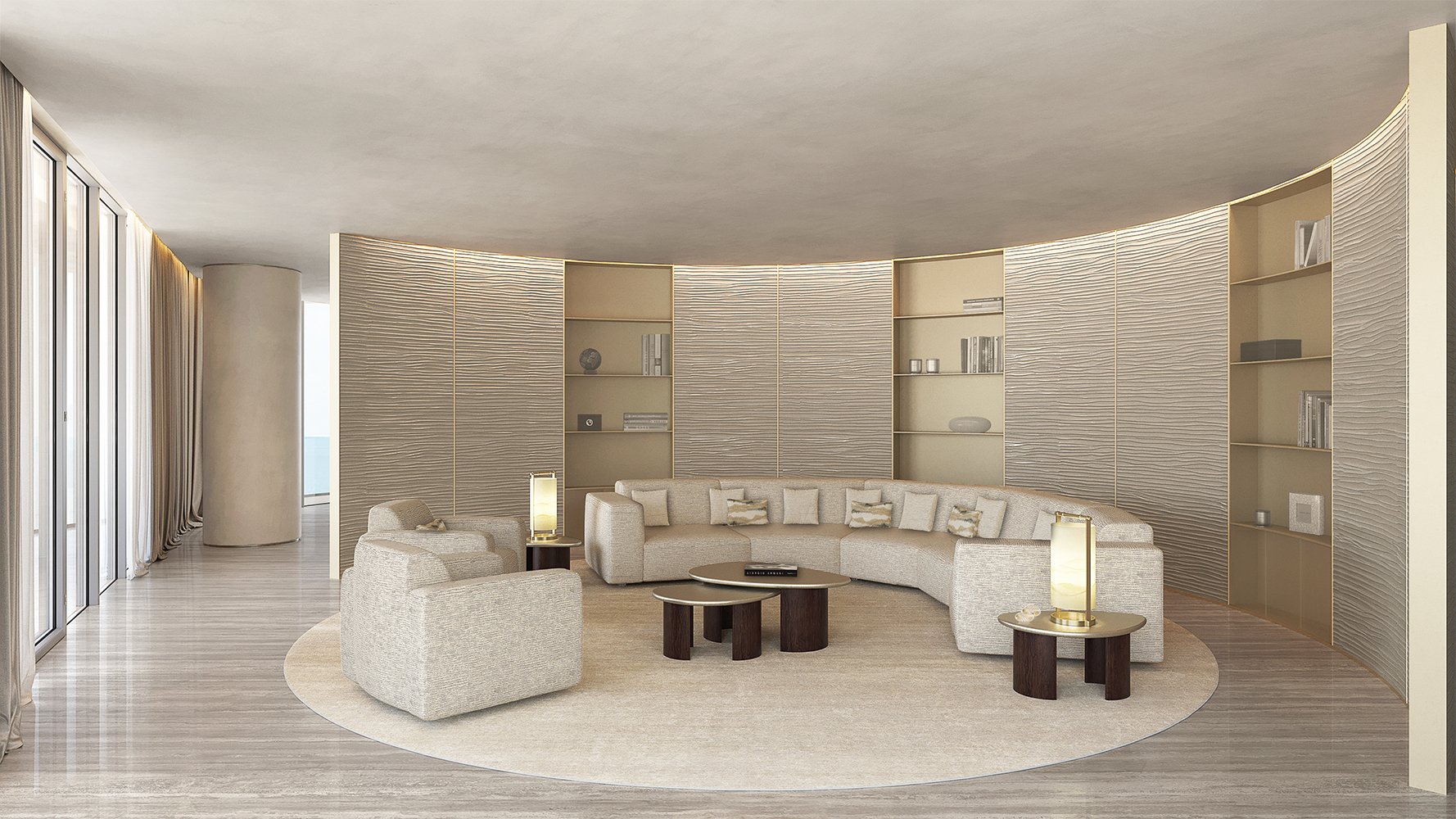
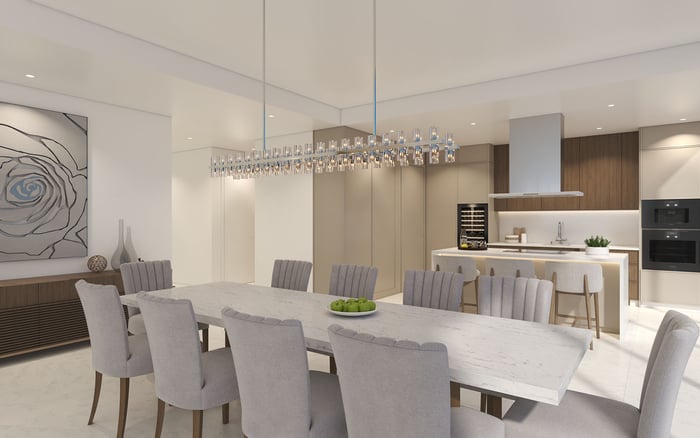
Armani/Casa is not a marketing afterthought in these projects. It is the design foundation: a dedicated interiors and home line that shapes how finishes, furnishings, and proportion are meant to be experienced in residence. For an ultra-luxury buyer, that matters less as a label and more as an organizing discipline. The strongest branded residences translate that discipline into daily ease: where storage is resolved, where light is framed, and how materials hold up over time.
South Florida’s coastal lifestyle is inherently spatial. Terraces are not accessory space; they function as true rooms. Floor-to-ceiling glass is not simply a view feature; it is also an exposure and privacy decision. Oceanfront towers are operational ecosystems, and the ownership experience often comes down to density, staffing, and how amenity demand is distributed.
Within that lens, Armani/Casa’s two coastal expressions in this region are positioned as deliberately different: one already living as a high-rise, full-service product, and one introduced as a low-density, privacy-forward concept.
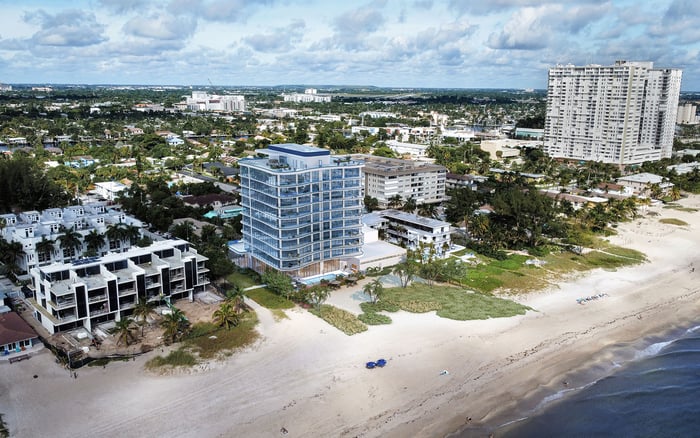
Residences by Armani/Casa in Sunny Isles Beach represents the “established and operational” side of the comparison. For buyers, the practical advantage is clarity: you can evaluate the building as it lives today-its rhythm in-season, how shared spaces are used, and whether tower-scale living matches your day-to-day preferences.
In the same corridor, other well-known luxury oceanfront options provide context for how branded and high-design living shows up at different scales, including Bentley Residences Sunny Isles, Turnberry Ocean Club Sunny Isles, and Armani Casa Sunny Isles Beach.
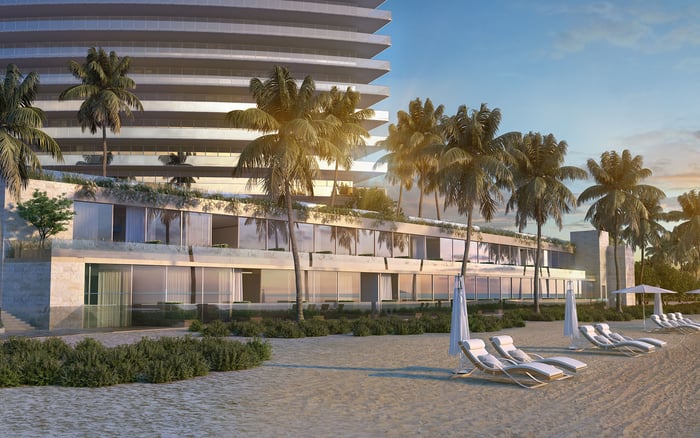
Armani/Casa Residences Pompano Beach is presented as the inverse proposition: a boutique, low-density concept designed to prioritize quiet arrivals, fewer neighbors, and a more optional social cadence.
For additional perspective on Pompano’s luxury direction, nearby branded and lifestyle-forward options include W Pompano Beach Hotel & Residences and The Ritz-Carlton Residences® Pompano Beach.
The most important difference between a tower-scale building and a boutique building is not the coastline-it’s how many residences share the same elevators, staff attention, and amenity time.
A larger building can support a broader amenity ecosystem and a more active social environment. The tradeoff is that you are living inside a vertical community, where elevator flow and peak amenity hours become part of the lived experience.
A boutique building tends to flip that equation: fewer owners, a quieter cadence, and a stronger feeling of psychological ownership over arrivals and shared spaces. The tradeoff is that the amenity menu may be more curated, and the building’s lifestyle layer can be defined by restraint rather than variety.
When amenities are expansive, you’re often buying optionality-multiple places to spend time without turning your residence into the default gathering spot.
When amenities are curated in a boutique setting, you’re often buying access-shared spaces that feel more private because demand is naturally lower.
A practical way to choose is to picture a typical week: Do you use fitness and wellness spaces daily? Do you value multiple indoor/outdoor social settings? Or do you prefer a quieter loop where the best “amenity” is simply not having crowds?
A completed building offers immediate usability and more certainty about what you’re buying.
A pre-construction timeline can offer flexibility and long-horizon planning, but it also carries the standard reality that details and timing can evolve before delivery.
With branded residences, the best outcomes happen when architecture, interiors, and outdoor experience support a single daily rhythm: how you arrive, how you transition to the terrace, how light behaves through the day, and how spaces can be both serene and social.
The deciding question is less “Which brand?” and more “Which format suits how I live?”-a full-service tower cadence or a boutique, privacy-forward cadence.
Choose the Sunny Isles format if you prioritize turnkey certainty, a proven operational rhythm, and the energy (and convenience) that often comes with a larger, full-service building.
Choose the Pompano format if you prioritize privacy, a smaller owner community, and the idea of a quieter oceanfront base designed around low-density living.
What is the biggest day-to-day difference between a tower-scale building and a boutique building? It usually comes down to density: how many neighbors share elevators, staff attention, and amenities during peak times.
Why does unit count matter so much for ultra-luxury buyers? Unit count can affect privacy, noise, and how often shared spaces feel busy versus calm.
How do amenities feel different in a larger building? Larger buildings often offer more variety, but you may encounter higher usage during season and weekends.
How do amenities feel different in a boutique building? Boutique buildings may have a more curated amenity menu, but access can feel more private because there are fewer owners.
Is one-residence-per-floor living always “better”? Not always; it can increase privacy and quiet, but buyers should still evaluate layout, services, and overall building operations.
What are the advantages of buying in a completed building? You can see the views, finishes, and management rhythm in real time and use the home immediately.
What are the tradeoffs of buying pre-construction? Timing and some details can change before delivery, so it’s best for buyers comfortable with a longer horizon.
How should buyers think about privacy in oceanfront condos? Privacy is influenced by floorplan, terrace exposure, elevator design, and how many residences share common areas.
How do I decide which coastline fits my lifestyle: Sunny Isles or Pompano? Focus on your daily rhythm-whether you prefer an established high-rise environment or a quieter, emerging luxury setting.
What should I compare first when touring or reviewing options? Start with density, privacy, and how you’ll actually use amenities, then evaluate design and the surrounding neighborhood fit.
For a discreet conversation and a curated building-by-building shortlist, connect with MILLION Luxury.
If branded residences are on your mind — as a home or as an allocation — we would be glad to share what we are seeing, privately.
Begin a quiet conversation