South Florida’s ultra-wealthy are increasingly purchasing adjacent and stacked condominium residences and commissioning seamless combinations that deliver privacy, scale, and full-service ease. From Fisher Island to Brickell, the “home in the sky” has become a second-home strategy: fewer keys, more volume, and a lifestyle that is intentionally lock-and-leave.
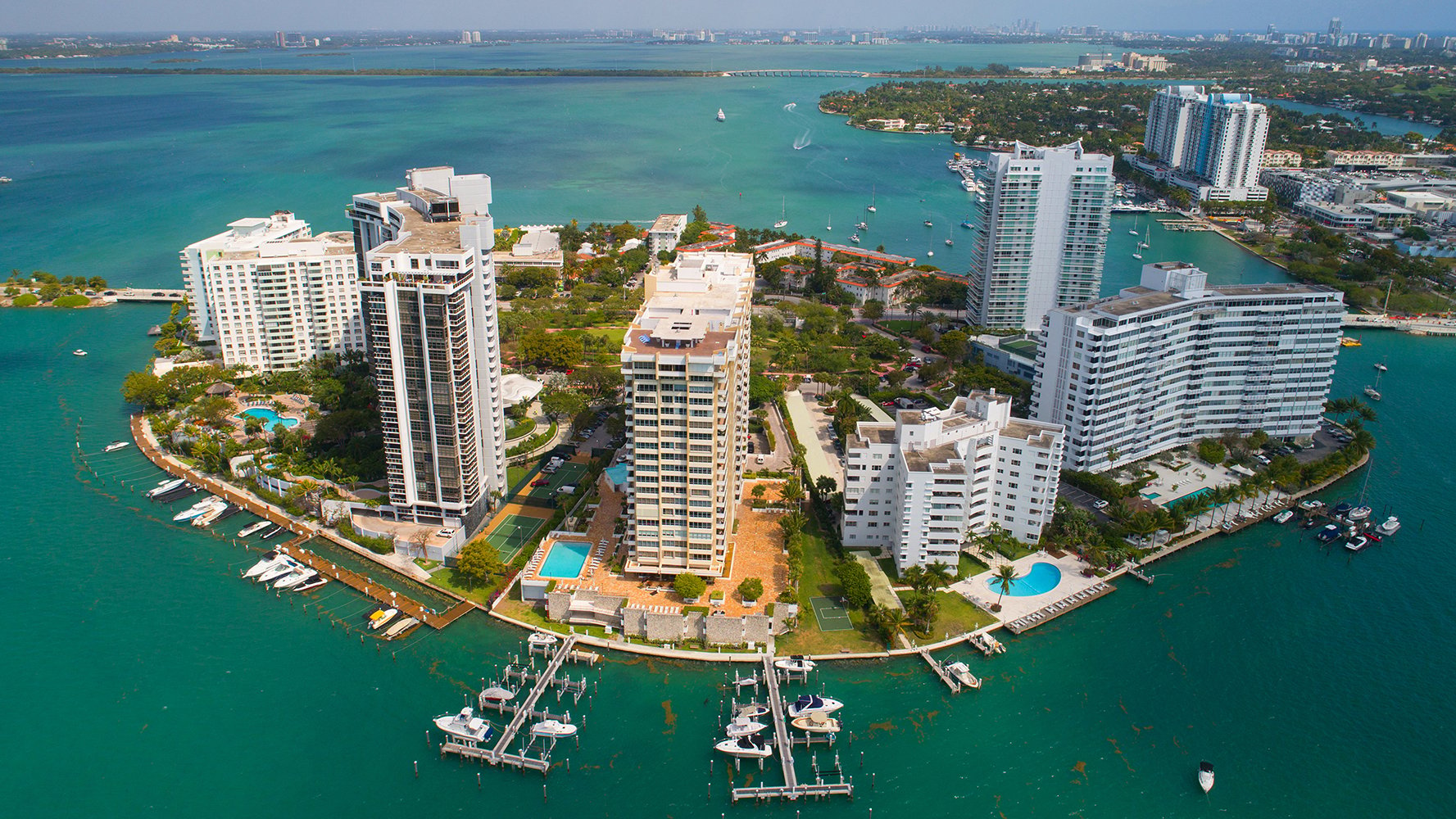
South Florida has become a gravitational center for high-net-worth second-home living, and Miami now stands out globally for the concentration of $30 million-plus net worth households who choose it specifically as a secondary residence. That positioning is shaping what top buyers demand: residences that live like private estates, yet operate with the precision and ease of a well-run hotel. The result is a design-and-acquisition pattern quietly redefining the top end of the condo market: purchasing multiple residences within the same building and combining them into a single, highly tailored home. For many buyers, it’s the most direct way to gain scale without giving up the managed convenience that makes a second home truly workable.
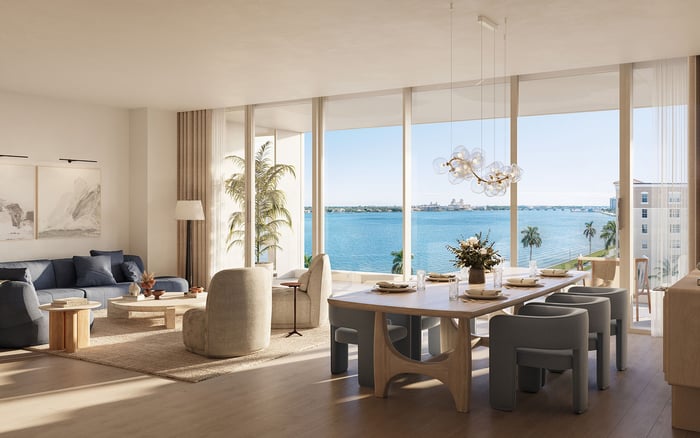
The ultra-prime second home has different performance requirements than a primary residence. It must be ready on arrival, secure when dark, and supported by staff who can maintain systems, manage deliveries, and coordinate service providers. Full-service condominium buildings naturally fit that operating model, which is why affluent buyers often prefer them to standalone homes that require constant oversight. Combining units intensifies the appeal. Rather than living within a standard plan, a buyer can shape a residence with the proportions of a single-family home while preserving the advantages of security, amenities, and professional management. In practice, that can translate to fewer neighbors per floor, clearer separation between entertaining and private quarters, and the flexibility to create galleries, libraries, wellness rooms, or dedicated staff spaces that a single condo line might never allow. In neighborhoods where lifestyle and service are inseparable, buyers often gravitate to projects that already signal a full-time, turnkey experience. In Brickell, for example, 2200 Brickell captures the preference for design-forward living paired with building infrastructure that supports an executive-level routine.
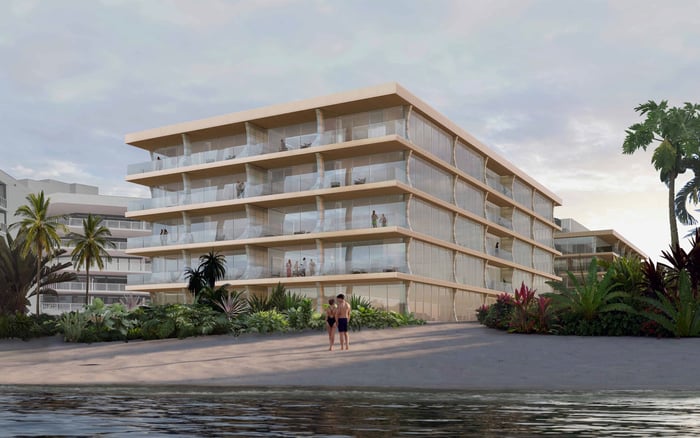
At the very top of the market, size is no longer just a statement. It’s a tool: a way to host comfortably, separate family zones, and meet the privacy expectations of an ultra-high-net-worth household. Recent high-profile penthouse pricing has also clarified the ceiling for condo product in Miami-Dade, including a publicly disclosed oceanfront penthouse sale at $86 million. The residence was reported at 16,053 square feet, implying a per-square-foot figure that highlights how strongly buyers will pay for singularity, elevation, and scarcity. Alongside closed sales, the market has embraced the mega-penthouse concept: a multi-level residence created by combining penthouse footprints. One proposed example has been widely covered at roughly $150 million, described as a three-level configuration formed by merging two penthouses, with more than 20,000 square feet of interior space plus about 10,000 square feet outdoors. Whether delivered as built reality or positioned as a marketed concept, the takeaway is consistent: the condominium format can credibly compete with the scale of a waterfront estate. In oceanfront corridors where privacy and service converge, buyers also seek boutique buildings that feel more like private clubs than towers. Miami Beach remains a focal point for this sensibility, and 57 Ocean Miami Beach reflects the appetite for intimate, high-touch environments where a combined residence can feel genuinely hushed.
Not all combinations are created equal. The two dominant approaches are horizontal merges and vertical stacks. Horizontal combinations, adjacent residences on the same floor, are typically the cleaner path. Layouts can often be reworked by opening connecting corridors, consolidating kitchens, and redistributing bedrooms into distinct “wings.” Building systems still matter, but the structural scope is generally more straightforward than creating an inter-floor connection. Vertical combinations, stacked residences, are inherently more complex. They can require structural openings between floors, new stair installations, and careful coordination around building systems. Even in markets where this is done routinely, the process is rarely quick: it typically involves architectural planning, structural engineering, permitting, and a sequence of building approvals. A realistic way to view it is that the purchase is only the starting point. The real project is integration: aligning mechanical, electrical, plumbing, life-safety requirements, sound attenuation, and finish standards into a single coherent home. That complexity is precisely why buyers often prefer to execute combinations in buildings with seasoned management and clear renovation protocols.
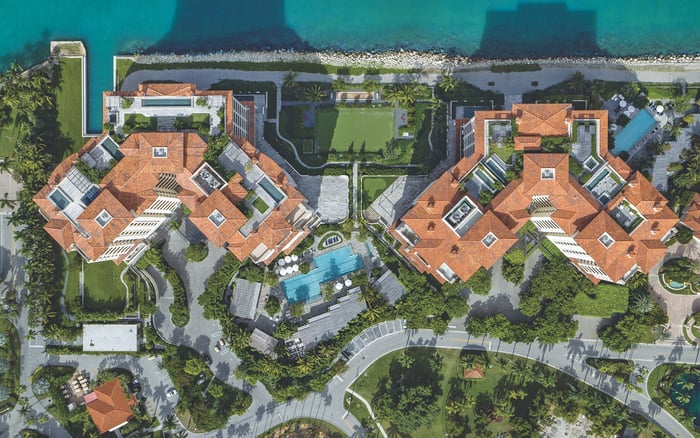
The combined residence is not theoretical in South Florida. Developers and sales teams have openly acknowledged robust demand from buyers who purchase adjacent units specifically to create larger, more estate-like homes. In Brickell, one widely publicized example is a two-story combined penthouse concept at Echo Brickell designed by Carlos Ott. It has been described at 13,518 square feet with dramatic volume, including 23-foot ceilings and a 27-foot indoor pool. Reported combined-floor-plan pricing in that building has ranged from about $3.8 million up to roughly $42 million for the flagship configuration. On Fisher Island, demand for combined layouts has been visible in marketed merged configurations at Palazzo del Sol, where residences created through merging have been described at approximately 10,000 square feet and priced around $17.4 million. In that context, square footage is only part of the story. Fisher Island’s appeal lies in its controlled access, resort cadence, and the sense that privacy is built into the infrastructure. This is also why Fisher-island remains a keyword in serious second-home searches. On the Miami Beach side, The Ritz-Carlton Residences, Miami Beach has marketed a combined two-story penthouse designed by Piero Lissoni at $40 million, created by merging two penthouse floor plans. The total size has been described at 25,589 square feet combining interior and exterior, with extensive entertaining zones spread across terraces and dedicated leisure spaces. Farther north, Four Seasons Private Residences Fort Lauderdale has also highlighted the ability to merge penthouses pre-construction into a one-of-a-kind home, described as exceeding about 12,000 square feet interior plus about 10,000 square feet exterior. In practice, pre-construction flexibility can be the advantage: structural intent, vertical circulation, and mechanical planning can be resolved before concrete becomes constraint. In Fort Lauderdale, the buyer who wants a polished, serviced second home with a more relaxed waterfront rhythm can also consider Four Seasons Hotel & Private Residences Fort Lauderdale as a benchmark for full-service living in the Fort-lauderdale market.
Different neighborhoods support different combination strategies. In Brickell, the case is speed and proximity. Owners want immediate access to dining, culture, and airports, with a building that can operate like an executive suite. Larger combined residences here often separate social spaces from private quarters while preserving the skyline views that define the district’s prestige. In Miami-beach, the driver is lifestyle texture. Many buyers want a home that feels calm, curated, and resort-adjacent. A combination can provide the square footage needed for extended family visits without sacrificing the effortless quality of an amenity-rich property. In Bal-harbour and adjacent enclaves, scarcity is the value proposition. Boutique inventory and status-location dynamics mean a combined residence can be less about “more” and more about “only.” In that spirit, Rivage Bal Harbour speaks to the market’s appetite for rarefied, design-led oceanfront living where top-floor possibilities naturally invite ambitious configurations.
A combined residence should be approached like a private build, not a light renovation. First, confirm feasibility with the building. Approval is often the gating item, and owners should anticipate a formal review process, strict renovation rules, and non-negotiable requirements around noise, scheduling, and contractor credentials. Second, define the type of combination. Horizontal merges typically limit structural risk and reduce timeline complexity. Vertical stacks can be extraordinary, but they demand early clarity around stair placement, structural openings, and the realities of coordinating building systems. Third, design the “invisible” elements. Luxury combinations fail when circulation feels improvised or acoustic privacy is compromised. The most successful projects treat entry sequences, service routes, and sound control as primary architecture. Finally, protect resale optionality. Even buyers planning to hold a residence for decades should consider whether the home can be re-divided, and whether the building’s documentation and layout can support that outcome if needed.
Why are wealthy buyers combining condo units in South Florida? To gain single-family scale and privacy while keeping full-service, lock-and-leave ease.
Is Miami mainly a primary-home or second-home market for the ultra-wealthy? It has become a standout global leader for $30M+ net worth second-home ownership.
What’s the difference between a horizontal and vertical combination? Horizontal combines same-floor units; vertical combines stacked units and is more complex.
Are vertical combinations harder to execute? Yes, they can require structural openings, stair installation, and deeper systems planning.
Do buildings usually allow unit combinations? Many do, but approvals, renovation rules, and formal review processes are common.
Can combined residences reach true “mansion” scale? Yes, some disclosed and proposed configurations exceed 20,000 interior square feet.
What’s a recent indicator of the condo price ceiling in Miami-Dade? A publicly disclosed $86M oceanfront penthouse sale has been widely covered.
Does combining units always improve resale value? Not always; value depends on execution quality and future buyers’ space preferences.
Is it easier to combine units pre-construction or after closing? Pre-construction can be easier because structural and mechanical planning starts earlier.
What professionals should be involved in a combination project? An architect and structural engineer are typical, alongside experienced building-approved teams.
For tailored guidance, speak with MILLION Luxury.
If branded residences are on your mind — as a home or as an allocation — we would be glad to share what we are seeing, privately.
Begin a quiet conversation