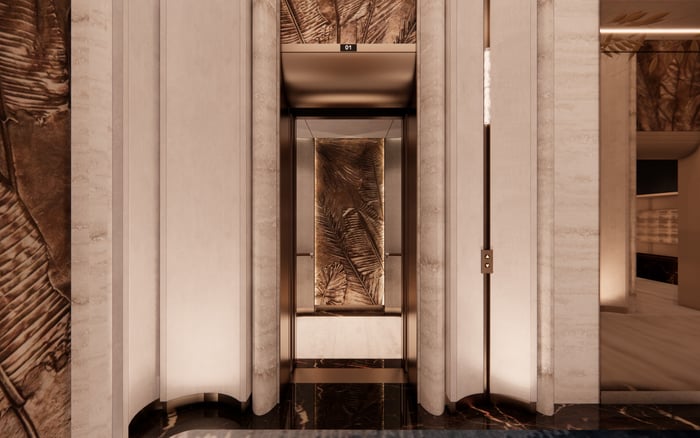
For Sunny Isles condominium owners and buyers, the most consequential line items are often the least photogenic: hurricane deductibles, master policy terms, and the practical gaps between what a building insures and what an individual must carry. This MILLION Luxury editorial clarifies how these moving parts typically interact, what boards and managers look for during renewals, and how to underwrite your own exposure before you sign a contract or renew a loan.
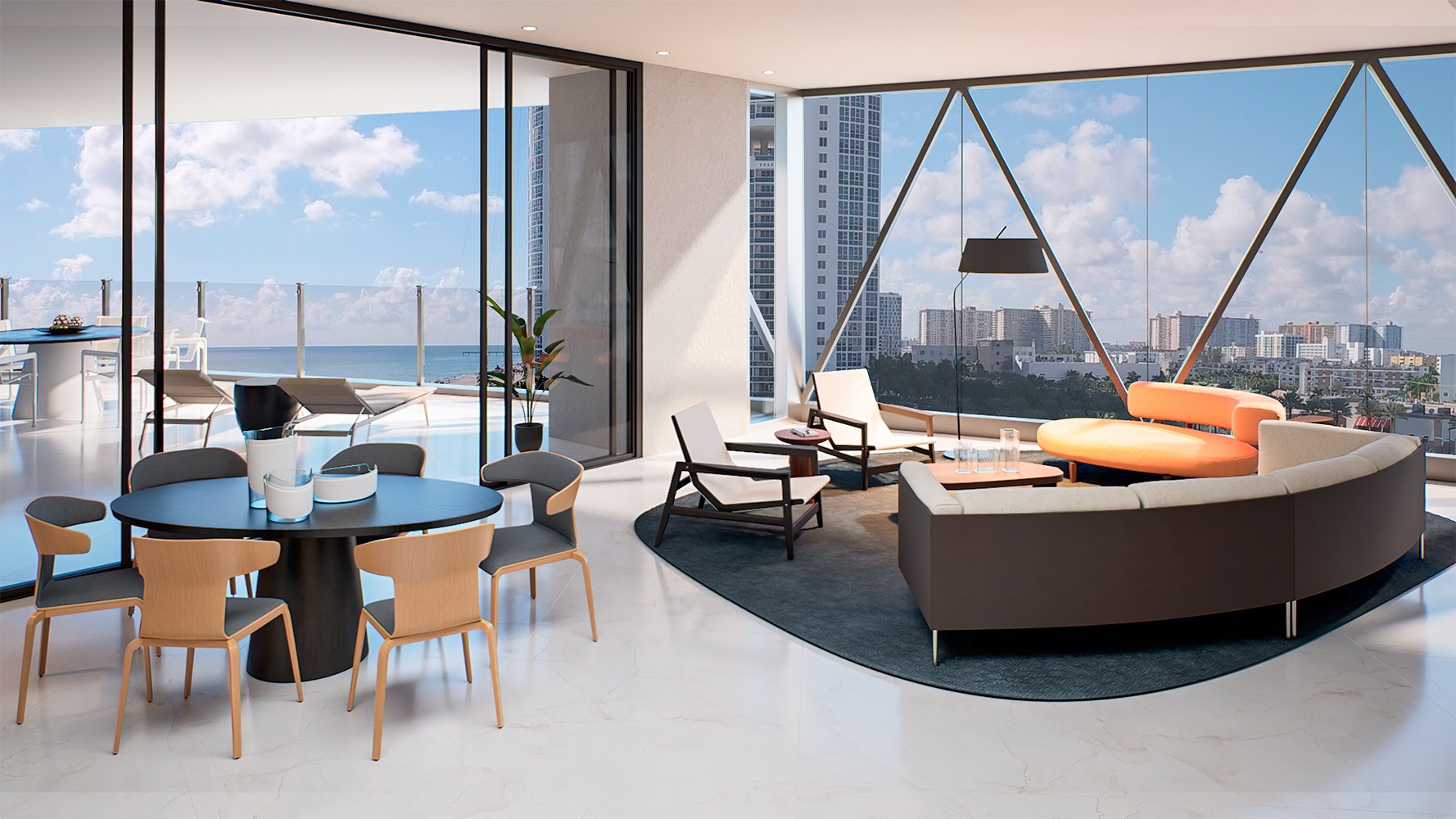
Sunny Isles Beach is a place where the horizon is a design feature. Glass, elevation, and unobstructed water views are central to the value proposition. They also sit squarely within the reality of coastal wind risk-which is why the hurricane deductible has become as much a boardroom issue as a personal finance one.
Unlike a typical homeowners policy deductible that reads like a manageable nuisance, a hurricane deductible is often structured as a percentage applied to the insured value. In practice, that means the deductible can scale precisely when you least want it to: after a named storm triggers the provision. For condominium living, the complexity compounds because your financial exposure is split across two layers: the building’s master policy and your own unit coverage.
In a market where prestige towers command attention, disciplined underwriting is increasingly the quiet differentiator between a building that stays liquid and financeable-and one that becomes harder to transact.
Condominium master policies are designed to insure the common elements and, depending on the condo documents and selected insurance form, some portion of the units themselves. For owners, the critical detail is not the headline “insured,” but the boundary of responsibility.
Most owners expect that hallways, lobbies, structural components, and shared mechanical systems sit under the association’s coverage. The surprises tend to surface in the interior, where definitions like “bare walls,” “single entity,” and “all-in” can materially change what the master policy restores after a loss.
A practical way to think about it:
The master policy is not your personal restoration budget. It is the association’s contract to rebuild what the association is obligated to rebuild.
Your unit policy is not optional window dressing. It is often the primary protection for interior finishes, upgrades, personal property, and liability that follows you.
Even in buildings that carry broader forms of coverage, the association’s deductible is typically treated as an association expense and may be passed through to owners in accordance with governing documents. That allocation is where hurricane deductibles become personal.
A hurricane deductible is best understood as a liquidity event. You may never pay it, but you must be positioned to handle it.
For Sunny Isles condominiums, the owner’s exposure can show up in multiple ways:
An association assessment to fund the master policy deductible after a storm loss.
An increase in future premiums and retentions at renewal, which can flow into higher monthly maintenance.
Your own unit policy deductible, which may be separate from the association’s.
The luxury buyer’s mistake is treating the deductible as an abstract percentage rather than modeling the after-loss cash call. For cash buyers, it is a balance sheet issue. For financed buyers, it can also become a timing issue: lenders and insurers move on their own calendars, and post-storm documentation can delay closings or renovations.
In Sunny Isles, where trophy residences are purchased as primary homes, second homes, and investment properties, the deductible conversation is often a proxy for a larger question: how resilient is this building’s financial plan under stress?
Insurance is priced at the intersection of risk, replacement cost, and confidence in governance. While each building renews on its own profile, several themes are frequently decisive:
Building condition and documentation.
Carriers want proof: inspection reports, maintenance records, and evidence that risk controls are implemented-not merely planned. For oceanfront towers, envelope performance and water intrusion prevention can be as critical as wind.
Risk controls that reduce severity.
Preparedness is more than sandbags. It includes generator planning, flood mitigation, access protocols, and a culture of preventive maintenance. Buildings that can demonstrate disciplined procedures tend to present as stronger risks.
Reserves and the ability to absorb volatility.
A well-capitalized association can absorb a deductible event or interim repairs without destabilizing the operating budget. In luxury towers, this is often the difference between quiet continuity and disruptive special assessments.
Claims history and litigation climate.
Claims frequency and the complexity of settling those claims influence future terms. Even when the building is immaculate, a contentious claims environment can add friction at renewal.
These factors are not theoretical. They influence whether coverage renews smoothly, whether retentions increase, and how much contingency a board must build into the budget.
For a Sunny Isles condo purchase, insurance diligence should begin in the offer phase-not after the contract is signed. The buyer’s goal is straightforward: understand what the association insures, what you must insure, and how the building has been managing premium and deductible pressure.
A disciplined checklist typically includes:
The current insurance certificate(s) and a summary of limits and deductibles.
The association budget showing insurance line items and any recent step-changes.
Recent board minutes that reveal renewal negotiations, risk mitigation projects, or contemplated assessments.
The condo declaration and bylaws to clarify responsibility boundaries and deductible allocation.
In practice, the most useful insight often comes from triangulating the insurance terms, the budget realities, and the tone of governance visible in the minutes. A building can present flawlessly and still be financially unprepared for a deductible event.
Your unit policy is where lifestyle choices translate into underwriting details. High-value interiors, custom millwork, imported stone, and smart home systems can be difficult to price correctly unless you approach coverage with intention.
For a luxury residence, consider whether your coverage is aligned with:
A standard estimate may not reflect a bespoke build-out.
If the building is temporarily uninhabitable, alternative living costs can be meaningful.
High-rise living includes water events that can impact adjacent units.
Owners also benefit from clear alignment on deductibles across both layers. If the association triggers a hurricane deductible and you also have a unit deductible, you can be exposed twice in the same event.
Sunny Isles sits within the broader South Florida coastal market, and buyers often compare it to neighboring luxury nodes when they think about risk, amenities, and long-term demand.
If you are cross-shopping, it can be useful to calibrate expectations in nearby markets that share similar coastal considerations. In Hallandale, 2000 Ocean Hallandale Beach reflects the same oceanfront lifestyle that makes insurance details feel immediate rather than academic. In Miami Beach, towers such as 57 Ocean Miami Beach underscore a similar premium on coastal exposure, where wind and water planning become part of the ownership profile.
Within Sunny Isles itself, ultra-luxury options like Bentley Residences Sunny Isles often prompt a more sophisticated buyer conversation: beyond finishes and services, what is the building’s risk-management posture, and how transparent is the association about it? These are not “deal killers,” but they can be meaningful pricing inputs.
Associations cannot control the weather, but they can control governance, documentation, and preparation. In the current environment, boards that treat insurance as a year-round discipline-rather than an annual scramble-tend to move through renewals with less disruption.
Operational priorities that often matter:
Renewal conversations benefit from lead time to present updated inspections, completed repairs, and mitigation work.
Deferred maintenance is not just an aesthetic issue; it is an underwriting signal.
Clear memos that explain deductibles, coverage boundaries, and owner responsibilities reduce post-loss confusion.
When owners understand the line between association obligations and individual obligations, the building’s response to an event is more orderly. That orderliness, in turn, supports the building’s long-term reputation.
Luxury real estate is often framed as lifestyle, but condominiums are also miniature financial ecosystems. Insurance is one of the few expenses that can change quickly and materially without any change to the building’s design or service level.
For owners, the priority is to treat insurance cost and deductibles as part of total cost of ownership, alongside taxes, maintenance, and capital projects. For buyers, the objective is to price the building’s insurance posture into your decision as carefully as you price the view line or floor plan.
Cross-market comparisons can be instructive. A Brickell buyer considering a branded vertical lifestyle might look at 2200 Brickell to compare governance, services, and ownership profile, then translate those expectations back to Sunny Isles-where the coastline changes the insurance conversation.
In the end, the right Sunny Isles condo is not the one with the lowest premium in a single year. It is the one with transparent governance, credible maintenance, and a plan for the deductible reality that coastal living brings.
What is a hurricane deductible in a condo context? It is the portion of a storm-triggered loss that must be paid before coverage responds, often applied at the association and unit levels.
Do condo owners pay the building’s hurricane deductible directly? Owners may fund it indirectly through assessments or association budgeting, depending on the condo documents.
Does the master policy cover my upgrades and custom interiors? Not necessarily; many master policies stop at a defined finish level, so unit coverage often protects upgrades.
Can my unit policy cover an assessment from the association? Some policies offer assessment coverage, but limits and triggers vary and should be reviewed with your insurer.
Why do two similar towers have different insurance outcomes? Building condition, documentation, governance, claims history, and risk controls can all influence terms.
Should I review insurance before or after making an offer? Before and during the contract period, so you can underwrite exposure early and avoid last-minute surprises.
Will higher master policy costs affect monthly maintenance? Often yes, because insurance is a major line item in association operating budgets.
If the building is insured, why do I still need unit coverage? Unit coverage typically protects personal property, interior improvements, liability, and certain gaps left by the master policy.
Does “all-in” master coverage mean I am fully protected? Not automatically; deductibles, exclusions, and personal liability still require individual planning.
What is the smartest way to prepare for a deductible event? Maintain liquidity, understand your documents, and align unit coverage with the building’s master policy terms.
For a discreet conversation and a curated building-by-building shortlist, connect with MILLION Luxury.
If branded residences are on your mind — as a home or as an allocation — we would be glad to share what we are seeing, privately.
Begin a quiet conversation