In 2026, ultra-luxury buyers are comparing global safe-harbor markets through a sharper lens: liquidity, taxes, inventory depth, and the friction embedded in each transaction. South Florida and Singapore sit at the center of that conversation, but they reward different strategies. Miami offers a uniquely cash-heavy closing environment and a tax structure that many high earners find efficient. Singapore offers institutional-grade governance and a tightly controlled prime landed segment, but foreign buyers face meaningful stamp-duty headwinds. For South Florida’s luxury real estate audience, the takeaway is not that one market “wins.” It is that each city has become a different kind of wealth instrument: Miami as a lifestyle-forward, inventory-rich coastal platform with powerful cash velocity; Singapore as a scarcity-driven, policy-shaped store of value where access is often the primary differentiator. Understanding how these characteristics translate into negotiation, timing, and portfolio construction is the edge in 2026.
Miami and Singapore are compared because both offer global connectivity, high-end urban living, and reputations for safety and governance. The markets, however, reward different instincts. Miami’s defining narrative is speed and lifestyle, supported by an unusually high concentration of cash. Singapore’s defining narrative is scarcity and regulation-forces that can reinforce market structure while also raising the bar for entry.
For South Florida buyers, the practical question in 2026 is not whether international peers are “catching up,” but whether your acquisition strategy is calibrated to the friction points unique to each city.
In 2025, South Florida recorded 361 closings of homes priced at $10 million or more, the second-highest annual total on record after 2021. More instructive for negotiating posture: 81% of those $10M+ closings were all-cash. At the top of a market that is already selective, that level of liquidity directly changes deal structure, diligence sequencing, and closing expectations.
Cash dominance is visible beyond the ultra-luxury tier. In December 2025, cash represented 40% of Miami closings versus 27% nationally-an outsized spread that signals two realities: (1) many buyers arrive pre-capitalized, and (2) sellers can be conditioned to prioritize certainty over marginal pricing.
For buyers, the implication is precise. Cash does not automatically mean overpaying. It means that in competitive moments, the winning offer is often the one with the cleanest path to closing, the simplest contingencies, and the most credible timing.
Miami’s luxury market in 2026 is defined not only by demand, but by selection. As of December 2025, Miami counted 10,591 active listings priced at $1 million or more, exceeding New York City’s 10,176 in the same dataset. That depth matters because ultra-luxury buyers rarely shop by price alone. They shop by view corridors, floorplate efficiency, marina access, security design, and neighborhood-level privacy.
Optionality also supports a more surgical approach to value. Rather than stretching for the first acceptable property, buyers can hold the line on layout and orientation, then negotiate on terms: timing, deposits, post-occupancy requests, furnishings, or tightly scoped concessions.
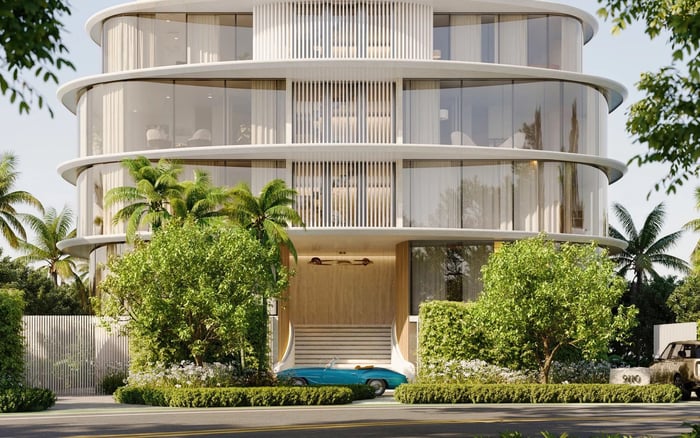
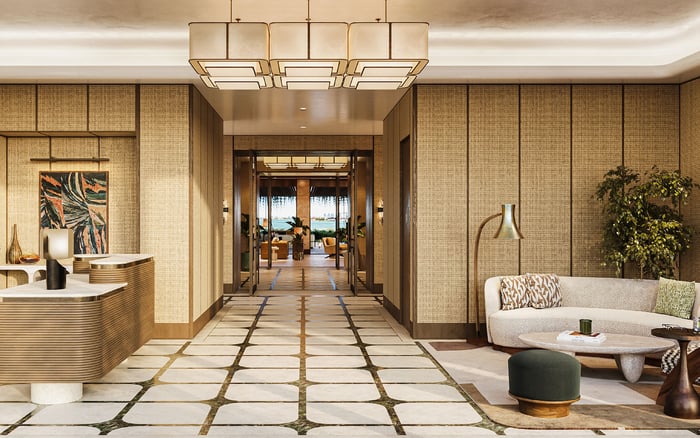
This is where certain new-development and boutique products become a practical “control group” for pricing expectations. In Brickell, The Residences at 1428 Brickell and Una Residences Brickell help define what premium execution looks like when the buyer is choosing between architectural pedigree and waterfront adjacency.
In ultra-luxury, after-tax considerations quietly sit behind many decisions. Florida’s lack of state personal income tax remains a meaningful draw for high earners evaluating long-term carrying efficiency. Property-tax policy can also matter in owner-occupied scenarios: Florida’s homestead exemption can reduce assessed value by up to $50,000, and the Save Our Homes cap can limit annual assessed-value increases for eligible homesteaded property.
This is not a universal solution and not the only reason capital moves, but in 2026 it remains one of the clearest structural differences between Miami and many global cities. Buyers who view Miami as a primary residence-not merely a seasonal address-often focus on how tax policy and ownership stability translate into a multi-year hold.
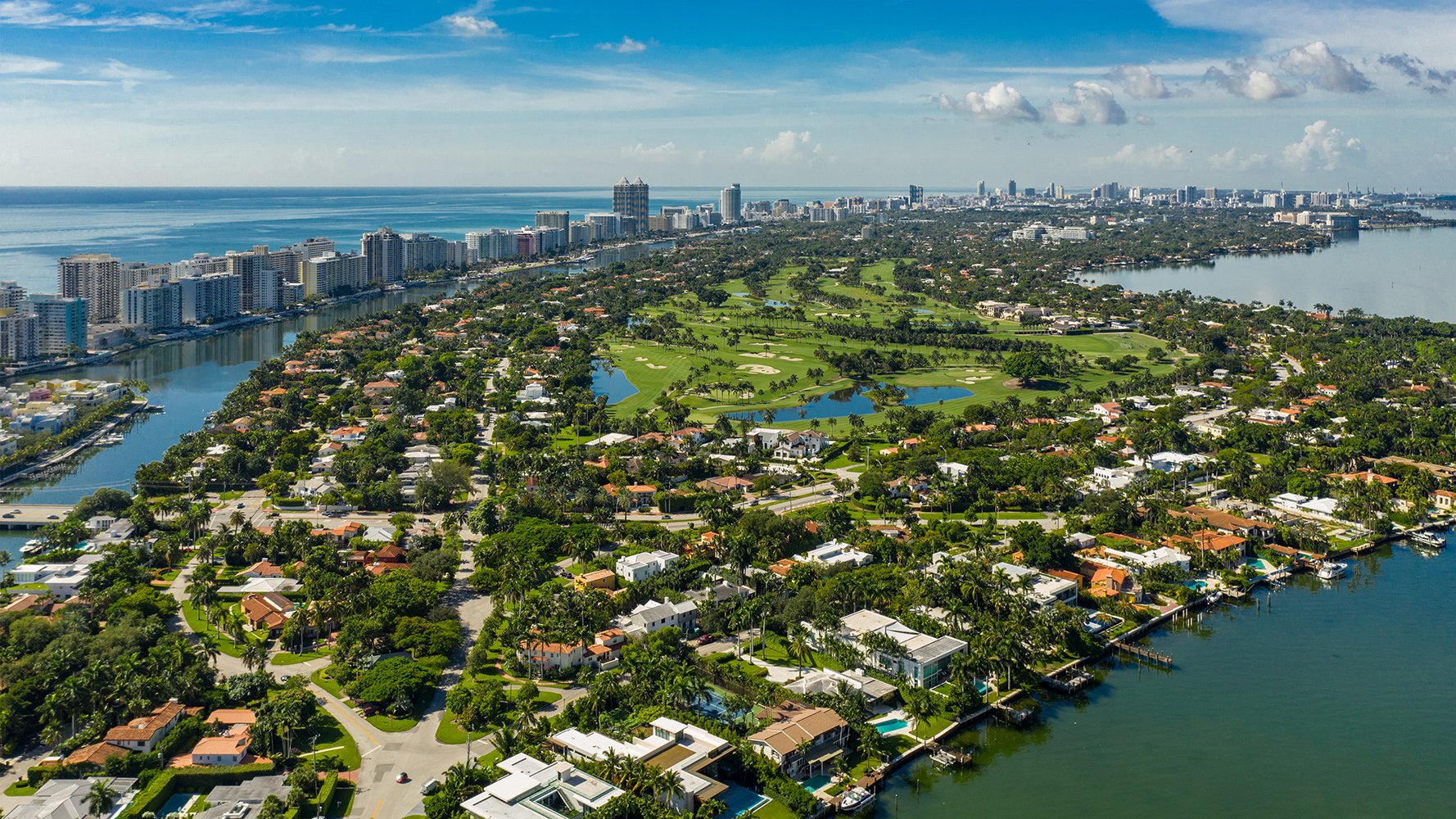
Miami luxury is not one market; it is a set of micro-markets with distinct rules.
Fisher Island continues to function as a rarity within a rarity. Accessible only by ferry, yacht, or helicopter, the logistical constraint doubles as a privacy feature. In Q3 2025, Fisher Island was cited around $2,708 per square foot, among the highest in the region. The headline is not simply the number, but what it represents: controlled access, limited supply, and an ownership profile that often values discretion over visibility.
On the mainland, Coral Gables offers a different kind of prestige-rooted in legacy and waterfront lot patterns. Gables Estates, for example, is described as an enclave of 192 waterfront homes off Old Cutler Road, a scale that feels nearly impossible to replicate.
Along the beach corridor, pricing behaves differently. Surfside and Bal Harbour luxury condos were cited around $1,297 per square foot in Q3 2025, up 4.5% year over year. The takeaway: ultra-luxury in Miami does not rise in unison. It advances in pockets where amenities, walkability, and brand-level execution converge.
For buyers who prefer a quieter beachfront profile, The Surf Club Four Seasons Surfside anchors the Surfside conversation with a service-driven standard that tends to hold attention across cycles.
Singapore’s real estate investment landscape remains active, with total real estate investment sales reaching S$34.12B in 2025, up 27% year over year. Private-sector investment sales were S$22.52B, up 24.3% year over year. These are not residential-only figures, but they still matter for ultra-luxury buyers: capital flows are present, and the market operates with institutional discipline.
At the residential apex, Singapore logged 28 ultra-luxury home transactions of $10 million or more in the second half of 2025, matching the first half of 2025 and marking the highest combined total since the first half of 2023. Transaction counts are not always directly comparable across geographies because definitions and coverage can differ, but directionally this still signals sustained activity at the very top.
Where Singapore diverges sharply from Miami is the policy cost of entry for non-citizens. The Additional Buyer’s Stamp Duty for foreign buyers is 60%. Singapore citizens face a tiered ABSD structure, including 0% for a first home, while permanent residents also face tiered rates. For global buyers, that foreign-buyer surcharge can turn a property decision into a balance-sheet decision.
Singapore’s prime landed segment is often framed around Good Class Bungalows, a category defined by tight supply and a tightly held owner base. One 2025 snapshot cited only about 36 GCB transactions for the year-an illustration of how infrequently the segment trades.
Pricing headlines reinforce that scarcity. The largest reported GCB deal in the second half of 2025 was S$55M on Chee Hoon Avenue on 13,906 square feet of land, roughly S$3,955 per square foot on land. A separate benchmark cited a Peirce Road sale at S$148M. For an ultra-luxury buyer, these numbers signal not just wealth, but constrained access: the buyer pool may be global in interest, but not always global in eligibility.
In Singapore’s prime ultra-luxury condo category, publicly discussed deals have included four-bedroom sales at 21 Anderson in the S$20M to S$24M range, roughly S$4,672 to S$5,347 per square foot. In one market summary, luxury apartment prices rose 6.2% to S$3,736 per square foot in the first half of 2025. Together, these figures contextualize the city’s premium: pricing is supported by limited land, strong governance, and a buyer base that often treats the asset as generational.
For a Miami-based ultra-luxury buyer, comparing Miami and Singapore can sharpen decision-making even if you never buy in Singapore. It forces clarity on what, exactly, you are buying.
If you are buying liquidity, Miami’s cash-heavy ecosystem-and the depth of $1M+ inventory-supports a strategy built on selectivity. You can wait for alignment: view, privacy, ceiling height, outdoor space, and a building’s operational culture.
If you are buying scarcity, Singapore’s prime landed story is a masterclass in how limited turnover and policy constraints can concentrate value in a narrow set of assets.
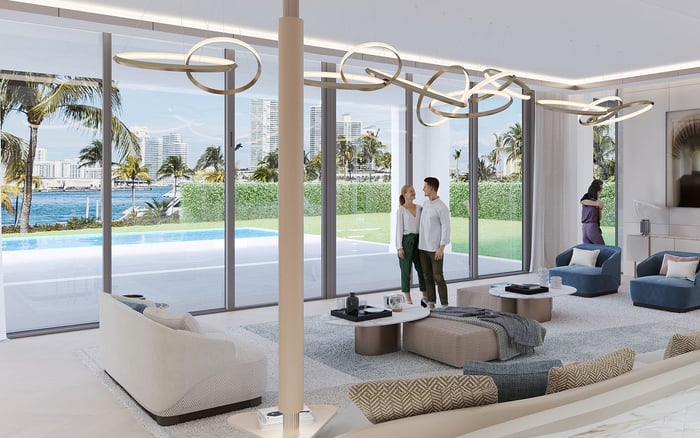
If you are buying lifestyle, Miami’s coastal neighborhoods, water access, and indoor-outdoor architecture remain difficult to replicate. Miami Beach buyers who prioritize design-forward beachfront living often track boutique new inventory closely, including 57 Ocean Miami Beach.
The sophisticated 2026 posture is to treat each market as a different tool. Miami can be the residence you use, host from, and enjoy year-round, with tax structure and liquidity supporting the hold. Singapore can represent a scarcity-driven, policy-shaped allocation where the cost of entry is part of the thesis.
Ultra-luxury buyers tend to win by controlling three levers.
First, control optionality. In Miami, the ability to choose among many $1M+ listings strengthens negotiation. In Singapore’s prime landed segment, optionality can be limited, and speed and preparation can matter more than incremental leverage.
Second, control terms. Miami’s high cash concentration means sellers may accept a slightly lower number for a cleaner structure-especially when closing certainty is credible.
Third, control your definition of value. Price per square foot is informative, but it is not the asset. The asset is the combination of view protection, privacy, building governance, resident profile, and long-term maintenance of standards.
Is Miami still a cash-driven market at the high end? Yes. In 2025, 81% of South Florida $10M+ closings were all-cash, underscoring strong liquidity.
How active is the $10M+ market in South Florida? South Florida recorded 361 closings of $10M+ homes in 2025, the second-highest annual total on record.
Does Miami have enough luxury inventory to be selective in 2026? Yes. As of December 2025, Miami had 10,591 active listings priced at $1M+.
Why do buyers compare Miami to Singapore if the markets are so different? Both are global cities where wealth prioritizes safety, governance, and premium residential product, but access and policy differ.
What is Singapore’s ABSD for foreign residential buyers? It is 60%, a significant transaction cost that can change net pricing and acquisition strategy.
Are Singapore Good Class Bungalows truly scarce? Yes. One 2025 snapshot cited about 36 GCB transactions for the year, reflecting very limited turnover.
How does Fisher Island fit into Miami’s ultra-luxury landscape? Its access is limited to ferry, yacht, or helicopter, reinforcing a privacy premium that supports top-tier pricing.
What does Florida’s tax structure mean for a primary residence strategy? Florida has no state personal income tax, and owner-occupied homestead rules can reduce taxable assessed value.
Is price per square foot a reliable cross-city comparison tool? Only partially. Differences in land scarcity, policy costs, and product type can make direct comparisons misleading.
What should a 2026 buyer prioritize when choosing between global luxury markets? Focus on liquidity at closing, policy friction, true scarcity, and whether the residence fits your lifestyle use case.
When you're ready to tour or underwrite the options, connect with MILLION Luxury.
If branded residences are on your mind — as a home or as an allocation — we would be glad to share what we are seeing, privately.
Begin a quiet conversation