A buyer-oriented look at how wellness has become the new status signal in South Florida branded residences, from thermal circuits to programming-forward wellness clubs.
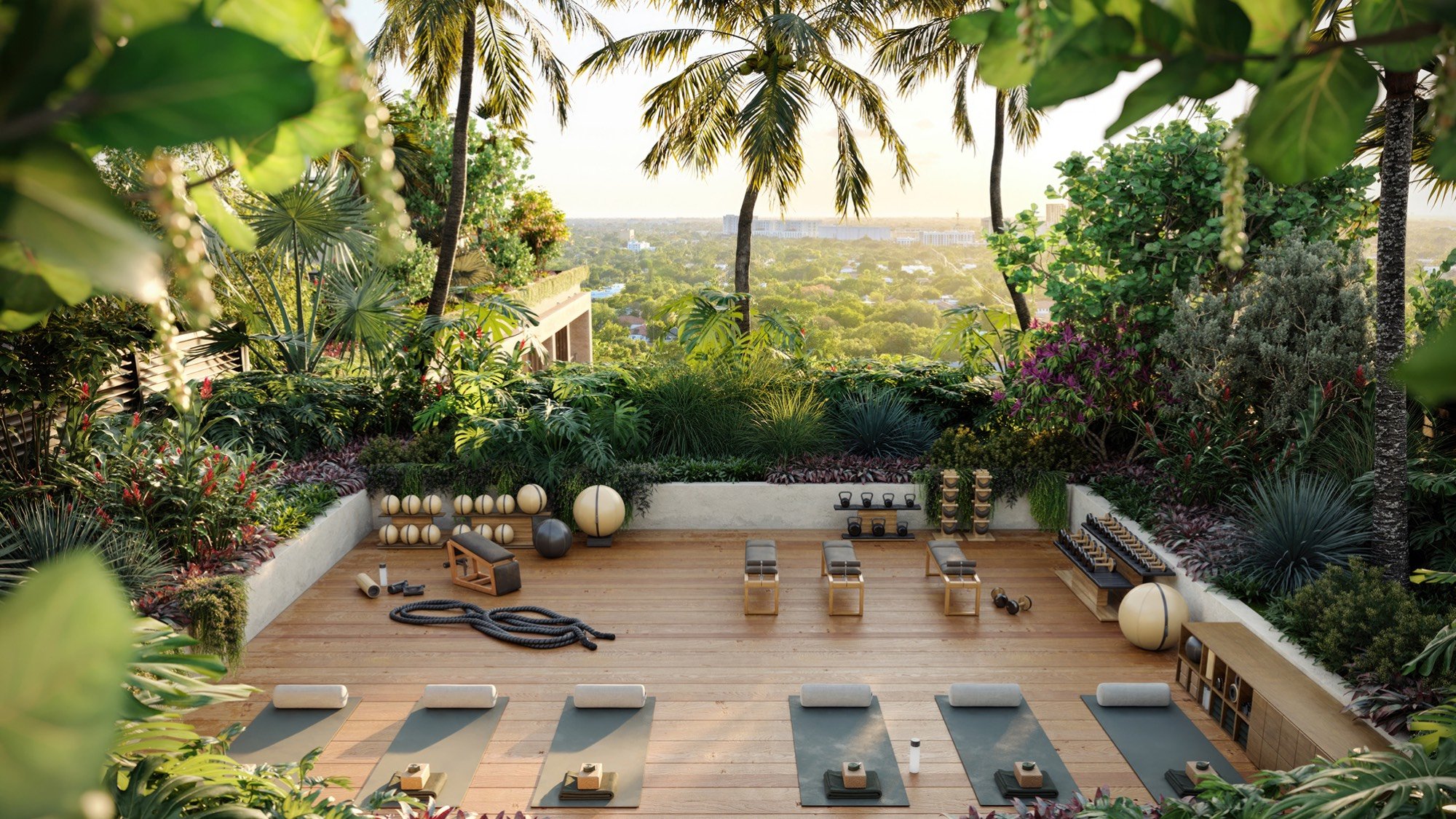
In South Florida’s upper tier, wellness has evolved from a nice-to-have into a primary lens for value. Today’s buyer isn’t simply asking whether a building has a gym; they’re asking whether the residence can sustain a repeatable, high-performance lifestyle when travel schedules, social calendars, and work demands collide. The shift is subtle but visible in how leading concepts are framed: less “amenity deck,” more daily ritual.
At the top of the market, the strongest wellness offerings now function like private clubs. They’re designed to compress time, reduce friction, and make discipline feel seamless. That can mean a recovery sequence built with intention, or a programming framework that treats movement, sleep, nutrition, and mental clarity as one system. This is the new status signal: not spectacle, but a residence that helps you feel better on a Thursday.
The most persuasive wellness-led residences tend to fall into three archetypes, each aligned with a different kind of principal.
First is the hotel-grade wellness sanctuary, where the objective is to translate luxury hospitality standards into a private residential setting. In Coconut Grove, Four Seasons Private Residences Coconut Grove is planned as a 20-story building with 70 residences and targets a 2028 completion. Its headline wellness statement is a roughly 10,000-square-foot spa concept known as “The Caesar Experience,” envisioned as a Roman-inspired thermal and recovery circuit. The distinction matters: a circuit implies choreography. Instead of a single steam room as a checkbox, residents move through multiple thermal environments designed as a structured sequence - positioning recovery as a practice, not a perk.
Second is the boutique hospitality lifestyle model, where wellness is embedded within a broader suite of services. Mr. C Tigertail Residences is a delivered, 21-story condominium with 125 residences, developed by Terra Group and designed by Arquitectonica with Meyer Davis interiors. Fitness is present and clearly marketed as a dedicated amenity, but the deeper value proposition is hospitality-forward living: concierge-style service paired with curated lifestyle amenities. For certain buyers, the most meaningful “wellness” feature isn’t a modality - it’s a service culture that protects time and privacy.
Third is the wellness-first ecosystem, where wellness is the organizing principle from the start. The Well Coconut Grove is explicitly built around THE WELL brand and frames its offering through five pillars: food, movement, mind, body, and lifestyle/community. That structure signals a different intent. It suggests a residence designed not merely to house wellness spaces, but to operate wellness as programming and community - closer to a dedicated club experience than a standard amenity suite.
Sophisticated buyers already know how to read floor plans and financials. The wellness advantage often lives in operational details that don’t translate in a glamorous image.
1) Is it a circuit or a room? A circuit signals guidance, pacing, and repeatability. A thermal sequence designed as a progression is more likely to become a habit - which is where wellness becomes tangible. Four Seasons’ “Caesar Experience” is positioned specifically as a thermal and recovery circuit with multiple environments, including a sauna circuit designed as a structured flow.
2) Is there a program, or only equipment? Equipment becomes dated; programming is what keeps an amenity relevant. A wellness concept with an explicit framework, like THE WELL’s five pillars, is a strong indicator that the building intends to evolve through experiences - not just machines.
3) Does service reduce friction? The difference between a gym you plan to use and a gym you actually use is often friction: reservations, towels, access, timing, privacy, and how you feel when you arrive. Hospitality-forward brands tend to compete here, pairing wellness with concierge-style living and resident privileges that extend beyond the four walls.
Coconut Grove has become a clear case study in how these models compete in real time. Within a tight radius, you can see the full spectrum: a planned Four Seasons-branded residence built around a signature spa concept; a delivered Mr. C project where fitness sits inside a larger hospitality system; and a wellness-first concept that brings “wellness club” energy into the residential identity.
For buyers, the Grove’s appeal is not only the neighborhood’s character, but also the clarity it offers: you can decide whether you want recovery as ritual, service as a lifestyle amplifier, or wellness as an integrated philosophy. The right answer is rarely universal. A principal who travels weekly may prioritize a predictable recovery circuit and a state-of-the-art fitness center over a broad calendar of programming. A family buyer may value a framework that supports routines across food, movement, and mindset. A privacy-driven purchaser may decide the best wellness is the kind that happens quietly, supported by service.
In the Grove, it’s also easy to benchmark wellness against other luxury expectations - such as design pedigree, delivery status, and brand consistency - which matters because wellness amenities only hold value when the building maintains them with discipline.
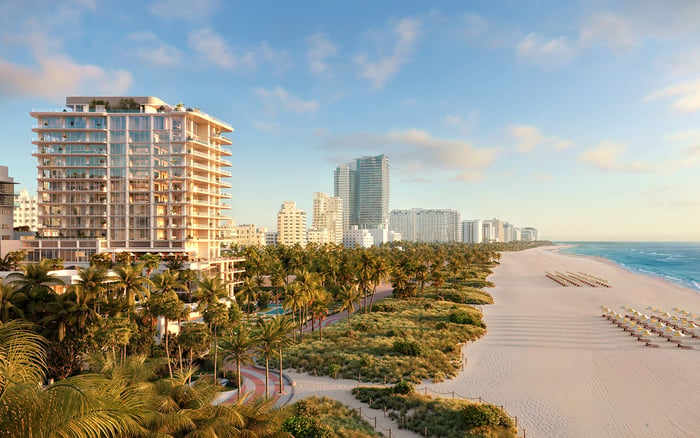
Miami Beach remains the region’s most visible laboratory for branded living, where residences are expected to deliver lifestyle theater and operational excellence at the same time. Even when a building’s primary identity isn’t wellness-first, today’s buyer still expects a credible health-and-recovery layer within the broader experience.
For those who prefer a private-collections style of ownership, Shore Club Private Collections Miami Beach sits within a market that rewards turnkey lifestyle and curated service. For buyers who want a more club-forward social cadence, Casa Cipriani Miami Beach reflects ongoing appetite for hospitality lineage, where wellness is often experienced as part of an all-day service environment rather than a stand-alone discipline.
And for the buyer who wants contemporary Miami Beach living with a strong emphasis on how a building performs day to day, Five Park Miami Beach aligns with the current preference for residences that feel modern, efficient, and elevated - supported by amenities that serve a full lifestyle rather than simply filling square footage.
The key Miami Beach question is this: does the building’s lifestyle intensity support your wellness, or compete with it? The most valuable projects manage both by building separation into the amenity experience, so recovery feels protected.
Wellness features rarely translate neatly into price per square foot. Instead, they influence liquidity, rentability, and buyer conviction - especially in branded residences, where the brand promise must feel lived, not theoretical.
To evaluate wellness value, consider three lenses:
Consistency: Will the wellness offering feel as compelling in year five as it does at opening? A programmatic framework tends to age better than a static room.
Privacy: Many principals want wellness without exposure. Ask how spaces are accessed, how busy they become, and whether the layout protects discretion.
Integration: The most valuable wellness is the kind you can’t avoid - in a good way. When movement and recovery are designed into the building’s daily flow, the residence becomes an accountability partner.
In other words, wellness is less about the most impressive amenity and more about the most usable one.
When touring, keep the conversation practical and non-theoretical.
For buyers comparing Coconut-grove and Miami-beach options, the goal isn’t to crown one “best” concept - it’s to choose the wellness philosophy you will actually live.
What is the main difference between wellness-first and wellness-forward residences? Wellness-first makes programming and wellness culture the organizing principle; wellness-forward adds strong amenities within a broader lifestyle package.
Why does a thermal circuit matter more than a single spa room? A circuit implies a structured sequence that supports repeatable recovery, making it easier to build a routine.
What is Four Seasons Private Residences Coconut Grove planning for wellness? It has disclosed a roughly 10,000-square-foot spa concept called “The Caesar Experience” and a broader wellness positioning.
When is Four Seasons Private Residences Coconut Grove expected to complete? The project targets a 2028 completion.
What should I look for in a luxury condo fitness offering? Beyond equipment, look for operational ease, privacy, and whether the space feels designed for consistent use.
Is Mr. C Tigertail Residences completed? Yes, it is delivered/complete.
How does Mr. C Tigertail approach wellness? It offers a dedicated fitness center within a hospitality-forward services and amenities model.
What makes THE WELL Coconut Grove distinct? It is explicitly built around THE WELL brand and is structured around five pillars: food, movement, mind, body, and lifestyle/community.
Do branded residences generally improve resale prospects? They can strengthen buyer conviction when the brand promise is consistently executed, though outcomes vary by building and market cycle.
How should I compare Miami Beach lifestyle buildings to Coconut Grove wellness concepts? Compare how each supports your daily routine: recovery and quiet versus social energy and full-service living.
For a confidential assessment and a building-by-building shortlist, connect with MILLION Luxury.
If branded residences are on your mind — as a home or as an allocation — we would be glad to share what we are seeing, privately.
Begin a quiet conversation