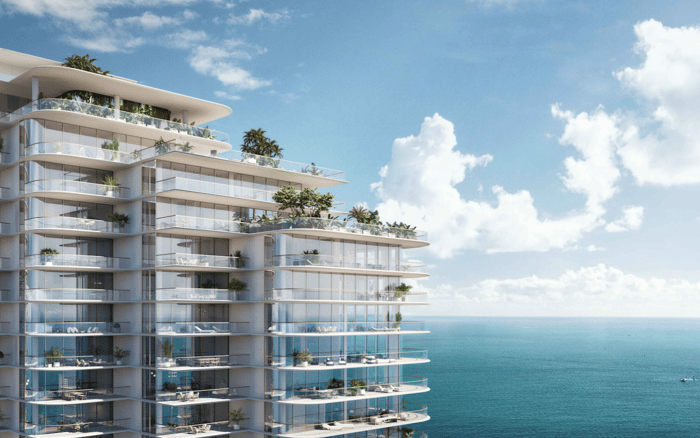
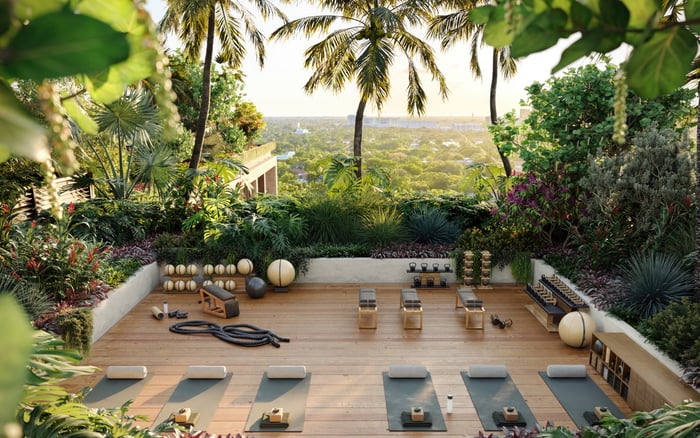
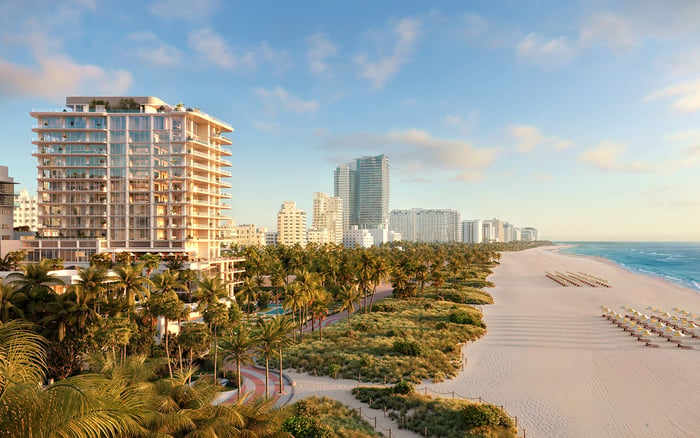
Branded residences are scaling globally, and South Florida sits at the center of the North American story. For buyers, the appeal is less about a logo and more about predictable service, amenity standards, and resale clarity in a market where luxury lifestyles are increasingly multigenerational. This MILLION Luxury editorial breaks down why the branded model commands a premium, what to scrutinize in the operating structure, and where Miami-beach demand is concentrating as new product comes online.
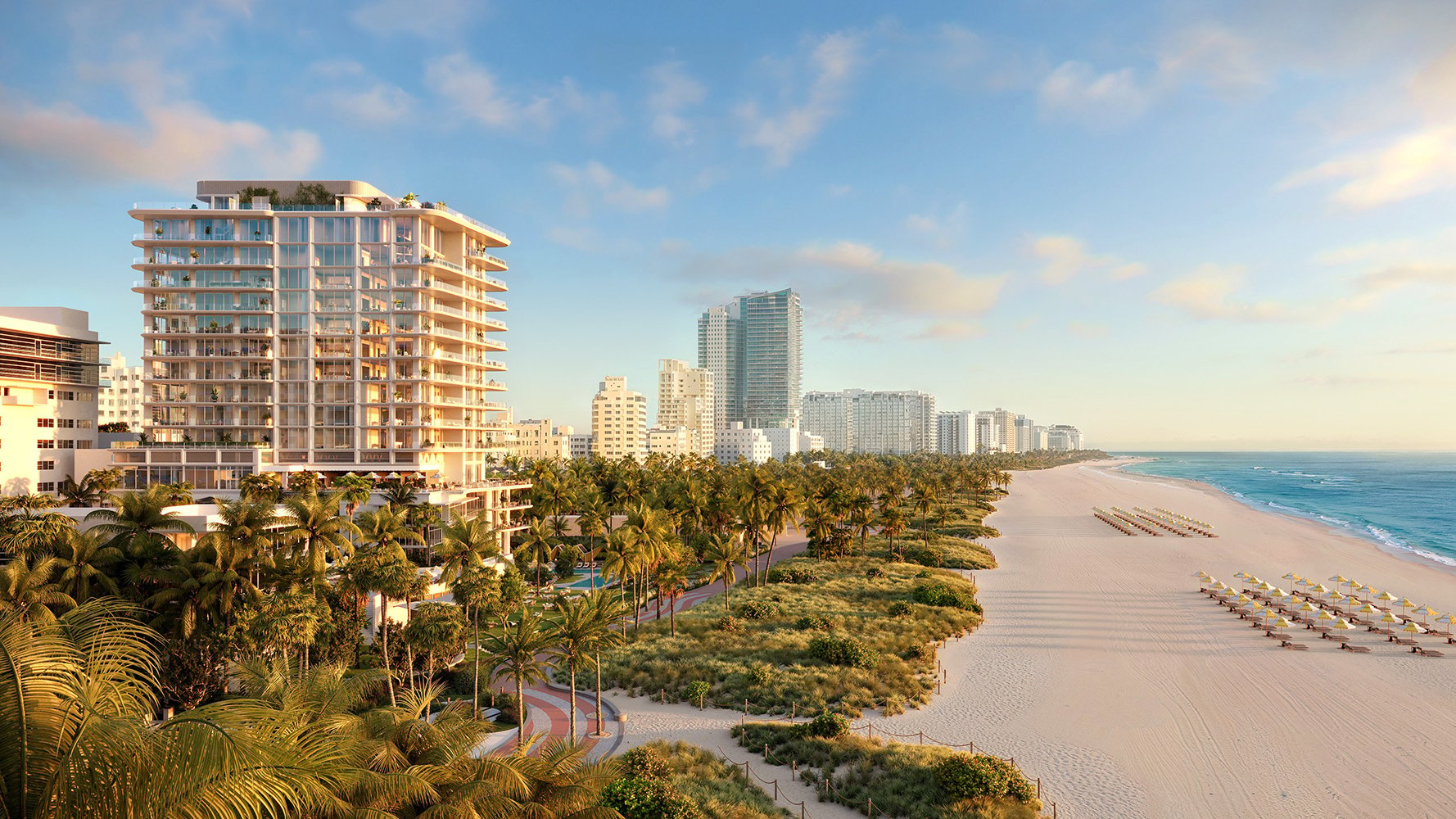
Branded residences have shifted from a niche development strategy to a primary channel in global luxury. Industry reporting projects more than 910 branded residential schemes by the end of 2025, up from 323 in 2015. The same reporting cites a pipeline of 837 contracted projects scheduled through 2032, implying roughly 1,747 total schemes by the end of the decade.
For South Florida buyers, the headline is less about global scale and more about what scale does to pricing and scrutiny. Choice is expanding, and the market is getting better at separating true operational strength from simple name recognition. In North America, the sector is cited with 48 completed projects and 55 in the pipeline, and Miami is routinely referenced as a key hub within that story.
The moment is also defined by diversification. Reporting around 2025 points to dozens of new hotel and non-hotel brands entering the category. More entrants can broaden options, but it raises a practical question for buyers: which brands can actually deliver residential-grade service every day, and which are primarily licensing a badge.
Branded residences are widely reported to command a meaningful price premium over comparable non-branded properties. One industry summary cites an average premium around 33%, with resort settings cited closer to 39% and emerging-market premiums reported as high as 57%.
In South Florida, that premium is easiest to defend when the building performs like a well-run private club. The differentiator is rarely a lobby rendering. It is consistency: an arrival experience that never slips, staff who are trained and retained, maintenance standards that are curated, and an operating culture that treats residence owners as the core constituency, not an add-on.
The buyer-side takeaway is straightforward. You are not paying “for the brand” in the abstract; you are paying for reduced friction. When service is institutionalized, the home functions smoothly as a primary residence, a second home, or an intergenerational base. It also becomes easier to explain on resale, which matters in a market where luxury inventory can be deep and comparables can be nuanced.
For investment-minded purchasers, the key question is not whether the building is famous. It is whether operations are durable: staffing, governance, and the ability to maintain standards without drifting as ownership turns over.
Miami-beach sits at an intersection that branded residences are built for: international demand, high expectations, and a lifestyle that blends dining, wellness, and privacy. Many of the neighborhood’s best new offerings are now designed around operational reality as much as architecture.
A buyer comparing Miami-beach product today is often weighing brand ecosystems as much as floorplans. In that frame, Casa Cipriani Miami Beach reads as a statement about social capital and discretion, while Shore Club Private Collections Miami Beach signals a hospitality-forward approach to ownership.
The newer generation of luxury towers also leans into full-time living rather than occasional use. Five Park Miami Beach is frequently discussed in the market as part of Miami Beach’s next chapter, where location is paired with a more modern service-and-amenity expectation.
For buyers who want a familiar, globally legible operating playbook, The Ritz-Carlton Residences® Miami Beach positions the proposition plainly: residence ownership with hospitality standards as a core promise.
In branded residences, the amenity deck is only half the story. The other half is the operating covenant: what is truly included, what is à la carte, and what is protected by enforceable standards.
Start with services. The most value-retentive buildings are typically those where service is not occasional, but procedural. Look for staffing levels that match the promise, training that is more than an opening-year initiative, and a resident-first priority that holds during peak seasons and quiet months alike. Branded projects are often framed as attractive because hospitality brands bring service, amenities, and management standards into residential ownership. The buyer’s job is to confirm the translation from hotel language to residential reality.
Next, governance. Buyers should understand how decisions are made when the brand, the developer, and the residents all have interests. The best outcomes usually come from clarity: transparent budgets, strong reserve planning, and a management structure that can keep the building consistent long after the sales gallery closes.
Finally, understand condo-hotel adjacency without confusing it for the modern branded residence model. Some projects are integrated with a hotel component; others are standalone residences under a brand. That difference can affect daily rhythms, privacy, and even how your home feels on a Tuesday in September. The fine print, not the marketing, tells you where the lines are drawn.
South Florida’s branded pipeline is not just growing; it is stretching upward and outward in ambition. A widely covered example is Waldorf Astoria Residences Miami, marketed as a 100-story, roughly 1,049-foot tower with architecture described as nine staggered stacked glass cubes. Marketing materials describe 360 private residences plus a 205-key hotel, with sales launched in May 2021 and completion commonly marketed for 2027. Pricing is marketed from around $1.1 million for studios, reaching up to around $40 million for penthouses.
In Edgewater, EDITION Residences Miami Edgewater is marketed as a roughly 55-story waterfront tower with about 185 residences on Biscayne Bay. Public marketing points to large-format homes, high ceilings often cited around 10 to 14 feet, and amenities marketed at 45,000-plus square feet. Pricing is marketed from about $2 million, and a sample deposit schedule has been marketed as 20% at contract with subsequent milestones and 60% due at closing.
And in Brickell, Cipriani Residences Miami has been marketed as an approximately 80-story tower around 940 feet, with 397 units cited and starting pricing marketed around $2.34 million for one-bedroom residences.
These figures are marketing disclosures and can evolve, but they illustrate the same direction: branded living is being packaged as a complete lifestyle platform, not merely a unit in a tower.
Two near-term signals are shaping luxury decision-making.
First, multigenerational living. Florida Realtors has cited “one in five” U.S. home purchases as multigenerational, and this trend is increasingly visible in how buyers shop South Florida. The preference shows up in larger layouts, privacy within the home, and amenity ecosystems that serve different ages without requiring compromise.
Second, the financing and development climate. Trade reporting in hospitality real estate has framed Fed rate cuts as a key 2026 tailwind for hotel-related investment and development activity, a backdrop that can support mixed-use and hospitality-adjacent concepts. In practice, a friendlier rate environment can influence both construction appetite and buyer psychology, particularly for those comparing new branded product to legacy luxury stock.
In Miami-beach and beyond, the discerning move is to separate cyclical pricing from structural value. Service, governance, and long-term standards are structural. A logo by itself is not.
What is a branded residence, in plain terms? A branded residence is a home sold under a luxury brand promise, typically anchored in hospitality-style service and operational standards.
Do branded residences really sell for more? Industry reporting has cited an average premium around 33% versus comparable non-branded properties, though it varies by market and execution.
Is a branded residence the same as a condo-hotel? Not necessarily. Some branded projects integrate a hotel component; others are standalone residences with branded services.
Why is Miami-beach so central to this trend? Miami-beach concentrates international buyers, lifestyle demand, and high service expectations, making it a natural proving ground.
What should I review before buying? Focus on the operating structure: what services are included, how the building is managed, and how standards are enforced over time.
How does a hotel component affect ownership? It can change privacy, traffic patterns, and the day-to-day feel of the property. The specifics depend on how the residence and hotel operations are separated.
Are new brands entering the category a good thing? It can expand choice, but it also increases the importance of vetting whether the brand can sustain residential-grade service.
What 2026 trend is influencing luxury housing most? Multigenerational living is a major driver, with Florida Realtors citing one in five U.S. home purchases as multigenerational.
How should I think about resale value in branded buildings? Resale strength often tracks operational consistency: staffing, maintenance standards, and a clear value story that buyers can understand quickly.
Where can I explore South Florida luxury options with guidance? Work with an advisor who can compare branded premiums against operations, governance, and true market comps. Explore current opportunities with MILLION Luxury.
If branded residences are on your mind — as a home or as an allocation — we would be glad to share what we are seeing, privately.
Begin a quiet conversation