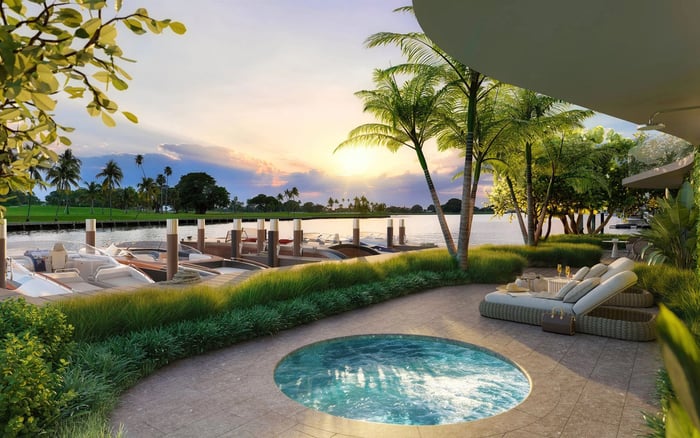
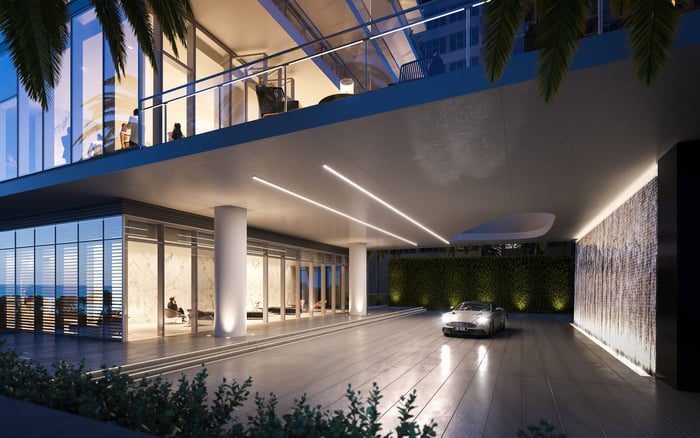
South Florida’s most ambitious condo amenities are shifting from conventional fitness rooms to wellness ecosystems that feel closer to private longevity clinics. For buyers, this evolution changes how value is assessed: not just square footage and views, but recovery capacity, sleep quality, air and water standards, and the daily friction required to maintain a high-performance routine.
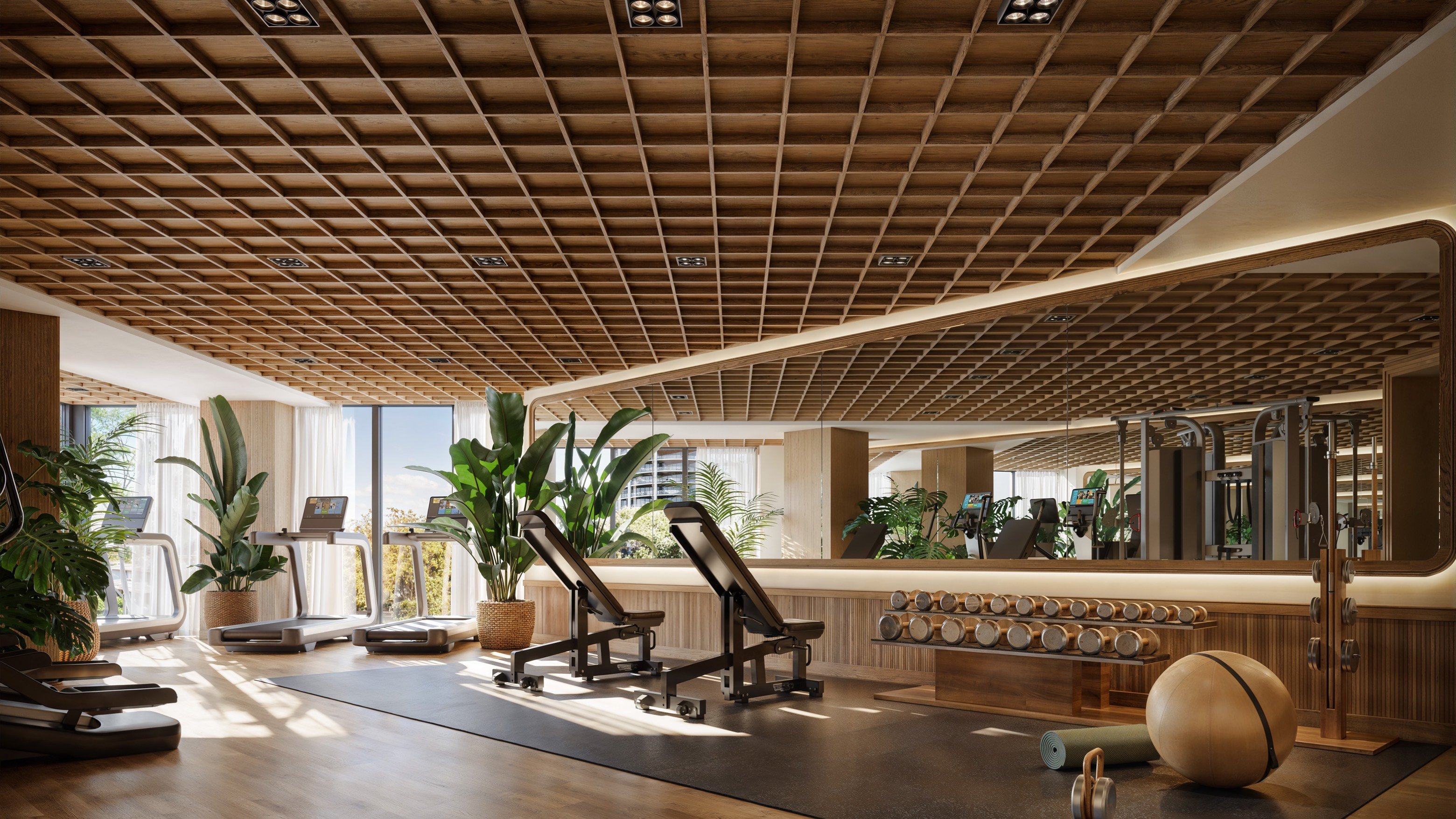
The luxury condominium gym used to be a predictable space: a row of cardio machines, a cable station, and mirrors engineered to make the room feel larger than it was. Today, the biohacking movement is rewriting the brief. The goal is no longer simply to work out on-site; it is to compress an entire wellness day into the building itself-fewer appointments, less travel time, and more consistency.
This shift is especially pronounced in South Florida, where residents often balance travel, entertaining, and demanding schedules with a desire to look and feel exceptionally well. In that context, the modern amenity suite becomes a quiet form of infrastructure-less “extra,” more essential. Think of it as a lifestyle operating system: training, recovery, sleep support, and stress regulation integrated into the property.
In places like Brickell, that mindset pairs naturally with a “one elevator ride away” philosophy. Buildings that position wellness as a private, residents-only experience are increasingly aligned with what the most discerning buyers want from a primary residence or a high-use second home. You can see this sensibility in wellness-forward concepts such as The Well Coconut Grove, where the story is less about having a gym and more about living inside a cohesive wellness culture.
Biohacking, at its core, favors measurable inputs and repeatable routines. Real estate intersects with that mindset when a building makes the right behaviors nearly automatic. The strongest amenity programs remove the friction that usually breaks consistency: parking, traffic, scheduling, and the subtle social exposure that can make even high-achievers skip a session.
From a buyer’s perspective, the value proposition is straightforward:
Time: a short, predictable window for training and recovery that fits between meetings or travel.
Privacy: spaces that feel discreet, not performative, with careful circulation and thoughtful zoning.
Completeness: a suite that supports what happens before and after exercise, not just the exercise itself.
Repeatability: environments designed to be used daily without feeling like a resort reserved for weekends.
This is why the word “gym” increasingly understates what’s being built. The amenity becomes a personal performance studio-calibrated for daily use rather than occasional motivation.
In many luxury buildings, wellness spaces are beginning to resemble a simplified longevity-clinic model-translated into residential terms. Not every tower offers every element, but the direction is clear: more modalities, more recovery, and more intentional design.
Traditional condo gyms are training-centric. The biohacking lens flips the hierarchy: recovery becomes the multiplier that keeps training sustainable. Accordingly, buyers are starting to ask different questions during tours. Not “How many treadmills?” but “Where do I downshift?”
The recovery-led amenity stack typically includes a combination of:
Heat exposure (for ritual, relaxation, and post-training decompression)
Cold exposure (for resilience, alertness, and inflammation-conscious routines)
Bodywork-ready rooms (quiet spaces that accommodate stretching, mobility, and services)
The crucial detail is not the headline modality; it is the execution. Materials should feel calm and hygienic. Acoustics should be controlled. Lighting should support parasympathetic recovery rather than nightclub energy.
A longevity-oriented gym prioritizes strength, stability, and joint-friendly movement patterns. That changes the equipment mix and, more importantly, the floor plan. Expect more free weights, functional training zones, and open areas that accommodate mobility work.
In a market where buyers may already have access to elite trainers, the building’s job is to provide the right canvas: clean lines, durable finishes, good ventilation, and intuitive zoning that keeps the room feeling ordered rather than crowded.
Biohacking is inseparable from metrics. Even when a building does not provide testing, residents bring their own wearables-and their expectations. The built environment needs to support a data-driven lifestyle: spaces with stable connectivity, controlled lighting, and consistent temperatures.
Wellness-forward residences in dense urban nodes, such as 2200 Brickell, are naturally positioned for this trend because they already sell a carefully curated, service-rich daily rhythm. Wellness is not an add-on; it is part of the home’s operational logic.
Luxury buyers have become exceptionally fluent at reading amenity spaces. The difference between a serious wellness program and a photo-ready room is often felt in the first minute.
A longevity-minded amenity suite avoids a single, exposed room where every activity happens under fluorescent light. Instead, it uses a sequence: arrival, warm-up, training, recovery, and quiet. The best layouts reduce cross-traffic so residents can move through the experience without feeling observed.
While buyers may not ask for technical specifications on a first visit, they do respond to cues of cleanliness and care: non-porous surfaces where appropriate, strong yet quiet ventilation, and an overall sense that the space is maintained like a private club.
Biohacking has made circadian alignment a mainstream conversation among high-performance circles. In practice, buyers gravitate toward amenity spaces that avoid harsh glare and offer warmer, calmer lighting in recovery zones.
In coastal markets such as Miami Beach, where many residents already anchor their days around morning light and evening wind-down, the wellness environment needs to feel consistent with that lifestyle. A building like 57 Ocean Miami Beach fits naturally into that sensibility, where wellness is often framed as a refined, ocean-adjacent way of living rather than a loud fitness culture.
When amenities shift from occasional perks to daily systems, they become “sticky,” meaning they materially influence whether an owner stays, renews, or chooses one building over another. For developers and associations, that stickiness can be powerful.
For buyers, the more useful takeaway is how to evaluate the offering:
Is it designed for everyday use? If it feels like a spa you’d only visit with guests, it may not support a real routine.
Does it support recovery as much as effort? Longevity culture prioritizes both.
Is it discreet? The most valuable wellness is often quiet.
Can it scale with your life? Think beyond your current training phase.
In certain ultra-luxury enclaves, the wellness suite also functions as an extension of concierge culture: a setting where services, privacy, and elevated design converge. That sensibility aligns with trophy-level living in places like Apogee South Beach, where the expectation is not simply “nice amenities,” but amenities that feel inevitable at the price point.
A sophisticated buyer doesn’t need to be a committed biohacker to shop intelligently for longevity-forward amenities. The goal is to ask questions that reveal whether the building pursued substance.
Consider asking:
When are the wellness spaces busiest, and how is crowding managed? A room that is always full is functionally less valuable.
How are recovery areas separated from high-energy zones? This reveals whether the plan was intentional.
What is the cleaning cadence and who oversees it? Well-designed spaces still require discipline.
Is there flexibility for personal services? Some residents want training, bodywork, or guided sessions on their schedule.
How does the building handle noise and vibration? Especially important near residences.
The most revealing detail is often not the equipment brand, but the experience of moving through the space: the ease, the calm, and the sense of being looked after.
As the biohacking movement continues to influence consumer expectations, condominium wellness will likely become more standardized and more strategic. We are moving toward an era where the building is not just a backdrop for health habits, but an active participant.
For South Florida’s luxury real estate audience, this is a meaningful evolution. It reframes the amenity conversation away from spectacle and toward longevity: sleep quality, recovery capacity, and the ability to maintain high performance without turning wellness into a logistics project.
In that sense, the most desirable condo gyms are no longer gyms at all. They are discreet longevity suites designed to make the best version of your routine the easiest one to keep.
What makes a condo gym feel like a longevity clinic? It prioritizes recovery, privacy, and consistent daily use over sheer equipment quantity.
Are recovery amenities more valuable than more machines? For many buyers, yes-because recovery supports consistency and reduces the need to leave the building.
Should buyers expect medical services inside the building? Not necessarily; most “longevity” amenities are lifestyle-oriented rather than clinical care.
How can I tell if the wellness suite is designed for real daily routines? Look for thoughtful zoning, controlled lighting, and spaces that feel calm and easy to use.
Do wellness amenities affect resale appeal? They can, especially when they differentiate a building and become part of residents’ daily habits.
Is privacy really that important in amenity design? Yes; discreet circulation and quieter rooms increase actual usage for many owners.
What’s the biggest red flag during a tour? A single exposed, crowded room that tries to do everything and ends up doing nothing well.
Do I need to be a biohacker to benefit from these amenities? No; most residents simply enjoy the convenience of better recovery and a calmer routine.
Are wellness-forward buildings only in one neighborhood? No; you’ll find them across Brickell, Coconut Grove, and coastal Miami Beach enclaves.
What should I prioritize first: training space or recovery space? Prioritize the mix that matches your lifestyle, but a recovery option often improves consistency.
If you'd like a private walkthrough and a curated shortlist, connect with MILLION Luxury.
If branded residences are on your mind — as a home or as an allocation — we would be glad to share what we are seeing, privately.
Begin a quiet conversation