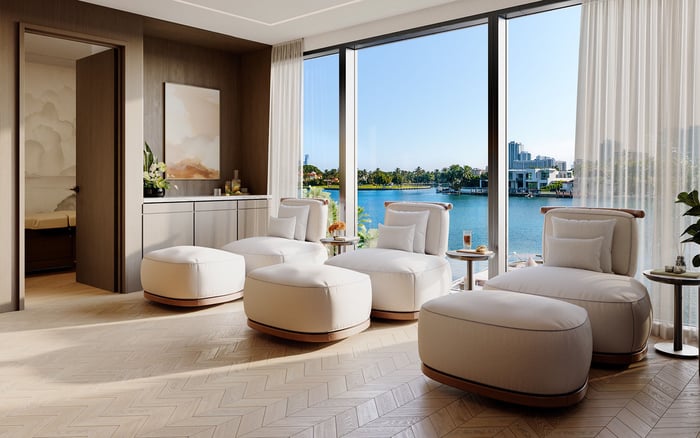
In South Florida’s luxury residential market, wellness amenities are no longer a nice-to-have. Buyers and residents increasingly evaluate a building’s fitness experience the way they evaluate a kitchen or a view: by outcomes, reliability, and the caliber of the people behind it. That means looking past glossy renderings and asking sharper questions about equipment selection, maintenance standards, space planning, and the credibility of any personal training partnership attached to the brand. This MILLION Luxury guide outlines a pragmatic framework for assessing fitness equipment and trainer relationships in new development and resale condos across Brickell, Miami-beach, Sunny-isles, and beyond. The goal is simple: distinguish amenities that will be used daily from those that will photograph well once, then quietly underperform.

In today’s top-tier South Florida market, a fitness center is no longer a nice-to-have. It functions as an extension of the home: a daily-use environment that competes with private clubs, boutique studios, and at-home training. For buyers, it also signals operational maturity. When a building consistently delivers a high-performing wellness experience with polished service, it often reflects well on everything from staffing to the culture of maintenance.
The core shift is that “fitness” now means both hardware and hospitality. Equipment can be technically premium and still disappoint if the room is poorly planned, the rules are ambiguous, or the training partnership lacks consistency. Conversely, a compact gym can feel genuinely elevated when it’s thoughtfully programmed, meticulously maintained, and supported by high-trust trainers.
Across Brickell and Downtown towers, wellness expectations often mirror the broader design intent found in buildings such as 2200 Brickell, where buyers tend to evaluate amenity performance with the same rigor they apply to finishes, privacy, and service.
Luxury buyers hear “best-in-class equipment” constantly. The more useful question is what that promise looks like in day-to-day operations.
Start with duty cycle and durability. Residential-grade machines can photograph well, but they aren’t built for repeated peak-hour use. A serious condo gym should prioritize commercial-grade cardio and strength equipment designed for continuous operation-plus parts and configurations that can be serviced quickly without sidelining half the room.
Then look for redundancy. A gym built around a single “hero” treadmill, one cable station, or one adjustable bench creates friction at exactly the wrong time. A stronger setup includes multiples of the most-used pieces, reinforcing a simple message to residents: this room is dependable at 7 a.m. on a Monday.
Finally, evaluate the strength ecosystem as a whole. Dumbbells alone don’t add up to a complete training environment. Expect a coherent system: adjustable benches, a functional trainer or cable crossover, a squat-capable rack or smith alternative, sufficient plates, and accessories that support mobility and recovery. In a well-executed space, the selection reads as an intentional program-not a collection of brand names.
A fast, accurate way to assess a fitness center is to picture two residents moving through it simultaneously, each on a different routine. If they repeatedly intersect, wait, or feel on display, usage drops.
Prioritize clear circulation, appropriate spacing between cardio rows, and distinct zones for strength, functional training, and stretching. Mirrors should enable form checks without turning the room into a stage. Flooring should be chosen for acoustics as much as aesthetics-especially in towers where the gym sits above residences.
Natural light matters, but not at the cost of glare and heat. In oceanfront buildings such as 57 Ocean Miami Beach, the strongest wellness rooms treat the view as an asset while still managing exposure, maintaining consistent temperature, and protecting privacy.
Also scrutinize the supporting details: towel and water stations, storage that prevents clutter, and ventilation that keeps the room fresh during peak hours. These features rarely trend, yet they’re often the difference between a gym residents use daily and one they visit once.
A pristine gym on day one is easy. A pristine gym in year three reflects management discipline.
Ask how maintenance actually works: whether service is scheduled, whether there’s a documented log, and how quickly broken equipment is repaired. In a true luxury environment, downtime should be the exception-not a recurring inconvenience. The most telling indicator is often less about the equipment label and more about the building’s mindset around proactive care.
Cleaning protocols should be equally specific. Luxury fitness spaces often look visually minimal, which makes surface hygiene even more consequential. Look for operational cues: readily available wipes, discreet bins, and staff touchpoints that keep the room consistently guest-ready.
In high-density neighborhoods like Brickell and Downtown, where amenity usage can be intense, sustained uptime becomes part of the real value proposition-alongside location and the broader service experience.
A personal training “partnership” can mean anything from a rotating roster to a fully integrated wellness program-and the gap in quality is substantial.
First, confirm whether the partnership is exclusive. If outside trainers are restricted, the on-site team must be deep enough to meet demand across schedules and training styles. If outside trainers are allowed, the building should have a clear access policy and reasonable insurance requirements that protect residents without creating unnecessary friction.
Second, evaluate credentialing and continuity. The strongest partnerships deliver consistent staff, defined standards, and a management structure that handles onboarding, scheduling, and client experience. Inconsistent staffing is a common failure point: residents book sessions, build trust, then watch their trainer disappear.
Third, assess privacy and discretion. In ultra-premium condos, residents often want results without becoming part of the room’s social dynamic. A strong program supports discreet arrivals, clear etiquette, and training zones that don’t force private clients through high-traffic pathways.
This emphasis on tailored service aligns with the broader wellness-forward approach buyers increasingly associate with projects like The Well Coconut Grove, where wellness is framed as a lifestyle system rather than a single room with machines.
Hardware and trainers are only part of the equation. The operating model determines whether the amenity feels elevated or chaotic.
Review hours of operation and access control. A luxury building should support early and late routines without creating avoidable noise conflicts. When the gym sits near residential corridors, sound mitigation and door hardware can matter more than many buyers expect.
If class programming exists, examine how it’s run: booking limits, no-show policies, and whether residents can reliably secure a slot during the most desirable windows. The most functional approach typically balances a few high-demand formats with open gym flexibility, avoiding over-programming that makes the space feel “reserved” instead of resident-owned.
Also consider training-session logistics. Where do clients warm up, store belongings, and recover without overtaking the room? If a partnership is truly operational, these systems should be built-in-not improvised.
The best wellness experiences feel consistent with the property’s identity and the neighborhood’s pace.
In Miami-beach, many residents prioritize a sculpted, efficient routine with strong recovery support. In Sunny-isles, buyers often expect deeper equipment selection, more generous layouts, and an experience that can substitute for off-site facilities. In Coconut-grove, preferences frequently lean toward holistic wellness, mobility, and lifestyle integration.
Use the building’s broader service profile as a proxy. When staffing is polished across the property and shared spaces are consistently maintained, the gym is more likely to be operated with the same discipline. When common areas show wear, fitness typically follows.
On tour, pay attention to who is using the gym and how. The clearest luxury signal isn’t emptiness-it’s quiet confidence: residents moving through the space without bottlenecks, equipment that performs, and an atmosphere that feels calm rather than performative.
For a quick, high-signal evaluation, focus on what’s difficult to correct after delivery.
Space and layout come first. A cramped gym rarely becomes generous later, especially once HOA budgets collide with real operating costs. Equipment can be upgraded; circulation, ceiling heights, and acoustic separation are structural.
Next, check the strength-to-cardio balance. Many buildings over-index on cardio because it looks clean and orderly, then under-serve residents who prioritize progressive strength training. A sophisticated room supports both without compromise.
Then evaluate policies. Rules around guest access, trainer access, and bookings shape the lived experience far more than brand names. A well-run building can explain these policies clearly-and residents tend to know them.
Finally, ask about the training partnership in practical terms: how trainers are selected, how scheduling works, whether private training areas exist, and how conflicts are handled. In premium settings, the best partnerships feel like an extension of concierge service, not a third-party operation in the corner.
Wellness-led communities, including The Well Bay Harbor Islands, have helped raise expectations around these operational details, even in buildings that aren’t explicitly branded around health.
What’s the quickest way to judge if a condo gym is truly high quality? Look for redundancy in commercial-grade equipment and a layout that minimizes waiting and crowding.
Is more square footage always better for a fitness center? No. A smaller room with proper zoning, strong ventilation, and a complete equipment mix can outperform a larger, poorly planned space.
How important is equipment brand compared to maintenance? Maintenance is often more important, because even top equipment feels average when machines are frequently down.
Should a building require residents to use only the in-house trainers? It depends. Exclusivity only works when the on-site roster is deep, consistent, and easy to schedule.
What trainer credentials should buyers expect in luxury buildings? Expect verifiable certifications, appropriate insurance, and professional conduct standards enforced by management.
Do class programs add value, or do they create friction? They add value when booking is fair and predictable-and when classes don’t consume the entire space during peak hours.
How can residents protect privacy during personal training sessions? The strongest buildings establish clear etiquette and, ideally, offer a discreet zone that isn’t in the main traffic flow.
What red flags suggest the gym is more marketing than substance? Single “showpiece” machines, limited strength options, clutter, and unclear policies around access and bookings.
Is it reasonable to expect a condo gym to replace a boutique studio? In many luxury buildings, yes-when the equipment ecosystem is complete and trainers are consistently available.
What should investors ask to protect long-term amenity value? Ask about replacement reserves, service contracts, and how the building tracks uptime and repairs.
When you're ready to tour or underwrite the options, connect with MILLION Luxury.
If branded residences are on your mind — as a home or as an allocation — we would be glad to share what we are seeing, privately.
Begin a quiet conversation