A refined buyer’s guide to Fort Lauderdale residence profiles that place privacy, access control, and discreet service at the center without sacrificing ease, light, or a warm coastal atmosphere.
For the Fort Lauderdale buyer, security is no longer a single feature to check off a list. It is a composition of arrival sequence, privacy, staffing, access control, parking, elevator flow, sightlines, service culture, and the way a residence allows daily life to remain relaxed. The most desirable homes do not announce protection. They absorb it into architecture and operations, so the experience still feels open, coastal, and gracious.
That distinction matters in South Florida, where buyers often want privacy without surrendering the ease that drew them to the region. A residence can be secure without feeling sealed off. It can be highly managed without feeling cold. The best versions create a soft threshold between public and private life, relying on layers rather than spectacle.
For buyers comparing Fort Lauderdale options across Broward, the quietest fit may be boutique, oceanfront, new-construction, or gated-community living, depending on temperament and routine. The goal is not to find the most imposing residence. It is to find the one whose security posture feels calm, proportionate, and compatible with how the owner actually lives.
1. Full-service condominium residence - staffed arrival
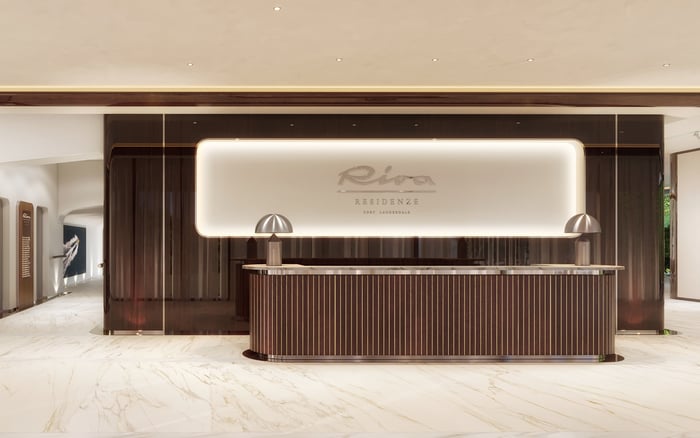
A full-service condominium can offer one of the most seamless security experiences when staffing, access, and hospitality are aligned. The appeal is not simply that someone is present at the entry. It is that the entire path from curb to residence feels observed, organized, and intentional without becoming theatrical.
For buyers who travel frequently or maintain multiple homes, this profile can be especially attractive. The residence continues to function while the owner is away, and daily arrivals can be handled with discretion. The key question is whether the building culture feels polished rather than procedural. Security should be present, but never the first emotional impression.
2. Boutique residence - fewer daily touchpoints
A boutique residence can appeal to buyers who prefer privacy through scale. Fewer homes can mean fewer encounters, quieter corridors, and a more legible rhythm of arrivals and departures. This profile suits owners who dislike the anonymity of very large buildings but still want a managed residential environment.
The best boutique setting is not merely small. It is thoughtfully controlled. Buyers should pay attention to entry sequence, guest handling, package management, parking access, and whether service circulation is separated enough to keep the residential experience serene.
3. Waterfront residence - privacy managed at the edge
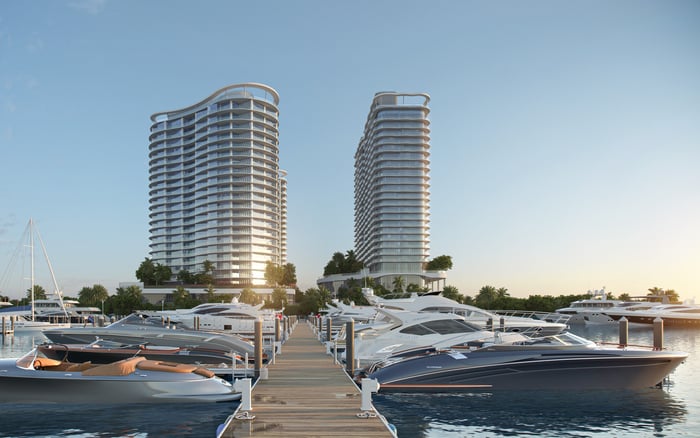
Waterfront living brings a special kind of beauty and a special kind of exposure. A secure waterfront residence balances views, terraces, boating lifestyle, and public-facing edges with careful transitions. The goal is to preserve openness while ensuring that access remains deliberate.
This profile is strongest for buyers who want light, water, and a resort-like mood without a residence that feels porous. Privacy depends on more than gates or cameras. It depends on how the home is oriented, how outdoor areas are framed, and how guests move through the property.
4. Gated-community home - perimeter softened by landscape
A gated-community home can give buyers a clear sense of threshold while still feeling residential and warm. The most refined examples avoid a hard perimeter by using landscape, setback, and architectural sequence to create privacy gradually. Arrival feels composed rather than defensive.
This profile may suit buyers who prioritize private garages, direct outdoor space, and a more traditional domestic rhythm. The advantage is control. The challenge is atmosphere. A buyer should look for a home where security measures support the architecture rather than dominate it.
5. New-construction residence - integrated access from the outset
New-construction residences can be compelling when security is integrated into the original plan rather than added later. In this profile, access points, elevators, parking, service areas, and resident circulation may be considered as part of the broader living experience.
The benefit is coherence. Security can feel less like equipment and more like choreography. For buyers, the important question is not whether a residence sounds technologically advanced. It is whether the systems are intuitive, discreet, and resilient enough to support daily life without friction.
The first test is arrival. A secure residence should make entry feel calm for the owner and clearly managed for everyone else. If the process feels awkward during a showing, it may feel even less graceful on an ordinary day. Watch how vehicles are received, how guests are identified, where service providers wait, and whether the building or home provides privacy without needless delay.
The second test is visibility. Security-minded buyers often focus on what can be locked, monitored, or controlled. Equally important is what can be seen. Consider the exposure of terraces, primary bedroom windows, pool areas, private entries, elevators, and parking paths. A residence that protects the most personal spaces through orientation and layout can feel more natural than one relying on conspicuous barriers.
The third test is service culture. In a luxury setting, security often depends on the human layer. A polished team understands discretion. They do not over-explain, over-engage, or turn private life into performance. The feeling should be one of quiet competence.
The most successful secure residences use design to make privacy feel inevitable. Landscaping, lighting, vestibules, recessed entries, controlled elevator access, and thoughtful interior planning all contribute. None needs to feel severe. In fact, the strongest security language is often gentle: a shaded arrival court, a layered lobby, a private lift landing, a terrace that opens toward the view rather than neighboring sightlines.
This is where luxury differs from simple protection. A fortress asserts separation. A refined residence creates it with proportion, sequence, and restraint. Buyers should ask whether the home feels better because of its privacy measures. If the answer is yes, security has been integrated at the level of design.
Fort Lauderdale buyers should also consider how the residence lives at different times of day. Evening arrivals, early departures, staff visits, deliveries, guest parking, marina or beach routines, and seasonal hosting can all reveal whether a property’s privacy plan is elegant or merely adequate.
A security-first purchase should still be a lifestyle-first purchase. Buyers should avoid overcorrecting into a home that feels isolated, dark, or difficult to use. The better strategy is to define non-negotiables, then search for residences that satisfy them quietly. That may mean controlled access, a staffed entry, private parking, a smaller resident population, or a layout that separates entertaining from family spaces.
Resale should remain part of the conversation. A residence that feels calm, private, and effortless will usually speak to a broader luxury audience than one that feels visibly defensive. The word to keep in mind is balance. Security should enhance the feeling of ownership, not narrow it.
For many buyers, the ideal Fort Lauderdale residence will not be the one with the most dramatic security language. It will be the one where protection is so well resolved that the owner stops noticing it.
Ask how residents, guests, staff, deliveries, and vendors move through the property. Ask what happens when the owner is away. Ask whether access can be managed without compromising hospitality. Ask how outdoor spaces are shielded from view. Ask whether the residence feels equally secure during quiet weekdays and high-traffic social moments.
Most importantly, ask whether the home still feels like a home. Security is a luxury only when it preserves ease.
Can a secure residence still feel warm and inviting? Yes. The best secure residences use layered design, staffing, and access control so protection feels natural rather than severe.
What is the first thing a buyer should evaluate? Arrival is the first signal. A calm, controlled entry often reveals how thoughtfully the rest of the residence is managed.
Are boutique residences better for privacy? They can be, especially when fewer homes translate into quieter circulation and more predictable daily movement.
Is waterfront living harder to secure discreetly? It can require more thoughtful planning because views, terraces, and water access create additional exposure points.
Does a gated community always feel more secure? Not always. The quality of the entry sequence, landscape, staffing, and home layout matters more than the gate alone.
Why is new construction relevant for security-focused buyers? When planned early, access control and circulation can be integrated into the residence instead of added visibly later.
Should buyers prioritize technology or staffing? Both can matter, but staffing and service culture often determine whether security feels discreet in daily life.
How can buyers avoid a fortress feeling? Look for privacy created through architecture, landscape, lighting, and circulation rather than imposing barriers.
What role does parking play in residential security? Parking affects daily exposure, guest flow, and the transition from public space to private living.
What is the best way to shortlist comparable options for touring? Start with location fit, delivery status, and daily lifestyle priorities, then compare stacks and elevations to validate views and privacy.
When you're ready to tour or underwrite the options, connect with MILLION.
If branded residences are on your mind — as a home or as an allocation — we would be glad to share what we are seeing, privately.
Begin a quiet conversation