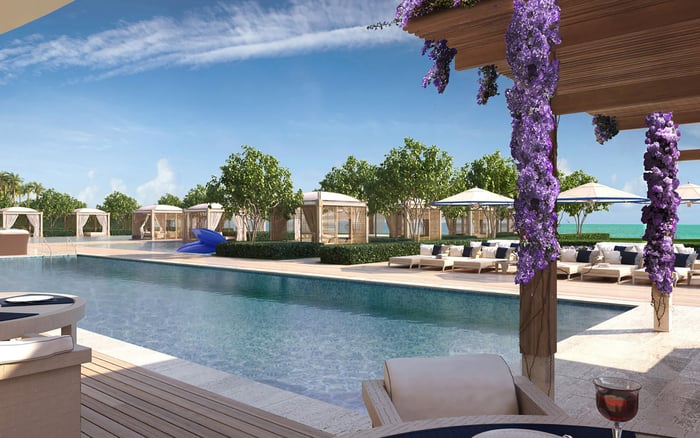
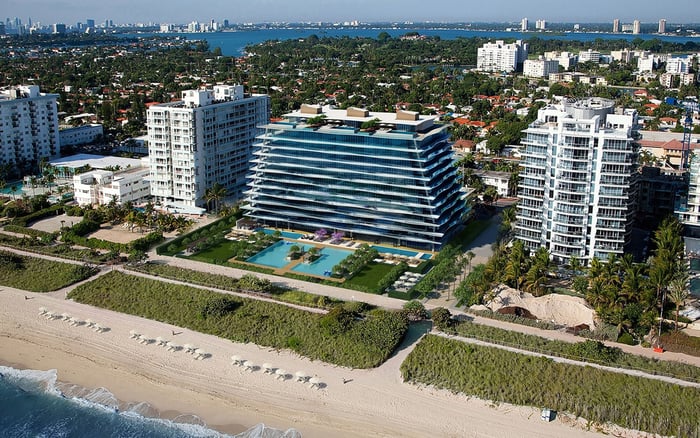
A discreet buyer’s comparison of Arte Surfside and Fendi Château Residences Surfside, focused on architectural individuality, branded formality, and long-term identity on the Surfside oceanfront.
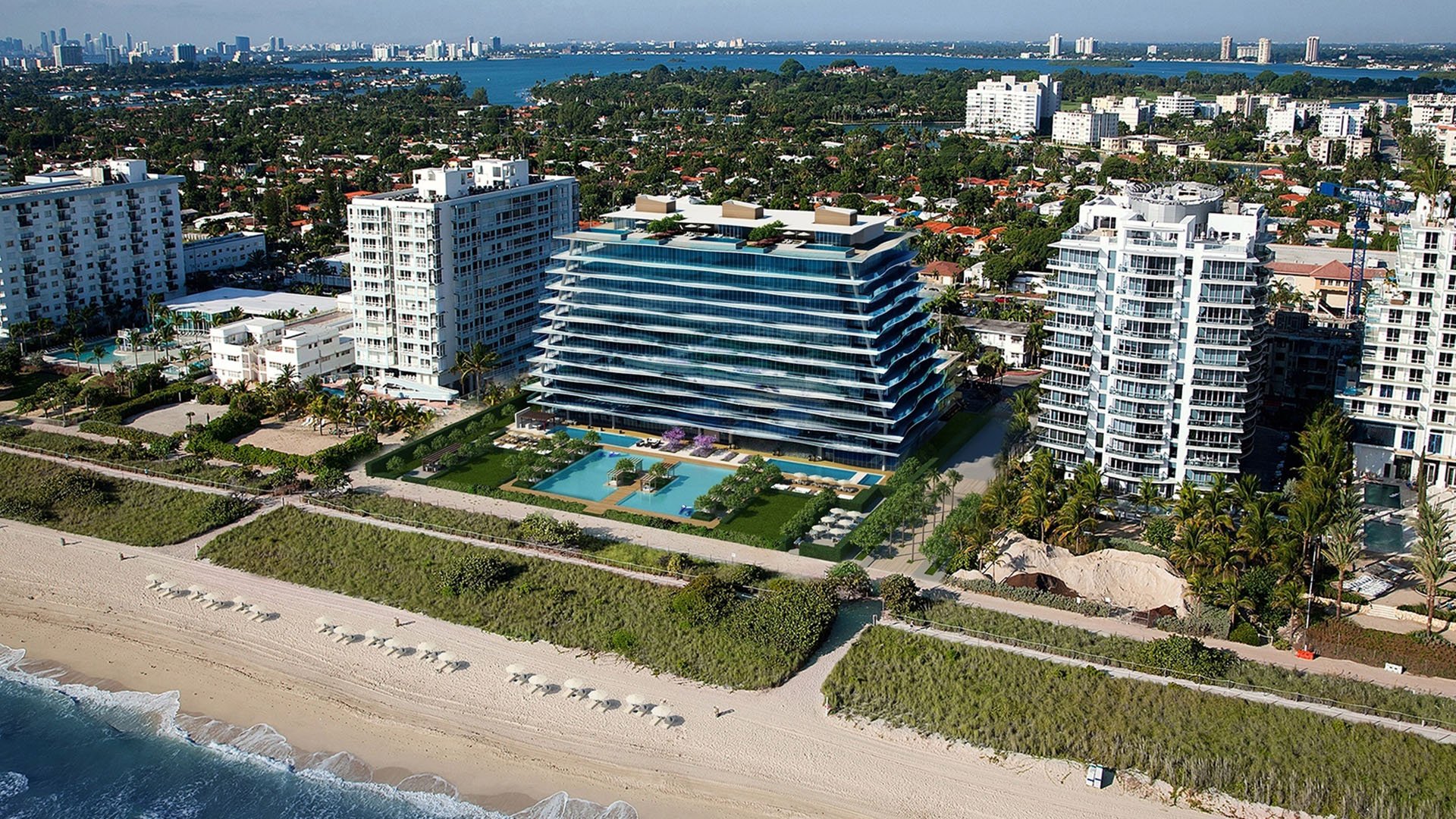
In Surfside, ultra-luxury real estate is rarely just about the view. The ocean is the constant. The more revealing question is how a residence expresses ownership: through architecture with its own authority, or through a globally legible luxury name that brings an established design language to the shoreline.
That is the essential tension between Arte Surfside and Fendi Château Residences Surfside. Both sit within Surfside’s rarefied oceanfront conversation, where privacy, design identity, and lifestyle positioning matter deeply. Yet they speak different dialects of luxury. Arte Surfside is best understood as the boutique-architecture proposition: singular, expressive, and rooted in the idea that the building itself can be the statement. Fendi Château Residences Surfside, by contrast, represents fashion-house formality: a residential interpretation of an established luxury universe, with the reassurance and social clarity that a global brand can provide.
For a buyer choosing between them, the decision is less about conventional comparison shopping and more about self-definition.
Arte Surfside appeals to the buyer who wants architecture to carry the emotional weight of the purchase. Its identity is framed around distinctiveness rather than affiliation, creative expression rather than brand translation, and a more individualized luxury narrative than one typically associated with branded residences.
The boutique reading of Arte is important. Boutique does not simply mean small in scale or intimate in atmosphere. Here, it suggests a disciplined focus on proportion, material authenticity, spatial experience, craftsmanship, and construction quality. The value proposition is architecture-led, which means the building’s perceived durability depends heavily on whether its design continues to feel specific, resolved, and meaningful over time.
That approach can be powerful on the sand. Arte’s luxury argument is site-specific, connected to the Surfside oceanfront rather than transferable to any luxury district in any global city. It is not selling a portable formula. It is offering the idea of a residence as an artistic statement, where form, materiality, and spatial rhythm become part of daily life.
For the collector, design patron, or buyer who resists obvious branding, that matters. Arte asks to be appreciated almost as an object of architecture. The ownership pleasure is tied to nuance: how the building sits in its setting, how materials age, how spaces feel, and how a singular design vision distinguishes the address from more codified luxury products.
Fendi Château Residences Surfside occupies the other side of the argument. Its appeal begins with the strength of an established luxury house and the translation of that brand ecosystem into an oceanfront residential setting. The identity is tied to associations of Italian craftsmanship, design sophistication, and heritage. For many buyers, that legibility is not superficial. It is part of the asset’s emotional and social value.
Where Arte leans into architectural authorship, Fendi Château leans into consistency. Its proposition is more codified and brand-consistent, offering recognizable luxury codes rather than an independent architectural statement. That can be precisely the point. The buyer is not only acquiring a residence; the buyer is entering a lifestyle language that has already been edited, refined, and made intelligible.
There is comfort in that formality. A fashion-house residence can reduce ambiguity for an owner who wants the home to communicate taste instantly. It can also create continuity between wardrobe, interiors, hospitality expectations, and the private experience of luxury. In this model, the brand does part of the narrative work.
The question is whether that brand assurance feels like depth or choreography. For the right owner, Fendi Château’s formality is an advantage: poised, recognizable, and anchored by a name with long-standing prestige. For another, it may feel less personal than a one-off architectural identity.
Surfside rewards restraint. Its luxury market is not defined by spectacle alone, but by a property’s ability to project confidence without noise. That is why design identity matters so much here. Buyers are not simply comparing floor plans or amenity promises; they are evaluating what a building says about them before anyone steps inside.
Within that context, Arte and Fendi Château sit among a small group of addresses that shape the area’s high-end residential vocabulary. Nearby names such as Eighty Seven Park Surfside, The Surf Club Four Seasons Surfside, and The Delmore Surfside reinforce how nuanced the Surfside conversation has become. Each name occupies its own position on the spectrum between architecture, service, brand, and place.
That spectrum is useful for buyers. It shows that Surfside is not monolithic. One buyer may want the quiet gravitas of architecture-first ownership. Another may want the established polish of a global hospitality or fashion association. Another may want an address whose identity is still forming in the market. What matters is not which language is universally superior, but which one will remain personally satisfying after the first season of ownership.
The Arte buyer is likely to value originality. This buyer may be less interested in overt labels and more interested in the feeling that the residence has been conceived as a complete artistic proposition. The perceived value is in singularity, materiality, and the belief that design distinctiveness can endure.
The Fendi Château buyer is likely to value recognition. This buyer may appreciate the reassurance of a name that arrives with built-in associations of taste, craft, and luxury heritage. The residence’s identity is supported by a broader brand world, which can be especially appealing to international owners or those who prefer their home to communicate refinement immediately.
Long-term identity also differs. Arte may age as an architecture-first collectible, with its appeal tied to the continued relevance of its design. Fendi Château’s identity is more directly connected to the ongoing prestige of the Fendi name. Neither path is inherently safer. They simply depend on different forms of confidence: confidence in architecture, or confidence in brand equity.
A practical buyer should begin with a simple question: when you imagine explaining the residence, what do you want to lead with?
If the answer is the building’s form, material logic, and the experience of inhabiting something distinctive, Arte Surfside is the more natural fit. Its appeal is intellectual as much as sensory. It rewards the owner who sees architecture as culture and wants the residence to feel specific to its place.
If the answer is the refinement of an established luxury house, Fendi Château Residences Surfside becomes more compelling. Its value is not only in design but in recognition, social signaling, and the ease of a luxury vocabulary that is already understood.
The sharper conclusion is that these two properties are not trying to win the same argument. Arte is for the owner who wants the building to be the signature. Fendi Château is for the owner who wants the signature to bring a world with it.
Is Arte Surfside more architecture-led than Fendi Château Residences Surfside? Yes. Arte Surfside is framed around boutique architectural identity, materiality, and a singular design vision rather than a global residential brand.
Is Fendi Château Residences Surfside considered a branded residence? Yes. Its positioning is tied to the Fendi brand ecosystem and the translation of fashion-house prestige into an oceanfront residential setting.
Which property feels more individualized? Arte Surfside is the more individualized proposition because its appeal centers on architectural distinctiveness and site-specific expression.
Which property offers stronger brand recognition? Fendi Château Residences Surfside offers stronger brand legibility through its connection to Fendi’s luxury heritage and recognizable design codes.
Does Arte Surfside depend more on design durability? Yes. Its market identity is architecture-led, so long-term appeal depends heavily on the distinctiveness and endurance of its design.
Does Fendi Château depend more on the Fendi name? Its long-term identity is more closely tied to the continued prestige of Fendi and the desirability of fashion-house residential branding.
Are both properties part of the Surfside ultra-luxury market? Yes. Both are positioned within Surfside’s high-end oceanfront residential market, where design identity and lifestyle meaning are central.
Which buyer is better suited to Arte Surfside? Arte is better suited to a buyer who values architecture as an artistic statement and prefers discreet individuality over branded formality.
Which buyer is better suited to Fendi Château? Fendi Château is better suited to a buyer who values recognizable luxury codes, brand assurance, and a polished fashion-house narrative.
Is one clearly better than the other? No. The stronger choice depends on whether the owner values one-off architectural identity or the reassurance of a global luxury brand.
For a confidential assessment and a building-by-building shortlist, connect with MILLION.
If branded residences are on your mind — as a home or as an allocation — we would be glad to share what we are seeing, privately.
Begin a quiet conversation