A discreet family-buyer guide to evaluating a wellness-oriented Brickell proposition through timing, daily routines, amenity credibility, school logistics, and resale discipline.
For family buyers considering House of Wellness Brickell, the most useful starting point is not whether wellness sounds desirable. It does. The sharper question is whether a wellness-led residential idea can support the daily architecture of family life in Brickell: school departures, evening returns, pediatric appointments, quiet sleep, active weekends, guests, grandparents, household staff, and the occasional need to disappear from the city without feeling cut off from it.
Because House of Wellness Brickell is best understood as a developing or conceptual proposition rather than a fully fixed, verified residential fact set, buyers should resist treating the name as a finished answer. The phrase should function as a due-diligence lens. What is being promised, what is merely implied, and what is essential to your household over the next five to ten years?
Brickell rewards precision. It is dense, convenient, polished, and increasingly lifestyle-driven, yet it is also a district where timing matters. Buying too early into a narrative can mean absorbing uncertainty. Buying too late can mean paying for momentum after the market has already priced it in.
In luxury real estate, district momentum often describes an area’s rising profile: better restaurants, stronger design language, deeper services, more polished public spaces, and a broader buyer base. For families, momentum has a more practical definition. It means the neighborhood is becoming easier to live in without improvisation.
A family should ask whether the district’s next stage will reduce friction or simply add glamour. Will the immediate environment support predictable drop-offs and pickups? Will traffic patterns work on school mornings, not just on a quiet Sunday? Will children have safe, intuitive routes through the building and neighborhood? Will service access be discreet enough for a staffed household? Will the residence remain calm during peak hospitality hours nearby?
Brickell can be compelling because it compresses convenience. The same compression, however, can create competing rhythms. Office life, dining, nightlife, hotel energy, visitor traffic, and residential privacy all meet in a small geography. The family buyer’s task is to decide whether wellness branding is strong enough, operationally and architecturally, to create a private rhythm inside that intensity.
Timing is not only about delivery. It is about the point at which a buyer’s life, a building’s maturity, and a district’s evolution intersect. A family moving with young children may value certainty more than speculative upside. A family buying for future use may tolerate a longer arc if the long-term position feels durable.
Before committing, ask what is known now and what must still become clear. Is the residential program defined enough to compare against other new-construction options? If the opportunity is pre-construction, what are the decision points that could materially affect family life, including amenity scope, access protocols, parking, service circulation, and residence mix? What happens if the district improves, but not in the way your household expected?
A disciplined buyer should also separate personal timing from market timing. A residence can be strategically early for investment purposes yet inconvenient for a household that needs immediate ease. Conversely, a building may be less speculative but far better aligned with school calendars, care routines, and family travel patterns.
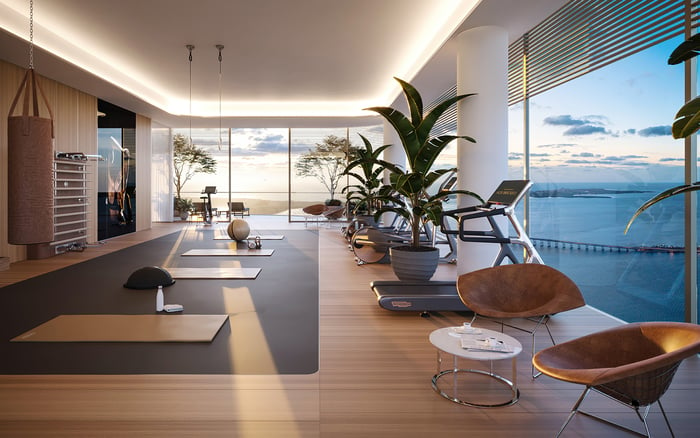
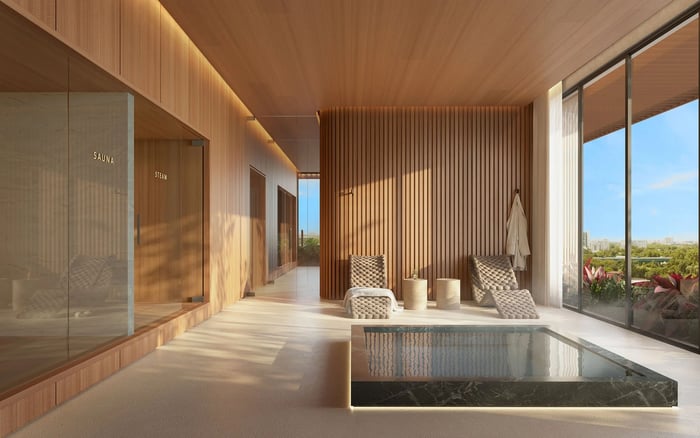
For a family, wellness is not a scent in the lobby or a beautiful spa photograph. It is the invisible system that makes daily life feel less abrasive. The most valuable wellness attributes are often the least theatrical: acoustics, elevator reliability, air quality strategy, circulation privacy, natural light, storage, water access, recovery spaces, children’s routines, and the ability to use amenities without scheduling life around them.
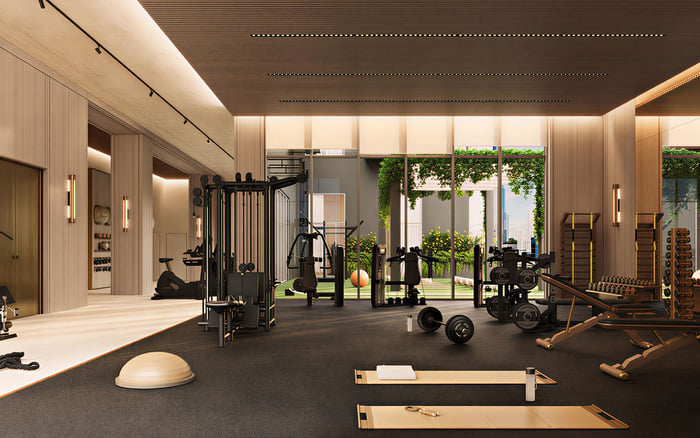
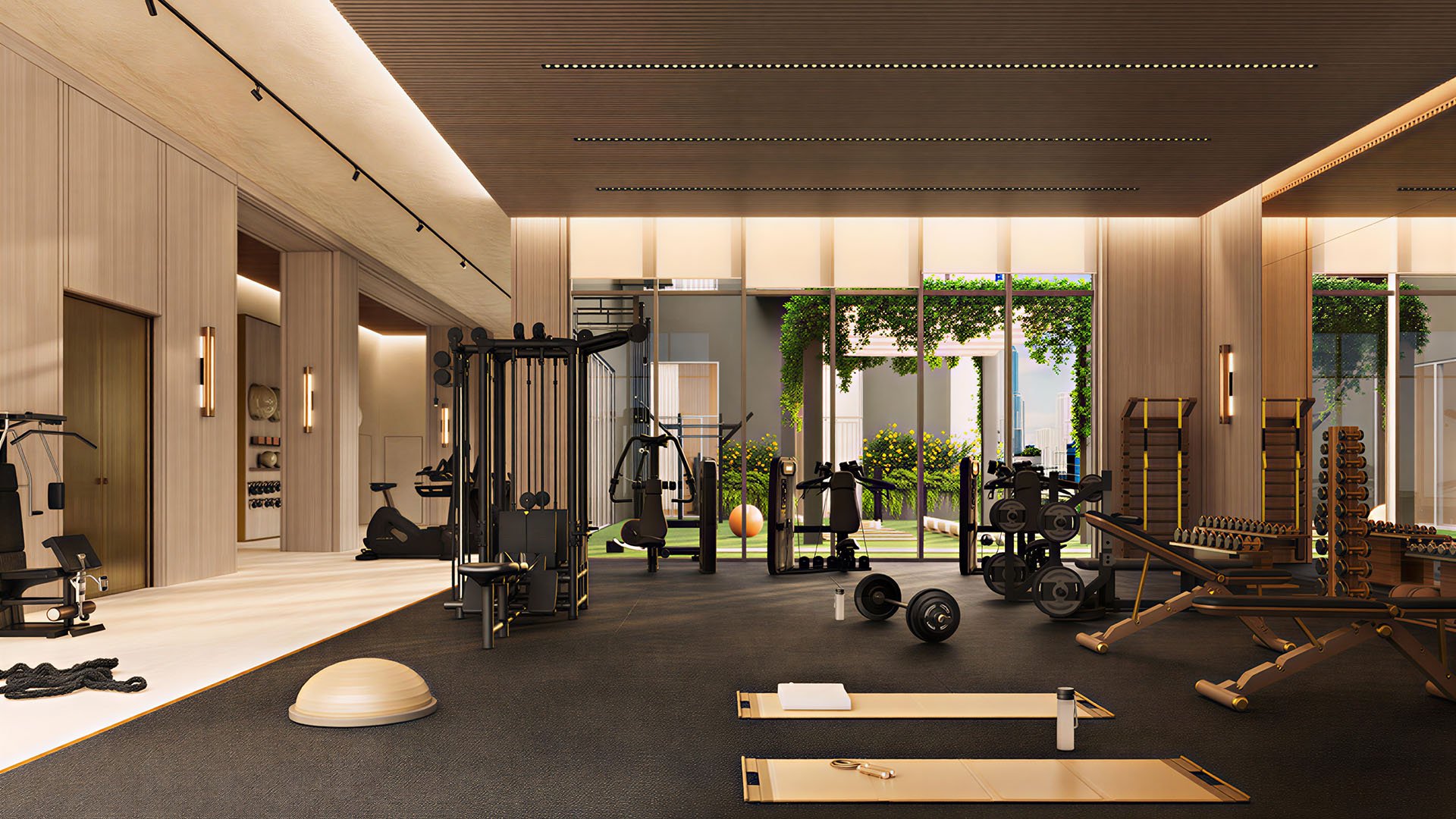
A serious buyer should ask how the wellness experience will be governed. Who controls access? Are children welcome in specific areas, or will the atmosphere be adult-only in practice? Is the pool conceived as a social centerpiece, a lap-oriented amenity, a family zone, or a resort statement? Are fitness and recovery spaces sized for peak-hour use? Will residents be able to maintain routines during high season?
The answer matters because families use buildings differently from occasional second-home owners. They arrive with backpacks, sports gear, tutors, grandparents, pets, groceries, and staff logistics. Wellness that cannot absorb those realities may be beautiful but fragile.
For many ultra-premium families, school choice drives residential geography as much as views or architecture. In Brickell, the private-school question should be addressed through real routes, not abstract proximity. A destination may appear convenient on a map, yet the daily experience can change materially depending on departure time, bridge conditions, parking protocols, and after-school activities.
The most refined approach is to build a weekday simulation before signing. Test the morning route. Test the return at peak hour. Consider what happens when one child is ill, another has practice, and a parent has an evening commitment. If a driver or household manager is involved, ask where vehicles stage and how the building handles repeated short stops.
A wellness-oriented building should make these movements feel composed, not improvised. The family buyer should view transportation, school access, and service choreography as part of the wellness promise, even if they are not presented that way in marketing language.
Brickell’s luxury housing is often vertical, which means the residence itself must do more work. Families should study the floor plan with unusual honesty. Are secondary bedrooms genuinely usable as children grow? Is there separation between entertaining and sleeping zones? Can a home office function during school breaks? Is there a place for a tutor, nanny, visiting relative, or wellness practitioner without compromising family privacy?
The best family residences in dense districts create a sense of internal calm. They allow children to live normally without turning the home into a compromise. They allow adults to entertain without exposing the private wing. They give household staff clear paths. They provide storage that acknowledges real life.
A wellness name does not replace these fundamentals. If the plan is weak, the amenity deck cannot rescue it. If the plan is strong, wellness programming can deepen the value proposition.
Every desirable district carries a premium. The question is whether that premium reflects current utility, future expectation, or branding. In Brickell, family buyers should identify which portion of the price is tied to lifestyle credibility today and which portion depends on continued district evolution.
If the premium is mostly future-facing, patience and leverage matter. If the premium is supported by immediate convenience, privacy, and daily usability, the case may be stronger. Buyers should also compare the residence against alternatives outside Brickell, including quieter enclaves, waterfront settings, and established family neighborhoods, without assuming one lifestyle is automatically superior.
The right decision is not always the most obvious. Some families thrive in Brickell because they want proximity, services, dining, work access, and a polished urban rhythm. Others discover that their version of wellness requires more space, less density, or a different relationship to water and schools.
Before treating House of Wellness Brickell as a serious candidate, families should ask a compact set of direct questions. What is the wellness program in operational terms? What will be reserved, shared, supervised, or restricted? How will children interact with the amenity environment? How will the building protect quiet in private residences? What is the plan for arrivals, valet, deliveries, staff, and guests?
Then ask the timing questions. What must be decided now? What can wait? Which unknowns would change the purchase decision? How does the expected timeline align with school years, relocation plans, liquidity, and broader family commitments?
The strongest buyers are not skeptical for sport. They are precise because precision protects lifestyle.
Should family buyers treat House of Wellness Brickell as a confirmed finished concept? Buyers should treat it as a wellness-oriented idea that deserves careful verification before relying on any specific program, timing, or amenity promise.
What is the most important timing question for a family? Ask whether the residence will be useful when your household needs it, not merely whether the district may be more valuable later.
How should buyers evaluate Brickell district momentum? Focus on daily ease, privacy, routes, and services, rather than assuming that new energy automatically improves family life.
Does wellness branding guarantee better resale strength? No. Resale depends on execution, location, floor plan quality, buyer demand, and whether the wellness concept remains credible over time.
Why does private-school access matter in this decision? School routines can define the weekday experience, so buyers should test real routes and timing before committing.
Is a pool enough to support a wellness claim? No. A pool can be valuable, but wellness should also include operations, privacy, acoustics, circulation, and routine usability.
How should families compare new-construction and pre-construction options? New-construction may offer more certainty, while pre-construction may offer earlier positioning but requires greater tolerance for unknowns.
What floor plan features matter most for families in Brickell? Look for bedroom separation, storage, service flow, quiet sleeping areas, and flexible rooms for work, guests, or care.
Can Brickell work for families with young children? It can, if the building, routes, residence layout, and service model support the household’s daily rhythm.
What should buyers do before making a commitment? Build a written checklist of must-have operational details, then compare the opportunity against both urban and quieter alternatives.
For a confidential assessment and a building-by-building shortlist, connect with MILLION.
If branded residences are on your mind — as a home or as an allocation — we would be glad to share what we are seeing, privately.
Begin a quiet conversation