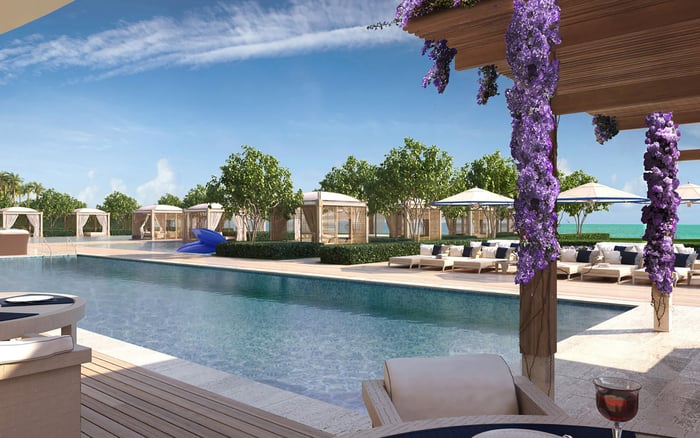
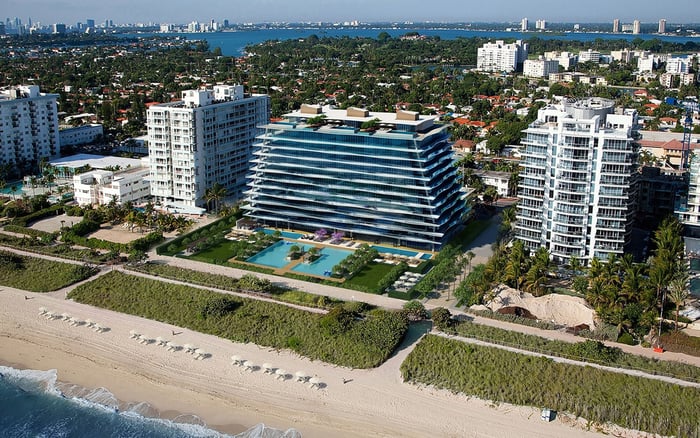
A discreet comparison of Arte Surfside and Fendi Château Residences Surfside for buyers weighing collector-focused flexibility against branded Italian design on the oceanfront.
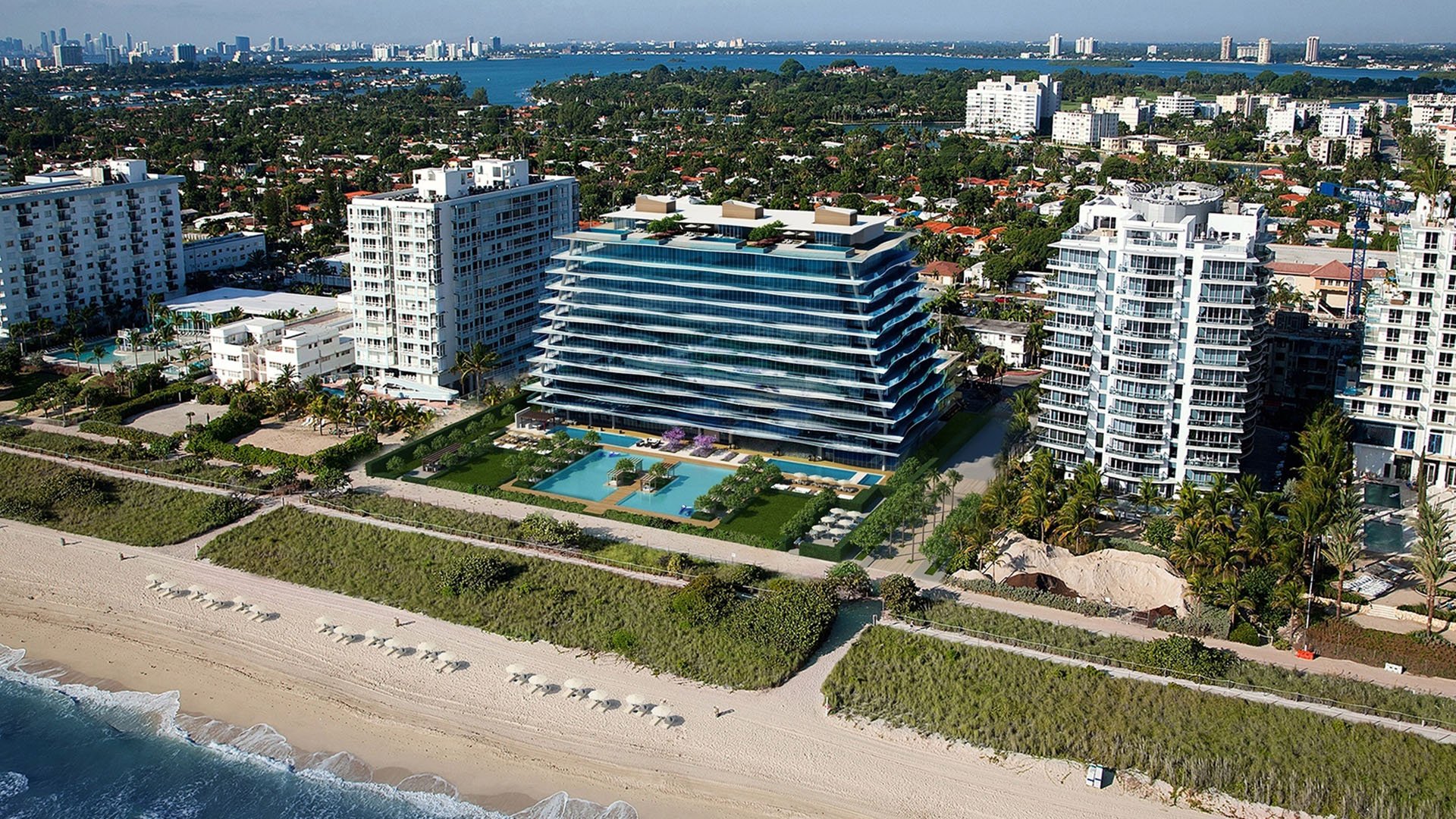
In Surfside, luxury is rarely about spectacle alone. The strongest oceanfront residences speak in quieter registers: proportion, privacy, light, materiality, and the degree to which an owner can impose a personal vision. That is why the comparison between Arte Surfside and Fendi Château Residences Surfside is less a conventional building-versus-building contest than a question of authorship.
Arte Surfside reads as the more contemporary, gallery-minded option, with a design posture that favors architectural distinction, refined materials, and residences that can function as curated environments for art, furniture, and design collections. Fendi Château Residences Surfside, by contrast, is shaped by the prestige of a fashion and interiors universe, translating the Fendi identity into a branded residential setting.
For the ultra-premium buyer, the distinction matters. One residence may feel like a canvas awaiting a collector’s eye. The other may feel like a completed design statement, already carrying the confidence of Italian luxury codes.
Arte’s appeal begins with its relative openness. Its design language is contemporary, clean, geometric, and oriented around expansive glass. The effect is a residence able to accommodate strong personal direction, particularly for owners who want to build rooms around important artworks, collectible furniture, or a highly specific interior vocabulary.
This is the logic of the collector’s home: the residence should not compete too aggressively with the collection. It should frame it, protect it, light it, and allow it to evolve. Arte is therefore well suited to buyers who want architectural presence without a heavily prescriptive branded interior narrative.
Fendi Château takes a different approach. Its design positioning is more fashion-influenced, with emphasis on material quality, proportion, and decorative refinement. The value proposition is not neutrality. It is authorship. Buyers are drawn to the idea that the residence belongs to a recognizable design universe, one tied to Italian luxury, heritage, and brand consistency.
For some owners, that coherence is exactly the point. A branded residence can reduce ambiguity, creating an environment where finishes, atmosphere, and lifestyle cues feel intentionally aligned. For others, especially design collectors who prefer to commission, edit, and reinterpret, that same coherence may feel less flexible.
Oceanfront living in Surfside is not merely about a view. It is about how the view enters daily life. Both Arte and Fendi Château benefit from Atlantic exposure and the private residential character that defines this stretch of coastline. The ocean becomes a spatial anchor, a calming presence, and a form of luxury that does not need to announce itself.
Arte treats the ocean view as a core architectural feature. Large glass areas and open interior planning help connect the residence to the beachfront setting, supporting the sense of living inside a carefully edited frame. For collectors, this can be powerful: art, furniture, architecture, and horizon line become part of one composition.
Fendi Château integrates the oceanfront setting into a broader lifestyle package. The beach is central, but it is not the only narrative. The residence is also about the polish of a branded environment, where design prestige, residential comfort, and coastal living are intended to feel cohesive.
Privacy is a defining consideration for both properties. In this context, privacy should be understood as an experience rather than a checklist of unverified features. The relevant question is whether the buyer prefers boutique discretion and architectural individuality, or a full-service atmosphere shaped by recognizable design prestige.
Surfside occupies a rare position in South Florida’s luxury map. It offers oceanfront living with a more residential tone than many resort-driven beach districts, while remaining connected to the broader design, dining, and cultural orbit of Miami Beach and Bal Harbour. That makes Surfside especially attractive to buyers who want calm without detachment.
Within that context, comparisons often extend beyond two buildings. A buyer studying Arte and Fendi Château may also look at The Delmore Surfside for another expression of Surfside luxury, or consider The Surf Club Four Seasons Surfside as a reference point for service-led oceanfront prestige. Those references do not replace the Arte versus Fendi question, but they sharpen the buyer’s priorities.
A more architecture-focused buyer may also keep Eighty Seven Park Surfside in mind when evaluating how contemporary design, landscape, and coastal restraint can shape the feeling of an address. In each case, the most important question is not which project is most visible. It is which one best supports the owner’s way of living with design.
Arte Surfside is strongest for owners who want to lead the design conversation themselves. These are buyers who may arrive with established collections, trusted interior designers, or a desire to create rooms that change over time. They may prefer fewer visual constraints, cleaner geometry, and the feeling that architecture is a disciplined frame rather than the final word.
That does not mean Arte lacks identity. Its identity is rooted in contemporary restraint, material refinement, and ocean-facing openness. But its comparative strength is that it leaves room for the owner’s eye. For a collector, that can be more valuable than decorative completeness.
The Arte buyer may be someone who thinks in terms of wall planes, sightlines, natural light, and the relationship between a sculpture and the sea. This buyer is likely to value discretion, individuality, and a residence that can become more personal over time.
Fendi Château Residences Surfside is strongest for buyers who want a residence with a defined design lineage. The connection to Fendi’s luxury fashion and interiors identity gives the property an immediate narrative. For the right buyer, that narrative is not limiting. It is reassuring.
This owner may prefer a cohesive environment where the brand’s aesthetic logic influences the feeling of arrival, the visual rhythm of interiors, and the broader lifestyle atmosphere. Rather than beginning with a blank canvas, the buyer begins with a curated world.
Fendi Château’s appeal is particularly clear for those who value brand authorship and design prestige. It suits an owner who wants oceanfront privacy, but also wants the residence to communicate taste through an established luxury language.
The better choice depends on who should have the final design voice. If the owner’s collection, designer, or personal aesthetic is meant to define the residence, Arte Surfside has the advantage. Its contemporary, gallery-like positioning makes it especially compelling for buyers who want flexibility and architectural individuality.
If the buyer wants the confidence of a branded Italian design environment, Fendi Château Residences Surfside becomes the more natural fit. Its value is not in acting as a neutral vessel, but in offering a cohesive residential world shaped by fashion-house identity.
Both properties speak to Surfside’s core appeal: oceanfront privacy, residential discretion, and a refined alternative to more public resort-style environments. The decision is not about which address is more luxurious. It is about whether luxury should be personally composed or expertly authored.
Is Arte Surfside better for art collectors? Arte is the stronger fit for buyers who want a flexible, gallery-like residence that can be personalized around art, furniture, or design collections.
Is Fendi Château Residences Surfside more design-led? Yes, Fendi Château is more explicitly shaped by a branded design identity tied to Italian luxury, fashion, and decorative refinement.
Which property feels more private? Both serve buyers seeking discretion, but Arte may appeal more to those prioritizing boutique individuality, while Fendi Château suits those wanting polished service-led prestige.
Are both properties oceanfront? Yes, both are positioned around Surfside’s oceanfront lifestyle, with Atlantic exposure central to the residential experience.
Which is better for a highly customized interior? Arte is better suited to owners who want to personalize interiors around a specific collection or design vision.
Which is better for a buyer who wants a finished aesthetic? Fendi Château is better for buyers who prefer a cohesive, brand-led interior identity rather than a blank canvas.
Does this comparison include pricing? No current pricing, HOA fees, unit availability, or resale performance should be assumed without verified transaction-level guidance.
Why does Surfside matter in this comparison? Surfside offers a quieter oceanfront residential setting, making privacy and design feel more central than resort-style visibility.
Is Fendi Château only about branding? No, its appeal also includes material refinement, proportion, and the lifestyle confidence of a curated residential environment.
What is the simplest way to choose between them? Choose Arte if the owner’s collection should lead; choose Fendi Château if the residence’s branded design authorship should lead.
For a discreet conversation and a curated building-by-building shortlist, connect with MILLION.
If branded residences are on your mind — as a home or as an allocation — we would be glad to share what we are seeing, privately.
Begin a quiet conversation