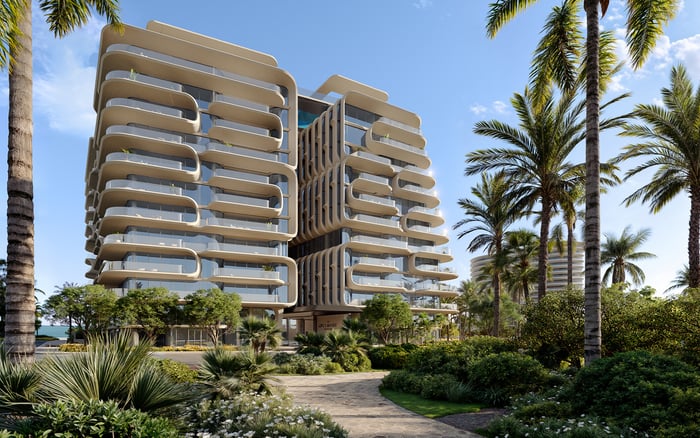
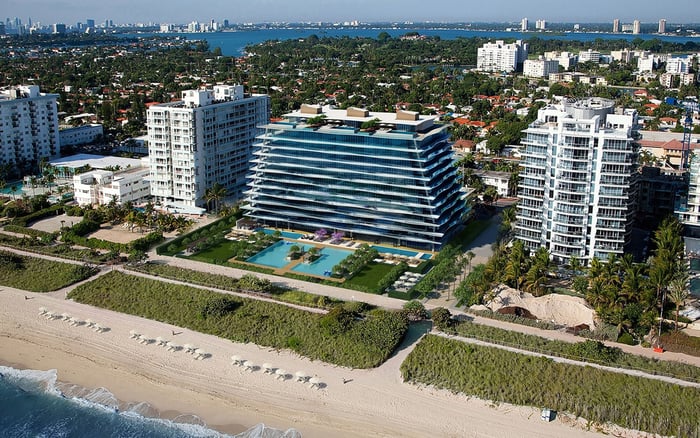
A discreet buyer’s guide to how Fendi Château Residences Surfside fits owners seeking beachfront privacy, branded service, and seasonal lock-and-leave ease rather than frequent rental turnover.
Fendi Château Residences Surfside occupies a rare category of South Florida condominium ownership: oceanfront, branded, intimate, and shaped more by private residential life than transient occupancy. For the buyer considering a lock-and-leave home, the essential question is not simply whether the residence can be rented. It is whether the building’s character, service model, and rental culture align with the way the owner expects to use the property.
That distinction matters. A beachfront condominium can serve as a second home, a legacy holding, a seasonal base, or an income-oriented asset. Fendi Château Residences Surfside is best understood through the first three lenses. Its appeal rests on privacy, design, beachfront access, and the comfort of returning to a serviced residence that feels composed after months away.
Rental language should therefore be treated carefully. Specific leasing rules, minimum rental periods, approval procedures, and association policies should be verified directly through the condominium documents, current association guidance, or counsel before a buyer underwrites income. What is clearer is the lifestyle fit: this is not a building whose identity depends on frequent short-term rentals.
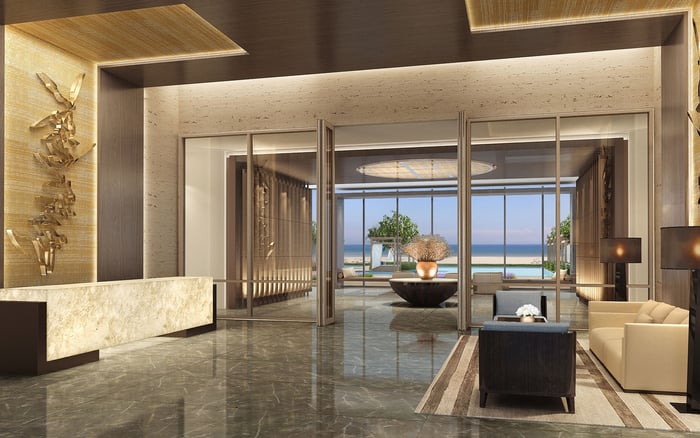
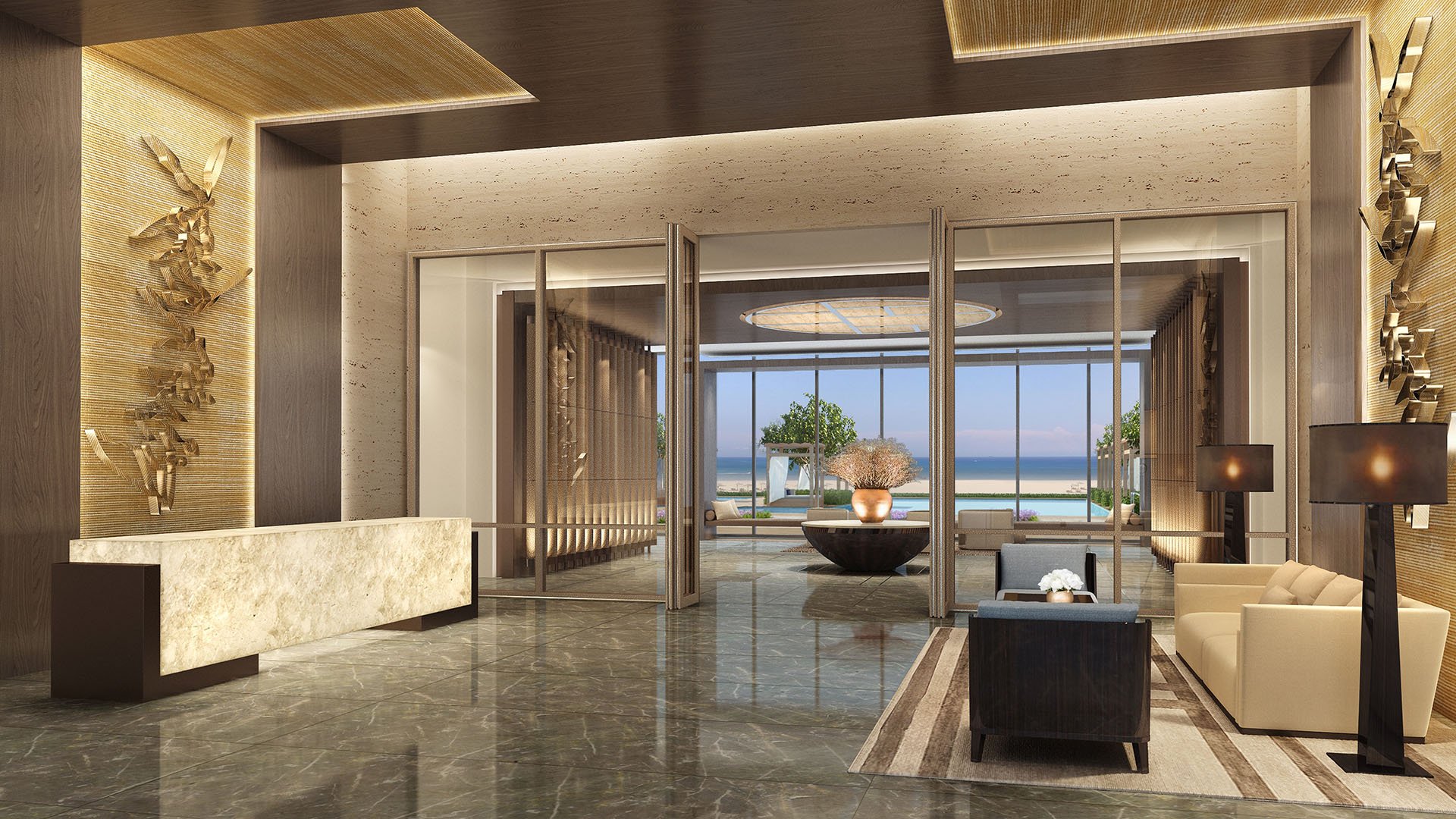
Fendi Château is positioned as an ultra-luxury, design-driven residential building on the sand in Surfside. Its identity is inseparable from the Fendi brand, not merely as a decorative association, but as a signal of curated interiors, bespoke finish sensibility, and a more composed version of Miami beachfront living.
The building is described as lower-density and more intimate than many high-rise condominium towers across South Florida. That lower-density character is central to the ownership proposition. It suggests fewer arrivals, quieter circulation, and a sense of recognition that can be difficult to preserve in larger resort-style towers.
Residences are described as expansive, with large floor plates suited to full-time or seasonal living. Deep terraces, high ceilings, extensive glass, and generous great rooms reinforce the idea that these homes are meant to be lived in graciously rather than occupied briefly. Private or semi-private elevator access also supports the privacy profile many luxury buyers in Surfside value.
This is where the word boutique becomes more than marketing. In a boutique oceanfront setting, the building’s greatest asset is often continuity: familiar staff, controlled access, stable neighbors, and a calm residential rhythm. Oceanfront living may sell the view, but discretion preserves the value of the experience.
For a lock-and-leave buyer, the premium is not only the residence. It is the confidence that the property can sit quietly, be maintained professionally, and welcome the owner back without friction. That is the core of Fendi Château’s fit for seasonal ownership.
The building’s service concept is framed closer to a boutique five-star branded residence than a typical Miami condominium. For owners who travel frequently, maintain homes in multiple markets, or use Surfside as a winter base, that service orientation can matter more than maximum leasing flexibility. Security, professional property management, and a high-touch residential environment create the emotional permission to leave the home behind.
This is also where conservative rental restrictions, if applicable, may support rather than diminish the ownership case. A building with fewer transient occupants can feel calmer, more private, and more consistent. Elevators, amenities, valet areas, and beachfront access tend to operate differently when residents and long-stay guests define the culture.
Second-home buyers should examine whether the lock-and-leave benefit is being valued properly. If the objective is to own a private Surfside residence with the ability to arrive effortlessly, host family comfortably, and preserve a quiet beachfront routine, then rental-income flexibility is secondary. If the objective is frequent turnover or aggressive yield, the buyer may be looking at the wrong type of asset.
The phrase rental-restriction fit should not be read as a warning. It is a compatibility test. A building can be excellent and still be wrong for a buyer whose financial model relies on high-frequency leasing. Conversely, a building with a more residential orientation can be ideal for an owner who wants long-term value, privacy, and predictable use.
Fendi Château’s best-fit profile appears to favor owners prioritizing quiet enjoyment and stable residential character. That does not make every rental scenario irrelevant. Long-term rentals may still matter to some owners, especially those who use the residence seasonally and want flexibility during extended absences. But the diligence should begin with documents, not assumptions.
A careful buyer should ask for the current rental minimums, association approval process, guest registration requirements, move-in rules, insurance implications, and any limits on frequency. The answers may influence carrying-cost strategy. They should not be improvised after contract.
There is also a social dimension. Ultra-luxury buildings are ecosystems. A buyer is purchasing not just square footage and views, but the daily behavior of the property. If the owner values privacy at the elevator, quiet on the terrace, and familiar faces in common areas, a more restrictive rental environment can reinforce the reason for buying.
The best-fit buyer for Fendi Château is likely a principal user, seasonal owner, or family seeking a refined Surfside base with beachfront access and strong privacy cues. This buyer values the branded-residence concept, appreciates design continuity, and wants a home that feels complete without depending on hotel-like turnover.
The building also suits owners who prefer larger residences over compact pied-à-terre formats. Expansive floor plates, deep terraces, and generous great rooms are particularly relevant for families who entertain privately or spend meaningful time in residence. The property is not simply a place to sleep near the beach. It is designed as a full residential environment on the ocean.
For investors, the question is more nuanced. A buyer seeking long-hold appreciation, scarcity, and residential quality may find the building’s quiet posture attractive. A buyer focused on frequent rental income should be cautious until the governing documents and current association rules are fully understood.
In South Florida’s luxury market, the most durable buildings often know exactly what they are. Fendi Château’s message is not volume. It is privacy, branded design, beachfront presence, and a stable residential atmosphere in Surfside.
Begin with the condominium documents and current association guidance. Confirm rental minimums, the number of leases permitted per year, approval timelines, deposits, application requirements, guest policies, and any restrictions that may affect family use or staff access.
Next, compare the written rules with the building’s lived culture. Rules define what is permitted. Culture defines what feels appropriate. In a privacy-focused, lower-density building, an ownership pattern centered on constant guest rotation may be technically possible in some cases but still misaligned with the property’s identity.
Finally, underwrite the purchase around the primary use case. If the residence is meant to be a lock-and-leave sanctuary, value service, security, maintenance, and ease of return. If it is meant to operate as an income asset, insist on verified rental terms before assigning revenue assumptions.
The most sophisticated buyers do not ask whether Fendi Château is flexible enough for every strategy. They ask whether its particular strengths match their own life.
Is Fendi Château Residences Surfside an oceanfront condominium? Yes. It is positioned as an oceanfront condominium project in Surfside, Miami-Dade County.
Is the building more residential or resort-like? Its profile is more private, design-driven, and residential than mass-market resort condominium living.
Does Fendi branding matter for buyers? Yes. The Fendi association shapes the building’s identity through curated interiors, bespoke finish sensibility, and branded-residence positioning.
Is this a good lock-and-leave option? It can be a strong fit for buyers who value security, service, property management, and a quiet return experience.
Are the rental restrictions confirmed? Specific rental rules should be verified through condominium documents, association guidance, or legal review.
Is it ideal for frequent short-term rental use? The building appears better aligned with privacy and stable residential character than frequent short-term turnover.
Who is the strongest buyer fit? Principal users, seasonal owners, and families seeking a refined Surfside beachfront residence are the clearest fit.
Why does lower density matter? Lower density can support privacy, quieter circulation, and a more consistent residential atmosphere.
What residence features support seasonal living? Expansive floor plates, deep terraces, large great rooms, high ceilings, extensive glass, and private or semi-private elevator access all support longer stays.
What should buyers verify before contract? They should confirm rental minimums, approval procedures, guest policies, insurance implications, and current association requirements.
When you're ready to tour or underwrite the options, connect with MILLION.
If branded residences are on your mind — as a home or as an allocation — we would be glad to share what we are seeing, privately.
Begin a quiet conversation