A discreet, buyer-oriented look at what “private wine cellar” can realistically mean in new Coconut Grove luxury towers, and how Vita at Grove Isle and The Well Coconut Grove may differ in execution.

In South Florida’s ultra-premium market, “private wine cellar” has become shorthand for connoisseur living-but sophisticated buyers know the phrase can signal several very different realities. A cellar might be a glass-enclosed display integrated into a living area, a temperature-stable room hidden behind millwork, or a building-managed private locker designed for long-term preservation. Each can be legitimate; each performs differently.
Against that backdrop, comparing Vita at Grove Isle with The Well Coconut Grove is less about which building “has wine” and more about how a residence can integrate collection-grade storage responsibly within the broader promise of luxury: discretion, durability, and daily ease.
Because publicly disclosed details on specific wine programs can evolve during design development, the most reliable approach is to evaluate the architecture and operations that make wine storage work, then map those requirements onto each project’s lifestyle positioning.
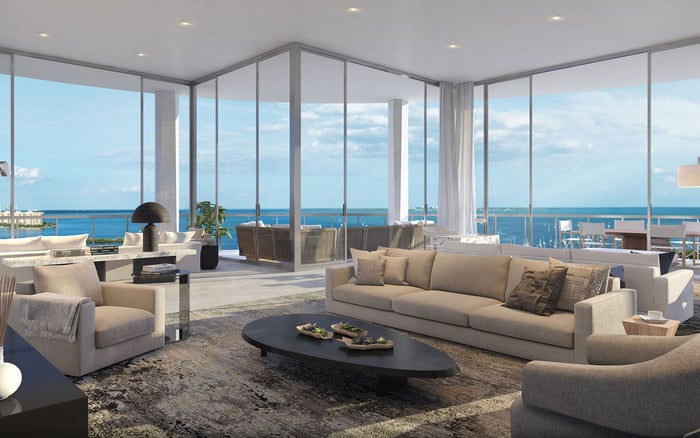
Vita at Grove Isle reads as a privacy-first proposition. Grove Isle itself signals separation from the city’s tempo: gated arrival, water on multiple sides, and a residential rhythm that tends to favor quiet ownership over constant activation. In that context, wine storage is typically expected to be personal and within the residence. The “cellar” becomes part of the home’s interior architecture-adjacent to entertaining spaces-and designed to read as bespoke cabinetry rather than an amenity.
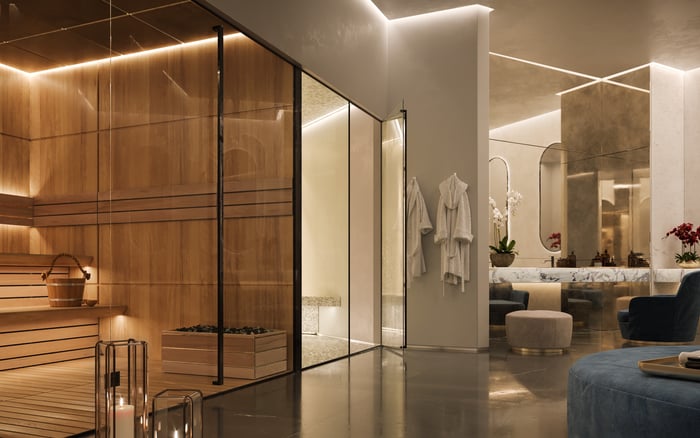
The Well Coconut Grove, by contrast, is framed by a wellness-forward narrative. In many wellness-led luxury buildings, storage decisions are influenced by the overall program: air and water quality goals, material choices, and a desire for calm, clutter-free interiors. In that environment, private wine storage can still be a priority, but it is often optimized around precise conditions and low-friction access rather than showmanship. When wine is treated as a collectible that belongs in stable conditions, the “private” component may be in-residence or building-managed, depending on the operational model.
The practical implication for buyers: Vita’s value case may naturally favor a home that wears its hospitality on the inside, while The Well’s value case may favor a home that feels edited, serene, and operationally supported.
Before comparing aesthetics, evaluate performance. Wine does not care about brand names; it cares about physics.
Thermal stability and humidity control.
A proper cellar maintains a narrow temperature band and stable humidity. If a “wine room” is simply a cooled cabinet without humidity control, cork integrity and label condition can suffer over time.
Vibration management.
Mechanical rooms, elevator cores, and even certain appliance placements can introduce vibration. A cellar designed for aging should minimize vibration transfer through floor assemblies and millwork.
Envelope and insulation.
A glass display wall can be stunning-but unless it is correctly specified, it becomes a weak point in the thermal envelope. Look for insulated assemblies, sealed doors, and detailing that prevents condensation.
Power resilience.
In South Florida, storm-readiness is not theoretical. Ask how cooling is supported in outages-whether through building systems, owner-installed solutions, or operational protocols. Wine storage is only as strong as its worst day.
Security and privacy.
“Private” should mean controlled access, especially if the cellar is visible from entertaining areas or accessible during in-home staffing.
These criteria are the baseline for evaluating both Vita and The Well, regardless of how the amenity is presented.
For buyers who entertain at home, the most satisfying wine program is the one that lives where the evening happens. Vita’s island setting and luxury positioning make a compelling case for wine storage as part of the residence’s architectural language: a dedicated room, a concealed enclosure behind paneling, or a glass-edged vignette that frames a dining experience.
The best executions in this category feel inevitable-resolved early, not forced in late. Electrical runs, drainage planning (when needed for humidification systems), and millwork proportions are addressed upfront so the cellar doesn’t become an afterthought fighting for space.
What to ask for, specifically:
Whether a true, enclosed cellar is feasible in your preferred stack without compromising livable area.
How the design manages heat rejection from cooling equipment.
Whether the location is buffered from vibration sources like elevator banks or heavy mechanical zones.
If your lifestyle is weekends on the water, intimate dinners, and a preference to keep your collection close, in-residence storage aligns naturally with the kind of discreet ownership that Grove Isle tends to attract.
In a wellness-forward building, a private wine cellar can sound like a paradox-until you frame it correctly. Wellness is often about intentionality. The question becomes less “Do I have more bottles on display?” and more “Can I preserve what I own in the cleanest, most stable way, without adding noise to my home?”
That translates to three buyer priorities:
A quieter interior.
Some owners prefer wine storage that doesn’t visually dominate the living space. A concealed cellar or compact, high-performance setup can be the luxury move, especially when the design goal is calm.
Operational confidence.
Wellness-led properties often emphasize building systems and experience management. If private storage exists beyond the residence, it can appeal to collectors who want stable conditions without dedicating prime interior square footage.
Material compatibility.
A wellness lens can shape finishes, adhesives, and ventilation strategies. For wine rooms, that can dovetail with the goal of avoiding odors, off-gassing, and moisture issues.
If your priority is a highly curated home with a strong “hotel-level” operational feel, The Well’s conceptual framework may suit a different kind of collector-one who values preservation and ease over theatricality.
When buyers say “private wine cellar,” they often mean one of two things.
Display cellar (entertaining-first).
This is the glass-fronted showpiece near dining and living. It photographs beautifully, and it can be engineered well, but it must be specified correctly to avoid heat gain and condensation. Vita’s residential narrative makes this approach feel organic.
Aging cellar (preservation-first).
This is the controlled environment designed for stability. It can be tucked away, dark, and quiet-sometimes with more emphasis on racking efficiency than aesthetics. The Well’s wellness-driven sensibility can make this approach feel more aligned.
Neither is universally “better.” The better choice is the one that matches how you actually live.
Coconut Grove buyers are often choosing among lifestyle features: terraces, water views, kitchen performance, privacy at arrival, and amenity stacks. Wine storage competes with all of them.
A true cellar can consume meaningful square footage. If you prefer a larger primary suite, a deeper pantry, or an office that closes, your wine solution may be better served by a smaller, high-quality enclosure or a building-managed option, if available.
For context, Grove luxury is not one-size-fits-all. A buyer drawn to Park Grove Coconut Grove might prioritize a broad, resort-like setting and indoor-outdoor living, while a buyer considering Four Seasons Residences Coconut Grove might value service culture and a polished residential cadence. Those preferences help determine whether wine storage should be the visual centerpiece or a quietly perfect subsystem.
If you want clarity without leaning on marketing language, ask questions that force specifics:
Where is the cellar located relative to heat and vibration sources?
Is humidity control included, and how is condensation prevented?
What is the noise profile of the cooling solution?
A loud compressor can undermine a great room.
Ask about resiliency and owner options.
Collecting evolves; your racking should too.
This is also where broader neighborhood context matters. In Brickell, for example, some buyers prioritize vertical lifestyle and statement interiors in buildings like 2200 Brickell, whereas Coconut Grove often rewards quieter luxury. Your cellar should feel appropriate to the neighborhood-and to your own habits.
If your collection is part of how you host, and you want wine integrated as an architectural feature inside the residence, Vita at Grove Isle is conceptually well suited to that desire. The island setting supports a private, residential mode where a cellar can be treated like custom furniture and kept close to the table.
If your priority is a wellness-led home where systems, materials, and daily calm drive the experience, The Well Coconut Grove offers a narrative where wine storage can be executed with preservation and operational confidence at the center-whether that is in-residence, discreetly concealed, or supported by building-level solutions.
For the most discerning buyers, the decision is rarely about bottle count. It is about friction: how seamlessly wine fits into your rituals, how quietly it is maintained, and how confidently it is protected when the weather turns.
Is a “private wine cellar” in a condo usually in-residence or amenity-based? It can be either; confirm whether it is inside your unit or a separate, controlled-access building space.
What matters more than bottle capacity for long-term storage? Temperature stability, humidity control, and low vibration typically matter more than total racking.
Can a glass wine display still be suitable for aging? Yes, if it is properly insulated, sealed, and engineered to prevent heat gain and condensation.
Should I worry about salt air in coastal Miami for wine storage? Salt air can affect metal components and seals over time, so specify corrosion-resistant materials.
Do I need a floor drain in a wine cellar? Not always, but humidification and condensate management should be planned so moisture is controlled.
How do I evaluate noise from a wine cooling system? Ask where equipment is located and request expected decibel levels or comparable performance guidance.
Is it better to store wine near the kitchen or away from it? Near the kitchen is convenient, but away from heat sources and vibration is often better for aging.
Can I add a cellar later if I buy without one? Sometimes, but it depends on electrical capacity, space, and how early the design allows modifications.
Does wellness-oriented design conflict with wine collecting? Not necessarily; it often encourages discreet, high-performance storage rather than purely visual display.
What is the simplest way to protect my collection during outages? Plan for backup power options and choose a well-insulated enclosure that holds temperature longer.
For a tailored shortlist and next-step guidance, connect with MILLION Luxury.
If branded residences are on your mind — as a home or as an allocation — we would be glad to share what we are seeing, privately.
Begin a quiet conversation