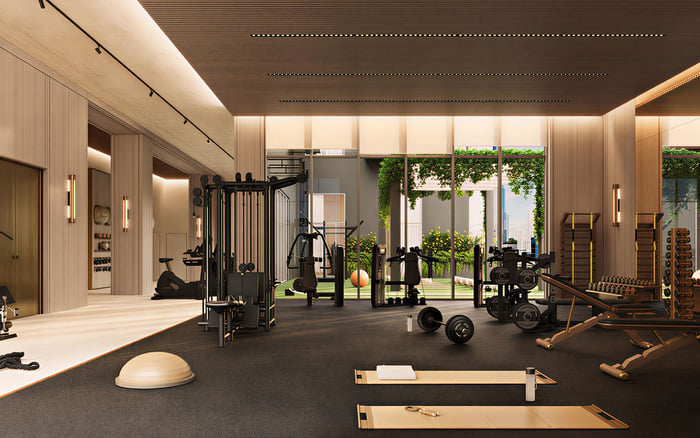
Padel has moved from niche sport to social signal in South Florida, and developers are beginning to treat the court as a design problem, not an afterthought. This MILLION Luxury editorial compares how padel courts can be integrated on amenity decks by looking at two different contexts: a master-planned, resort-forward environment like Reserve at SoLe Mia and a dense, lifestyle-driven vertical setting like Mercedes-Benz Places Miami. With limited publicly standardized detail across projects, the focus here is on the practical considerations that define whether a padel court feels like an elevated club experience or a noisy accessory: placement, acoustics, wind, circulation, scheduling, and the way the court connects to wellness, hospitality, and everyday resident life.
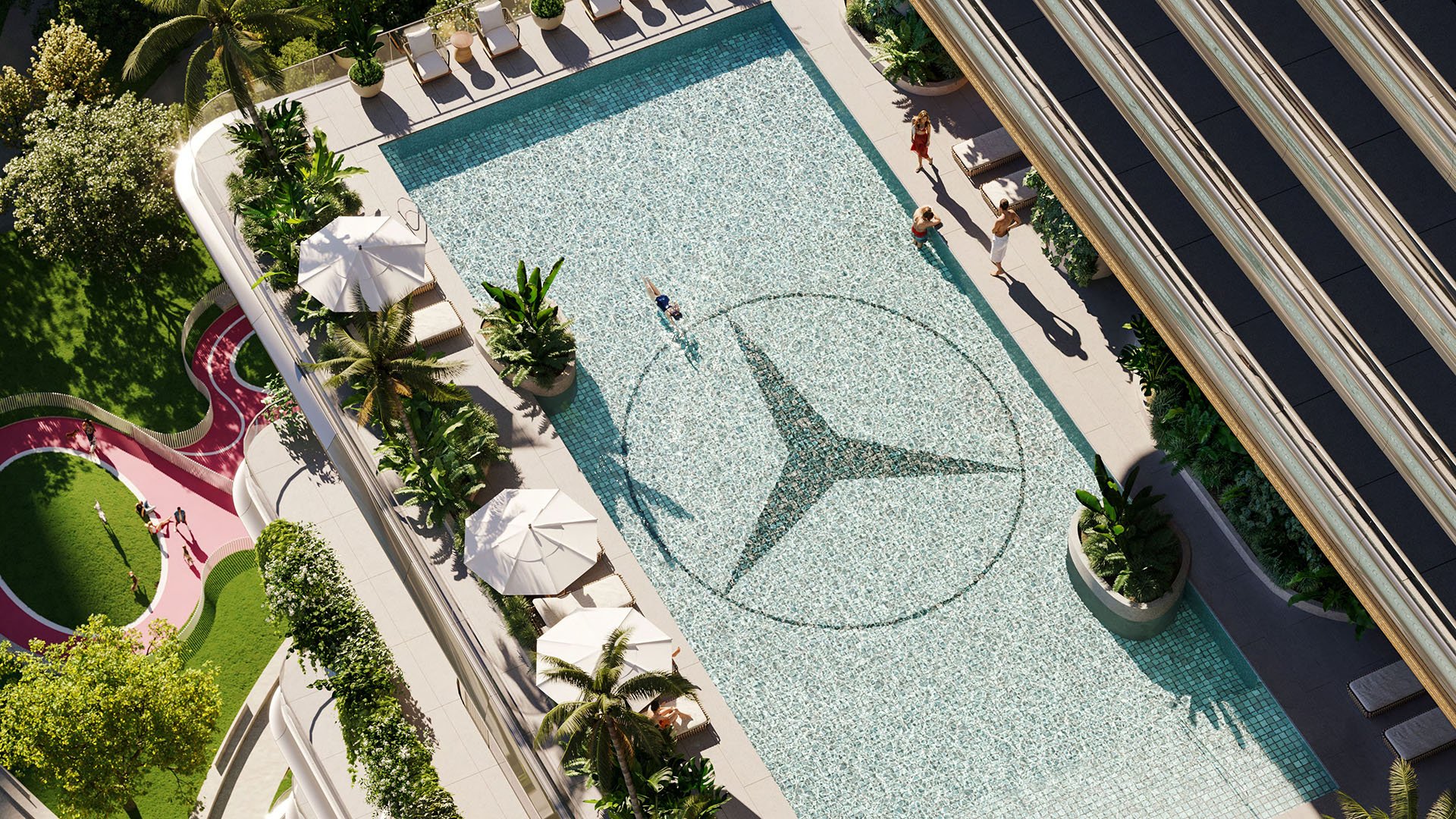
In the luxury condominium conversation, padel is less about checking a sports box and more about shaping a community rhythm. It’s social, visually legible, and inherently easy to program: doubles play, short match times, and a culture of post-game lingering. For developers, that makes the court an unusually high-yield use of amenity real estate-provided it’s integrated with the same rigor as a pool terrace or private dining room.
Amenity decks are the proving ground. A rooftop or podium deck is often the most valuable shared surface in a tower or mixed-use campus, with every square foot competing with pools, cabanas, fitness, spa, and lounge environments. A padel court-given its footprint and perimeter requirements-forces decisive planning around adjacencies, noise, and how residents move through the space.
Reserve at SoLe Mia and Mercedes-Benz Places Miami represent two distinct archetypes for how a padel court can belong within a luxury lifestyle. One reads as campus resort living; the other as highly curated vertical urban life. The difference isn’t simply “outdoor vs. indoor” or “more space vs. less.” It’s whether the court is treated as a destination room in the open air-or as a dynamic layer within a broader amenity ecosystem.
At a high level, the design tension is consistent: padel wants visibility, while residents want calm. It benefits from proximity to social zones, yet those zones can’t be acoustically overwhelmed. It welcomes breezes, but not so much wind that play becomes frustrating. These pressures register very differently in a master-planned environment than they do in a dense, mixed-use district like Brickell.
In a campus-style setting such as Reserve at SoLe Mia, decks and grounds can be composed as a sequence of outdoor “rooms.” The padel court can be framed by landscape, buffered by distance, and paired with shaded seating that supports spectatorship. Here, padel can function like a private club: show up, play, stay.
In a vertical, urban environment such as Brickell, the amenity deck is often a podium experience. Wind can be stronger and more variable at height. Sound can travel differently across hard surfaces and neighboring towers. Circulation is tighter, and the court must coexist with a higher intensity of daily use. In this context, padel performs best when it’s operationally disciplined: reservations, guest rules, and clear separation from quiet amenities.
For buyers comparing lifestyle fit, this distinction is decisive. A court that is merely “available” is not the same as a court that is comfortable, consistently playable, and socially integrated.
The first question is whether the court is designed as a centerpiece-or treated as an edge condition.
A centerpiece court is intentionally visible. It sits where it can be seen from lounge areas and accessed naturally from the amenity core. That visibility can elevate padel into a community ritual, but it demands higher investment in acoustics and circulation. Without mitigation, a too-central court risks turning the deck into a perpetual soundstage.
An edge-condition court is pushed toward the perimeter of the deck or grounds, using distance and landscape to create separation. This can preserve a more serene overall amenity atmosphere-especially in resort-like environments-but it may also dilute the spontaneous social energy that makes padel appealing.
In practice, the strongest integrations often land as a “semi-centerpiece”: visible, but framed-paired with a defined spectator zone that doesn’t force non-players to pass through the playing environment. In a Brickell-style podium deck, that can mean routing traffic so residents heading to the pool or spa aren’t crossing behind players or waiting at gates.
For comparison, consider how high-design towers treat other high-activity amenities. In Una Residences Brickell, market expectations lean toward amenity spaces composed with architectural intention-not simply assembled. Buyers increasingly bring that same standard to sport.
Padel carries a distinct acoustic profile: sharp impacts, rapid exchanges, and echo off surrounding surfaces. On an amenity deck, those impacts can collide with quiet-luxury programming such as wellness rooms, meditation lawns, or spa terraces.
In a master-planned resort context, the primary tool is separation: distance, landscaping, and orientation. If the court is positioned so the loudest vectors face away from primary lounge zones, the deck retains its calm.
On an urban podium deck, the solution set shifts toward design and operations:
Material choices and surface treatments around the court to reduce harsh reflections.
Clear physical buffers between the court and adjacent lounge seating.
Operational rules that limit late-night play or protect peak quiet hours.
This is where buyers should think like asset managers. The question isn’t only, “Is there a court?” It’s, “Is the court a good neighbor to the rest of the building’s amenity promise?” A building can be impeccably designed yet feel less luxurious if sound becomes a daily friction point.
Even elite finishes won’t rescue a windy court. At height, gusts and crosswinds can make the game feel inconsistent, discouraging repeat play. Sun angle matters, too; glare can become a persistent issue depending on orientation and surrounding reflective surfaces.
In a resort-forward environment, a court can sit lower, with natural wind buffering from landscaping and adjacent structures. In Brickell-where podium and upper-level decks are common-the building’s massing and the surrounding skyline become part of the court’s performance.
For buyers evaluating Mercedes-Benz Places Miami in Brickell, “playability” deserves to be treated as due diligence, not a lifestyle assumption. Ask how the court is oriented relative to prevailing winds, and whether wind-mitigation strategies are integrated into the architecture. In premium buildings, the goal is a court that’s not only photogenic, but consistently usable.
To calibrate expectations, consider the broader Brickell tier of amenity-driven towers such as 2200 Brickell. The neighborhood’s buyer profile tends to reward operational polish, and daily friction is noticed quickly.
Padel reads most luxurious when it has an arrival ritual: a clear entry, storage for gear, a moment to reset, and a nearby place to hydrate and socialize. Without those elements, the court can feel like a leftover rectangle on a deck.
In a campus context like Reserve at SoLe Mia, the court can be supported by adjacent shaded seating, walkable paths, and a broader outdoor recreation narrative. Players can arrive without cutting through the most serene parts of the deck, and spectators can gather without feeling in the way.
In a vertical mixed-use context like Mercedes-Benz Places, the arrival sequence must be more compact and deliberate. The best version stitches the court into the fitness and wellness ecosystem, with intuitive access from locker facilities, and without forcing pool loungers to share circulation with active play. When done well, the court reads as a private-club layer within the building’s lifestyle stack.
Luxury often shows up in operations. With padel, management determines whether the amenity becomes a community asset-or a recurring source of tension.
Buyers should ask:
Is play reservation-based, and if so, is it building-managed or app-based?
Are guests permitted, and what limits apply?
Are lessons, leagues, or clinics anticipated, and who controls them?
How are peak hours handled so residents do not feel crowded out?
In a resort-like setting, casual drop-in play can work because there’s often more space to absorb activity and more outdoor “spillover” zones. In an urban tower, the court’s success typically depends on predictable scheduling. The most refined outcome is one where residents can secure a time slot easily, and non-players can enjoy the deck without feeling that sport dominates the atmosphere.
This operational lens is especially relevant for buyers who value quiet enjoyment and a strong sense of privacy-hallmark expectations in Brickell and similar ultra-premium corridors.
If your ideal padel experience is spontaneous, social, and outdoorsy, the Reserve at SoLe Mia archetype tends to support it. The court can function as part of a broader leisure landscape, encouraging longer linger time and a more relaxed transition from sport to downtime.
If your ideal padel experience is efficient, polished, and integrated into a high-design urban lifestyle, the Mercedes-Benz Places archetype can be compelling-provided the court is supported by strong operations and thoughtful separation from quiet amenities.
The deeper point is that padel is becoming a proxy for how a project thinks about lifestyle. Some buildings treat sport as decoration. Others treat it as programming.
For additional context on how different South Florida submarkets interpret outdoor lifestyle, consider how beachfront projects such as 2000 Ocean Hallandale Beach often prioritize resort-caliber outdoor rooms, while Brickell towers tend to prioritize curated, schedule-friendly amenities. The best choice depends on whether you want your building to feel like a destination-or a highly serviced home base.
Is a padel court always outdoors on an amenity deck? Not always. Some projects place courts on podium decks, others may integrate them in enclosed or semi-enclosed areas.
Does a deck-level padel court affect resale value? It can, especially if it signals strong lifestyle programming, but execution and management matter as much as the amenity itself.
What should I ask about noise and quiet hours? Ask about permitted playing hours, any sound-mitigation design, and whether policies are enforced consistently.
How important is wind for padel in high-rises? Very. Wind can reduce playability, so orientation and mitigation strategies should be part of the amenity design.
Are reservations typically required for padel courts in luxury condos? Often yes in dense buildings, since reservations reduce conflict and keep usage predictable.
Can non-players enjoy the deck if the court is nearby? Yes when circulation is separated and spectator zones are designed, so activity does not spill into quiet lounging areas.
Do padel courts need special maintenance? They do. Net systems, playing surface wear, and perimeter glass or fencing typically require ongoing upkeep.
Should I expect lessons or leagues in a residential building? Some communities program them, but buyers should confirm whether instruction, events, and guest play are planned.
Is padel replacing tennis in new developments? Not universally. Many projects treat padel as an additional social sport rather than a replacement.
What is the biggest sign a padel amenity was thoughtfully integrated? When the court has a clear arrival sequence, nearby support spaces, and policies that protect both players and loungers.
For a confidential assessment and a building-by-building shortlist, connect with MILLION Luxury.
If branded residences are on your mind — as a home or as an allocation — we would be glad to share what we are seeing, privately.
Begin a quiet conversation