For high-net-worth buyers, proximity to elite medicine is not a convenience feature. It is a lifestyle insurance policy, a privacy consideration, and increasingly, a decision variable on par with waterfront orientation and building services. In West Palm Beach, two addresses frequently enter the same shortlist: Alba West Palm Beach and Forté on Flagler. Both sit in the city’s most coveted corridor, yet they can feel meaningfully different when you evaluate what matters on the day you actually need care: speed, simplicity, discretion, and optionality. This MILLION Luxury editorial frames the comparison the way private clients tend to: not by quoting minute-by-minute drive times, but by examining routing logic, neighborhood friction, and the everyday realities of how West Palm Beach is navigated. The result is a buyer-oriented lens for anyone prioritizing seamless access to top-tier hospitals, specialists, and urgent care, while still wanting the calm, design-forward life that defines the Flagler waterfront.
In ultra-premium real estate, “close to the hospital” can sound utilitarian-until you translate it into real life. For many households, medical access is a blended requirement: routine specialists, elective procedures, visiting family needs, pediatric flexibility, and the occasional true emergency. The question isn’t only how near a facility is, but how consistently you can reach it, how predictable the route feels in-season, and how discreet the experience can remain.
In West Palm Beach, that calculus matters because the city’s luxury inventory has matured quickly, drawing second-home owners, full-time residents, and multigenerational buyers. As that buyer mix evolves, proximity to elite medicine becomes part of an “operational” lifestyle: easy pickup and drop-off, straightforward wayfinding for caregivers, and minimal friction for guests.
Two projects often compared through this lens are Alba West Palm Beach and Forté on Flagler West Palm Beach. Both sit within the broader West Palm Beach orbit where top clinical networks and Palm Beach-area specialists are part of daily life. The nuance is how each building’s setting shapes your “time to care” experience.
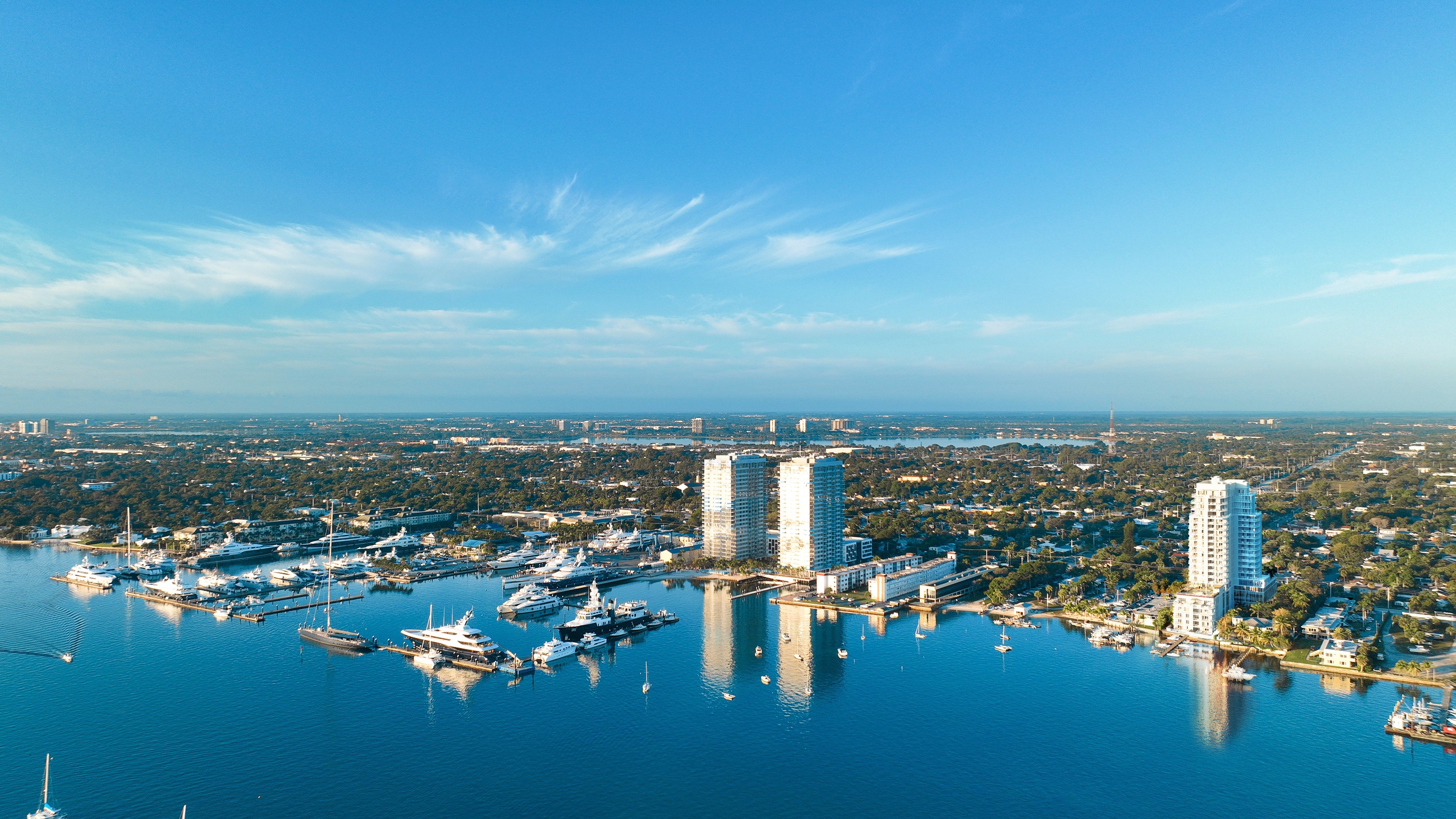
West Palm Beach is navigable by South Florida standards. Many daily destinations fall inside a relatively tight grid: downtown, the Flagler waterfront, the bridge connection to Palm Beach, and the inland routes that lead to broader County access. That compactness can make it tempting to assume any two buildings are effectively the same distance to everything.
Yet residents quickly learn the city runs on micro-patterns: where seasonal congestion builds, which turns stay consistently easy, and which corridors feel longer than they are. When you’re evaluating medical proximity, those patterns stop being trivia and start being decision drivers.
Think in three layers:
Primary route clarity. A simple, repeatable route reduces stress-especially for visiting family or staff.
Arrival experience. Where a facility’s entrance and parking sit relative to your most likely route can matter as much as the route itself.
Redundancy. Multiple viable paths preserve predictability when traffic or events disrupt the usual flow.
Within that lens, Alba and Forté are both well-positioned. The difference isn’t whether care is reachable; it’s whether you prefer a calmer, more insulated departure-and-return sequence or the immediacy of being anchored to a primary waterfront artery.
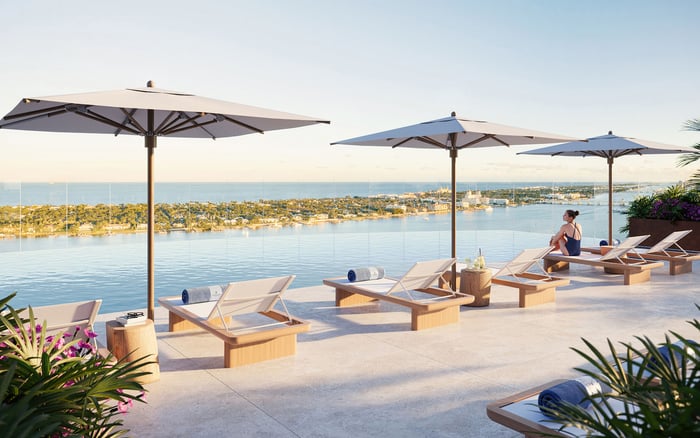
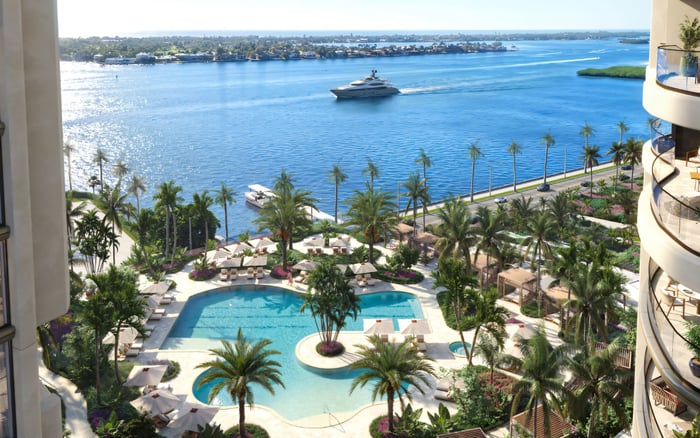
Alba reads as a modern waterfront lifestyle proposition, and in a medical-access context that translates into something quietly valuable: a setting that tends to feel composed when you’re coming and going. For households who prioritize a low-friction daily rhythm, that calm becomes part of healthcare planning-even if it’s never labeled that way.
The advantage here is predictability. When your departure begins in an environment that feels organized, you’re less likely to lose minutes to small inefficiencies: waiting for an elevator at peak times, navigating a congested curb, or managing complicated guest instructions. These aren’t dramatic variables, but they’re the ones that create friction.
For buyers balancing wellness routines with specialist visits, Alba’s lifestyle positioning can support a “health-forward” week: workouts, recovery, and appointments that don’t require a mental reset every time you step outside. If you’re also evaluating other wellness-oriented addresses across South Florida, it can help to see how different neighborhoods interpret the same requirement. For example, a Brickell buyer may consider House of Wellness Brickell for a similarly health-first narrative, though West Palm Beach delivers a different pace and spatial openness.
In short: Alba tends to fit the buyer who wants medical access to feel embedded in a serene lifestyle, not appended to an urban routine.
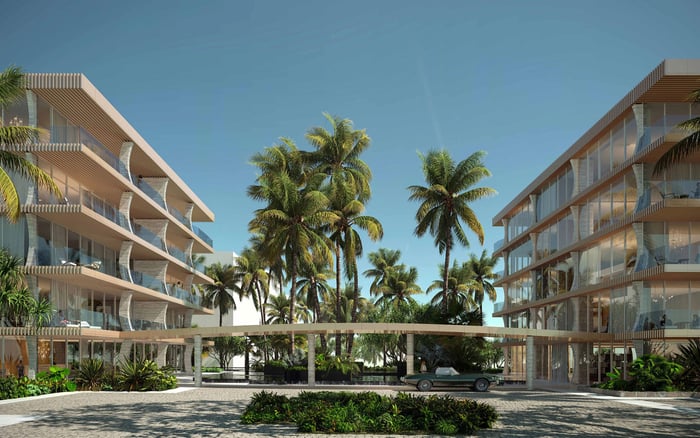
Forté’s placement on the Flagler corridor supports a different priority: direct connection to a primary north-south route with a distinctly downtown cadence. For medical proximity, that can translate into directness. When a building aligns cleanly with a major artery, it can reduce complexity and improve the efficiency of getting out-and getting back.
This matters for households using their West Palm Beach residence as a base for a high-volume schedule. If your calendar includes meetings, travel, visiting family, and medical appointments across multiple household members, reducing detours is more than convenience-it’s capacity.
Forté can also be a strong fit for buyers who anticipate frequent third-party visits: caregivers, private nurses, family arriving for procedures, or friends assisting during recovery. Downtown familiarity helps because it’s often easier to describe, easier to navigate, and more intuitive for visitors.
As a mental model, Forté appeals to the buyer who wants an address that functions like a well-organized entry in an address book: simple, legible, and efficient.
Because the Research Pack and Fact Table do not provide facility-by-facility distances, the most responsible approach is to evaluate proximity the way sophisticated buyers actually experience it: as a set of operational realities. This framework applies to both Alba and Forté.
Emergency care prioritizes the most reliable route at any hour. Scheduled care prioritizes repeatability, parking ease, and minimizing time lost to micro-friction. Be honest about which one drives your decision.
In luxury buildings, privacy is part of the service promise. In medical situations, it can become more sensitive. Consider how visible your departure and return are, how a driver can stage a pickup, and whether guest entry feels controlled rather than exposed.
If you anticipate home health services at any point, focus on visitor flow: check-in, elevator access, and whether staff can arrive without disrupting residents. It’s not about glamour; it’s functional elegance.
West Palm Beach has a social calendar. On the right evening, “downtown energy” is a feature. On the wrong day, it becomes a variable. The more your household prioritizes medical predictability, the more you should weigh route redundancy and the building’s immediate curb dynamics.
For many luxury buyers, West Palm Beach isn’t an isolated market-it’s half of a two-shore ecosystem with Palm Beach. That matters because some of the most sought-after specialists, private practices, and concierge healthcare experiences tend to cluster where luxury clients spend their time.
In that sense, both Alba and Forté benefit from their position in West Palm Beach’s premium waterfront sphere, with straightforward access to the bridge connection and the broader Palm Beach area.
If you’re comparing other waterfront-led options in the same conversation, the Flagler corridor has matured into a constellation of high-end residences. Buyers who want additional reference points often also look at Shorecrest Flagler Drive West Palm Beach and South Flagler House West Palm Beach for a similar “close to everything that matters” feel along the waterfront.
When clients say they want “close to elite medical,” they often mean one of two things. Use these cues to match each project’s proximity style to the way you live.
Alba is compelling if your ideal scenario is a residence that lowers the mental noise around care. If you view appointments as part of a wellness routine and want the building experience to feel restorative before and after, the calmer departure profile can register as a true luxury.
It also suits a second-home owner who wants a residence that feels like a sanctuary when in town for periodic checkups or elective procedures. The goal isn’t speed alone; it’s the sense that everything is handled with quiet competence.
Forté is compelling if your household runs on pace. If you want a straightforward “in and out” relationship with the city, and you anticipate frequent trips for a range of appointments, the downtown practicality can feel like a daily advantage.
It can also be the better fit if you expect more visitors tied to care, or you prefer an address that’s easy for others to locate and navigate without extensive instructions.
For ultra-premium buyers, the best medical proximity is the one that stays reliable under real conditions: a busy season, an unfamiliar driver, a last-minute appointment, a family member visiting, or a day when you’d rather not think about logistics.
Both Alba West Palm Beach and Forté on Flagler offer strong positioning within West Palm Beach’s luxury waterfront ecosystem. The decision is personal: Alba leans toward composed, resort-calm living with medical access that feels seamlessly integrated; Forté leans toward direct downtown alignment and the pragmatic clarity of being connected to a primary corridor.
If medical proximity is central to your purchase, treat it like any other luxury feature: test routes at different times, pressure-test guest logistics, and choose the building whose daily rhythm matches the way you actually live.
Is West Palm Beach generally well positioned for high-quality medical care? Yes. The area supports a broad mix of hospitals, specialists, and outpatient options within a compact metro layout.
Which is “closer” to elite medical facilities, Alba or Forté? Both are positioned within the same West Palm Beach luxury core, so the practical difference is often route feel and ease.
What matters most in an emergency: distance or route simplicity? Route simplicity often wins because it reduces uncertainty, especially when timing and stress are high.
Does being on Flagler Drive meaningfully change medical access? It can, because Flagler is a primary corridor that tends to make navigation more direct and legible.
How should second-home owners evaluate medical proximity? Focus on predictability, ease for visiting family, and a building experience that feels calm during appointments.
What should I ask about building logistics for caregivers or home health visits? Ask about guest entry, concierge coordination, elevator access, and how visitor flow is handled day to day.
Is privacy a real factor when planning medical access from a luxury condo? Yes. Discreet arrivals, controlled access, and low-visibility transitions can matter for many households.
Should I test routes at different times of day before buying? Yes. Try peak hours, weekends, and event nights to understand variability and backup options.
Can medical proximity affect resale in the West Palm Beach luxury segment? Often, yes. Buyers increasingly value lifestyle infrastructure, including healthcare access and convenience.
If I want a broader Flagler corridor comparison, what else should I consider? Consider how other waterfront addresses align with your daily routes and preferences for calm versus downtown energy.
For a confidential assessment and a building-by-building shortlist, connect with MILLION Luxury.
If branded residences are on your mind — as a home or as an allocation — we would be glad to share what we are seeing, privately.
Begin a quiet conversation